kidnappings
Killings, abuse and kidnappings mark Ethiopia’s hidden conflict
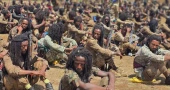
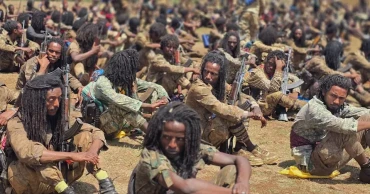
Sought by the Ethiopian government, Oromo rebel commander Jaal Marroo remains on the move to evade drone surveillance targeting him from the air.
Marroo heads the Oromo Liberation Army (OLA) from a network of remote forest hideouts in Oromia, Ethiopia’s largest region, home to an estimated 40 million people.
The government has labelled the former student a terrorist, accusing the OLA of carrying out ethnically driven attacks that have killed civilians. However, speaking in a rare interview from one of his concealed locations, Marroo denied allegations that his forces deliberately target civilians.
“Our war is not against the people,” he told The Associated Press. “It is against the brutal regime that has occupied and oppressed the nation for generations.”
The Oromo Liberation Army (OLA) has been fighting Ethiopia’s federal government since 2018, although the conflict has often been overshadowed by other crises, including the 2020–2022 war in the northern Tigray region. U.N. investigators have accused the group of grave abuses such as killings, rape and abductions.
Human rights organizations, while documenting violations by the OLA, say government forces have also committed serious abuses. Indiscriminate drone strikes, extrajudicial killings and enforced disappearances are described as key features of the counterinsurgency campaign.
“The research that we conducted puts both the OLA and the government forces in the middle of the conflict in terms of summary executions, in terms of torture, in terms of abductions, in terms of rape of women,” said Sarah Kimani, Amnesty International’s regional spokesperson. “Our report is able to point to both groups having been responsible for the atrocities that are being carried out in the Oromia region and that continue to be carried out against civilians in the region,” she told the AP.
Read More: Eritrea withdraws from regional bloc as UN expresses concern over tensions with Ethiopia
Civilians report widespread fear and displacement. Ayantu Bulcha said members of her family were killed after being accused of supporting the OLA, while others described harassment, extortion and ransom demands by armed groups.
“Movement from place to place has become increasingly restricted,” said Lensa Hordofa. “It’s almost impossible to travel.”
Access restrictions have limited reporting from Oromia, where aid delivery has been disrupted, schools closed and health facilities looted or destroyed. Analysts say insecurity persists despite recent government gains, leaving civilians trapped between multiple armed actors.
“Oromia is very insecure,” said International Crisis Group’s Magnus Taylor, citing criminal groups alongside the insurgency.
7 months ago
US, Haiti seek release of 17 missionaries snatched by gang
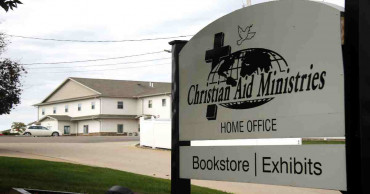
U.S. officials are working with Haitian authorities to try to secure the release of 12 adults and five children with a U.S.-based missionary group who were abducted over the weekend by a gang notorious for killings, kidnappings and extortion.
The group was snatched by the 400 Mawozo gang, which controls the Croix-des-Bouquets area east of the capital of Port-au-Prince, police inspector Frantz Champagne told The Associated Press on Sunday. The abduction happened Saturday in the community of Ganthier, which lies in the gang's area. It was blamed for the kidnapping of five priests and two nuns earlier this year.
As authorities sought the release of the 16 Americans and one Canadian with the Ohio-based Christian Aid Ministries, local unions and other organizations expected to launch a strike Monday to protest Haiti’s worsening lack of security.
The Western Hemisphere's poorest nation is again struggling with a spike in gang-related kidnappings that had diminished in recent months, after President Jovenel Moïse was fatally shot at his private residence on July 7 and a magnitude 7.2 earthquake killed more than 2,200 people in August.
“Everyone is concerned. They’re kidnapping from all social classes,” Méhu Changeux, president of Haiti’s Association of Owners and Drivers, told Magik9 radio station.
Read:US religious group says 17 missionaries kidnapped in Haiti
He said the work stoppage would continue until the government could guarantee people’s safety.
The kidnapping of the missionaries came just days after high-level U.S. officials visited Haiti and promised more resources for Haiti’s National Police, including another $15 million to help reduce gang violence, which this year has displaced thousands of Haitians who now live in temporary shelters in increasingly unhygienic conditions.
The U.S. State Department said Sunday that it was in regular contact with senior Haitian authorities and would continue to work with them and interagency partners.
“The welfare and safety of U.S. citizens abroad is one of the highest priorities of the Department of State,” the agency said in a statement.
Christian Aid Ministries said the kidnapped group included seven women, five men and five children, including a 2-year-old. The organization said they were taken while on a trip to visit an orphanage.
“Join us in praying for those who are being held hostage, the kidnappers and the families, friends and churches of those affected,” Christian Aid Ministries said in a statement. “As an organization, we commit this situation to God and trust him to see us through.”
An annual report issued last year by Christian Aid Ministries said its American staffers had returned to their base in Haiti after a nine-month absence “due to political unrest” and noted the “uncertainty and difficulties” that arise from such instability.
Nearly a year ago, Haitian police issued a wanted poster for the alleged leader of the 400 Mawozo gang, Wilson Joseph, on charges including murder, attempted murder, kidnapping, auto theft and the hijacking of trucks carrying goods. He goes by the nickname “Lanmò Sanjou,” which means “death doesn’t know which day it’s coming.”
Read: Options shrink for Haitian migrants straddling Texas border
Amid the spike in kidnappings, gangs have demanded ransoms ranging from a couple of hundred dollars to more than $1 million, sometimes killing those they have abducted, according to authorities.
At least 328 kidnappings were reported to Haiti’s National Police in the first eight months of 2021, compared with a total of 234 for all of 2020, said a report last month by the United Nations Integrated Office in Haiti.
Gangs have been accused of kidnapping schoolchildren, doctors, police officers, busloads of passengers and others as they grow more powerful. In April, a man who claimed to be the leader of 400 Mawozo told a radio station that it was responsible for kidnapping five priests, two nuns and three relatives of one of the priests that month. They were later released.
The spike in kidnappings and gang-related violence has forced Haitians to take detours around certain gang-controlled areas while others opt to stay home, which in turn means less money for people like Charles Pierre, a moto taxi driver in Port-au-Prince who has several children to feed.
“People are not going out in the streets,” he said. “We cannot find people to transport.”
4 years ago