Kashmir attack
India blames Pakistan for Kashmir attack, suspends historic water treaty
Tensions between India and Pakistan escalated sharply on Thursday after a deadly attack in Kashmir killed 26 people, prompting New Delhi to launch a diplomatic offensive against Islamabad and suspend a landmark water-sharing treaty that had withstood wars and border skirmishes for over six decades.
India accused Pakistan of backing the assault in Kashmir’s tourist town Pahalgam, which shattered claims of calm in the disputed region and fuelled demands for a strong response from Prime Minister Narendra Modi’s government.
India’s Foreign Secretary Vikram Misri announced late Wednesday that several Pakistani diplomats were asked to leave the country.
In a statement issued Thursday, India's foreign ministry said all visas issued to Pakistani nationals will be revoked with effect from Sunday. It also advised Indians citizens not to travel to Pakistan, reports AP.
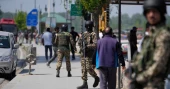
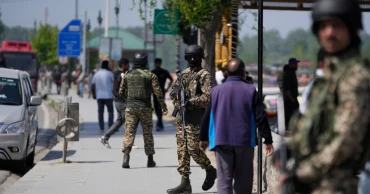
India increases security in Kashmir following tourist attack
In a reciprocal move, Indian diplomats are being withdrawn from Pakistan.
Both countries agreed to cut diplomatic staff from 55 to 30, effective May 1, and the only functioning land border crossing between the nations will be closed.
Besides, Indian Prime Minister Modi vowed harsh action, “India will identify, track and punish every terrorist, their handlers and their backers. We will pursue them to the ends of the earth,” he declared in a public rally on Thursday.
“We will pursue them to the ends of the earth,” said Modi, who was later in the day scheduled to head an all-party meeting with opposition parties to brief them on the government’s response to the attack.
Meanwhile, Pakistan rejected the accusations and called India’s actions rash and baseless.
Pakistan Prime Minister Shehbaz Sharif convened a meeting of the country’s National Security Committee to chart out a response to India’s diplomatic and strategic retaliation.
According to Radio Pakistan, the top civil and military leadership are attending the emergency meeting, reviewing measures in response to “India’s hastily taken, impulsive and impractical water measures.”
1 year ago

Black Day observed to denounce Pak-led attack in Kashmir in 1947
Pro-liberation forces and liberal minded NGOs on Friday organised various programmes to mark the Black Day when Pakistan-led tribal forces attacked the innocent Kashmiri population in 1947 to take control of Jammu & Kashmir under code name ‘Operation Gulmarg’.
The event drew parallel to the 1971 Genocide under code name ‘Operation Searchlight’ by Pak Army in Bangladesh, said a media release.
Rationalism and Liberalism Practice Forum, Bangladesh Organised a seminar on “Black Day - Invasion of Kashmir by Pakistan in 1947” at Dhaka Reporters Unity which was attended by more than 100 participants. Banners and placards condemning the massacre in Kashmir were displayed in the seminar hall.
Open Dialogue, Bangladesh formed a human chain on ‘Black Day’ with banners ‘Disgusting Blueprint of Pakistan Army’ in front of Pakistan High Commission in Dhaka around 3pm, said the media release.
Read: Wave of killings triggers memories of dark past in Kashmir
Through the human chain Pak Army’s atrocities towards women, children, plunder and loot were highlighted in posters/banners with Indicative slogans such as ‘KASHMIR INVASION-PAKISTAN’S PRE-PLANNED ATTACK, EXECUTED BY ARMY & TRIBAL INVADERS IN UNISON’ ; ‘INVADERS PLAYING VICTIMS- PAKISTAN IS THE BUTCHER OF JAMMU & KASHMIR’ ; ‘PAKISTAN’S HENIOUS CONSPIRACY- 1947 AND 1971 GENOCIDE’ etc.
A street play was also organized in front of the National Press Club to highlight the Black Day - Pak Army’s atrocities on innocent Kashmiri people by Pakistan-led tribal forces under the code name ‘Operation Gulmarg’.
Bangladesh Social Activists Forum (BSAF) formed a human chain to mark the ‘Black Day’ at Hadis Park, Khulna and Rajshahi University.
The participants were seen wearing T-shirts with ‘BLACK DAY marked on them as a statement of protest against then killings of Innocent Kashmiris in 1947 and Genocide in 1971.
Through the human chain Pak Army’s atrocities were highlighted, Indicative slogans both in English and Bengali were flashed in posters/banners against Pakistan’s nefarious act. Later, the participants formed a bike rally and moved around the city to spread the message.
Read: Resistance leader’s death deepens Kashmir strife
Members of Swadhinata Sangram Parishad gathered in front of Pakistan High Commission, Dhaka at 8am to participate in a demonstration against Pak Army genocide in Kashmir on October 22, 1947, Pak genocide in Bangladesh (March 25, 1971) and killing of Father of the Nation Bangabandhu Sheikh Mujibur Rahman (August 15, 1975) and Pak-backed Taliban atrocities in Afghanistan (2021).
The members held posters, banners stating the above and urging Pakistan to apologise.
Muktijoddha Mancha organised a photo exhibition, seminar and screening of documentary in front of National Museum, Shahbag, Dhaka University area, on the same cause.
4 years ago