leather sector
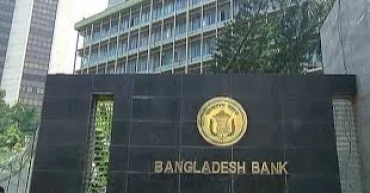
Loan conditions for raw hide traders eased ahead of Eid-ul-Azha to boost leather sector
Bangladesh Bank has relaxed conditions to avail new loans for raw hide traders ahead of Eid ul Azha, allowing them to access funds without having to clear their previous arrears.
The central bank issued a circular to this effect on Tuesday (May 5), prioritizing liquidity flow into the market before the festival, which accounts for the vast majority of the principal input (raw hide) for the export-oriented leather industry.
According to the new decision, the requirement for hide traders with rescheduled loans to pay a specific portion of their outstanding dues before availing fresh financing has been temporarily waived, specifically to facilitate the purchase of raw hides during the upcoming festive season.
The circular emphasizes that the leather industry is a significant export sector in Bangladesh, heavily reliant on the peak supply of raw hides collected during Eid-ul-Azha. Ensuring traders possess sufficient cash reserves during this critical time is essential for the smooth collection, preservation, and subsequent trade of hides, the central bank noted.
Consequently, banks have been directed to sanction and disburse required working capital loans to hide traders. The directive specifically highlights the need to extend credit not just to large-scale tannery owners but also to grassroots level collectors operating in villages and cattle markets.
The circular specifies that the mandatory upfront payment required from borrowers with existing rescheduled loans when seeking new financing for rawhide purchases is suspended until June 30, 2026. This move effectively enables numerous traders to secure fresh funds despite unresolved previous dues.
Furthermore, banks have been instructed to set specific lending targets for the leather sector for the fiscal year 2026. These targets must not be lower than the allocation made in the preceding year. Banks are required to submit their target figures and implementation reports to Bangladesh Bank by July 31.
Stakeholders and sector insiders expect this initiative to significantly ease the anticipated liquidity crunch in the raw hide market during Eid. By accessing financing on easier terms, traders can aggressively pursue rawhide purchases, which in turn is likely to help ensure a fair price for sacrificial animal skins at the producer and middleman levels.
4 months ago
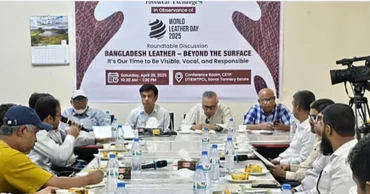
Bangladesh leather sector is 30 years behind: Speakers on Leather Day
Speakers at a discussion meeting on Sunday said that the Bangladesh leather industry has been going through a tough situation over the past 10 years.
The types of leather that were produced in Bangladesh 20 to 30 years ago are still being produced without any change. There is no development in this regard. So the leather sector is lagging behind, they said.
“In 2012, the revenue from the leather sector was US $1.13 billion. In 2024, it decreased to $970 million,” the discussion was told on the occasion of ‘World Leather Day 2025’ at the Leather Industry City in Harindhara, Savar, on Sunday.
Despite having potential and enough sources of rawhide in the country, other industries are developing, but the picture is the opposite in the leather Industries, they said.
The meeting was organised by Footwear Exchange at the seminar hall of Dhaka Tannery Industrial Estate Waste Treatment Plant Company Limited (DTIEWTPCL) in Shilpanagar with the theme ‘Beyond the Surface: It’s Our Time to Be Visible, Vocal and Responsible’.
The meeting was moderated by Golam Shahnewaz, managing director of DTIEWTPCL, and the chief guest was Bangladesh Tanners Association (BTA) Chairman Shaheen Ahmed. Apex Tannery Chief Production Officer Salauddin Mahmud Khan, Managing Director of Marson Tannery Tariqul Islam Khan were the special guests.
Golam Moin Uddin appointed as new chairman of Apex Footwear
Leather Engineers and Technologists Society of Bangladesh President Mohammad Ali, Leather Products and Footwear Manufacturers and Exporters Association (LFMEAB) Director Mushfiqur Rahman and others were present at the event.
BTA Chairman Shaheen Ahmed said that coordination between various industry-related associations is essential to overcome the crisis in the leather industry.
“The institutions are not fully independent. The way BSCIC officials are running the industries ministry, it is being run the same way. In Kolkata, the owners of the leather industry institutions are the main stakeholders and shareholders. But in Bangladesh, it is completely the opposite,” he said.
“This needs to be fixed, the power of the association needs to be increased. The shares of tannery owners need to be increased,” he added.
Speaking at the event, Mohammad Ali said that leather engineers have a big role in the development of the leather sector in Bangladesh. That role is not being played properly.
LFMEAB Director Mushfiqur Rahman said, “We are far behind in the demand for leather or footwear all over the world. We are always committed to the development of leather and leather products.”
1 year ago
.jpg)
Italy to invest in waste management in Bangladesh: Ambassador Enrico
Italy is keen to invest in solid waste management and development of green technology in leather sector in Bangladesh.
Italian ambassador to Dhaka Enrico Nunziata on Sunday expressed this intention during a courtesy call on BSCIC Chairman Mustaque Hassan at his office in Tejgaon.
The ambassador wanted gurantee of uninterrupted supply to the waste management plant from which electricity and organic fertilizer would be produced.
Italian company is assessing waste quantity and possibility of setting up a full-fledged waste management plant in Savar leather industrial hub.
Read: Invest in technology to improve waste management: UN chief
The chairman of Bangladesh Small and Cottage Industries Corporation (BSCIC) urged Italian investment in different economic zones in the country.
The government is working to establish ecofriendly 100 economic zones on 40000 acres of land by 2041.
Additional secretary (BSCIC) Kazi Shakhawat Hosain, senior BSCIC officials were present,
4 years ago