University Grants Commission
Education, Health, Agriculture Key to National Security: UGC Member
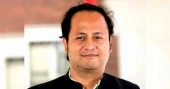
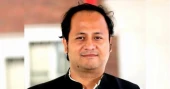
University Grants Commission (UGC) member Prof. Mohammad Tanzimuddin Khan, has identified education, health, and agriculture as the primary drivers of national security, stressing that investment in these sectors is essential for human security.
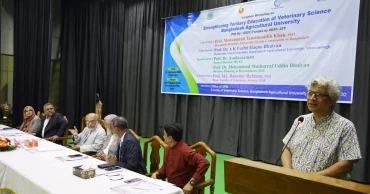
Speaking as the chief guest at a workshop on strengthening veterinary science education at Bangladesh Agricultural University (BAU) on Tuesday, he noted that global powers like the USA and China treat education as a core component of national security, a vision Bangladesh must also adopt.
Addressing the selection process for the Higher Education Acceleration and Transformation (HEAT) project, Professor Khan highlighted that the grant was awarded through a highly competitive and transparent process.
He asserted that in the post-August 5 era, the UGC has moved away from historically opaque practices to a purely merit-based selection system, countering common allegations of corruption in project allocations. He also expressed concern over Bangladesh’s low GDP allocation for education compared to other South Asian nations, stating that international university rankings cannot improve without addressing this investment deficit.
BAU Vice-Chancellor Prof. A. K. Fazlul Haque Bhuiyan, attending as the chief patron, emphasized that while modern technology is vital, the sincerity and profound knowledge of teachers remain the heart of quality education.
The workshop, presided over by Veterinary Faculty Dean Prof. Md. Bahanur Rahman, also featured a keynote by Sub-Project Manager Prof. Mohammad Eliusur Rahman Bhuiyan. He outlined plans to modernize classrooms, establish high-tech research infrastructure, and digitize library facilities to align veterinary training with global technological standards and produce skilled professionals.
The event was attended by BAU's Director of Planning and Development Prof. Mohammad Musharraf Uddin Bhuiyan, HEAT Project Regional Coordinator Md. Monabberur Rashid and faculty members from various departments. The project, funded by the HEAT-Academic Transformation Fund (ATF), aims to create a technology-driven environment to enhance research and hands-on training within the veterinary faculty.
6 months ago
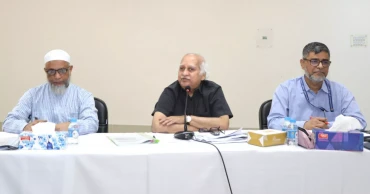
UGC to decide soon on launching PhD programmes at pvt universities: Chairman Faiz
The University Grants Commission (UGC) will soon take a decision on allowing private universities to introduce PhD programmes, UGC Chairman Professor Dr SMA Faiz said on Sunday.
He made the remarks while speaking at a stakeholder consultation on the Private University Act 2010 (Amended 2024) held at the UGC auditorium.
Dr Faiz said only those private universities that meet the required academic and infrastructural standards would be permitted to offer PhD programmes.
Highlighting the role of universities in society, he said they are not isolated from its challenges and therefore have a responsibility to conduct research aimed at solving pressing social issues.
He also urged university authorities to be mindful of students’ changing expectations and mental well-being in the context of current social and political dynamics, and to take proactive steps in addressing these concerns.
Govt to initiate PhD programme in nursing: UGC chairman
Clarifying the Commission’s role, he said, “The Commission does not view itself as a regulatory authority but rather as a facilitator for enhancing the quality of higher education and research.”
He assured that all constructive recommendations made during the meeting would be given due consideration.
The event was chaired by Dr Md Sultan Mahmud Bhuiyan, Director of UGC’s Private University Division, while Prof Dr. Mohammad Anwar Hossain, Acting Member in charge of the division, attended as special guest.
Dhaka University Vice-Chancellor Prof Dr Niaz Ahmed Khan, Rajshahi University VC Dr Saleh Hasan Nakib, Jagannath University VC Prof Dr Rezaul Karim, North South University VC Prof Dr Abdul Hannan Chowdhury, East West University VC Prof Dr Shams Rahman, National University VC Prof Mohammad Nurul Islam, Brac University Dean Prof Dr Yusuf Haider, and Association of Private Universities of Bangladesh President and Chairman of the Board of Trustees of Daffodil International University Dr Mohammad Sabur Khan, among others, also joined the consultation.
Nuri Shahreen Islam, Senior Assistant Director of the Private University Division, conducted the programme.
1 year ago
UGC moves to ensure transparency in use of research funds by private universities
The University Grants Commission (UGC) has initiated strict monitoring mechanisms to ensure transparency in the utilisation of research funds at private universities in the country.
It has also begun work on drafting a set of guidelines to regulate the distribution and use of these funds.
As part of this initiative, the UGC has formed a committee to draft policies on how private universities should use their research allocations.
The committee is tasked with examining whether research is being conducted appropriately, whether a specific percentage of total income is being allocated to research and how those funds are actually being used, including whether they are being spent at all.
In an interview with UNB, UGC Member Professor Dr Mohammad Anwar Hossen, who oversees private universities, shared these developments.
“All private universities are expected to maintain transparency in the use of research funds. There should be accurate information available on how research funds are being spent,” he said.
“UGC currently lacks the means to monitor this in detail. However, a committee is now working on a guideline to address this," Professor Anwar Hossen said.
Service rules in the offing to protect rights of pvt univ teachers
He added that there had previously been no formal policy on research funding. “We are now developing one to ensure that research funds are spent properly. Many universities also receive foreign funding for research and related activities, but there was no regulation for this either. We are working to create guidelines covering these aspects as well, and we aim to complete it soon.”
Professor Hossen also expressed concern over the lack of student involvement in research and the minimal output in terms of publications.
“We are observing this closely to ensure improvement. Besides, proper methods for linking international funds with national development goals and ensuring correct financial practices will be devised," he added.
Professor Hossen mentioned that private universities are required to offer 6% of their total student intake as scholarships — 3% for underprivileged students and 3% for children of freedom fighters.
He went on to say, “Whether these scholarships are actually being provided and the criteria for awarding them are now under scrutiny. A separate committee is handling this matter. All members of the committee, including a former secretary, a former district judge, and several respected academics, are known for their honesty and competence.”
UGC formulating strong policy to regulate foreign university branches in Bangladesh
“This committee is preparing a guideline on how scholarships should be awarded, and whether they are being given at all. The committee will also report its findings to the court,” Professor Hossen mentioned.
According to UGC sources, under the Private University Act, 2010, each private university is required to allocate a specific portion of its annual budget for research.
This fund must be utilised for the development and expansion of research activities.
University general funds are operated under the joint signatures of an official nominated by the Board of Trustees and the treasurer. These funds may only be used to cover necessary university expenses.
Besides, by 30 September of each financial year, each university must submit the income and expenditure statement of the previous year to the UGC and the Ministry of Education.
1 year ago

UGC formulating strong policy to regulate foreign university branches in Bangladesh
The University Grants Commission (UGC) is in the process of developing a clear and stringent guideline to regulate the establishment of foreign university branch campuses in Bangladesh, aiming to ensure quality higher education while preventing its commercialisation.
According to UGC member and head of the sub-committee on private universities, Professor Dr Mohammad Anwar Hossen, a high-powered committee has been tasked with drafting the policy.
The committee comprises prominent academics from several leading public and private universities, including the University of Dhaka, Buet, North South University, and Jahangirnagar University.
The Vice-Chancellor of Buet is leading the main committee, while Dr Hossen is leading a key sub-committee within the group.
In an interview with UNB, Dr Hossen said, “We are assessing how beneficial foreign campuses will be for Bangladesh. A high-powered committee, consisting of experienced professors, is actively preparing a guideline policy. Once this policy is finalised, we will be able to decide on the approval of foreign campuses.”
He explained that the UGC has a generally positive stance towards foreign university campuses but remains cautious.
“We are closely examining whether student interests might be hampered, or if public and private universities would come under undue pressure. Private universities have reached a certain standard. However, when we consider the living standards, salary structures, and research facilities for public university teachers, the picture is less satisfactory. If foreign universities begin operating here, our educators might face even more strain,” he added.
The UGC intends to finalise the policy only after comprehensive review and national interest assessments. “If the move proves to be beneficial for the country, we will structure the policy accordingly,” Dr Hossen said.
UGC may appoint administrators to private universities if graft allegations proven
Sources at the UGC said the commission is currently revising the 2014 Regulations for the Operation of Foreign University Branch or Study Centres due to existing ambiguities and limitations.
The new draft policy proposes allowing only the establishment of full-fledged branch campuses, explicitly excluding the operation of study centres.
The proposed policy outlines several mandatory conditions for foreign universities wishing to establish a branch campus in Bangladesh.
These include having a minimum of 25,000 square feet of campus space, employing full-time academic staff, maintaining a fixed deposit of Tk 5 crore, and paying a non-refundable application fee of Tk 10 lakh.
The commission emphasises that the core objective of this policy is to ensure high standards in higher education and to avoid commercial exploitation of the education sector.
Currently, UCSI University has become the first foreign university to receive approval from both the UGC and the Ministry of Education to establish a branch campus in Bangladesh.
The Malaysian university has already started academic activities in Dhaka.
UGC to be ‘university commission: CA’s Press Secretary
The UGC says that any future approvals will be granted only after the finalisation of this new policy framework and will apply strictly to recognised and high-quality foreign institutions.
1 year ago
Service rules in the offing to protect rights of pvt univ teachers
The University Grants Commission (UGC) is going to introduce service rules to protect the rights of teachers and staff in all private universities and prevent their arbitrary dismissal.
In an interview with UNB, UGC member Professor Dr Mohammad Anwar Hossain, who oversees private universities, said the commission is taking steps to ensure that every private university formulates and enforces a clear set of service rules.
“Teachers in private universities often raise their voices or express justified concerns. But when authorities are displeased they may terminate them without proper cause. This also happens to staff and officers,” Prof Anwar said.
To end such practices, every university must have a service rule in place, he said.
“All appointments and disciplinary actions must follow these rules. This will be a significant step toward ensuring job security for teachers and staff,” Prof Anwar added.
The UGC member said the commission is taking the matter seriously and has already issued letters to all private universities, instructing them to prepare or update their service rules within the next two weeks.
JnU students demand bigger UGC allocation for the university
From outsourced staff to professors, appointments must align with the service rule framework to protect the employees, he said.
“Even if someone is to be dismissed under the service rule, they must be given time, show-cause notices, and warnings in advance. Their rights must be protected,” Prof Anwar noted.
He further pointed out that service rules will also help bring structure to salary systems which are currently irregular and often fall short of minimum standards. “We will review the salary structure periodically,” he said.
There are currently 117 private universities in the country, and each must have its own service rule, the UGC member added.
According to UGC sources, the absence of clear and enforceable service rules has led to a range of institutional challenges in private universities including arbitrary dismissals, lack of due process in promotions and disciplinary measures and unregulated leave policies.
Teachers often face restrictions in expressing independent opinions, conducting research, or engaging in critical discussions.
Many have been dismissed without prior notice or explanation, leaving them with no scope to appeal or defend themselves.
In some cases, teachers are pressured to follow management’s directives or risk harassment and they are often burdened with excessive teaching loads or administrative responsibilities.
Many teachers and staff members do not receive minimum wages, and salary structures are often inconsistent, the UGC sources said.
Annual increments and leave entitlements are difficult to obtain and promotions frequently disregard seniority, qualifications and research contributions.
1 year ago

UGC may appoint administrators to private universities if graft allegations proven
The University Grants Commission (UGC) may dissolve the Boards of Trustees (BOTs) of private universities if allegations of financial irregularities are substantiated, and appoint administrators to oversee the institutions' operations.
Boards of Trustees (BOTs) of at least 20 to 30 private universities are facing serious allegations of money laundering, fund misappropriation and financial irregularities, UGC Member Professor Dr Mohammad Anwar Hossen told UNB in an interview.
"Where there are substantial allegations against the boards of private universities, we will consult with the government and if necessary appoint administrators to ensure proper governance. If more innovative or better ideas come from the government, we are open to that too—but whatever is done will follow legal procedures,” he said.
Asked about the nature of the allegations, Dr Anwar Hossain said the primary accusations involve money laundering, embezzlement of university funds, and various other irregularities.
When asked how the UGC is gathering such information, he said, “Data is coming from multiple sources—ACC (Anti-Corruption Commission), our own investigations, media reports, and also directly from some universities.”
The UGC has already formed separate committees to investigate the allegations against each of the universities in question.
“We’ve found serious irregularities in 20 to 30 universities. Committees have been formed to investigate them independently. Once the reports are ready, they will be sent to the Education Ministry for further action,” he said.
He said an investigation report on Southern University has already been submitted, and the UGC has recommended appointing an administrator there. “We’ve sent the recommendation to the government. Once it gives nod, an administrator will be appointed.”
Asked when the administrator might be appointed at Southern University, he said, “The process is underway.”
Bangladesh’s economy holds glimmers of hope amid IMF-ADB’s lower growth forecasts: Experts
Regarding the composition of the investigation committees, Dr Anwar said, “Most of the conveners are from outside UGC. In some cases members include university teachers and retired judges. But, for every committee, we have ensured that our designated officer who oversees the respective university is included.”
According to UGC sources, the list of complaints against BOTs continues to grow as student numbers—and with it revenues—increase annually.
There is a severe lack of transparency in income and expenditure, said the sources.
An UGC official preferring anonymity old UNB that that most of the Board of Trustees had been formed under political influence during the previous government’s tenure and are now operating universities as profit-making businesses.
“Necessary action will be taken under the Private University Act, 2010, if the allegations are proven. We had initially wanted the education ministry to handle this matter, but the responsibility has been handed over to us,” the official said.
“A full commission meeting chaired by the UGC chairman will decide on the action to be taken against the universities found guilty,” he added.
1 year ago
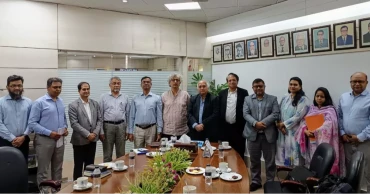
UGC to host regional higher edu conference this December
The University Grants Commission (UGC) will host a three-day regional higher education conference in Dhaka this December, aimed at bringing together UGC representatives from SAARC countries.
The decision to host the conference was taken from a meeting chaired by UGC Chairman Professor Dr. S M A Faiz on Monday.
The conference, will be held at a city hotel, aims to foster regional collaboration in higher education and research and to explore strategies for advancing the quality of education in universities across the region.
Chief Adviser and Nobel Laureate Professor Dr. Muhammad Yunus is expected to attend the event's opening ceremony as the chief guest.
A steering committee has already been formed to ensure its successful organisation.
UGC chairman expects 7 colleges' issue to be resolved amicably
Apart from UGC representatives from SAARC nations, vice-chancellors, academics, and researchers from various universities in Bangladesh are expected to attend the event.
The conference will be funded by the ongoing Higher Education Acceleration and Transformation (HEAT) project, implemented by the UGC with support from the World Bank.
UGC members Prof Dr. Mohammad Tanzimuddin Khan, Prof Dr. Mohammad Anwar Hossain, and Prof Dr. Md. Saidur Rahman, among others attended the meeting.
1 year ago
Education Ministry will request heads of higher education institutions to discuss with student organisations to resume academic activities
The Ministry of Education will request the heads of the higher educational institutions to discuss with the students’ organisations to resume academic activities after ensuring safe and congenial atmosphere.
Education Minister Mohibul Hasan Chowdhury Nowfel revealed the information, said MA Khayer, public relations officer of the ministry.
The University Grants Commission (UGC) on July 16 announced a closure of all public and private universities until further notice considering the issue of students' safety in the wake of widespread protests for reforming quota.
HSC exams for July 28, 29, 31 & Aug 1 postponed
A press release, signed by UGC secretary Dr Ferdous Zaman, said academic activities of all public, private universities, medical, textile, engineering colleges affiliated to the university and other colleges will remain shut until further notice.
The UGC has taken the move in line with the Education Ministry’s decision, said the release.
2 years ago
Education Minister addresses controversy over ‘Sharifa’s story’ in textbook
Bangladesh's Education Minister Mohibul Hasan Chowdhury Nowfel today (January 23, 2024) addressed the media regarding the ongoing controversy over a story featured in a textbook.
“We plan to consult with experts about the story of Sharifa discussed in the textbook. If there's any confusion or misrepresentation, changes will be made,” Chowdhury told reporters at the Secretariat.
The story of Sharifa previously sparked debate, and currently, some are protesting over its content. The Education Minister emphasized the need for a thorough discussion with National Curriculum and Textbook Board (NCTB) to understand why the story is eliciting such reactions.
Read more: UGC team investigates IU VC’s corruptions in teacher recruitment
He expressed concern about certain groups’ tendency to exploit religious sentiments and instigate instability and anarchy in the country, and said, “A few days ago, some recommendations were given to me from an organization. Some Qawmi madrasa teachers claimed that the word ‘transgender’ has been used in the textbook. However, upon examination, it was clarified that the term used was ‘third gender’.”
“In our society, third gender individuals, commonly known as ‘Hijra,’ are legally recognized citizens with rights," Minister Chowdhury clarified.
He further added, “If the presentation of the story leads to misunderstandings and controversies, we will discuss with experts whether we can modify its presentation while respecting the dignity of the third gender individuals. This is a specialized issue, and we don’t want to comment at a policy level.”
Responding to a question about the BRAC University controversy, the Education Minister said, “We will discuss this matter with BRAC University and understand the issue through the University Grants Commission, following which a detailed discussion will be held.”
Read more: Govt changes class schedule for primary schools due to cold wave
2 years ago

Prof Haseena Khan joins as member of UGC
Dr Haseena Khan, a prominent researcher and retired professor at Dhaka University, has joined the University Grants Commission of Bangladesh as a full-time member.
Read : UGC asks universities to follow financial regulations properly
She presented her contract letter to UGC Secretary Prof Ferdous Zaman after a meeting with UGC Chairman (additional charge) Prof Mohammad Alamgir on Thursday.
Read : UGC members Sajjad, Alamgir reappointed for another term
Haseena is a retired professor of biochemistry and molecular sciences. The Swadhinata Padak-winning scientist was directly connected with the invention of the hilsa gene mystery and the jute gene discovery. The renowned researcher also worked as an UGC professor.
3 years ago