Houthis
Houthis claim attack on Saudi oil refinery near Riyadh; Yemeni forces report heavy casualties in counter-strikes
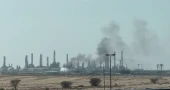
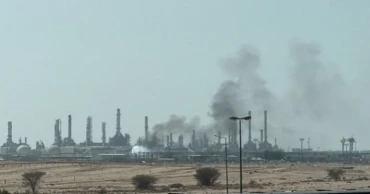
Yemen’s Houthi rebels claimed to have launched a combined ballistic missile and drone attack on a major Saudi Aramco oil refinery near Riyadh on Saturday, causing fires at the facility.
Footage from the scene showed flames and thick plumes of smoke rising from the refinery as firefighters worked to contain the blaze. Neither Saudi authorities nor Aramco have issued an official statement regarding the cause of the fire.
Houthi military spokesman Yahya Saree stated on X (formerly Twitter) that the strike was carried out in retaliation for approximately 60 Saudi air raids launched over the past 24 hours against Houthi-controlled territories, including the capital, Sanaa.
Meanwhile, forces aligned with Yemen's internationally recognized government announced a massive military offensive against Houthi positions.
Brigadier General Majid Abdullah Al-Nuzaili, spokesman for the Yemeni military, confirmed on X that government forces executed 97 "precision operations" across the Al-Tawwahi front in Taiz province and the Al-Baha district in Lahij province. Utilizing aircraft, drones, artillery, missiles, and snipers, the operations neutralized at least 260 Houthi fighters and destroyed numerous military and supply vehicles.
The announcement followed earlier strikes by government-aligned forces targeting Houthi strongholds across Sanaa, Midi, Baqim, al-Jawf, Marib, Al Bayda, Lahij, and Taiz. Military officials claimed those combined air, artillery, and missile attacks resulted in more than 700 Houthi casualties.
The battlefield claims could not be independently verified.
Source: Al Jazeera
18 days ago

Houthis say they will not attack US vessels in Red Sea
Yemen’s Iran-backed Houthi rebels have assured the administration of US President Donald Trump that they will not attack US vessels in the Red Sea, a senior Houthi official said Sunday.
However, the official warned other countries against joining Saudi Arabia in Yemen’s renewed civil war.
The comments came after the Houthis fired a ballistic missile toward Saudi Arabia’s capital over the weekend.
Meanwhile, Iran’s foreign minister is set to stop in Qatar before traveling to New York for the United Nations General Assembly. CIA Director John Ratcliffe also visited Egypt and met President Abdel-Fattah el-Sissi.
In the occupied West Bank, an Israeli man was shot dead, while Israeli forces said they killed a Palestinian man who tried to ram his vehicle into soldiers.
Houthi official warns countries against joining Yemen conflict
Mohamed al-Bukhaiti, a member of the Houthis’ political bureau, told The Associated Press that Washington contacted the group after its forces advanced rapidly along Yemen’s western coast toward the Bab el-Mandeb Strait earlier this month.
He said the Houthis had assured the US that they were not targeting American vessels or ships from other countries in the strait, except those linked to Saudi Arabia.
“We confirmed that we are not targeting the United States, or any other nation, in the strait, with the sole exception of the Saudi enemy,” al-Bukhaiti said in a Zoom interview from Sanaa, which is controlled by the Houthis.
Iran’s foreign minister to stop in Qatar
Iranian Foreign Minister Abbas Araghchi will make a brief stop in Qatar before traveling to New York for the UN General Assembly, state-run IRNA reported.
Iran says it is waiting for a US response to conditions it conveyed through Qatar for ending the war.
Iran’s Supreme National Security Council chief Mohsen Rezaei told Al Jazeera that the conditions include ending the war on all fronts, releasing Iranian assets seized by the US and lifting the US naval blockade of Iranian ports.
Araghchi and President Masoud Pezeshkian are among senior Iranian officials granted US visas to attend the UN gathering.
CIA chief meets Egyptian president
CIA Director John Ratcliffe visited Egypt and met President Abdel-Fattah el-Sissi, according to the Egyptian president’s office.
El-Sissi expressed support for efforts to resolve the Iranian crisis and ensure freedom of navigation, while rejecting attacks against Arab countries.
He also called for the full implementation of the second phase of the US ceasefire plan for Gaza. Egypt has played a key role in mediating between the sides and shares a border with Gaza.
Israeli man killed in West Bank
A 30-year-old Israeli man was shot dead near the Neve Tzuf settlement north of Ramallah, hours before Yom Kippur, the holiest day in the Jewish calendar.
The Israeli military said the suspected attacker opened fire from a vehicle before fleeing on foot. Security forces later detained the suspect at a hospital, where he had gone for treatment after being wounded while fleeing.
The Samaria regional council identified the victim as Netanel Shakron, a settler who had been bathing at a spring ahead of Yom Kippur.
The United Nations said it was the second time this year that an Israeli civilian had been killed in a confrontation with a Palestinian in the West Bank.
Separately, the Israeli military said it killed a Palestinian man who attempted to ram soldiers at an intersection near Jenin in the northern West Bank. It said another man who was in the vehicle was being sought.
Prime Minister Benjamin Netanyahu condemned the attacks and instructed the military to expand its operations in the West Bank.
Tensions have risen sharply in the West Bank, where attacks by Israeli settlers against Palestinians have also increased. Earlier Sunday, Israeli troops conducted a major operation in the northern West Bank town of Al-Mughayyir. Palestinian officials said at least 28 people were detained.
Iran closes French-language center
Iranian authorities said they had closed a French-language center linked to the French Embassy in Tehran, accusing it of operating without a license and carrying out activities against national security.
Iran’s judiciary-run Mizan news agency said prosecutors ordered the closure after repeated warnings.
The agency alleged that the center used language courses as a cover for activities including identifying and building networks among Iranian elites and helping them leave the country. It did not provide evidence for the allegations.
The French Embassy did not immediately comment.
Six French nationals tried in Iraq over alleged IS links
Six French nationals have gone on trial in Iraq on suspicion of belonging to the Islamic State group, Iraqi judicial and security officials told AP.
The officials said the cases could require several legal proceedings before verdicts are issued. They spoke on condition of anonymity because they were not authorized to speak publicly.
The six are among 47 French nationals held in Iraq after being transferred from neighboring Syria earlier this year. They were among thousands of people suspected of having links to Islamic State.
1 month ago
A week after Houthis seize Red Sea city, rebels eye Yemen’s oil-rich east
A week after Iran-backed Houthi rebels swept along Yemen’s Red Sea coast, expanding their control toward a key maritime chokepoint and threatening Saudi Arabia’s oil exports, the group appears to be turning its attention to the country’s oil-rich east.
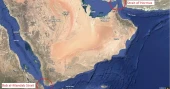
The Houthis’ biggest territorial expansion in years has reignited Yemen’s 12-year civil war and pushed global fuel prices higher. It has also provided Iran with another potential source of leverage as the United States has begun easing Tehran’s control over the Strait of Hormuz, located on the other side of the Arabian Peninsula.
The Houthis have also launched attacks on Saudi oil facilities and tankers. An attack on Saudi Arabia’s East-West Pipeline, blamed on Iran-backed militias in Iraq, has added to the kingdom’s security concerns and unsettled global markets.
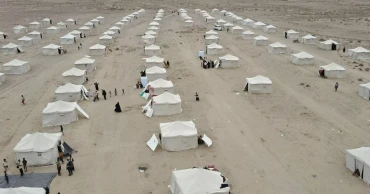
The rebel offensive has forced about 125,000 Yemenis to flee their homes. More than 150,000 people have been killed in the civil war, which has at times pushed Yemen close to famine.
The rebels now appear to be targeting Yemen’s oil-rich eastern regions. Standing in their way are the Saudi-backed government and various armed groups that were still fighting each other as recently as January. Saudi Arabia’s most important ally, the United States, appears to be staying out of the conflict for now.
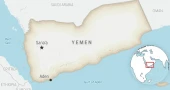
Houthis fighting on several frontsThe Houthis captured the important Red Sea port city of Mokha before seizing several islands near the narrow Bab el-Mandeb Strait, through which about 12% of global trade passes during peacetime.
The rebels are also only 32 kilometres (20 miles) from Djibouti, a small African country that hosts US and other foreign military bases.
The Houthis launched their first major advance from their northern stronghold in 2014, capturing the capital Sanaa and large parts of northern Yemen. Saudi Arabia intervened the following year, and fighting continued until a ceasefire in 2022.
Heavy fighting has been reported in recent days in and around Marib, a central city in an oil-rich province of the same name. Previous Houthi offensives failed to capture the city, which is also a major military base for Saudi-backed forces.
The Houthis are also threatening Taiz, a western city that has remained a major front line throughout much of the conflict.
Pressure grows on the world’s largest oil exporterThe Houthis want Saudi Arabia to end a long-running blockade on areas under their control.
“It is Saudi Arabia that closed the Bab el-Mandeb strait to shipping traffic to and from Yemen and imposed an unjust blockade on the country,” Mohammed al-Bukhaiti, a member of the Houthi political bureau, told The Associated Press.
Saudi Arabia and its allies have struggled for years to contain or deter the Houthis and could consider a diplomatic solution to stop the attacks. Such a move could eventually require concessions from the United States to Iran, the only country considered to have significant influence over the Houthis.
The United States bombed Houthi targets under both the Biden and Trump administrations but has shown little interest in intervening this time. The Houthis also appear keen to avoid drawing the US into the conflict, saying they are targeting only Saudi-linked shipping.
Red Sea shipping traffic recovers for nowShipping company Windward reported that daily traffic through the Bab el-Mandeb Strait fell from 35 crossings before the Houthi advance to 25 afterward. However, traffic has since recovered, reaching 45 crossings on Sunday.
The Houthis could still broaden their targets beyond Saudi ships and tankers. During their self-declared blockade of Israel at the height of the Gaza war, the rebels attacked ships in the Red Sea that had no known connection to the conflict.
“At the moment, their focus is on Saudi-linked shipping,” said Valentin d’Hauthuille, a Middle East analyst at conflict monitor ACLED.
However, he said the Houthis could “extend the criteria according to which vessels are assessed to be ‘Saudi-linked’ to increase pressure on both Saudi and the global economy.”
Diplomatic efforts underway, but challenges remainRegional mediators have begun efforts to ease tensions, but a diplomatic agreement appears unlikely without progress in the wider conflict involving Iran.
Iran wants the United States to lift a blockade and sanctions that have severely damaged its economy. Washington, meanwhile, wants the Strait of Hormuz fully reopened and seeks an agreement to limit Iran’s nuclear programme.
Neither side has shown signs of changing its position since a preliminary agreement collapsed over the summer.
Oman hosted a meeting between US and Houthi representatives last weekend, according to a Houthi official and another person familiar with the talks who spoke to AP this week. They requested anonymity because they were not authorised to speak publicly about the meeting.
The United States says it has remained in “constant contact” with Saudi Arabia, a close ally that receives billions of dollars in American military assistance.
Saudi Crown Prince Mohammed bin Salman recently visited Egypt, which has played a role in regional mediation. A Turkish government official said this week that Ankara was also holding talks with Iran and the United Arab Emirates to try to reduce tensions.
The Houthi attacks are the first major test of a new defence pact involving Saudi Arabia, NATO member Turkey and nuclear-armed Pakistan. However, officials from Turkey and Pakistan said they have not received a request from Saudi Arabia for military assistance.
Humanitarian crisis deepensThe latest fighting has killed eight civilians and wounded 32 others, according to the UN humanitarian office, which estimates that about 125,000 people have been displaced.
The Health Ministry of the Saudi-backed government says the Houthis have killed about 150 civilians since Sept 3.
Saudi Arabia said Thursday that debris from a Houthi drone intercepted over the kingdom killed one person and injured two others.
Yemen was already the poorest Arab country before the civil war. The conflict and Saudi-led blockade have contributed to widespread hunger in recent years.
The Houthis’ detention of UN and aid workers has also disrupted international assistance in areas under their control. Experts say the rebels have struggled to pay government employees, contributing to unrest, while much of the tax revenue they collect has been directed toward their military operations.
The UN humanitarian office, known as OCHA, said only 20% of its humanitarian appeal for Yemen has been funded. It warned that “millions risk losing access to food, healthcare, nutrition, water and protection services.”
“The needs are extremely high right now,” said Sara Ahmed, a supervisor with Doctors Without Borders in Mokha.
She said medical workers are operating in difficult conditions to keep essential services running while hearing airstrikes nearby.
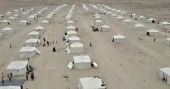
Mahida Ahmed fled the fighting in Mokha and is now staying at a displacement camp in Aden, where the Saudi-backed government is based.
She said she fled quickly with her children and left all her belongings behind, while her husband remains stranded in Mokha.
“This war has been completely devastating for us,” she said.
1 month ago

Fighting intensifies in Yemen as Houthis launch more attacks on Saudi Arabia
Fighting in Yemen intensified Sunday as government forces launched attacks on Iran-backed Houthi rebels along the Red Sea, while the Houthis fired missiles and drones toward neighboring Saudi Arabia, which supports Yemen’s government.
Yemen’s government said it would send more forces to the Red Sea coast after the Houthis captured the port city of Mokha and an island in the Bab el-Mandeb Strait last week. A senior official described the defeat as “painful.”
The Bab el-Mandeb is a key shipping route and an alternative to the Strait of Hormuz.
The escalation, particularly Houthi attacks on Saudi oil facilities and shipping in the Red Sea, is adding pressure on global oil supplies and prices and could give Iran greater leverage in its conflict with the United States.
As Yemen faces the risk of another civil war, the United Nations said more than 82,000 people had been displaced by fighting since the beginning of September.
A woman who fled the Red Sea town of Khawkha in Hodeida province shortly before it fell to the Houthis said a mortar shell landed nearby as she escaped during the night.
“I saw with my own eyes cars and buses burning, and bodies of children and women were lying on the road in a horrific scene,” she said. She spoke anonymously because of concerns for her and her family’s safety.
Houthis claim attacks on Saudi ArabiaSaudi authorities activated warning sirens Sunday afternoon in the southern city of Abha and Khamis Mushait province, urging residents to take shelter from possible incoming attacks. Both areas have been targeted by the Houthis several times in recent weeks.
Houthi military spokesperson Brig. Gen. Yahya Saree said the group had used drones and missiles to attack targets in Saudi Arabia, including a military base near the Yemeni border. He did not provide evidence or specify when the attack took place.
Saudi civil defense authorities said overnight that a projectile landed in another area near the Yemeni border along the Red Sea, injuring two people and damaging a mosque and several other buildings. Saudi authorities blamed the Houthis.
Saudi Arabia did not report any new attacks against Houthi positions.
The Houthis have been targeting Saudi oil facilities and shipping as part of a recently announced blockade. They have said, however, that they do not intend to target commercial shipping from other countries.
Yemen says more than 500 government fighters killedThe National Resistance, a government-allied force that had controlled parts of the western coast, said more than 500 government fighters had been killed there over the past four weeks. It was the group's first comprehensive casualty figure.
The force also claimed that more than 1,000 Houthis had been killed in Hodeida and Taiz provinces. A Houthi spokesperson did not respond to a request for comment.
More than 40 million people live in Yemen, where many fear a return to the civil war that began more than a decade ago. The conflict killed about 150,000 people and pushed millions toward famine. Yemen’s internationally recognized government and Saudi Arabia have fought the Houthis for years, although a ceasefire that began in 2022 largely halted the fighting.
A senior Yemeni government official said government forces would return to the Red Sea coast and fight back. Residents fleeing the Houthi advance told The Associated Press that they saw government forces withdrawing and telling civilians to flee.
Sultan al-Arada, a member of Yemen’s ruling Presidential Leadership Council, described the loss of Mokha and other areas along the western coast as “painful and regrettable.” In a televised interview late Saturday, he said government forces were regrouping and would return to the fighting.
Presidential council leader Rashad al-Alimi sought Sunday to play down the setbacks, calling them “incidental,” according to comments published by the state-run SABA news agency. He said the government remained committed to restoring state institutions and reclaiming sovereignty over all national territory.
The Yemeni military said Sunday that it carried out airstrikes on Houthi positions in Mokha, the coastal town of Dhubab and other areas of Taiz province. The Houthis reported attacks by Saudi-backed forces in Taiz and artillery shelling in Saada province, a Houthi stronghold near the Saudi border.
Houthi advance brings them closer to US base in DjiboutiThe Houthi advance has brought the group to within about 20 miles (32 kilometres) of a US military base in Djibouti, across the Bab el-Mandeb Strait.
The base is the main US military facility in Africa. Djibouti also hosts military bases operated by China, France and Japan.
The small Horn of Africa country is already receiving Yemenis fleeing the fighting across the dangerous waters. More than 2,000 Yemenis have arrived in Djibouti, the International Organization for Migration said Sunday.
Djibouti’s Economy and Finance Minister Ilyas M. Dawaleh said on X that the country’s navy, coast guard and other specialized agencies were carrying out rescue operations and providing emergency assistance.
Displaced Yemenis fear for their futureThe UN migration agency said more than 82,000 people had been displaced across Yemen since the start of September.
“The displaced people are in a very bad condition,” said Ahmad al-Masawi, director of the Al Salam camp in Aden. He appealed to international organizations for help.
“They left their homes quickly without any clothing or anything. They are crammed in camps, houses and even on roads,” he said.
Hussein Haydara sat outside a shelter at the camp while his children waited to be assigned a tent. He said he was worried about the shelter’s distance from schools, hospitals and markets and questioned how his family would survive in the coming weeks and months.
Haydara had previously fled his home in Hodeida when the Houthis took control of the area in 2015. But he said the latest displacement was more difficult.
“With the first displacement, we had time to plan things, but this time we were forced to escape all of a sudden. One could hardly take their children and the lightest stuff possible,” he said.
1 month ago
Saudi Arabia, Houthis trade strikes over Bab al-Mandeb
Saudi Arabia and Yemen’s Iran-backed Houthi forces have traded strikes as fighting intensifies around the strategic Bab al-Mandeb chokepoint on Yemen’s Red Sea coast.
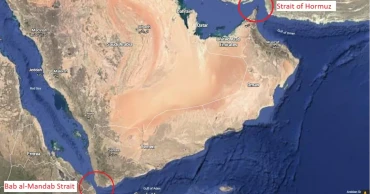
The escalation comes as Houthi forces have seized Mayun Island, also known as Perim, giving the group a strategic position in the Bab al-Mandeb Strait and strengthening its control over Yemen’s Red Sea coastline.
US President Donald Trump said the Houthis had contacted Washington and asked it not to intervene in the conflict involving Yemen’s internationally recognized government.
The developments came amid wider regional tensions after Iraq temporarily closed three border crossings with Iran following a drone attack launched from Iraqi territory that targeted Saudi Arabia’s East-West oil pipeline.
Saudi Arabia suspended the pipeline as a precaution and has so far held off on an immediate response.
Meanwhile, Iran is expected to meet Gulf states in Oman on Monday to discuss the Strait of Hormuz and efforts to promote regional security.
Houthis gain strategic foothold
Mayun Island, a 13-square-kilometre volcanic island in the middle of the Bab al-Mandeb Strait, divides the waterway into two channels and overlooks one of the world’s most important maritime routes.
The Houthis also control nearby coastal areas, including the port city of Mocha, strengthening their ability to threaten shipping through the strategic waterway.
Security analyst Wolfgang Pusztai told Al Jazeera that the Houthis now have “the real capability to shut down any maritime traffic through Bab al-Mandeb if they want to”.
However, maintaining control of the island could prove more difficult than capturing it.
Andreas Krieg of King’s College London said the Houthis are in a strong position to defend Mayun in the short term because of their control of nearby territory, but the island could be difficult to defend against an amphibious assault over a longer period.
The Bab al-Mandeb is a major global shipping route connecting the Red Sea with the Gulf of Aden, making control of the waterway strategically important for regional powers and international trade.
1 month ago
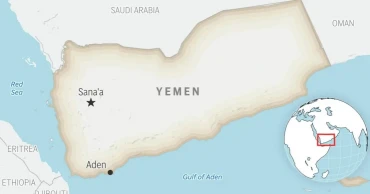
Yemen army attacks Houthis as UN warns of renewed conflict
Yemen’s military has launched attacks on Iran-backed Houthi rebels, prompting a warning from the United Nations that the country faces a growing risk of renewed large-scale fighting.
Meanwhile, Turkey’s parliament has taken an important step toward a proposed peace process with Kurdish militants.
Yemen strikes Houthi positionsYemen’s military said it carried out attacks against Houthi positions in response to recent strikes by the rebels in central and eastern parts of the country.
Col. Majed al-Nazili, a spokesperson for the Yemeni military, said the attacks targeted Houthi “sites and capabilities” along several front lines, without providing further details.
He said the operation was intended to protect the military and defend its positions, marking a significant escalation since a 2022 truce largely brought the fighting to a halt.
Yemen’s long-running civil war pits the Iran-backed Houthis against a Saudi-led coalition supporting the country’s internationally recognized government.
UN envoy Hans Grundberg on Friday called on all sides to show restraint.
“Yemen today faces a greater risk of renewed large-scale conflict than at any point since the UN-brokered truce of April 2022,” he said in a statement.
Turkey’s Kurdish peace bill advancesIn Turkey, a parliamentary committee approved a draft law on Saturday aimed at supporting a peace process with Kurdish militants.
The bill includes measures that could provide conditional relief from prison sentences for thousands of former members of the Kurdistan Workers’ Party, or PKK.
The PKK announced last year that it would disarm and dissolve as part of an initiative aimed at ending its decades-long conflict with the Turkish state.
The proposed law sets out procedures for the group’s disarmament and measures to help reintegrate some of its members. It would suspend certain prison sentences for people convicted of belonging to the PKK and delay legal proceedings against others.
The measures would take effect after Turkey’s National Security Council confirms that the PKK has dissolved and surrendered its weapons.
The bill is expected to be debated and voted on by the full parliament early next week.
The conflict between Turkey and the PKK has killed tens of thousands of people since the 1980s and has also spread into neighboring Iraq and Syria.
Turkey and its Western allies classify the PKK as a terrorist organization.
2 months ago
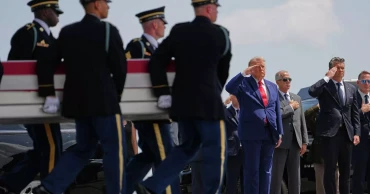
Houthis claim attacks on two Saudi oil tankers as US continues strikes on Iran
Yemen's Iran-backed Houthi rebels said early Thursday they attacked two Saudi oil tankers in the Red Sea, while the United States carried out a 12th consecutive night of airstrikes on Iran, further escalating tensions in the region.
The latest developments have raised fears of a wider conflict that could further disrupt global shipping and energy supplies, with no signs of progress in diplomatic efforts to ease the crisis.
The US Central Command (CENTCOM) said the overnight strikes were aimed at weakening Iran's ability to threaten commercial shipping and civilian vessels in regional waters as Washington seeks to restore safe navigation through the Strait of Hormuz.
Earlier on Wednesday, President Donald Trump warned that the US would target one Iranian bridge or power plant every time Iran attacked a ship in the Strait of Hormuz.
"From this point forward, any time the Islamic Republic of Iran shoots at a ship in the Strait of Hormuz... the United States will bomb and destroy one bridge or power plant," Trump wrote on social media.
US Secretary of State Marco Rubio, speaking at a regional summit in the Philippines, said Iran had expressed interest in negotiations but questioned its willingness to honour any agreement.
"The problem is making a deal with people who don't keep their commitments," Rubio said.
Houthis claim tanker attacksThe Houthi-run SABA news agency said the rebels targeted the Saudi-linked oil tankers Encelia and Layla in the Red Sea, claiming both vessels caught fire.
If confirmed, the attacks would be the Houthis' first reported strike on commercial ships since they announced a blockade of Saudi-linked shipping through the Bab el-Mandeb Strait earlier this week.
The group said the move was in retaliation for Saudi Arabia's blockade of Houthi-controlled areas in Yemen and a recent attack on Sanaa's international airport.
Bab el-Mandeb is one of the world's busiest maritime routes, linking the Red Sea with the Gulf of Aden. Around 12% of global trade, including roughly one-quarter of the world's container shipping, passes through the waterway.
A senior Houthi official said the blockade would continue until Saudi Arabia lifted its restrictions on Yemen.
Saudi Arabia's state news agency confirmed that the tanker Encelia was attacked and caught fire while sailing in the Red Sea, but said there were no casualties. It did not mention the Layla.
The UK Maritime Trade Operations (UKMTO) also reported that a tanker had been struck by an unidentified projectile southwest of Saudi Arabia's Al Shuqaiq area. No casualties were reported.
Rubio urged the Houthis to avoid further escalation, saying continued attacks would only worsen the situation.
Strait of Hormuz tensions continueThe US air campaign comes as tensions remain high over the Strait of Hormuz, one of the world's most important oil shipping routes.
The waterway, through which about one-fifth of globally traded oil and gas normally passes, has been severely disrupted by the conflict.
Iran says it has the right to regulate shipping through the strait and has targeted vessels using routes protected by US forces.
In response, Washington has tightened its blockade on Iranian ports and expanded military operations across Iran.
Trump also indicated this week that US forces could target an Iranian nuclear facility currently under construction.
Iranian Parliament Speaker Mohammad Bagher Qalibaf dismissed the US threats, saying conditions in the Strait of Hormuz would not return to how they were before the conflict.
Overnight strikes and regional concernsIranian state media reported that US missiles hit areas near Ahvaz, Ramshir and Andimeshk in western Iran overnight. Two people were reportedly killed in a strike near the Iraqi border town of Shalamcheh.
Iran has responded to US attacks by targeting energy facilities and desalination plants in neighbouring Gulf countries.
Kuwait's military said its air defence systems intercepted hostile drones, while Iranian Foreign Minister Seyed Abbas Araghchi warned that Tehran would respond forcefully to any further attacks.
"Any aggression against Iran, including our infrastructure, will receive a strong and decisive response," he wrote on X.
Diplomatic efforts remain stalledIranian Interior Minister Eskandar Momeni recently held talks in Pakistan, which has been trying to mediate between the parties, but there has been little indication of any diplomatic breakthrough.
Pakistan's Prime Minister Shehbaz Sharif strongly condemned the attacks on the Saudi oil tankers.
Meanwhile, Iran's Interior Ministry said diplomatic contacts were continuing despite the ongoing fighting.
An Arab diplomat, speaking anonymously, said Gulf countries were becoming increasingly pessimistic about the chances of reducing tensions and remained deeply concerned about the latest escalation in the region.
2 months ago

Houthis announce maritime embargo on Saudi shipping through Bab al-Mandeb
Yemen's Iran-backed Houthi rebels have announced a maritime embargo against Saudi Arabia, threatening to block Saudi shipping through the strategic Bab al-Mandeb Strait in retaliation for what they described as Riyadh's blockade of Yemen and a recent attack on Sanaa International Airport.
Houthi military spokesperson Yahya Saree said in a televised statement on Monday that the embargo would take effect immediately, calling the move an “eye for an eye” response.
The group did not provide details on how the restrictions would be enforced. However, Nasruddin Amer, deputy head of the Houthi media office, said on social media platform X that the Bab al-Mandeb Strait would be closed to Saudi shipping in response to what he described as Saudi Arabia’s decade-long blockade of Yemen.
The Bab al-Mandeb Strait, located at the southern entrance to the Red Sea, is one of the world's most important maritime chokepoints. Around 12 percent of global trade passes through the waterway, while roughly one-quarter of the world's container traffic transits the narrow passage en route to and from the Suez Canal.
The announcement has raised concerns over renewed disruption to international shipping in the region.
The Houthis previously demonstrated their ability to disrupt maritime traffic by launching attacks on commercial vessels during the Israel-Hamas war in Gaza. More than 100 ships were targeted in a campaign that significantly affected trade through the Red Sea.
It remains unclear whether the group intends to launch a similar campaign against Saudi-linked vessels.
Saudi Arabia's military said it would continue to ensure freedom of navigation through the waterway.
Saudi military spokesperson Maj. Gen. Turki al-Malki said any threats against vessels transiting the Bab al-Mandeb would be dealt with "swiftly and firmly," describing such actions as a clear violation of international law and an act of maritime piracy.
3 months ago
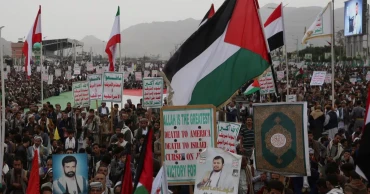
Israel strikes Houthis in Yemen; rebels fire missile back
Israel carried out airstrikes early Monday targeting ports and facilities held by Yemen’s Houthi rebels, prompting the group to retaliate with missile fire aimed at Israel, officials said.
The escalation follows an attack Sunday on the Liberian-flagged bulk carrier Magic Seas in the Red Sea, which caught fire and took on water, eventually forcing its crew to abandon the vessel.
The Magic Seas, owned by Greek interests, was reportedly struck by bomb-laden drone boats after an initial assault involving small arms fire and rocket-propelled grenades. Although Houthi media reported on the incident, the rebels have yet to claim responsibility. Their confirmation of attacks often comes hours or days later.
A renewed Houthi campaign against shipping in the Red Sea could draw US and Western forces back into the conflict, especially after President Donald Trump launched a major airstrike campaign against the rebels earlier this year.
The attack also comes amid heightened tensions in the Middle East, as negotiations for a ceasefire in the Israel-Hamas war remain uncertain and Iran considers whether to resume nuclear talks following recent American airstrikes on its nuclear sites. Israeli Prime Minister Benjamin Netanyahu is also traveling to Washington to meet with Trump.
Israel strikes Houthi-held ports and seized ship
The Israeli military confirmed that it had struck ports under Houthi control, including Hodeida, Ras Isa, Salif, and the Ras Kanatib power plant.
“These ports are used by the Houthi terrorist regime to transfer weapons from the Iranian regime, which is employed to carry out terrorist operations against the state of Israel and its allies,” the Israeli military said.
Israel also targeted the Galaxy Leader, a vehicle-carrying ship seized by the Houthis in November 2023 at the start of their Red Sea attacks linked to the Israel-Hamas war.
“Houthi forces installed a radar system on the ship and have been using it to track vessels in the international maritime arena to facilitate further terrorist activities,” the Israeli military said.
The Galaxy Leader, which sails under a Bahamian flag, is linked to an Israeli billionaire. No Israelis were on board at the time of its seizure, and the ship was operated by Japanese firm NYK Line.
The Houthis acknowledged Israel's strikes but did not provide details on the damage. Rebel military spokesperson Brig. Gen. Yahya Saree claimed that Houthi air defenses “effectively confronted” the Israeli attacks, though no evidence was provided.
Israel has launched multiple strikes on Houthi targets in Yemen, including a naval strike last month. While both Israel and the United States have targeted Houthi-controlled ports in the past — including a US strike in April that killed 74 people — Israel is now operating independently as the rebels continue to target Israel with missiles.
Israeli Defense Minister Israel Katz warned of more strikes if Houthi attacks continue.
“What’s true for Iran is true for Yemen,” Katz said. “Anyone who raises a hand against Israel will have it cut off. The Houthis will continue to pay a heavy price for their actions.”
Turkey sends firefighting planes to Syria as raging wildfires devastate border regions
Houthis retaliate with missile strike on Israel
Following the Israeli strikes, the Houthis fired a missile at Israel. The Israeli military said it attempted to intercept the missile, but it appeared to make impact. No casualties or significant damage were immediately reported. Sirens were activated in the West Bank and along the Dead Sea.
Crew abandons stricken vessel after Houthi attack
The attack on the Magic Seas, which was en route to Egypt's Suez Canal, occurred about 100 kilometers southwest of Hodeida, a port city under Houthi control.
According to the UK’s Maritime Trade Operations center, an armed security team aboard the ship initially repelled gunfire and rocket-propelled grenade attacks. However, the vessel was later hit by additional projectiles.
Private maritime security firm Ambrey said eight skiffs attacked the vessel before bomb-laden drone boats struck it. Two drone boats reportedly hit the ship, while armed guards destroyed two others.
The Maritime Trade Operations center confirmed that the ship was taking on water and its crew abandoned it. They were rescued by a passing vessel.
The U.S. Navy’s 5th Fleet referred questions to Central Command, which acknowledged awareness of the incident but provided no further details.
Yemen's exiled government blamed the Houthis for the attack.
“The attack also proves once again that the Houthis are merely a front for an Iranian scheme using Yemen as a platform to undermine regional and global stability, at a time when Tehran continues to arm the militia and provide it with military technology, including missiles, aircraft, drones, and sea mines,” Yemen’s Information Minister Moammar al-Eryani said on social media platform X.
The ship’s owners have not commented on the incident.
Houthi campaign linked to Israel-Hamas conflict
The Houthis have repeatedly launched missile and drone attacks on commercial and military vessels in the Red Sea in response to Israel’s military operations in Gaza.
The group’s al-Masirah satellite channel acknowledged the latest ship attack but provided no further comment. Ambrey noted that the Magic Seas fits the Houthis’ typical target profile but did not elaborate.
Between November 2023 and January 2025, the Houthis have attacked over 100 merchant ships using missiles and drones, sinking two vessels and killing four sailors. Their campaign has severely disrupted Red Sea trade, through which $1 trillion in goods normally passes each year.
While Red Sea shipping has recently increased, the Houthis had paused maritime attacks until the US launched airstrikes against them in March. That campaign ended weeks later, though the Houthis have continued occasional missile attacks on Israel.
On Sunday, the Houthis claimed to have launched another missile toward Israel, which the Israeli military said it successfully intercepted.
1 year ago

Trump says US will stop bombing Yemen's Houthis
President Donald Trump said Tuesday that he's ordering a halt to nearly two months of US airstrikes on Yemen's Houthis, saying that the Iran-backed rebels have indicated that “they don’t want to fight anymore” and have pledged to stop attacking ships along a vital maritime corridor.
“We’re going to stop the bombing of the Houthis, effective immediately,” Trump said at the start of his Oval Office meeting with Canadian Prime Minister Mark Carney, AP reports.
Trump said that the Houthis had indicated to US officials that "they don't want to fight anymore. They just don't want to fight. And we will honour that, and we will stop the bombings.”
That likely means an abrupt end to a bombing campaign that began in March, when Trump promised to use “overwhelming lethal force” after the Houthis said they would resume attacks on Israeli vessels sailing off Yemen in response to Israel's mounting another blockade on the Gaza Strip.
At the time, they described the warning as affecting the Red Sea, the Gulf of Aden, the Bab el-Mandeb Strait and the Arabian Sea.
Trump said the Houthis had "capitulated but, more importantly, we will take their word that they say they will not be blowing up ships anymore. And that's what the purpose of what we were doing,” Trump said.
“I think that's very positive," Trump added. "They were knocking out a lot of ships."
Asked how the Houthis had communicated that they were looking to stop being targeted by US bombs, Trump offered few details, saying only with a chuckle that the information came from a “very good source.”
Ukraine drone attacks briefly shut down Moscow's international airports
A short time later, Omani Foreign Minister Badr al-Busaidi, confirmed that the US bombing campaign was ending, posting on X that discussions involving the US and Oman, as well as negotiators in Yemen, “have resulted in a ceasefire agreement between the two sides.”
“In the future, neither side will target the other, including American vessels, in the Red Sea and Bab al-Mandab Strait, ensuring freedom of navigation and the smooth flow of international commercial shipping,” he wrote, calling the agreement a “welcome outcome.”
The broad-based missile strikes Trump had ordered were similar to ones carried out against the Houthis multiple times by the administration of his predecessor, President Joe Biden, in response to frequent attacks against commercial and military vessels in the region.
1 year ago