US
US announces new travel restrictions on South African officials
The Trump administration has announced new travel restrictions on South African officials it accuses of supporting discrimination against white people and other minority groups.
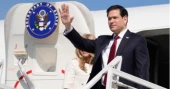
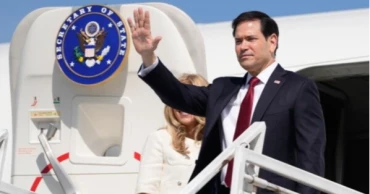
US Secretary of State Marco Rubio said Tuesday that the United States would revoke visas or reject visa applications from foreign nationals found responsible for or involved in enforcing laws and policies that permit uncompensated land seizures, racial discrimination or incitement of violence against minority ethnic and racial groups in South Africa.
"The United States will not allow such behavior to go unchecked," Rubio said in a statement, adding that such actions undermine peace, economic stability and the rule of law and conflict with the principles of US foreign policy.
The South African government has strongly rejected the US allegations, describing claims of discrimination against whites as baseless and saying they have resulted from misinformation since US President Donald Trump returned to office last year.
Rubio did not name any officials who could face the restrictions. However, a South African lobby group representing white minorities has previously urged the US to sanction officials from the African National Congress (ANC), the party of President Cyril Ramaphosa and the largest party in Parliament.
The announcement is the latest step by the Trump administration against South Africa over its claims that white South Africans, particularly Afrikaners, face discrimination under the country's Black-led government.
Afrikaners are largely descended from Dutch and French settlers who arrived in South Africa in the 17th century. They were central to the country's former apartheid system of racial segregation.
South Africa has a population of about 62 million, including roughly 4.5 million white people of Afrikaner, British and other backgrounds.
The United States has pointed to a controversial South African law allowing the government, under certain conditions, to expropriate unused private land without compensation. Washington has also cited affirmative action policies aimed at expanding opportunities for Black South Africans and others, as well as a small number of violent crimes against white farmers, as evidence of what it describes as broader anti-white discrimination.
The Trump administration has also criticized South Africa's decision to accuse Israel of genocide against Palestinians in Gaza before the International Court of Justice, the UN's highest court. Israel strongly denies the allegation.
During Trump's second term, the United States has imposed several other measures against South Africa over what it describes as anti-white and anti-American policies. These include excluding South African officials from meetings of the Group of 20 major economies held in the United States this year and reducing aid to the country's HIV treatment program.
The United States has also introduced a refugee program for Afrikaners and other white South Africans, claiming they face a humanitarian emergency in the country. South Africa has rejected that characterization.
Washington says the latest measures are necessary because South Africa has not changed its policies.
"This visa restriction policy is only the first step in a series of escalatory measures that will show America's firm resolve in this matter," the official US ambassador to South Africa account said on X on Wednesday, referring to Rubio's announcement.
4 days ago
US confirms deployment of weapons in space for first time
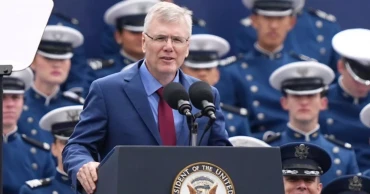
The United States has acknowledged for the first time that it has deployed weapons in space, a significant disclosure following years of warnings about the possibility of countries such as Russia placing weapons in orbit.
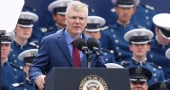
US Air Force Secretary Troy Meink said Monday that the United States has deployed "on-orbit space control weapons" capable of protecting the Joint Force from hostile actions by adversaries.
Meink did not provide details about the weapons, how they operate or whether they are designed to target objects in space or on Earth.
The United States warned two years ago that Russia was developing a new space-based anti-satellite weapon, although the White House said at the time that there was no immediate threat.
The reports renewed longstanding concerns about space-based threats from Russia and China, particularly because much of the US infrastructure depends on satellite communications. The United States has also previously demonstrated its ability to destroy satellites from the ground.
Speaking at the Air and Space Forces Association's Air, Space & Cyber Conference, Meink said the Air Force was expanding its use of autonomous systems and predicted that the service would look "radically different" by 2032.
He said, for example, that one-way attack drones could replace artillery as the "primary killer."
"We are increasing readiness against existing threats," Meink said.
The disclosure comes as the Trump administration places greater emphasis on space-based military capabilities.
During Trump's first term, in 2019, he established the Space Force as a separate branch of the US military. In his second term, he has announced the "Golden Dome" missile defense system, which includes plans to deploy US weapons in space.
Trump said last year that he expected the system to be "fully operational before the end of my term," which ends in January 2029. He said it would be capable of intercepting missiles "even if they are launched from space."
He also ordered the Pentagon during the first week of his presidency to pursue space-based missile interceptors.
The Congressional Budget Office has estimated that the space-based components of the Golden Dome alone could cost as much as $542 billion over 20 years.
In 2024, the Biden administration said Russia was developing a space-based nuclear weapon capable of remaining in orbit for long periods before releasing a burst powerful enough to destroy nearby satellites.
The disclosure sparked renewed debate at the United Nations over weapons in space.
In April 2024, Russia vetoed a US-Japanese resolution calling on countries not to develop or deploy nuclear weapons or other weapons of mass destruction in space. Such weapons are prohibited under a 1967 international treaty signed by both the United States and Russia.
The treaty also established outer space as a global commons to be used only for peaceful purposes.
Russia's delegation described the resolution as hypocritical and a double standard. Moscow instead proposed a separate resolution calling for a ban on all weapons in space "for all time," but it failed to pass.
Russia has argued that the United States and its allies oppose a complete ban on weapons in outer space because they intend to deploy weapons there.
4 days ago

Most US men unaware of possible link between dairy and prostate cancer risk
Most US men may be unaware of a possible link between dairy consumption and prostate cancer, according to a new survey released during Prostate Cancer Awareness Month.
Only 20% of the men surveyed knew that consuming milk and other dairy products may increase the risk of prostate cancer. After being informed about the potential risk, 66% said they would be likely to avoid dairy products.
The survey, conducted by Morning Consult for the Physicians Committee for Responsible Medicine, included 1,102 US men. It also found that only 20% had received information from a healthcare professional about the relationship between diet and prostate cancer risk.
“Physicians and other healthcare professionals need more education on the dangers of dairy products and the benefits of a plant-based diet for prostate cancer,” said Noah Praamsma, a dietitian and nutrition education coordinator with the Physicians Committee for Responsible Medicine.
Studies link dairy consumption to prostate cancer riskPrevious studies have found an association between higher consumption of dairy products, including milk and cheese, and a greater risk of prostate cancer. A review of 32 studies found evidence of increased risk among people who consumed larger amounts of dairy products.
One study found that people who drank at least one serving of skim or low-fat milk daily had a 19% higher risk of prostate cancer than those who rarely drank it.
Another study followed 3,612 men for eight to 10 years. It found that men who consumed the most low-fat dairy products — about three servings a day — were more than twice as likely to develop prostate cancer.
The survey also found strong support for clearer food labeling. About 76% of respondents said they favored warning labels on dairy products informing consumers about the potential prostate cancer risk.
Plant-based diets may offer protectionPraamsma said most men surveyed already understood that fruits, vegetables, grains and beans may help protect against prostate cancer.
He said research suggests that a fully plant-based diet may provide the greatest benefits.
The Adventist Health Study-2 found that men following a vegan diet had a 35% lower risk of prostate cancer compared with men following nonvegetarian or other vegetarian diets.
Plant-based diets may also benefit men who have already been diagnosed with prostate cancer. A study of more than 2,000 men with the disease found that those who ate the most plant-based foods had a 56% lower risk of the cancer progressing and a 59% lower risk of recurrence than those who consumed the fewest plant foods.
Prostate cancer remains a major health concernProstate cancer is the most common cancer among men in the United States and the second-leading cause of cancer deaths among men, according to the American Cancer Society's 2024 annual report.
The society estimates that 333,830 new prostate cancer cases will be diagnosed in the United States in 2026, while 36,320 people are expected to die from the disease.
Source: Science Daily
6 days ago
US, South Korea, Japan to hold trilateral military drill amid North Korean tensions
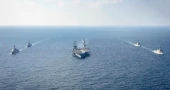
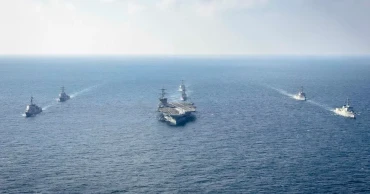
The United States, South Korea and Japan will hold a five-day trilateral military exercise next month as they seek to strengthen their response to North Korea’s nuclear and missile threats, South Korean officials said Friday.
The announcement came a day after North Korea warned that it would take “serious, immediate and powerful” action against what it described as hostile moves by the United States.
The planned exercise could further reduce the chances of an early restart of talks between Washington and Pyongyang, despite US President Donald Trump’s recent decision to reduce the scale of a major military exercise with South Korea.
South Korea’s military said the Freedom Edge exercise will begin September 7 in waters near the southern island of Jeju. It described the drill as defensive and said it aims to improve the three countries’ ability to respond to North Korean nuclear and missile threats while supporting regional peace and stability.
North Korea has repeatedly condemned the trilateral exercise, calling it a “reckless show of strength.” Pyongyang has also accused the US and its allies of using the drill to pressure China and Russia.
Launched in 2024, Freedom Edge combines air and naval exercises to improve cooperation in areas including ballistic missile defence, anti-submarine warfare and surveillance.
Last week, US and South Korean forces ended their annual Ulchi Freedom Shield exercise six days earlier than planned after Trump said he had ordered the Pentagon to “substantially reduce” the drill. North Korea considers such exercises preparations for an invasion.
Trump cited his relationship with North Korean leader Kim Jong Un when announcing the reduction. But Pyongyang rejected the gesture, saying shortening the exercise did not change its “provocative, aggressive nature.”
North Korea subsequently fired about 10 short-range ballistic missiles into the sea, apparently in response to the US-South Korean military exercise.
Pyongyang has said it will not return to talks with Washington unless the US drops its demand for North Korea to give up its nuclear weapons as a condition for negotiations.
Since talks with Trump broke down in 2019, Kim has expanded North Korea’s nuclear arsenal and strengthened ties with Russia amid the war in Ukraine. Experts say Pyongyang could now seek major concessions from Washington, including recognition as a nuclear-armed state and broad sanctions relief, in exchange for giving up part of its nuclear programme.
On Thursday, North Korea’s Foreign Ministry accused Washington of carrying out a series of hostile actions, including a possible plan to sell air-to-air missiles and related equipment to South Korea.
It warned that Pyongyang would respond strongly to what it called hostile acts in various areas.
23 days ago
Chinese foreign minister urges US, China to overcome obstacles ahead of summit
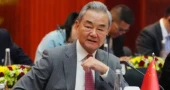
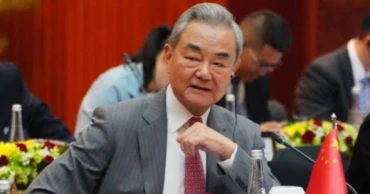
Chinese Foreign Minister Wang Yi has called on China and the United States to overcome their differences ahead of an expected summit next month between US President Donald Trump and Chinese President Xi Jinping.
Wang made the remarks during a meeting with US Ambassador to China David Perdue on Wednesday, according to China's state broadcaster CCTV.
He urged both sides to focus on areas of cooperation, properly manage their differences, reduce interference and clear obstacles to high-level exchanges between the two countries.
China-US relations still face "various risks and challenges," Wang said, according to CCTV.
Trump and Xi met in Beijing in May and agreed to keep bilateral ties stable and maintain a fragile trade truce. Trump invited Xi to visit the United States for a meeting on Sept 24, although the exact date of the Chinese president's visit has yet to be confirmed.
Despite the agreement, Washington and Beijing have continued taking targeted economic measures against each other. The United States has banned imports of newly manufactured Chinese humanoid robots, while China has restricted American entities involved in trade and other activities in the country.
Chinese Foreign Ministry spokesperson Lin Jian said at a regular press briefing Thursday that the two countries were continuing discussions on the leaders' planned meeting "within the year."
Tensions between the world's two largest economies rose sharply after Trump returned to the White House last year. At one point, the US said tariffs on Chinese goods could reach 145%, although the rates were later reduced significantly.
Tensions have eased in recent months, and the two leaders reached several agreements during their May meeting, including plans to establish trade and investment boards between the countries.
However, the Trump administration has been considering an additional 7.5% tariff on Chinese goods following a US investigation into excess industrial capacity and production in 16 economies. No final decision has been announced.
The US also said last month that it would impose a 12.5% tariff on China following an investigation into forced labour involving 60 economies.
China's Commerce Ministry said Thursday that Beijing "firmly opposes" the US investigation into excess capacity, accusing Washington of "politicizing economic and trade issues."
The ministry said China would closely monitor developments and "reserves the right to take all necessary measures" if required.
Last month, China also rejected Western criticism over its industrial overcapacity in a report titled "China's Position on the So-called Excess Capacity Issue," saying Beijing had never sought to maintain a large trade surplus.
24 days ago
Asian shares rise, South Korea’s Kospi jumps 6% after US expands debt buybacks
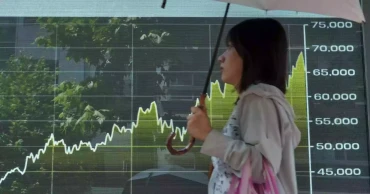
Asian shares rose Thursday, following gains on Wall Street, while South Korea’s benchmark Kospi jumped more than 6% after the US Treasury announced plans to significantly increase its purchases of longer-term government debt.
US stock futures also edged higher after the Treasury said it would at least double the size of its planned buybacks of longer-term government bonds.
The move could reduce pressure on stock markets from rising bond yields. Increased government bond purchases can push bond prices higher and, in turn, lower yields.
South Korea’s Kospi surged 6.1% to 6,858.91 after falling 5.8% on Wednesday as investors sold shares linked to artificial intelligence.
Samsung Electronics rose 9.7%, while SK Hynix, a major memory chipmaker, gained 14.1% after announcing a large share buyback programme.
Japan’s Nikkei 225 climbed 1.3% to 66,178.26, recovering from losses earlier in the week. Japan reported a trade deficit for the third consecutive month in July, with both imports and exports reaching record levels.
SoftBank Group, which has invested in OpenAI, gained 3.8%.
Hong Kong’s Hang Seng Index rose 1.1% to 25,786.32, while the Shanghai Composite gained 0.3% to 3,905.23.
Australia’s S&P/ASX 200 increased 0.3% to 9,066.40. Taiwan’s Taiex was little changed, while India’s Sensex gained 0.7%.
US government bond yields fell after the Treasury announced its expanded buyback plans. Bond prices and yields generally move in opposite directions.
The announcement appeared to ease investor concerns about rising borrowing costs. On Wednesday, the S&P 500 rose 0.2%, ending a three-day losing streak. The Dow Jones Industrial Average and Nasdaq composite each also gained 0.2%.
US bond yields have climbed in recent months amid concerns about inflation linked to the prolonged war in Iran, rising government debt and other economic pressures.
The yield on the 10-year US Treasury note fell to about 4.64%, down from 4.71% on Tuesday. However, it remains significantly higher than before the war in Iran began. The 30-year Treasury yield also declined to 5.18% from 5.28%.
Bond yields in Asia also eased following the US Treasury announcement. Japan’s 10-year government bond yield dropped to about 2.83% from above 2.89% on Wednesday. It had recently reached its highest level in about 30 years.
Oil prices edged higher Thursday as negotiations between the US and Iran showed little progress.
Brent crude, the international benchmark, rose 0.3% to $91.90 a barrel. It was trading at around $72 before the war began.
US benchmark crude gained 0.2% to $84.57 a barrel.
The US dollar rose to 158.60 Japanese yen from 158.16 yen. The euro was trading at $1.1676, slightly.
1 month ago

US to make visa bond programme permanent, raises maximum fee to $20,000
The United States will make permanent a visa bond programme requiring applicants from 50 countries, most of them in Africa, to pay a refundable bond before applying for certain US visas.
According to a draft notice published Friday in the Federal Register, the US State Department said a year-long review found the programme helped reduce visa overstays, prompting the decision to make it permanent from Monday.
The revised rules also raise the maximum bond amount from $15,000 to $20,000. The previous minimum bond of $5,000 has been removed, leaving bond amounts of $10,000 or $20,000, depending on the decision of a consular officer.
The programme applies to applicants seeking B1 business visas and B2 tourist visas.
The bond is refunded if the visa application is rejected or, if approved, once the traveller complies with all visa conditions and leaves the United States as required.
The Trump administration introduced the programme in August last year as part of broader efforts to reduce illegal immigration and prevent visitors from overstaying their visas.
The State Department said it costs the US government about $18,000 to locate, arrest and deport each person who remains in the country after their visa expires.
According to the department, nearly 45,500 visitors from the 50 affected countries overstayed their visas in 2024. During the first 10 months of the bond programme, fewer than 50 overstays were recorded from those countries.
US officials described the programme as successful in reducing visa violations.
However, critics argue that the policy places a heavy financial burden on people from low-income countries who want to travel to the United States for tourism, business, education or to visit family members.
The State Department had originally expected around 2,000 applicants to be affected by the programme. Instead, about 20,000 applicants were required to pay the bond.
Nearly half of those applicants decided not to proceed with their visa applications, contributing to an 83 percent drop in business and tourist visas issued to citizens of the affected countries.
The department said it expects the permanent programme to further reduce demand for B1 and B2 visas from countries covered by the policy.
1 month ago
US and Iran intensify Middle East strikes as bridges, port Infrastructure, water plant hit
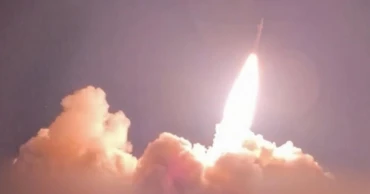
The United States and Iran stepped up their military campaign across the Middle East on Friday, exchanging attacks on key infrastructure and military sites as tensions over the Strait of Hormuz continued to escalate.
The United States broadened its offensive by striking additional bridges, energy facilities, and a surveillance tower at Iran’s strategic Chabahar port. The attacks align with President Donald Trump’s pledge to increase pressure on Tehran over its control of the Strait of Hormuz, a vital global shipping route for oil and gas.
Iran responded by launching missile attacks against U.S.-aligned countries, including Qatar and Kuwait. In Kuwait, a missile strike damaged a desalination plant, a critical source of the country’s drinking water, while Qatar reported injuries from falling debris after its air defenses intercepted incoming missiles.
After days of escalating exchanges, the conflict remains centered on control of the Strait of Hormuz. An earlier ceasefire has collapsed, leaving little indication that the war—now more than four months old—will end soon.
The U.S. Central Command (CENTCOM) said Friday’s operation marked the seventh consecutive night of strikes targeting Iran’s military infrastructure. According to the military, the attacks struck surveillance facilities, logistics hubs, underground weapons depots, and maritime assets.
Iranian officials said recent U.S. airstrikes have killed dozens of civilians and injured hundreds, while the U.S. military acknowledged additional injuries among American service members.
Early Saturday, Iran claimed two oil tankers exploded after entering a mined section of the Strait of Hormuz. The country offered no evidence, and CENTCOM rejected the allegation, calling it false.
Since the conflict began in late February, Iran has effectively restricted shipping through the strait, pushing global oil prices above $86 a barrel and significantly reducing maritime traffic. Shipping activity has fallen to its lowest level in three weeks, according to international tracking data.
In a televised address Thursday, President Trump said U.S. operations were succeeding and predicted the results would soon become evident. Before the war, Washington and Tehran had been negotiating over Iran’s nuclear program, but Trump now faces growing political pressure to end the conflict and avoid a prolonged military engagement.
Bridges and Power Infrastructure TargetedIranian state media reported that overnight U.S. airstrikes struck bridges in Hormozgan province, including routes connecting Bandar Abbas—Iran’s largest port—to the country’s interior. The attacks also affected Bandar Khamir along the Strait of Hormuz.
Iran’s Energy Ministry acknowledged attacks on electrical infrastructure for the first time, urging residents in southern provinces to conserve electricity during extreme summer temperatures, although officials did not specify the damaged facilities.
Authorities said at least 46 people have died and more than 400 have been injured in recent U.S. strikes, including eight fatalities in Friday’s bridge attack.
Meanwhile, the Pentagon confirmed 13 additional U.S. service members were wounded this week, bringing total American casualties since the war began to 14 killed and 427 injured.
Strategic Port Tower DestroyedFriday’s strikes also brought down a surveillance tower at Iran’s Chabahar port on the Gulf of Oman, an important commercial gateway serving Afghanistan and regional trade. Iranian officials described the structure as part of the port’s commercial operations, while CENTCOM said it supported Iran’s Revolutionary Guard by monitoring commercial shipping and identifying potential maritime targets.
Iranian media later reported explosions in several provinces, including Khuzestan, Fars, Yazd, and Hormozgan, though authorities provided few details.
Iran Expands Retaliatory AttacksIran broadened its retaliation by firing missiles toward Qatar, Bahrain, and Kuwait. Qatar activated air defenses twice, with one child reportedly injured by falling debris. Kuwait said a missile strike damaged a power and desalination facility, temporarily disrupting a key source of drinking water.
Kuwaiti officials also reported Iranian drone attacks on military installations that wounded several personnel. Jordan’s military intercepted three incoming Iranian missiles, while explosions were reported in northern Iraq’s Kurdish region. Local officials said an attack targeting the Iranian Kurdish opposition group Komala killed at least nine people.
Separately, British maritime authorities reported that a commercial tanker sustained minor damage while sailing through the Strait of Hormuz near Oman. No injuries were reported, and Iran did not comment on the incident.
Strait of Hormuz Remains the Conflict’s FocusIran continues to insist that the Strait of Hormuz falls under its exclusive authority and has argued that ships passing through should pay transit fees, despite the waterway being internationally recognized as open to global navigation.
President Trump has repeatedly threatened further attacks on Iranian infrastructure—including bridges and power facilities—to pressure Tehran into loosening its grip on the strait. The United States has also reinstated a naval blockade on Iranian ports in an effort to restrict the country’s oil exports.
Although some regional energy exports have shifted to pipelines, analysts say alternative routes cannot fully replace the shipping capacity of the Strait of Hormuz, through which roughly one-fifth of the world’s oil and natural gas trade normally passes. Recent data show vessel traffic through the waterway has dropped to its lowest level in weeks, underscoring the conflict’s growing impact on global energy markets.
2 months ago
US seeks public Iranian commitment on Strait of Hormuz security
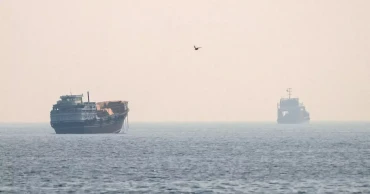
The United States is urging Iran to publicly declare that the Strait of Hormuz is open to international shipping and that it will no longer target vessels passing through the strategic waterway. According to senior U.S. officials, internal political divisions within Iran have complicated efforts to maintain a ceasefire and advance negotiations.
U.S. officials said recent attacks on ships were allegedly carried out by a hard-line faction within Iran seeking to undermine the truce. Although President Donald Trump described the interim ceasefire as effectively over, he stated that diplomatic efforts toward a long-term agreement would continue. The administration has reportedly given negotiators only a limited period to reach an agreement while keeping other options available if diplomacy fails.
Washington is also seeking assurances that Iran will respect freedom of navigation in the Strait of Hormuz, a crucial route for global oil and gas shipments. U.S. officials claimed Iranian representatives privately acknowledged the recent maritime attacks were a mistake and expressed interest in continuing negotiations. However, Iran's ambassador to the United Nations insisted that all activities in the strait, including navigation and security operations, fall solely under Iran's authority and warned against outside involvement.
Iran has argued that it should have exclusive control over the waterway and has suggested that commercial vessels pay transit fees. The conflict previously disrupted energy markets, although oil prices have eased from wartime highs.
The United States also maintains that any future nuclear agreement must require Iran to surrender its stockpile of highly enriched uranium. Officials warned that if negotiations fail, the U.S. has military options to ensure Iran cannot use its nuclear material. They emphasized that progress on nuclear talks depends on Iran fully honoring the ceasefire and ending attacks on shipping.
The conflict has created political and economic challenges for the Trump administration, which faces pressure to avoid a prolonged war while pursuing its security objectives.
Meanwhile, unexplained airstrikes continued inside Iran after Washington announced it had ended its military campaign. No group claimed responsibility. Iranian officials accused the United Arab Emirates of secretly assisting the United States, while Gulf nations and Israel declined to comment on the latest strikes.
Iran responded by launching missiles toward several Gulf countries, including Bahrain, Jordan, Kuwait, and Qatar, with reports indicating limited casualties. Regional leaders and diplomats have intensified efforts to prevent further escalation. Iranian Foreign Minister Abbas Araghchi is scheduled to meet his Omani counterpart to discuss the Strait of Hormuz, while Pakistan, Qatar, Oman, and other regional partners continue diplomatic outreach. Israel has also reaffirmed that it is prepared to respond forcefully if tensions with Iran increase again.
2 months ago
US marks 250th Independence anniversary amid political divisions and extreme heat
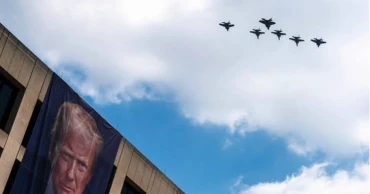
Americans are celebrating the 250th anniversary of the country's independence on Saturday with fireworks, concerts and public events, as political tensions and a severe heat wave shape this year's historic celebrations.
The anniversary marks the signing of the Declaration of Independence, one of the world's most influential documents on democracy.
President Donald Trump is expected to play a central role in the celebrations, delivering a speech on the National Mall in Washington before a major fireworks display over the U.S. capital.
On Friday, Trump spoke at Mount Rushmore in South Dakota, where he warned about what he described as the growing threat of communism in the United States.
Across the country, cities are hosting a wide range of events to mark the milestone. Fireworks displays are planned over Navy Pier in Chicago and New York City's skyline. New York also welcomed the anniversary with a midnight ball drop similar to its New Year's Eve celebration.
Bristol, Rhode Island, which says it has hosted the nation's oldest Independence Day celebration since 1785, is also holding special events.
In Los Angeles, a concert hosted by Queen Latifah will feature performances by The Smashing Pumpkins and Chris Stapleton, with Chaka Khan appearing as a special guest.
Many celebrations, however, have been disrupted by extreme heat affecting large parts of the eastern United States.
In Washington, the Great American State Fair was temporarily closed on Friday during the hottest part of the day, while the city's Independence Day parade scheduled for Saturday was canceled because of the weather.
Conditions were much cooler in the Pacific Northwest, where temperatures stayed in the 60s Fahrenheit with occasional light rain.
In Issaquah, near Seattle, resident Megan Kurowski said people in her community were excited to celebrate the country's 250th anniversary and that she planned to watch the fireworks from a paddleboard.
The holiday weekend also features several major sporting and entertainment events. More than a dozen Major League Baseball games are scheduled, while the 2026 FIFA World Cup continues with Round of 16 matches in Houston and Philadelphia.
The celebrations come at a time of deep political polarization in the United States, with debates over politics, race, immigration and social issues continuing to divide the country.
Speaking at Mount Rushmore, Trump described communism as the greatest threat to American freedom.
Meanwhile, New York City Mayor Zohran Mamdani, without mentioning Trump by name, urged Americans to uphold the country's democratic values and resist authoritarianism.
In Topeka, Kansas, auto technician Joe Fuqua-Bejarano said the country's greatest strength was its resilience rather than its politics. While selling fireworks, he expressed hope that Americans could find greater unity despite their differences.
Jerry Chin of Newcastle, Washington, said he planned to spend the holiday quietly at home with his wife and dogs instead of watching fireworks. While calling America "a great place," he acknowledged that the country still faces significant challenges.
2 months ago