BDR mutiny

PM visits graves of army officers killed in BDR mutiny
Prime Minister Tarique Rahman on Thursday visited the graves of army officers killed in the 2009 BDR mutiny at Banani Military Graveyard.
The Prime Minister and his wife Zubaida Rahman arrived at the graveyard around 9:15am.
They first visited the grave of Zubaida Rahman’s father, former Navy chief Rear Admiral Mahbub Ali Khan and offered fateha and a munajat seeking eternal peace for his soul.
Later, they went to the graves of the army officers killed in the BDR mutiny.
Standing in front of the memorial monument, they joined a munajat seeking forgiveness and peace for the departed souls.
Home Minister Salahuddin Ahmed, Social Welfare Minister AZM Zahid Hossain and State Minister for Local Government Mir Shahe Alam, were, among others, present.
Earlier in the day, the Prime Minister, along with his wife, visited the graves of his father, late President Ziaur Rahman, his mother, late Prime Minister Begum Khaleda Zia, and his younger brother Arafat Rahman Koko, after offering Eid-ul-Azha prayers at the National Eidgah.
On February 25 and 26, 2009, 74 people, including 57 army, were killed during the mutiny at the then Bangladesh Rifles (now Border Guard Bangladesh) headquarters in Pilkhana, Dhaka.
Most of the slain army officers were buried at the Banani Military Graveyard.
4 months ago
BDR mutiny a planned conspiracy to destabilise Bangladesh: Inquiry Commission chief
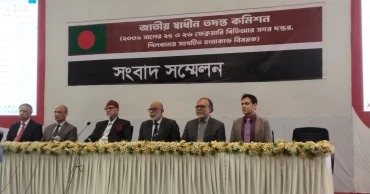
The 2009 BDR mutiny at Pilkhana headquarters, which took place on February 25–26, was a premeditated conspiracy aimed at destabilising Bangladesh, prolonging political power, and weakening the country’s security forces, said Major General (retd) Fazlur Rahman, head of the National Independent Inquiry Commission.
Fazlur Rahman made the remarks on Sunday evening (November 30) while briefing reporters at the commission’s office in Dhaka’s Science Lab area after submitting the investigation report to the Chief Adviser.
The commission found involvement of several influential political figures in the mutiny, with names of senior Awami League leaders surfacing during the probe.
Read more: Govt to ensure justice for deprived armed forces members: Chief Adviser
Those mentioned include former Prime Minister Sheikh Hasina, Barrister Fazle Noor Taposh, Sheikh Selim, Mirza Azam, Jahangir Kabir Nanak, Sahara Khatun, then Security Adviser Maj Gen (retd) Tarique Ahmed Siddique, former Army Chief Gen (retd) Moeen U Ahmed, and former DGFI Chief Maj Gen (retd) Akbar.
Discussing the causes of the mutiny, Fazlur Rahman cited multiple factors, including dissatisfaction with the Dal-Bhat programme and the creation of the BDR Shop, which significantly increased BDR personnel workloads.
He also noted opposition among some personnel to the presence of army officers within the force, along with internal crises within BDR.
“Fundamentally, the mutiny aimed to weaken the army and destabilise Bangladesh. The main reasons were to undermine the army, with neighbouring India seeking to destabilise the country. Extending the political tenure of the ruling Awami League was also among the motives. India was a beneficiary from the incident,” he said.
On reports of missing army officers, the commission found evidence supporting claims that five army officers disappeared after the mutiny.
BDR Mutiny: Probe body says Hasina had 'green signal' for entire incident
Fazlur Rahman said that RAB personnel were deployed at Pilkhana’s Gate 5 at the time but did not intervene, reportedly due to instructions from then RAB Additional Director General Col Reza Nur.
He stressed that RAB and police do not require special orders to act during such incidents.
On foreign involvement, he stated that the commission identified a “neighbouring country” linked to the incident, noting that Sheikh Hasina and her associates had taken refuge there.
He added that grievances tied to Operation Dal Bhat were reportedly used to mask the underlying objective of destabilising the country and weakening BDR.
Dhaka-Delhi ties won’t get stuck over Hasina issue: Foreign Adviser
The inquiry also highlighted that political decisions blocked army action during the mutiny, terming the absence of a military response a “major conspiracy.”
Witness accounts suggested participation from outsiders alongside BDR personnel, some affiliated with Awami League, Jubo League, and Chhatra League.
The commission said a group of 20–25 people entered the compound and later emerged with a procession of around 200.
Referring to intelligence lapses, Fazlur Rahman described them as “mountain-sized.”
Regarding former Army Chief Gen (retd) Moeen U Ahmed’s statement on not conducting an army operation during the mutiny, he said the former chief informed the commission online that intervention might provoke Indian involvement, warning, “they might not return to India like 1971.”
The investigation also found that 721 Indian nationals entered Bangladesh during the period, with 67 unaccounted for.
The commission recommended that the government trace them and seek explanations from India. Some perpetrators inside Pilkhana reportedly spoke in Hindi.
“If we fail to properly evaluate this incident, the country may face another BDR-like mutiny in the future. For national security, truth and corrective measures are essential,” Fazlur Rahman told journalists.
Read more: Sacked BDR men dispersed near Kakrail while marching to Jamuna
10 months ago
BDR Mutiny: Probe body says Hasina had 'green signal' for entire incident
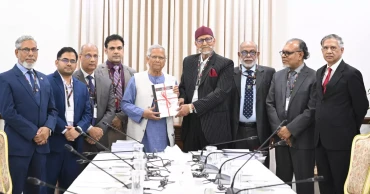
The Commission, formed to reinvestigate the 2009 BDR massacre, the brutal massacre committed in the name of BDR mutiny submitted its report to Chief Adviser Prof Muhammad Yunus on Sunday (November 30), noting that then PM Sheikh Hasina had a 'green signal' for the entire incident to take place while then MP Sheikh Fazle Noor Taposh played the role of the main coordinator behind.
Chief of the National Independent Investigation Commission Maj Gen (retd) ALM Fazlur Rahman, who was also former director general of BGB, and other members submitted the report to the Chief Adviser at the State Guest House Jamuna.
Major General Md Jahangir Kabir Talukder (retd), Brigadier General Md Saidur Rahman Bir Pratik (retd), Munshi Alauddin Al Azad, Dr M Akbar Ali, Associate Professor of the Department of Political Science, Dhaka University Md Shariful Islam, Assistant Professor of the Institute of Education and Research, Jagannath University Md. Shahnewaz Khan Chandan are the members of the commission.
Read more: Govt to ensure justice for deprived armed forces members: Chief Adviser
"The nation was in the dark about the BDR massacre for a long time. The nation will remember the role you played in uncovering the truth. On behalf of the nation, I thank you,” Prof Yunus said.
He said the nation had many questions about this most horrific incident in history and these questions will be answered through this work.
Prof Yunus said there are many lessons to be learned from this report. “It will be a valuable asset for the nation.”
Commission chief Fazlur Rahman said the highest professionalism has been maintained in the interest of making the investigation fair, impartial and error-free.
He said when they started the work, many signs of this incident 16 years ago had been destroyed and many people involved in this incident have gone abroad.
“We went through two processes. We called witnesses; we listened to some of them for up to 8 hours - as long as the individual wanted to say. We talked to those who were involved in the investigation. We collected their investigation reports and other elements,” Fazlur Rahman said.
He said through this investigation, answers have been sought for every question in the public mind about the BDR killings, an attempt has been made to uncover who had what role and why the army did not take action.
Fazlur Rahman said the investigation has found strong evidence of the direct involvement of external forces in the BDR killings and the direct involvement of the then ruling party Awami League.
Read more: BDR mutiny a planned conspiracy to destabilise Bangladesh: Inquiry Commission chief
Jahangir Kabir Talukder said about the commission’s findings that the commission has found some external and real reasons for this incident.
He said the killings were planned and the role of the main coordinator behind it was played by the then MP Sheikh Fazle Noor Taposh, according to the Chief Adviser’s press wing.
Jahangir said the local Awami League played a direct role in protecting those involved in the murder. They entered Peelkhana with a procession of 20-25 people and when they came out, there were more than two hundred people in that procession.
Jahangir said that Hasina had a 'green signal' for the entire incident to take place, according to the press wing.
Regarding the assessment of responsibility for the incident, Jahangir said that the responsibility for the incident lies with the then head of government and the army chief.
A decision has been made to resolve this incident politically. The police, RAB and intelligence agencies have also failed miserably.
Jahangir said that the role of some print and electronic media and some journalists during the incident was unprofessional.
He said that the exact names and information of the BDR members with whom Sheikh Hasina met at the State Guest House Jamuna (the then Prime Minister's residence) during the murder were not preserved.
The commission made several recommendations in its report so that such incidents can be avoided in the future and the victims of this incident get justice.
The meeting was attended by National Security Advisor Dr Khalilur Rahman, Special Assistant to the Chief Adviser on Defense and National Integration Development Lieutenant General (retd) Abdul Hafiz, and Home Secretary Nasimul Gani.
Read more: Sacked BDR men dispersed near Kakrail while marching to Jamuna
10 months ago

BDR mutiny case accused dies at DMCH
An accused in the BDR mutiny case died at Dhaka Medical College and Hospital on Tuesday, police said.
The deceased was identified as Md. Abed Ali, 57, son of late Masir Uddin. He was an accused in a case over 2009 BDR mutiny and an inmate of Dhaka Central Jail.
Read: BDR mutiny accused who was in Dhaka Central Jail dies
He was taken to DMCH on June 7 from jail after he fell sick and died in the medicine ward of the hospital at around 10:08am on Tuesday.
DMCH police outpost In-Charge Inspector Md Bacchu Miah said the body was kept at the hospital morgue for autopsy.
Also Read: Convict in BDR mutiny case dies at Kashimpur Jail
Seventy-four people, including 57 army officials, were killed in the mutiny in the capital's Pilkhana headquarters of the erstwhile Bangladesh Rifles (BDR) on February 25 and 26 in 2009.
A total of 58 cases, including one for murder and looting and the rest for mutiny, were filed in connection with the incident.
Also Read: Death row convict in BDR mutiny case dies at DMCH
Some 152 people were sentenced to death and 423 others to different jail terms in the case. Besides, 277 accused were acquitted.
3 years ago

AL govt involved in BDR carnage: Fakhrul
BNP Secretary General Mirza Fakhrul Islam Alamgir on Sunday alleged that Awami League and its government were involved in the BDR mutiny at the Pilkhana Headquarters that left 57 army officers killed.
“The Awami League government gets unnerved whenever February 25 comes. One of their (govt’s) ministers said yesterday (Saturday) whether our leaders Begum Khaleda Zia and Tarique Rahman were involved in that carnage,” he said.
Speaking at a discussion, the BNP leader further said, “We would like to say very clearly that Awami League and its government were fully involved in this killing. With their direct cooperation and through their conspiracy and plan, this BDR carnage was carried out to turn Bangladesh into a weak subservient state and to completely demoralise the patriotic army of the country.”
Fakhrul said the government’s involvement can easily be understood as it talked to the rebel leaders and made a negotiation with them at the time of the mutiny. “What kind of negotiation was it? You compromised with those who were killing the smart officers of our army."
As per the rules of the Army, he said the mutiny must be suppressed through intervention, not by another means. “Moeen U Ahmed was the then Army Chief who played the main role in destroying democracy in Bangladesh through 1/11 (political changeover) and who tried to hamper the country’s independence and destroy the army.”
BNP arranged the discussion at Dhaka Reporters’ Unity (DRU) in memory of 57 army officers killed in the BDR mutiny 14 years back.
On 25-26 February 2009, a cabal of the then Bangladesh Rifles (BDR) killed 74 people, including 57 army officers, of the paramilitary force at the Pilkhana Headquarters.
Following the heinous killings of the army officers at the Pilkhana headquarters, the government renamed the mutiny-hit paramilitary force BDR as Border Guard Bangladesh (BGB), changing its logo as well as uniform.
Fakhrul criticised the media for 'not running any news' on the BDR mutiny on Saturday.
“Unfortunately we note with sadness that yesterday (Saturday) was February 25, but there was not even a single column of news in any newspaper of the country about the horrific carnage that had taken place on that day,” he said.
Fakhrul said there is a positive sign that the country’s people have started taking to the streets to restore democracy and their voting and other rights.
“We’ve already been on the streets and we’ve been observing different programmes in protest against the price hikes in the daily essentials, including rice, pulses, oil and fuel, since August last year,” he said.
During the current movement, the BNP leader claimed that police gunned down their party’s 17 leaders and activists while many others were arrested and sent to jail by implicating them in false cases. “We must get rid of such an awful situation.”
He called upon people from all walks of life and all political parties to get united to establish a pro-people and democratic government through a credible election under a non-party administration.
"No election will be held in Bangladesh until the caretaker government is established. No elections will be allowed before that,” Fakhrul warned.
He said their moving ached with their peaceful programmes in a democratic manner. “They (govt) are obstructing our programmes…they can’t stop us as people will come up with resistance very soon and we’ll move forward with redoubled speed.”
Speaking at the programme, BNP standing committee member Khandaker Mosharraf Hossain said the Awami League government must be held responsible to people someday for its all misdeeds, corruption, looting and killing incidents carried out by it.
"The people of the country have their backs against the wall. They’re waking up. Inshallah, the unelected, undemocratic, usurper and illegitimate government will be ousted. We will be there on the streets with the people until this government is removed,” he said.
3 years ago

‘Tarique called Khaleda Zia 45 times the night before BDR mutiny,’ video posted by Sajeeb Wazed says
“The day before the BDR mutiny, Tarique Rahman called Khaleda Zia 45 times from London – between 1am to 6am – and asked her to leave her residence by 6am,” says a video posted yesterday by Prime Minister’s ICT Adviser Sajeeb Wazed Joy.
Posted on his verified Facebook profile, the video adds that Prime Minister Sheikh Hasina later presented the call records in the parliament. “The PM does not provide information on issues of national interest without evidence. BNP never responded to this,” it said.
On the 14th anniversary of the 2009 Pilkhana tragedy, the video raises several questions regarding the background of the BDR mutiny.
Expressing condolences to families who lost their near ones in the tragedy, Sajeeb Wazed wrote that centering the anniversary, “one political party” has unleashed a stream of disinformation campaign on social media.
This video posted on his profile “contains some facts” surrounding that killing spree, he added.
The video refers to Pakistan president’s then special envoy Zia Ispahani’s visit to Bangladesh before the BDR mutiny. Zia Ispahani requested the Government of Bangladesh not to initiate trial of the 1971 war criminals. On February 17, 2009, he met Prime Minister Sheikh Hasina and formally proposed to stop the trial of war criminals on behalf of Pakistan, which the PM turned down.
Also read: Fakhrul questions investigation into 2009 BDR mutiny
Zia Ispahani also met Khaleda Zia during his visit. The video questions the purpose of the meeting, and adds, “On whose call did Zia Ispahani come to Bangladesh?”
“Jamaat leader Ali Ahsan Mohammad Mojaheed attempted to fly out of the country just four days before the BDR mutiny,” the video says. However, he was turned back by the law enforcers at the airport. “What was his motive for leaving the country?” – it asks.
The video also says that many of the convicts, who confessed to involvement in the BDR mutiny, had been recruited during the BNP government’s tenure. “Twenty-two absconding BDR personnel were arrested from Tangail, 14 of them managed their job recommendation from BNP leader Abdus Salam Pintu, who was convicted in the August 21 grenade attack case,” it says.
“The BNP-Jamaat alliance made a desperate bid to cling to power in 2006. The dark side of the BNP-Jamaat government was divulged by a handful of high-ups in the armed forces, including Moeen U Ahmed and Sadik Hasan Rumi,” the video says.
“Most of the deceased, including BDR Chief Major General Shakil Ahmed and Colonel Gulzar Uddin Ahmad, played a remarkable role in conducting the 2008 election in a free and fair manner,” it says.
The Pilkhana massacre took place just after the formation of the Awami League government and a total of 78, including 57 seasoned armed forces officials and their family members, were gunned down. “This irreparable loss was incurred by not just the armed forces but the entire nation as well. The newly-formed Awami League government faced the biggest blow,” the video said.
3 years ago

Fakhrul questions investigation into 2009 BDR mutiny
BNP Secretary General Mirza Fakhrul Islam Alamgir on Saturday alleged that there was no proper investigation into the killings of 57 army officers in the BDR mutiny in 2009.
"We think the way this incident should have been investigated and the way the investigation process should have been conducted to bring out the real offenders and the masterminds through a fair investigation, that didn’t happen unfortunately,” he said.
Fakhrul came up with the remarks while talking to reporters after placing wreaths at a monument set up at Banani Army Graveyard in memory of the army officials killed in the Pilkhana carnage, marking the 14th anniversary of the incident.
He said the Army had conducted an investigation into the BDR mutiny incident, but the nation has not yet got the full report of that probe.
The BNP leader said some people were awarded death sentences and life imprisonment in a case filed in connection with the mutiny and subsequent killings.
But he lamented that the trial of another case filed under the Explosive Substances Act in connection with the same incident has not yet been completed, forcing many soldiers of the erstwhile Bangladesh Rifles (BDR) who claim themselves innocent still stay in jail.
"I was in prison a few days ago. I saw there that many ex-BDR members who were made accused in this case have been living inhumanly for 13/14 years. Their families and future are ruined,” Fakhrul said.
He demanded the government take steps to complete the trial in the explosive case so that those who are innocent can return to normal life with their families.
On 25-26 February 2009, a mutiny in the then Bangladesh Rifles (BDR) left 74 people, including 57 army officers, murdered at the Pilkhana Headquarters.
3 years ago

14th anniversary of Pilkhana carnage tomorrow
The 14th anniversary of the atrocious carnage at the Pilkhana BDR (now BGB) headquarters in the capital will be observed on Saturday.
A total of 74 people, including 57 army officers, were killed in the carnage beginning on this day in 2009.
Read more: Bangladesh peacekeeper dies in Congo
Marking the day, Border Guard Bangladesh (BGB) will organize Quran Khawani, doa, and milad mahfil, said a BGB press release.
Floral wreaths will be placed at the graves of the slain army officers at the Military Graveyard in the capital's Banani at around 9 am by the representatives of President Abdul Hamid and Prime Minister Sheikh Hasina.
To mark the day, all Border Guard Bangladesh (BGB) installations will have the BGB flag at half-mast and all BGB members will wear black badges.
Besides, Home Minister Asaduzzaman Khan, chiefs of the three services -- Chief of Army Staff General SM Shafiuddin Ahmed, Chief of Naval Staff Admiral M Shaheen Iqbal and Chief of Air Staff Air Chief Marshal Shaikh Abdul Hannan -- Director General of BGB Major General Md Shafeenul Islam and the family members of the slain officers will also pay their tributes to the slain Army officers.
On February 25, 2009, several hundred Bangladesh Rifles (now BGB) men rose up in an armed revolt at the Darbar Hall of the force's Pilkhana headquarters during the three-day "BDR Week". They killed 74 people, including 57 army officers.
The mutiny finally ended the following day (Feb 26) with the surrender of firearms, ammunition and grenades through a negotiation between the then government and the BDR rebels.
A total of 58 cases including one for murder and looting and the rest for mutiny were filed in connection with the incident.
Some 152 people were sentenced to death and 423 others to different jail terms in the killing case. Besides, 277 accused were acquitted in the country’s largest-ever killing case.
Among the convicts, 262 mutineers were sentenced to different jail terms starting from three months to 19 years and 161 people, including late BNP leader Nasiruddin Ahmed Pintu and local Awami League leader Torab Ali, were sentenced to life imprisonment.
On the other hand, 5,926 BDR personnel were sentenced to different jail terms ranging from four months to seven years in the 57 mutiny cases.
3 years ago

Army officials killed in BDR mutiny an outcome of conspiracy: BNP
BNP Secretary General Mirza Fakhrul Islam Alamgir on Friday alleged that the killings of military officials in the BDR mutiny were the outcome of a deep-rooted conspiracy against the Bangladesh Army.
"It (BDR mutiny) was not just a mutiny as there was a deep-rooted conspiracy behind it. The main reason was to break the morale of the army,” he said.
Fakhrul came up with the remarks while talking to reporters after placing wreaths at a monument set up at Banani Graveyard in memory of the army officials killed in the Pilkhana carnage, marking the 13th anniversary of the incident.
Read: Nation pays tribute to Pilkhana martyrs
He lamented that the nation has not yet got a proper investigation report on who really were behind the BDR mutiny and no report has been released on the investigation carried out by the army.
"It’s our bad luck that we still couldn’t reveal the truth through an investigation even after so many years. We still don’t know who actually were behind it and why this incident happened! We believe that there’s a conspiracy behind holding back the investigation report (of the army)," Fakhrul said.
On February 25-26, 2009, a cabal of the then Bangladesh Rifles (BDR) killed 74 people, including 57 army officers, of the paramilitary force at the Pilkhana Headquarters.
On November 5, 2013, a Dhaka court awarded death sentence to 150 BDR members and two civilians, and life imprisonment to 160 others in the case. On November 27, 2017, the High Court confirmed the death penalty for 139 out of 152 accused.
Following the heinous killings of the army officers at the Pilkhana headquarters, the government renamed the mutiny-hit paramilitary force BDR as Border Guard Bangladesh (BGB), changing its logo as well as uniform.
Fakhrul said February 25, 2009, is a very sad and terrible day for the whole nation as 57 officials of the army, the best resource of the nation, were killed on this day through the mutiny.
“Our national security system was completely shattered through this incident. We didn’t lose so many army officers even in the war of independence in 1971,” he observed.
Read: Dispose of Pilkhana murder case by 2021: BNP
The BNP leader expressed deep shock at the losses of so many lives in the BDR mutiny and prayed for the salvation of the departed souls.
Earlier, Fakhrul along with party leaders and ex-army officials went to the graveyard and placed wreaths at the monument and offered special prayers there seeking eternal peace of the departed souls of the slain army officers.
BNP vice chairmen Maj (retd) Hafiz Uddin Ahmed, and Air Vice Marshal (retd) Altaf Hossain Chowdhury, retired army officers Fazle Elahi Akbar, Hasan Nasir, Kamruzzaman, Mizanur Rahman, Sarwar Hossain, MA Hasan, Kohinur Alam Noor and Aziz Reza were there in the BNP delegation.
4 years ago