economic zones
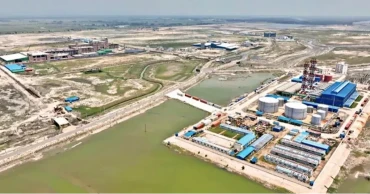
Govt plans rail link for all economic zones starting with Mirsarai
The government has undertaken a major initiative to establish railway connectivity with all economic zones (EZs) across the country, including the National Special Economic Zone in Chattogram’s Mirsarai, to make goods transportation faster, cheaper and more efficient.
“We are preparing an integrated plan for all economic zones in the country with focus on Mirsarai. Our goal is to connect each economic zone directly to railway lines to facilitate smooth goods transportation,” said Sheikh Moinuddin, Chief Adviser’s Special Assistant on the Ministry of Road Transport and Bridges and the Ministry of Railways.
“Currently, goods have to be transported by trucks to reach the train. We want to ensure that containers or goods can be loaded directly onto trains from all economic zones. This will save both time and cost while also making industrial operations more efficient,” he added.
According to officials, a comprehensive master plan is being prepared to link all economic zones directly with the country’s railway, road and port networks. “This will add a new dimension to the national transport system,” Sheikh Moinuddin said.
Dhaka-Ctg highway’s 10-lane expansion shelved; focus shifts to railway
Once implemented, he said, the initiative would significantly strengthen Bangladesh’s industrialisation drive, boost exports and improve the overall goods transportation system.
Bangladesh has been developing economic zones to accelerate industrial growth, attract foreign direct investment (FDI) and create large-scale employment opportunities.
The previous government set an ambitious target to establish 100 economic zones by 2025, but the current administration is prioritising the development of five fully operational EZs to ensure effective delivery.
The Bangladesh Economic Zones Authority (BEZA) has already prepared a two-year roadmap to make these five zones fully functional.
Par Bishnupur residents in Narial fall victims to riverbank erosion
BEZA Executive Chairman Chowdhury Ashik Mahmud Bin announced earlier this year that the zones are expected to attract $5.5 billion in investment and create over 200,000 jobs.
The five targeted zones are:
· National Special Economic Zone in Chattogram, Mirsarai
· Sylhet Economic Zone
· Jamalpur Economic Zone
· Maheshkhali Economic Zone
· Japanese Economic Zone
Among these, the National Special Economic Zone in Chattogram stands out as the largest public sector EZ. Spread over 30,000 acres of land across Mirsarai, Sonagazi and Sitakunda upazilas, and this planned and modern industrial hub is poised to play a pivotal role in driving the country’s industrialisation efforts.
Experts say establishing direct rail connectivity to Mirsarai’s economic zone will be crucial for seamless movement of raw materials and finished goods to ports and markets, further enhancing its attractiveness to both local and foreign investors.
11 months ago
10 new economic zones to come up in 10 years: Finance Adviser
The interim government has decided to set up ten economic zones in the next ten years aiming to generate employment.
Of the ten, the following five will be implemented within the next five years: National Special Economic Zone, Srihatta Economic Zone, Jamalpur Economic Zone, Moheshkhali Economic Zone3 (Dhalghata) and Bangladesh Special Economic Zone.
The Chinese Industrial Economic Zone, Sabrang Tourism Park, Chandpur Economic Zone-1, Kushtia Economic Zone and Kurigram Economic Zone are expected to become operational in the next ten years.
Finance Adviser Dr Salehuddin Ahmed made the announcement while delivering his televised budget speech for the next 2025-26 fiscal.
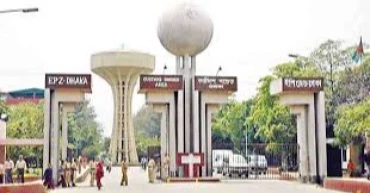
He said that management and operation of Private Export Processing Zones (EPZ) has been entrusted to Bangladesh Economic Zones Authority (BEZA) and the long-running land related complications in Korean EPZ have been resolved.
“A pipeline of investors is being formed to increase foreign investment. By this, the investment commitment will be converted into real investment through systematic tracking,” he said.
He said that Bangladesh Investment Development Authority (BIDA) has already published the FDI Heatmap.
Besides, he said, we are paying special attention to encourage the implementation of investment projects through public-private partnership in the potential sectors of the country.
“For this purpose, I propose to allocate Tk 5,040 crore as public-private partnership fund in the next fiscal year. Appropriate initiatives are being taken to make public investment more effective, sustainable and fruitful.”
In the meantime, the Adviser said a number of projects that are less important or taken under political consideration have been dropped.
Govt working with ILO for decent condition of labours in EPZs: Lutfey Siddiqi
To evaluate important infrastructure investment projects in the 'Transport and Connectivity' and 'Environment, Climate and Water Resources' sectors, financial and economic analysis is being done to determine the cost of the project and determine the potential benefits, he said.
In addition, he said, the projects are being evaluated during the project preparation stage to determine their environmental impact and resilience against climate change.
In addition, the Multi-Year Public Investment Program (MYPIP) has been formulated in coordination with the Medium-Term Budget Framework (MTBF) to increase efficiency and effectiveness of public investment and achieve the goals and objectives of the adopted national plans and SDGs, he added.
1 year ago
Outcomes of Hasina-Scholz bilateral talks on sidelines of MSC 2024
Germany and Bangladesh have agreed it is best to end the Russia-Ukraine war and the attack on Gaza.
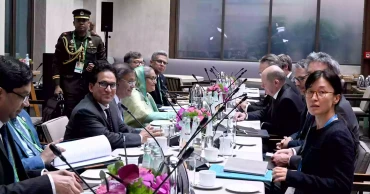
The consensus came when Prime Minister Sheikh Hasina and German Chancellor Olaf Scholz held bilateral talks on the sidelines of the Munich Security Conference 2024 on Saturday (February 17, 2024).
"A detailed discussion was held between the Bangladesh Prime Minister and the German Chancellor about ending wars, particularly the Russia-Ukraine war and attack on Gaza," Foreign Minister Dr Hasan Mahmud said, while briefing media regarding the outcome of the meeting between the two leaders.
The meeting between the two leaders was held at Hotel Bayerischer Hof, the conference venue, here, this afternoon.
Both the leaders, Bangladesh Premier and the Chancellor of Germany, agreed that none will be benefited through war.
At meeting with Zelenskyy PM Hasina calls for ending Russia-Ukraine war
Quoting the German Chancellor, Dr Hasan Mahmud said, "The only process of establishing peace is to stop war."
The prime minister called upon the German Chancellor to make investment in various sectors of Bangladesh including the IT sector as Germany is advanced in high technology industries.
Mentioning that Bangladesh is establishing 100 economic zones across the country, Sheikh Hasina said,"Germany can invest in Bangladesh."
The Prime Minister invited the German Chancellor to visit Bangladesh and he accepted the invitation.
Sheikh Hasina recalled the contribution of Germany in rebuilding independent Bangladesh after the Liberation War.
The two leaders also discussed exporting more Bangladeshi products to Germany as it is the highest exporting country from Bangladesh to the EU.
Bangladesh and India need to increase use of their currencies to boost trade: PM Hasina tells Jaishankar
They also talked about sending skilled Bangladeshi manpower to Germany as the country is welcoming skilled labour from around the globe.
During the bilateral meeting held after a long time in a very warm environment, Olaf Scholz again congratulated Sheikh Hasina on her reelection as Bangladesh prime minister for the fifth term and fourth in a row.
Earlier in the morning, Germany Federal Minister for Economic Cooperation and Development called on the Bangladesh PM at the Conference venue here.
During the meeting, she offered Germany a dedicated place for investment in economic zones being set up across the country. Senior Secretary of Foreign Affairs Masud Bin Momen and Ambassador to Germany Md Mosharraf Hossain Bhuiyan, were present, among others.
Sheikh Hasina arrived in Germany to attend three-day MSC 2024 on February 15 evening.
Read more: PM Hasina meets German Chancellor in Munich, discusses bilateral issues
2 years ago

PM opens, lays foundation stones of 50 industrial units, infrastructures
Prime Minister Sheikh Hasina on Sunday inaugurated and laid foundation stones of 50 industrial units and infrastructures at different economic zones on the occasion of the golden jubilee of the country’s independence.
She unveiled their plaques joining an event through a videoconference from her official residence Ganabhaban.
Bangladesh Economic Zone Authority (BEZA) arranged the event at the country’s largest industrial estate 'Bangabandhu Sheikh Mujib Shilpa Nagar' in Mirsarai of Chattogram.
Among them, four industrial units have started production at Bangabandhu Sheikh Mujib Shilpa Nagar while eight others at different privately-run Economic zones.
Besides, Karnaphuli Drydock Special Economic Zone, the administrative buildings of Bangabandhu Sheikh Mujib Shilpa Nagar (BSMSN), Jamalpur Economic Zone, Srihatta Economic Zone and Sabrang Tourism Park, 20-kilometre Sheikh Hasina Sarani, 230-KVA gridline and substation at BSMSN were opened.
Moreover, the foundation stones of 29 industrial units in different economic zones and a water treatment plant having 50 million litres per day (MLD) capacity in the BSMSN were laid.
Read more: Won’t suffer much from electricity crisis from next month: PM
In the BSMSN, the four industrial factories which started the commercial operation are Asian Paints of India, Nippon Steel of Japan, McDonald Steel of Bangladesh, and TK Group's subsidiary Samuda Construction Limited.
The government has been setting up 100 economic zones in different parts of the country. Some 10 million people are expected to be directly and indirectly employed in the economic zones. The government has set a target of goods production and export earnings worth around US$ 40 billion from the zones.
Among the planned 100 economic zones, the government has already approved 97 economic zones. Of them, 28 economic zones are currently under development.
In the economic zones, 29 industrial establishments are already in commercial production and 61 others are under construction. So far, some 45,000 jobs have been created in the economic zones and about US$ 4 billion have been invested in the private economic zones.
Read more: PM invites Singapore investors to special economic zones, emphasises agro-processing
Besides, the proposed investment in all economic zones is more than US$ 26 billion.
Land Minister Saifuzzaman Chowdhury, PM’s Private Industry and Investment Adviser Salman F Rahman, Chattogram-1 MP Engineer Mosharraf Hossain and President of Bangladesh Economic Zone Investors Association and also vice chairman of Bashundhara Group Safwan Sobhan also spoke at the function, while BEZA Executive Chairman Sheikh Yusuf Haroon delivered the welcome speech.
3 years ago

Economic zones can turn Bangladesh into global investment destination: FBCCI
Federation of Bangladesh Chambers of Commerce and Industries President Md Jashim Uddin has called for branding Bangladesh as the most favourable investment destination in Asia by attracting local and global investment in the economic zones.
He made this call at a courtesy meeting with Safwan Sobhan Tasvir, president of Bangladesh Economic Zone Investors Association and Bashundhara Group vice-chair, in the capital Wednesday.
The government is providing the most investment-friendly infrastructure and policy support in Asia for investment in special economic zones, Jashim said.
Read: FBCCI to provide safety equipment to healthcare professionals, essential service workers
He urged the Economic Zone Investors Association to convey these benefits to global entrepreneurs.
Safwan highlighted the current investment status in Bangabandhu Sheikh Mujib Shilpanagar at Mirsarai and other economic zones.
Bangladesh has huge potential in toy manufacturing, polyvinyl chloride (PVC) and the petrochemical industry, he added.
4 years ago
.jpg)
Build ‘Padma Bridge’ as economic corridor for greatest benefit: Speakers
Speakers at a discussion termed the ‘Padma Bridge’ as a symbol of national aspirations and urged the government to build it as an economic corridor for both sides of the river for the greater benefits of the country.
They emphasize that this bridge needs to be made an economic corridor. If economic zones and industrial parks can be built around the river, it will be able to contribute to economic development and employment.
They came up with the suggestion while speaking in a discussion on 'Current Status of the Macroeconomic: Bangladesh Perspective,' jointly organized by the Institute of Chartered Accountants of Bangladesh (ICAB) and Economic Reporters Forum (ERF) at the CA Bhavan Auditorium in Karwanbazar on Saturday.
Also read: All 64 districts to celebrate Padma Bridge's inauguration
Planning Minister MA Mannan, the chief guest of the discussion, said the government is working to check waste of state money in every sector of the country.
"We are working to prevent waste, sometimes we are relaxed. It has to be rushed. Now there are 1800 projects. We are designing the priority projects based on importance and need,” the planning minister added.
Prof Mustafizur Rahman, Distinguished Fellow, Center for Policy Dialogue (CPD), said the Padma Bridge is a symbol of national aspiration. It should not only be used for transportation, it should be made an economic corridor.
“There were plans to build 17 economic zones around the Padma Bridge. They have to do that. Then it will be able to contribute to the national economy and employment,” he said.
Ahsan H. Mansur, Executive Director, the Policy Research Institute (PRI) and Chairman Brac Bank, said that it is important to keep the exchange rate of taka stable, it is also important to strengthen local currency.
“The price of the US dollar was between 82, 83 and 84. But suddenly the taka depreciated severely, there is a reason also. But a stable exchange rate is important for the economy,” he said.
Also read: Padma Bridge is a blessing for southern people: Minister
Regarding the budget, Mansur said, “Our budget is only 14 percent of GDP, which is less than other countries. Again, a large expenditure of our budget goes to pay salaries and allowances. The rest of the money is used for government development work. It is better to make the budget at least 20 percent of GDP.”
4 years ago
.jpg)
DCCI invites Indian investors to invest in EZs in Bangladesh
Dhaka Chamber of Commerce and Industry (DCCI) has invited Indian entrepreneurs to invest in the Economic Zones in Bangladesh that are already ready for operation.
A 47-member DCCI delegation led by its President Rizwan Rahman had an industry interactive meet with the Calcutta Chamber of Commerce at a hotel in Kolkata on Wednesday.
During the meeting, DCCI President Rizwan Rahman, also the leader of the Business delegation, said pharmaceuticals, footwear, energy, food processing, light engineering, ICT are some of the areas where Indian investors can tap the opportunities.
Also read: DCCI urges Philippines to invest in Bangladesh’s healthcare, tourism sectors
Besides, initiative of signing comprehensive economic partnership agreement (CEPA) between India and Bangladesh will usher a win-win situation for both end businesses, he added. Later, he also sought joint collaboration on different non-tariff issues which hinders our business scopes.
Meanwhile, President of Calcutta Chamber of Commerce Shailja Mehta said India is the biggest trade partner of Bangladesh in South Asia. “Toward achieving advantageous trade figures, both the nations need to diversify trade with active industry participation.”
Better market access, improved physical connectivity and transit and energy trade between India and Bangladesh are important instruments for unlocking bilateral trade potential, she added.
She also termed tourism as one of the important area where there are huge potential to tap into.
The bilateral trade between Bangladesh and India hovers within USD 9.87 billion having a potential of USD 16.4 billion forecast by the World Bank, DCCI said in a press release.
Also read: DCCI president tries to woo Sri Lankan investment, as envoy drops in
Deputy High Commissioner of Bangladesh in Kolkata Andalib Elias was also present on the occasion and he said there is a deficit between the bilateral trades but it is decreasing day by day.
During the last five to six years, the bilateral trade has multiplied about 2.5 times, he added.
Later, an interactive B2B match-making was organised where DCCI business delegation and Calcutta Chamber of Commerce took part.
4 years ago
.jpg)
FBCCI President urges expatriate Bangladeshi businessmen to invest in economic zones
Speakers at a discussion organised by Federation of Bangladesh Chambers of Commerce and Industry (FBCCI) emphasized establishing Europe-Bangladesh Chamber of Commerce in order to expand trade with Europe.
They said although many products other than readymade garments are exported to Europe the consumers are mainly expatriate Bangladeshis.
Those products are not yet well known in the mainstream market and such a chamber can work to improve the situation, they said.
READ: FBCCI demands corporate tax cut in backward linkage industry
President of France-Bangladesh Economic Chamber Kazi Enayet Ullah spoke at the discussion meeting at FBCCI on Saturday.
Kazi Enayet Ullah said that the initiative is planned to be implemented by next July.
With the establishment of the Europe-Bangladesh Chamber of Commerce, it will be possible to ensure the visible presence of Bangladeshi products in the main European economy,he said.
Through this chamber, various activities will be undertaken to enhance bilateral trade and attract European investment, he added.
Kazi Enayet Ullah called on the Bangladesh government to create a skilled workforce saying the European labour market has changed dramatically since the Coronavirus pandemic and it needs huge manpower.
Earlier in his welcome address, FBCCI President Md. Jashim Uddin said that many Bangladeshis have established themselves abroad as businessmen.
He urged them to take a special economic zone in Bangladesh.
Highlighting the country's investment-friendly policies, the FBCCI chief said the income of the people of Bangladesh is increasing day by day. “Due to a large number of population, the domestic market of this country is also huge. Therefore, by investing in this country, expatriates can play a greater role in the economic development of Bangladesh.”
He said PWC is conducting a study on the London market under the initiative of the FBCCI, adding that the results of the study would be known in the next few months.
Based on the research outcome, FBCCI will take necessary measures to popularize Bangladeshi products in foreign markets. Similar research initiatives will be undertaken in other countries in future.
At the same time, Md. Jashim Uddin called upon the France-Bangladesh Economic Chamber to brand Bangladesh in France.
The President of the All-European Awami League M. Nazrul Islam, Executive Director of France-Bangladesh Chamber of Commerce and Industry Rubaba Navera Sayeed, Vice President of France-Bangladesh Economic Chamber Fakhrul Akon Selim and FBCCI Advisor Manzur Ahmed also spoke at the meeting.
Among others, FBCCI President Md. Habib Ullah Dawn, Director Priti Chakraborty, Dr. Ferdousi Begum were also present at the meeting moderated by FBCCI Secretary General Mohammad Mahfuzul Hoque.
4 years ago

Post-pandemic economy: Bangladesh’s blueprint for reviving investment atmosphere
With the pandemic hitting hard the economy as an external shock, the government gives an immense importance to investments, both local and foreign ones, for ensuring a balanced development and improving business environment in the country.
“The government will take effective steps to build infrastructures and provide other policy supports to improve the investment-friendly environment,” says an official document obtained by UNB.
To increase investments and create jobs, it says, steps have been taken to establish 100 Economic Zones across the country, which will provide employment opportunities for nearly one crore people. Approval has already been given for the establishment of 97 Economic Zones.
Read Bangladesh’s economic progress continues despite pandemic: Minister
The document says production has already begun in nine economic zones and the development work on 28 economic zones is under way, creating jobs for around 40,000 people. “Employment opportunities will be created for another 8 lakh people,” it says.
As of now, investment proposals, worth US$ 27.07 billion, from 210 investors have been submitted for these economic zones. “Of the total amount, about US$ 1.60 billion is foreign investment.”
The largest Economic Zone in the public sector 'Bangabandhu Sheikh Mujib Industrial City' is being developed in Mirsarai, Sonagazi and Sitakunda upazilas on 30,000 acres of land as a modern industrial zone.
Also read: Coronavirus: Experts for prudent economic recovery plan for Bangladesh
To woo investors, seminars, workshops, roadshows and tradeshows are being organised and sponsored both at home and abroad.
Through these arrangements, as per the document, Bangladesh can identify new investors, which will help augment the investment.
More importantly, the document says, the government is laying special emphasis on the implementation of projects under Public-Private Partnerships (PPPs) to attract investment required for the implementation of the government's development plans.
Also read: ‘Bangladesh economy shows signs of positive growth’ despite global recession
At present, as many as 76 projects are scheduled to be implemented under the PPP, against which the investment worth US$ 27.76 billion has been mobilised.
One project under PPP has already been implemented and six more projects are under implementation.
5 years ago
.jpg)
PM asks state-owned companies to be self-reliant
Prime Minister Sheikh Hasina on Tuesday asked state-owned companies like Bangladesh Telecommunications Company Ltd (BTCL) to be self-reliant so that they do not have to depend on government funds.
The Prime Minister made the directive while presiding over a meeting of the Executive Committee of the National Economic Council (Ecnec) at the NEC Conference Room.
She joined the meeting virtually from her official residence Ganobhaban.
Planning Minister MA Mannan briefed reporters after the meeting from an online platform.
“The Prime Minister instructed the state-owned companies to spend money from their own incomes. No money will be allotted from government funds in the future. They need to stand on their own feet,” said Mannan.
Also read: People’s lives come first: PM Hasina
He said the Prime Minister made the directive while approving a project titled ‘Installation of Telecommunication Network in Economic Zones (Phase-I)’ at the meeting.
BTCL will implement a Tk 90.12-crore project by June 2023 in Srihatta economic zone in Maulvibazar, Sabrang and Naf Tourism Park at Teknaf, Sonadia Tourism Park at Maheshkhali and Jamalpur Economic Zone. The entire money will come from the state coffer.
The Prime Minister also directed the authorities concerned to quickly complete the construction works on a super specialized hospital under Bangabandhu Sheikh Mujib Medical University, said Mannan.
The directive came during the approval of the first revision of ‘Specialised Hospital Establishment under Bangabandhu Sheikh Mujib Medical University’ project with the deadline extension and the rise in costs.
Also read: PM Hasina suggests 5 actions to deal with drug-resistant diseases
Now the project deadline has been extended up to June 2022 from December 2020, while the project cost raised to Tk 1561.18 crore from the original estimated cost of Tk 1,366.34 crore.
At the Ecnec meeting, a total of 10 projects involving the estimated cost of Tk 11,901.33 crore were approved, said the Planning Minister.
Of them, Tk 8,991.44 crore will be borne from government funds, while Tk 2,099.91 crore will come as loan from foreign sources and the remaining Tk 809.98 crore from the own funds of the organisations concerned, he said.
Nine of the projects are new while another is a revised one.
Also read: Govt’s focus on agriculture to tap its full potential: PM Hasina
The projects include modernisation and capacity enhancement of electricity supply by Rural Electrification Board in Khulna Division with an estimated cost of Tk 3076.23 crore by June 2025, Development of important rural roads in Cumilla, Brahmanbaria and Chandpur districts with Tk 2,500 crore by June 2025; and Construction of Upazila-Level Sheikh Russel Mini-Stadium (Phase-II) in 186 upazilas with Tk 1649.33 crore by June 2024.
The rest of the projects are Rehabilitation and Expansion of Teesta Irrigation Command Area at a cost of Tk 1452.33 crore by June 2024; Flood control, drainage and irrigation at Patia in Chattogram with Tk 1,158.36 crore by June 2024; Construction of 1.4-km Panguchi Bridge over Panguchi River at Morelganj in Bagerhat with an estimated cost of Tk 912.33 crore by June 2025; Construction of Multistoried Building for the Department of Public Libraries with Tk 524.25 crore by June 2024; and Development of Rangamat’s Kargoripara-Bilaichhari Road and construction of bridges and culverts with Tk 338.54 crore by June 2024.
5 years ago