student visa
Malaysia likely to offer 'Graduate Plus' visa for Bangladeshi students
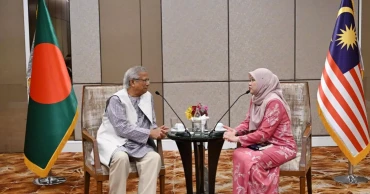
Malaysia is likely to introduce ‘Graduate Plus’ visas for Bangladeshi students studying in the country, enabling thousands to access high-skilled jobs in its expanding economy.
Chief Adviser Prof Muhammad Yunus raised the issue during a meeting with Malaysian Higher Education Minister Zambry Abdul Kadir at Universiti Kebangsaan Malaysia in Kuala Lumpur.
“We had productive discussions with the minister. In principle, he has agreed to issue Graduate Pass visas to Bangladeshi students in Malaysia. However, both sides need to complete certain formalities before the policy can take effect,” said Expatriates Welfare and Overseas Employment Adviser Dr Asif Nazrul.
Foreign Adviser Md Touhid Hossain was also present.
Prof Yunus honoured with UKM’s Doctorate for pioneering social business
Currently, about 10,000 Bangladeshis are enrolled in Malaysian universities, said Chief Adviser’s Deputy Press Secretary Abul Kalam Azad Majumder.
While students from other countries enjoy access to Malaysia’s job market, this privilege has so far been unavailable to Bangladeshi students.
Earlier on Wednesday, Malaysian Education Minister Fadhlina binti Sidek met Prof Yunus at a hotel in Kuala Lumpur.
The two sides discussed ways to enhance educational cooperation, including expanding scholarships for Bangladeshi students in Malaysian universities and colleges.
1 year ago

Student Visa to PR: Top 5 Countries for International Students to Get Permanent Residency
Securing permanent residency (PR) is a significant milestone for international students aiming to build a stable and prosperous future abroad. It offers long-term benefits such as job security, access to social services, and the freedom to live without visa restrictions. As global education becomes a pathway to migration, students are increasingly choosing countries that provide clear PR opportunities. Let’s explore the top five destinations where education opens doors to permanent residency.
Top 5 Countries Offering Smooth Transition from Student Visa to PR
.
New Zealand
The structured migration pathway in New Zealand allows graduates to transition from student status to skilled professionals, eventually leading to PR.
The first critical step after completing studies in New Zealand is the Post Study Work Visa (PSWV). This visa is available to those who have held a student visa and recently completed an eligible qualification. The duration can be extended up to three years, depending on the level and duration of the qualification studied within the country.
Holders of a degree-level 7 or above qualification- studied full-time for at least 30 weeks- are permitted to work for any employer in any job. Conversely, graduates with a non-degree level 7 or below qualification must secure employment that is directly related to their field of study. To qualify, the programme must have been pursued full-time in New Zealand for its full duration and appear on the green list roles.
Read more: Study in New Zealand: Application process, cost for international students
The list link:https://www.immigration.govt.nz/new-zealand-visas/preparing-a-visa-application/working-in-nz/qualifications-for-work/green-list-occupations
This visa can be granted only once, making the application process critical. It must be submitted within three months of the student visa's expiry. There are exceptions: doctoral graduates are allowed six months, and those transitioning from an eligible qualification to a higher-level but ineligible programme may have up to twelve months post-completion of the first qualification to apply. The visa application processing time is efficient, with 80% of applications processed within three weeks.
Additional benefits include provisions for immediate family members. Partners of PSWV holders can apply for a work visa, and dependent children may study as domestic students without paying international fees.
Read more: 10 Cheapest UK Universities for Non-EU, International Students
For those aspiring to transition from temporary to permanent residence, employment in roles listed on New Zealand’s Green List becomes highly advantageous. This list identifies occupations in demand, divided into Tier 1 and Tier 2 categories, offering two residency pathways:
Straight to Residence Visa: Available to individuals working in a Tier 1 Green List role for an accredited employer. This visa grants indefinite stay, with 80% of applications processed within six months.
Work to Residence Visa: Designed for individuals employed in a Tier 2 Green List role for at least 24 months under an accredited employer. This visa also permits an indefinite stay.The journey culminates with a Permanent Resident Visa, which may be obtained after holding a Resident Visa for a minimum of two years. Applicants must meet all conditions attached to their current Resident Visa and demonstrate a commitment to New Zealand. One common pathway to prove this is having spent at least 184 days in the country during each of the two preceding years before applying. This stay does not need to be continuous. Processing for Permanent Resident Visa applications is efficient as well, with 80% completed within two weeks.
Further details on resident visa conditions are outlined here:
https://www.immigration.govt.nz/new-zealand-visas/already-have-a-visa/your-visa-conditions/check-your-visas-conditions/resident-visa-conditions
Ireland
This European country promises a route for international students seeking PR after completing their education. The system begins with the Third Level Graduate Scheme. It is designed to support non-European Economic Area (non-EEA) graduates in transitioning from study to skilled employment. This post-study work visa applies to those who have successfully completed a qualification at Level 8 or Level 9 on the National Framework of Qualifications from a recognised Irish awarding institution.
Read more: Study in Ireland: Application process, cost for international students
Graduates holding a Level 8 qualification are granted a 12-month stay, enabling them to remain in the country legally while seeking graduate-level employment. Meanwhile, those with a Level 9 or higher qualification may also receive an initial 12-month permission, with the total student permission capped at seven years.
Two key employment permit options are available under this framework:
General Employment Permit
Critical Skills Employment Permit, which has replaced the earlier Green Card permit model.The Critical Skills Employment Permit targets sectors facing significant skill shortages. Roles listed under this category are regarded as high-demand and are designed to encourage long-term residency by offering a more direct pathway to permanent status. Applicants must submit their employment permit applications at least 12 weeks before their intended start date. The current list of eligible occupations can be accessed here:
https://enterprise.gov.ie/en/what-we-do/workplace-and-skills/employment-permits/employment-permit-eligibility/highly-skilled-eligible-occupations-list/
Holders of the Critical Skills Employment Permit are entitled to apply for permission to live and work in Ireland without requiring a further employment permit once the initial permit period has been completed. This is typically recorded under Stamp 4, which signifies permission to remain and work without additional conditions.
Long-term residency becomes a viable option after five years (60 months) of legal residence in Ireland. It is designated as an employment permit issued by the Department of Enterprise, Trade and Employment (DETE). To apply, applicants must present documented evidence of continuous legal residence based on employment permit conditions. This status must be confirmed by immigration stamps in the passport or expired Irish Residence Permit (IRP) cards. Importantly, only the periods covered by valid stamps or IRP cards are considered; gaps without such documentation are excluded from the calculation.
Successful applicants receive a confirmation letter from Immigration Service Delivery. This official permission allows the individual to reside and work in Ireland for an additional five years without needing to reapply for a work permit.
Finland
A welcoming post-study pathway awaits graduates in this Nordic nation, where foreign students are given a practical opportunity after completing their academic commitments. Those who have earned a degree or completed research in the country may apply for a two-year residence permit to look for work or to establish a business. This post-graduation permit supports graduates who don’t yet have a job. It also applicable for those who doesn't meet the financial requirements for a work-based residence permit.
Read more: Higher Studies in Finland For Bangladeshi Students: Admission, Visa, Scholarship, and Costs
The flexibility of the system allows graduates or researchers to apply for this residence permit within five years from the expiry of their previous student or research permit. During this period, work-based residence permit applicants must have a job or successful business. It markes a pivotal step towards long-term settlement.
Two types of permits categorize this phase: the A permit (continuous) and the B permit (temporary). Graduates issued with an A permit enjoy a broader set of rights, including the eligibility to apply for a municipality of residence through the Digital and Population Data Services Agency. This classification plays a significant role in enabling access to local services and formal civic integration.
Progressing toward PR is structured yet achievable. To qualify, an applicant must have held a continuous residence permit (A permit) for four uninterrupted years. Temporary permits (B permits) are not counted towards this required duration. Additionally, applicants must have lived in the country for at least two years during this four-year period, ensuring not only legal residence but also meaningful integration into the society.
Read more: Finland ranked again the world’s happiest country in 2025: What’s the secret
A crucial requirement is the continuity of permits. Gaps between A permits, even brief, disrupt eligibility. Therefore, those aiming for PR must remain vigilant about permit renewals and application deadlines. Applying for a permanent residence permit must also occur before the expiration of the current residence status. If the permit has already lapsed, eligibility for permanent residence is lost. Any new application filed from abroad will be treated as a first-time residence permit, incurring the relevant fee and processing time.
Denmark
International graduates emerging from a Danish higher education institution have the opportunity to apply for a residence permit. Students at any level- bachelor’s, master’s, or PhD can apply for this three years permit to seek employment within the country. This transitional phase is specifically tailored for international students who wish to explore career opportunities upon completing their studies. The application process for this permit can take up to eight months. It is essential that applicants maintain their Danish address and refrain from residing abroad for more than six consecutive months.
Read more: Study in Denmark: Costs, opportunities for international students
However, an exception is made for individuals who were enrolled in international programmes such as Erasmus Mundus, Erasmus+, Nordic Master, or who completed a PhD in Denmark. These groups retain their residence rights even if they relocate temporarily or give up their Danish address, granting them greater flexibility during their post-study phase.
In addition to the job-seeking permission, graduates are provided with a limited work permit. This allows them to take on part-time employment of up to 90 hours per month between September and May. During the summer months of June, July, and August, they are permitted to work full-time. This arrangement supports a balanced transition between academic life and professional engagement while searching for a longer-term role.
Aspiring residents may also work toward a permanent residence permit, typically granted after eight years of continuous legal stay under a temporary residence permit. For some applicants who meet certain exceptional conditions, the required period may be reduced to four years. In all cases, the applicant must be employed at the time of the final decision regarding their PR.
Read more: Study in South Korea: Admission, Visa, Costs, Scholarships, and Opportunities for International Students
To fast-track eligibility, candidates must meet at least two out of four supplementary criteria:
Passing the Danish Language Test 3, demonstrating strong language integration. Maintaining four years of employment, reflecting long-term economic contribution. Either passing the active citizen exam or engaging in activities that show civic participation. Earning a minimum average annual income of DKK 331,249.35 over the past two years (based on the 2025 threshold). The figure amounts to BDT 5,894,772.76 as per exchange rate of DKK 1 = BDT 17.80.
All applications- whether for a new permit, extension, or PR- must be submitted before the current permit expires. For extensions, applicants can initiate the process up to three months in advance, ensuring a seamless transition and uninterrupted legal status within the country.
Italy
Foreign students aiming to build a long-term career in Italy often find themselves considering a post-study pathway that leads to PR as well as employment. One such option allows students who complete their higher education in Italy to remain in the country on a Job-Seeking Visa. This permit grants them up to 12 months to explore job opportunities following graduation.
Read more: Higher Studies in Italy: Application Process, Costs, Student Visa, Scholarships, and Benefits
To initiate this process, it's essential to apply for the permit before the student visa expires. The application must be submitted to the Immigration Office, complete with all required documentation. Processing time typically ranges from 60 to 90 days, during which the applicant can legally reside in the country. Once a job is secured, the residence permit may be converted into a work permit. It extends the right to stay for two years, with the option for renewal.
A unique aspect of this system lies in the ‘in quota’ and ‘extra quota’ visa classifications. Visas falling under the ‘in quota’ category are governed by Italy’s annual Decreto Flussi. This is a governmental policy that caps the number of work permits available for non-European Union nationals. Categories affected include seasonal work, non-seasonal employment, and self-employment. Applicants seeking a visa under this category must ensure that quotas are still open at the time of application, or risk rejection due to limits being reached.
By contrast, ‘extra quota’ visas are not subject to numerical restrictions, allowing qualified candidates to proceed unhindered if all criteria are met.
Those who manage to convert their job-seeking visa into a work permit are positioned well to begin fulfilling the prerequisites for PR. After five years of legal residence under a valid permit, individuals may apply for PR.
Read more: Study in Lithuania: Application Process, Visa, Scholarships, Costs, and Benefits
However, this five-year period must be continuous, meaning the applicant must not have left Italy for more than six consecutive months or a total of ten months across the period. Furthermore, the applicant must prove financial stability, employment, integration into Italian society, and proficiency in the Italian language at level A2. All these criteria should be met according to the Common European Framework of Reference for Languages (CEFR).
Registration as a civil and tax resident is also mandatory at the time of applying for PR. As part of the broader integration criteria, applicants may also be assessed on their knowledge of local culture and civic understanding.
To avoid disruptions in legal residency, graduates must apply for a residence permit renewal at least 30 days prior to their current permit’s expiration, especially if they are awaiting employment confirmation or continuing work under a renewed contract.
Bottom Line
These Top 5 Countries stand out as leading destinations for international students seeking post-study work visa and PR pathway. New Zealand, Ireland, Finland, Denmark, and Italy each start with offering of time-bound permits to seek employment. It includes legal stay, stable income, job integration, and language proficiency. Permit durations vary from 12 months to three years, with clear transition routes to work permits. Timely applications, adherence to permit conditions, and fulfilling country-specific criteria are essential.
Read more: How Bangladeshi Students Can Attest Certificates Online Before Going Overseas
1 year ago
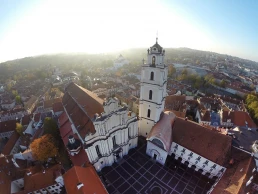
Study in Lithuania: Application Process, Visa, Scholarships, Costs, and Benefits
Pursuing higher studies offers an invaluable opportunity to deepen expertise and open doors to global career prospects. A well-chosen study destination enhances this journey, allowing students to experience diverse cultures, broaden perspectives, and foster independence. Europe has become a popular choice due to its quality of education, rich history, and vibrant campus life. Among its destinations, Lithuania stands out as an affordable, accessible option with well-respected institutions and a student-friendly environment. Let’s explore how Lithuania could be the next step in your academic journey.
Why Study in Lithuania?
Lithuania has become a top study destination, with an impressive international student enrolment rate of 71.91 percent.
Vilnius University, one of the nation’s most prestigious institutions, stands out in both European and global rankings. According to the AD Scientific Index, it ranks 484 in Europe and 1217 worldwide. Furthermore, the QS World University Rankings place Vilnius University (473) within the global top 500, underscoring its commitment to high educational standards.
A key appeal of Lithuanian universities is their wide range of academic offerings, with over 350 programs available in English. These programs provide flexibility and align well with global industry needs, giving graduates the advantage of a globally recognized degree.
Beyond academics, the local job market is thriving, with about 72 percent of the working-age population (15 to 64) employed. Graduates find promising roles in sectors like education, catering, healthcare, and social services. It makes the country not only an ideal place to study but also a promising environment to launch a fulfilling career.
Read more: Studying for Bachelor’s in Romania: Application Process, Costs, Scholarships, and Opportunities for Bangladeshi Students
Lithuania’s Top Universities and Courses
With a strong emphasis on academic excellence, this European country boasts several prestigious universities offering quality education. Here are some of the country’s most notable institutions:
- Vilnius University- Kaunas University of Technology- Vilnius Gediminas Technical University- Vytautas Magnus University- Mykolas Romeris University- Lithuanian University of Health Sciences
These universities provide a variety of programs that appeal to international students, with options designed to support academic growth. Here are some popular courses to consider:
- Medicine- Accounting and Audit- Fashion Engineering- Architecture- Business and Public Administration- Law- Performing Arts- Engineering Sciences.
Read more: How to Register for IELTS Exam in Bangladesh
How to Apply to Lithuanian Universities
There are two main intakes available for international students: the September (Autumn) intake, which is the primary option, and the January–February (Spring) intake, which serves as an alternative. Keep in mind that application deadlines and requirements may differ depending on the university, so it’s essential to check directly with your chosen institution. The process of document verification and subject equivalency can take up to a month or more.
Documents Required for Admission
- Completed application form
- Educational certificate (including grades), validated by the Lithuanian Centre for Quality
- Assessment in Higher Education
- Curriculum Vitae (CV)
- Letter of motivation explaining the reasons for choosing to study in Lithuania
- Copy of a valid passport
- Passport-sized photographs
- Receipt of payment for application and tuition fees
- Bank statements demonstrating adequate funds to cover living costs
- English proficiency certificate: Minimum IELTS score of 6.5 or TOEFL score of 81.
Read more: Studying for Bachelor’s Degree in Hungary: Cost, Scholarships, Opportunities for Bangladeshi Students
1 year ago
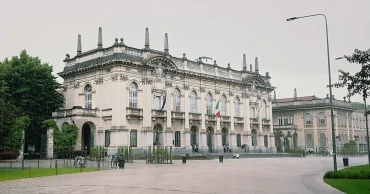
Higher Studies in Italy: Application Process, Costs, Student Visa, Scholarships, and Benefits
Studying abroad offers more than academic growth; it immerses students in diverse cultures, broadening their worldview. They meet people from different backgrounds, forming friendships and professional networks. Italy stands out as a destination that embodies these experiences, with its vibrant history, culture, and cosmopolitan atmosphere. Students go to Italy not only for its world-class education, but also for the chance to live in a culturally rich environment. This article provides a detailed guide on applying in Italy for bachelor's, master's, and PhD, covering key aspects such as study costs, student visas, scholarships, and benefits.
What Makes Italy a Top Destination for International Students?
Italy is home to some of the world’s oldest universities, renowned for centuries of academic tradition and continuous development of their educational systems. These institutions are highly respected in global academic forums, with several ranked in the prestigious QS World Rankings: Politecnico di Milano (123), Sapienza University of Rome (134), and the University of Bologna (154).
According to Global PEO (Professional Employer Organization) Services and Forbes, the country, a member of the EU (European Union) also boasts the third-largest economy in Europe and ranks ninth globally. This economic strength provides abundant opportunities for internships, on-the-job training, and industrial placements in various sectors.
While Italian is the primary language, the growing importance of English in academic settings has contributed to the increasing number of international students. Cities like Milan, Rome, and Turin are among the most student-friendly in Europe, offering an ideal environment for higher education.
Beyond academics, Italy’s appeal extends to its rich cultural heritage and tourism. As ranked by the United Nations World Tourism Organization (UNWTO), Italy holds the 4th position in global tourism. The country thrives with the most UNESCO World Heritage Sites (59), including 53 culturally significant sites and 6 of outstanding natural beauty.
Read more: Higher Studies in England: Application, Study Cost, Scholarship, and Other Scopes
Top Universities and Popular Courses in Italy
Top 10 Italian Universities
- Politecnico di Milano- Sapienza University of Rome- University of Bologna- University of Padua- Politecnico di Torino- University of Milan- University of Naples Federico-II- University of Pisa- University of Florence- University of Turin
Popular Courses
Fine Arts, Fashion Design, Business and Management, Social Sciences and Humanities, Hospitality and Tourism, Medicine, Computer Science, Economics, Finance, Political Science, etc.
Read more: How to Register for TOEFL Exam in Bangladesh?
How to Apply for Admission in Italian Universities
Like other Schengen countries, Italy follows a two-semester education system. The first admission season, Fall, begins its application process between November and April. Courses typically start in late September or early October, after all applications are received from April to July. During this period, leading universities admit the maximum number of students across various courses.
The Spring admission season accepts applications between July and September, with courses beginning between October and December. Admissions are finalized between February and March, and the courses commence afterward.
In Italy, each educational institution requires separate applications through its own web portal. Specific deadlines, required documents, and application costs are detailed on the university websites. It’s important to note that only one course can be applied for at each university.
Read more: Studying for Bachelor’s in Romania: Application Process, Costs, Scholarships, and Opportunities for Bangladeshi Students
Pre-enrolment
Pre-enrolment is a crucial step in the admission process for Italian educational institutions. It is a prerequisite for applying to any course. Students must apply by registering on the Universitaly portal (https://universitaly-private.cineca.it/index.php/registration/firststep).
At this stage, students should research the website of their preferred university and contact admission officers to gather all relevant information and instructions. After that, all required documents must be uploaded to the Universitaly portal for the chosen study program. Once the pre-enrollment online application is completed, the university will begin preparing the offer letter.
During this time, students will be instructed to pay the study fee. Typically, this fee is charged in three installments throughout the academic year. The first installment is paid at the time of admission, and subsequent installment dates are notified by the respective universities.
Read more: How to Register for IELTS Exam in Bangladesh
Documents Required for Admission Application
- Completed online application form- A valid passport- Documents of Previous Educational Qualifications:- High school diploma or equivalent certificate and academic transcript for undergraduate programs- Graduation certificate and academic transcript for postgraduate programs- Postgraduate certificate and academic transcript for doctoral programs- A minimum score on the language proficiency test:IELTS: 6 or TOEFL iBT: 59 for undergraduate programsIELTS: 6.5 or TOEFL iBT: 79 for master’s programsIELTS: 7 or TOEFL iBT: 96 for Ph.D. programs- Study Fee Payment Receipt: A minimum of 1 installment out of three. In most cases, the amount is between 120 and 180 Euros, equivalent to BDT 15,862 to 23,793 (1 Euro = BDT 132.18).- CV- Statement of Purpose- Multiple motivation letters- Medical Certificate and Health Insurance- GMAT or GRE test results (for master’s programs)- Portfolio (for applicants in creative fields)- Research Proposal (for Ph.D. programs)- Contact information for the supervising professor and a consent form for supervision of the - student’s research- Summary of relevant publications (if applicable)- Evidence of work experience – for some selected programs- Additional documents may be required depending on the university, course, and program.
Read more: Studying for Bachelor’s Degree in Hungary: Cost, Scholarships, Opportunities for Bangladeshi Students
How to Apply for a Student Visa in Italy
Students wishing to study long-term in Italy must apply for a Type-D visa, also known as a national visa, which allows for stays exceeding 90 days. This visa is valid for the entire duration of the selected full-time study program.
Bangladeshi students can apply for a Type-D visa through VFS (Visa Facilitation Services), the global partner of Italian immigration. Access the application form via the following link for download:
https://visa.vfsglobal.com/one-pager/italy/bangladesh/english/pdf/visa-d-long-term.pdf
After filling out the form, it must be printed, signed manually, and submitted to the VFS center along with the relevant documents.
Read more: Study in France: Costs, Scholarships, and Opportunities for Bangladeshi Students
Documents Required for Visa Application
- Fully completed and manually signed National (Type-D) Visa Application Form- Two recent color photographs:Photographs must be in ICAO (International Civil Aviation Organization) format (size 4 x 3.5 cm), taken on a white background, and no older than 6 months.- Original valid passport and photocopy of each page:The passport must be valid for at least 3 months beyond the date of arrival in any Schengen country and must have at least two blank pages.- Proof of pre-enrollment at an Italian university or AFAM Institute (Institute of Fine Arts, Music, and Dance) (only for pre-enrollment): Admission and study costs must be mentioned.- Admission offer letter from the Italian university.- Proof of applicant's financial solvency:- The student’s personal bank statement from any bank in Bangladesh for the last 6 months.- Proof of financial resources if sponsored:The sponsor’s bank statement from any bank in Bangladesh for the last 6 months.Proof of family relationship with the sponsor (the sponsor must be related by blood or marriage).Proof of financial resources is required even if the student has been awarded a scholarship.- IELTS Certificate (minimum score 6) as proof of English language proficiency. The certificate must be issued no more than two years before the visa application date.- Proof of student residence in Italy:Apartment purchase or rental agreement, orResident statement from an Italian citizen or a foreign citizen with a permanent residence permit in this country. The identity card of the person signing the statement must be attached.- Advance air ticket booking details.- Travel Insurance: Coverage of EUR 30,000 (BDT 39,65,486), including medical fees, hospitalization, and repatriation expenses.- Marriage certificate (if married), divorce certificate (if divorced), or death certificate of spouse (if widowed or surviving spouse).
Read more: Staying Safe When Studying Abroad: Essential Considerations
Visa Application Submission and Biometric Registration
An online appointment does not require submitting visa-related documents at VFS. However, the application process must be initiated by completing the link form at https://vfsforms.mioot.com/forms/CFNC/.
The appointment date will be sent to the candidate’s email address provided in the form. A printout of this email must be brought when visiting the VFS center.
Italy VFS Center Addresses in Bangladesh:
Dhaka: Nafi Tower (4th & 5th Floor), 53, South Gulshan Avenue, Gulshan 1, Dhaka 1212.Chattogram: World Trade Center Chattogram, (5th Floor), 102/103 Agrabad C/A, Commerce College Road, Chattogram-4100.Sylhet: 4th Floor, Nirvana Inn Complex, Ramer Dighir Par, Mirzajungal Road, Sylhet-3100.
Applicants must attend the VFS center between 8:30 a.m. and 1:00 p.m. for submission. On the appointment day, biometric registration will be completed, which involves taking a photograph and scanning all ten fingerprints. In some cases, an interview may be conducted. Once the process is completed, the candidate will receive an acknowledgment letter or receipt upon payment of any incidental expenses, including the visa fee.
Read more: Where to Learn the French Language in Dhaka
Visa Processing Time and Incidental Costs
A study visa typically takes a minimum of 21 calendar days to process. However, delays may occur due to document verification or other reasons.
As per Italy's VFS website, the Type-D visa fee is EUR 50 (BDT 5,750). The VFS global service charge is EUR 38 (BDT 4,370), and an additional bank draft charge of BDT 270 applies.
Visa Processing Status and Collection
The status of the visa application can be tracked via the VFS web portal during the verification process. To track the application, visit this link:https://www.vfsvisaonline.com/Global-Passporttracking/Track/Index?q=shSA0YnE4pLF9Xzwon/x/IzcvBCb/70NmWcryI2n01dau+KWr9vOycRn8+9h+u8XIqecwY3I+ZSwJbdFTpO9OZlVSATCCz354s5WEZMMYrE=Applicants must enter their last name and reference number, which can be found on the receipt issued by VFS. You can also inquire about the visa status by calling +8809606777666.
Once the visa is approved, the candidate will be notified via phone. After receiving confirmation, the passport with the visa can be collected from the VFS center. The original receipt or acknowledgment letter and a national identity card must be presented during collection.
Read more: Free Websites for Online IELTS Mock Tests
1 year ago
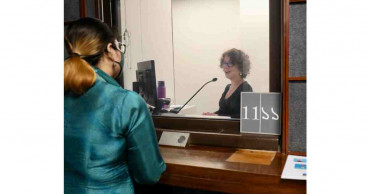
US embassy holds “Super Friday” to help meet huge demand for student visa interviews
The US Embassy in Dhaka interviewed over 600 students applying for nonimmigrant student visas in a special workday called “Super Friday.”
“We recognize the unique opportunity that study in the United States offers,” said U.S. Embassy Consul General William Dowers, adding that they are prioritizing student visa interviews.
The US embassy plans to have another “Super Friday” on July 29, 2022 and this is part of a campaign to allow the Embassy to meet high demand for such visas, said the embassy on Friday.
Although the global COVID-19 pandemic has disrupted international educational exchange and student mobility around the world, the US embassy in Dhaka has resumed regular consular services and is making special efforts to ensure as many students as possible receive interviews before the start of the fall semester.
These special efforts include spending selected Fridays dedicated to interviewing applicants for student visas.
The United States remains a popular destination for higher education.
During the 2020-2021 academic year, it welcomed over 914,000 international students from over 200 places of origin.
Read : UN court to rule on jurisdiction in Rohingya genocide case
International students build life-long connections with American peers to maintain and grow America’s international partnerships and to collectively address current and future global challenges.
In the last decade, the number of Bangladeshi students in the United States has nearly tripled, to over 8,500.
According to the 2021 Institute of International Education Open Doors report, Bangladesh currently ranks 14th among the top-sending countries of students to America from around the world—moving up three places from 17th place during the 2019-2020 academic year.
The United States has been open and welcoming to international students throughout the pandemic.
US colleges and universities have implemented different procedures to safely welcome international students in person, online, and via hybrid learning methods, providing opportunities and resources to students during a global crisis.
These exemplify the US government’s commitment to international student mobility and global higher education.
4 years ago

Bangladesh requests Germany to expedite student visa processing
Bangladesh has requested Germany to expedite the visa processing for its students going to the country for under-graduate and post-graduate studies. Bangladesh has also sought Germany’s support in developing skill sets for creating job opportunities for the hard working people of Bangladesh.State Minister for Foreign Affairs Md Shahriar Alam made the request when Ambassador of Germany to Bangladesh Achim Tröster met him at the Ministry of Foreign Affairs on Sunday.
Also read: Bangladesh to open first official visa application centre in KolkataBoth the countries are celebrating the 50th anniversary of the establishment of their diplomatic relations this year. The state minister urged the ambassador for enhanced German investment to take advantage of the facilities being created in Special Economic Zones and Hi-Tech parks in Bangladesh. He requested the envoy to explore ways to increase the volume and content of bilateral trade between Bangladesh and Germany. Shahriar briefed the German ambassador of the situation arising out of the forcibly displaced Myanmar nationals currently sheltered in Bangladesh and sought continued cooperation and support of Germany for an early resolution of the crisis.
Also read: Visa Free Country List for Bangladeshi Passport Holders in 2021The envoy appreciated Bangladesh’s proactive role in providing shelters as well as humanitarian assistance to the Rohingyas. He assured of standing by Bangladesh to help find a durable solution for the Rohingya crisis. He also mentioned about his recent visit to Bhashan Char and expressed his satisfaction about the infrastructural development as well as all other facilities that are being put in place by the Government of Bangladesh. During the meeting, different aspects of bilateral relations between Bangladesh and Germany were discussed including trade and investment, technical cooperation, technology transfer, private sector development, new economic opportunities in Bangladesh, maritime connectivity and cooperation in vocational education. They also exchanged views on the regional and multilateral cooperation between the two countries.Secretary (West), Ministry of Foreign Affairs Mr. Mr. Shabbir Ahmad Chowdhury was present at the meeting.
4 years ago