world-business

U.S. trade deficit falls 24% in Aug as tariffs curb imports
The U.S. trade deficit dropped nearly 24% in August as President Donald Trump’s broad tariffs on global imports drove down purchases from other countries.
The Commerce Department reported Wednesday that the gap between U.S. imports and exports fell to $59.6 billion in August from $78.2 billion in July. The report, delayed more than seven weeks due to a federal government shutdown, showed imports of goods and services declined 5% to $340.4 billion, following a July surge when companies stocked up ahead of Trump’s tariffs, which took effect on Aug. 7. Exports edged up 0.1% to $280.8 billion.
Trump has long argued that persistent trade deficits reflect foreign countries taking advantage of the U.S., prompting him to abandon decades of free-trade policy and impose double-digit tariffs on most imports. Specific goods, including steel, copper, and automobiles, have faced separate levies.
Despite the August drop, the U.S. trade deficit for 2025 remains higher than last year, totaling $713.6 billion through August — a 25% increase from $571.1 billion in the same period of 2024.
Economists note that lower imports can boost economic growth since foreign goods are subtracted from gross domestic product (GDP). “August’s smaller trade deficit will support third-quarter real GDP because more U.S. spending went toward domestic goods and services rather than foreign ones,” said Bill Adams, chief economist at Comerica Bank. He added that while the report is somewhat dated due to the shutdown, it reinforces evidence of robust third-quarter growth.
Trump has defended the tariffs as a way to protect U.S. industries and encourage domestic manufacturing. Importers typically pass the added costs to consumers, which economists say has contributed to inflation remaining above the Federal Reserve’s 2% target.
Asian shares mostly slip after Wall Street’s weak finish
Following voter concerns about high living costs, the president recently removed tariffs on products including beef, coffee, tea, fruit juice, cocoa, spices, bananas, oranges, tomatoes, and some fertilizers. Meanwhile, the legality of Trump’s tariffs faces a Supreme Court challenge, with justices questioning whether the president can impose unlimited import taxes by declaring a national emergency.
Source: AP
1 month ago
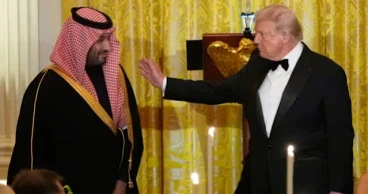
Deals and diplomacy mark Trump–Saudi Crown Prince meeting
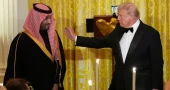
President Donald Trump hosted Saudi Crown Prince Mohammed bin Salman at the White House on Tuesday in a meeting marked by friendliness, elaborate ceremony and major announcements on defense and investment. Trump praised the crown prince’s leadership, downplayed concerns about Saudi Arabia’s human rights record and touted sweeping new Saudi commitments to the United States.
The visit was steeped in pomp. Fighter jets performed a flyover as the two leaders watched from a red carpet, an honor guard arrived on horseback, and an opulent dinner followed in the East Room.
During a joint appearance in the Oval Office—occurring seven years after U.S. intelligence linked the crown prince to the killing of journalist Jamal Khashoggi—the two fielded numerous questions from the press, including from one reporter whom Trump repeatedly berated.
Progress on defense cooperationTrump confirmed that the U.S. would move ahead with the sale of F-35 fighter jets to Saudi Arabia, saying Israel’s concerns about preserving its qualitative military edge would be addressed. Some Pentagon officials have opposed the deal due to fears that sensitive technology could reach China, a close Saudi partner.
Trump insisted both Israel and Saudi Arabia “should get top of the line” equipment, and Israeli officials have indicated they could accept the sale if Saudi Arabia normalizes ties with Israel under the Abraham Accords. Prince Mohammed reiterated that his country would join the framework only if a credible path to a Palestinian state is secured.
Trump also said Washington and Riyadh were finalizing a broader security agreement and would continue pursuing a civilian nuclear cooperation deal. The two nations additionally signed an agreement for Saudi Arabia to purchase nearly 300 U.S.-made tanks. At the evening dinner, Trump designated Saudi Arabia a major non-NATO ally, a symbolic status that enables certain defense and trade benefits.
Khashoggi’s murder largely brushed asideThe crown prince’s visit was his first to the White House since the 2018 murder of Khashoggi, a U.S. resident and Washington Post columnist. U.S. intelligence assessed that Prince Mohammed likely approved the operation.
When questioned about the killing and Saudi involvement in the 9/11 attacks, Trump attacked the reporter asking the questions. He described Khashoggi as “extremely controversial” and insisted the crown prince “knew nothing about it.”
Trump plans to sell F-35s to Saudi Arabia ahead of Crown Prince’s visit
Prince Mohammed again denied involvement and said Saudi Arabia had undertaken investigations and reforms. “It’s been painful,” he said. “We’ve improved our system to ensure nothing like that happens again.”
Trump also commended the kingdom for human rights progress, without specifying which reforms he meant.
Full ceremonial welcomeTrump welcomed the crown prince on the South Lawn with an embrace-like gesture and a full red-carpet reception, complete with a military band and a tour of White House decorations.
Calling the prince “a very respected man” and “a longtime friend,” Trump also criticized former President Joe Biden for greeting the prince with a fist bump in 2022. “You shake his hand,” Trump said, demonstrating the gesture.
The evening dinner featured high-profile guests including Nvidia CEO Jensen Huang, Tesla founder Elon Musk, Apple CEO Tim Cook, golfer Bryson DeChambeau and football star Cristiano Ronaldo. Guests were served pistachio-crusted rack of lamb and a chocolate mousse pear dessert.
Broad but undefined economic promisesPrince Mohammed told Trump that Saudi Arabia would increase its investment commitments in the U.S. from $600 billion—announced during Trump’s May trip to Riyadh—to $1 trillion. Specifics were not disclosed but are expected to involve technology, artificial intelligence, jet engines and other sectors.
Source: AP
1 month ago
Asian shares mostly slip after Wall Street’s weak finish
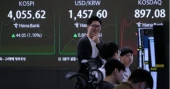
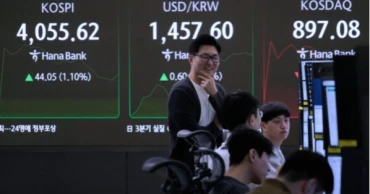
Asian markets were mostly lower Monday as U.S. futures edged higher following a lackluster performance on Wall Street last week. Tokyo’s Nikkei 225 fell 0.3% to 50,226.67 after data showed Japan’s economy contracted 1.8% annually in July-September. The dollar rose slightly against the yen to 154.65 from 154.58.
Chinese markets also declined, with Hong Kong’s Hang Seng down 0.8% at 26,359.22 and Shanghai Composite off 0.4% at 3,973.31, amid heightened tensions between China and Japan over Taiwan-related comments by Japan’s Prime Minister Sanae Takaichi.
In contrast, South Korea’s Kospi gained 1.7%, led by tech stocks, including SK Hynix (+6.8%) and Samsung Electronics (+3.3%), after collaboration plans with Nvidia on artificial intelligence development. Australia’s S&P/ASX 200 fell slightly to 8,628.60, while Taiwan’s Taiex rose 0.4% and India’s Sensex added 0.3%.
G7 foreign ministers gather in Canada amid rising trade tensions with Trump
U.S. futures showed moderate gains, with the S&P 500 up 0.5% and the Dow Jones Industrial Average up 0.1%, following mixed trading last Friday. Treasury yields and investor uncertainty remain influenced by Federal Reserve policy, interest rate expectations, and inflation trends.
Crude oil prices dipped, while Bitcoin rose 1.1% to $95,400. The euro declined slightly to $1.1602.
Source: AP
1 month ago

Slowing wartime economy forces Kremlin to seek more revenue from consumers
After two years of rapid, war-fueled growth, Russia’s economy is losing momentum. Oil revenues have dropped, the budget deficit has widened and defense spending — the engine of recent expansion — has plateaued.
Facing growing financial pressures, the Kremlin is turning to ordinary consumers and small businesses for additional revenue, signaling where President Vladimir Putin plans to find the money to stabilize state finances.
A proposed increase in value-added tax (VAT) from 20% to 22% could add up to 1 trillion rubles ($12.3 billion) to government coffers. The measure is already advancing through the Russian parliament and is slated to take effect on Jan. 1.
More tax hikes and higher fees expectedThe legislation also lowers the sales-revenue threshold for businesses required to collect VAT, dropping gradually to 10 million rubles ($123,000) by 2028 from the current 60 million rubles ($739,000). The move aims partly to prevent firms from splitting operations to dodge the tax — but it will also pull in many small enterprises such as neighborhood shops and beauty salons.
Other proposed measures include higher excise taxes on spirits, wine, beer, cigarettes and vapes. The tax on strong liquor like vodka would rise by 84 rubles per liter of pure alcohol — roughly 17 rubles (20 cents) for a half-liter bottle, or about 5% of the minimum retail price.
Fees for driver’s license renewals and international licenses are also set to increase, while a major tax break on imported cars will be scrapped. Russian media report that officials are considering a new technology tax of up to 5,000 rubles ($61.50) on high-end devices such as smartphones and laptops.
G7 ministers reaffirm support for Ukraine, sidestep trade and military strike debates
The unfolding tax measures underscore the trade-offs Putin faces as the war in Ukraine enters its fourth year: the tension between sustaining military spending and protecting household purchasing power.
Public reaction: frustration mixed with resignationOn a Moscow street, residents told The Associated Press the changes will strain household budgets, particularly in poorer regions.
Pensioner Svetlana Martynova warned that forcing smaller firms to collect VAT could backfire.“I think small and medium businesses will fold,” she said. “The budget will get less, not more.”
Higher car registration costs add to the burdenThe VAT hike arrives alongside changes to the recycling fee for registering cars — a cost increase that will hit owners of higher-powered imported vehicles. Starting Dec. 1, individuals will lose access to a concessionary rate of 3,400 rubles ($42) on cars above 160 horsepower and must pay the commercial rate, potentially hundreds of thousands of rubles.
But this will do little to spur domestic auto manufacturing, said Andrei Olkhovsky, head of the Avtodom auto group, citing high interest rates and the relatively small Russian market compared to China, now the main supplier of imported vehicles.
He expects sales to dip in the short term and then return to current levels.“Taxes and fees will influence prices,” Olkhovsky said. “Consumers will adapt — and demand higher wages. That will raise the cost of everything around us.”
Slower growth widens deficitRussia’s economy contracted early this year and is projected to grow only about 1% in 2025 — a sharp slowdown from the more than 4% logged in both 2023 and 2024. High central bank interest rates, now 16.5%, are dampening activity as policymakers try to curb inflation running at 8% after years of heavy wartime spending.
Oil revenues have fallen roughly 20% due to lower global prices, according to the Kyiv School of Economics Institute. Western sanctions continue to drag on investment and raise production costs.
As a result, the budget deficit has been revised upward to 2.6% of GDP, compared with 1.7% last year. Unlike many countries, Russia cannot borrow on global bond markets and must rely on domestic banks.
Finance Minister Anton Siluanov has argued that raising revenue is preferable to borrowing, saying excessive debt would fuel inflation and force even higher interest rates — further weakening growth.
SoftBank sells Nvidia stake for $5.8 billion to boost investments in OpenAI
While the VAT increase may briefly push prices higher, economists say it could later ease inflation by reducing demand.
Kremlin still has cash, but choices ahead grow harderThe tax increases mark a shift away from the earlier wartime economic model, in which higher oil prices and soaring defense spending boosted wages and kept consumer demand strong. Death payments and recruitment bonuses also pumped money into poorer regions.
Putin is not at imminent risk of running short, said Alexandra Prokopenko of the Carnegie Russia Eurasia Center in Berlin.
“Growth is slowing, but companies are paying taxes, people are consuming and earning salaries, and paying taxes on those incomes,” she said. “For the next 12 to 14 months, Putin has enough money to sustain the war and current spending levels.”
Beyond that point, she added, the Kremlin may confront tough decisions.“He will need to choose between maintaining military spending and preserving consumer living standards so people don’t fully feel the impact of the war.”
Source: AP
1 month ago
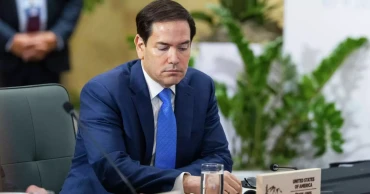
G7 ministers reaffirm support for Ukraine, sidestep trade and military strike debates
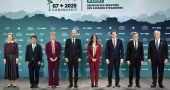
Foreign ministers from the Group of Seven (G7) nations reaffirmed their united support for Ukraine and condemned escalating violence in Sudan on Wednesday but avoided divisive issues such as U.S. trade tensions with Canada and recent American military strikes in the Caribbean.
At the two-day meeting, the G7 ministers met with Ukraine’s Foreign Minister Andriy Sybiha, who urged continued international support as his country braces for a harsh winter amid intensified Russian attacks. In a joint statement, the ministers pledged to increase economic pressure on Moscow and target those financing its war.
Canada and the UK announced new sanctions and energy aid for Ukraine, while U.S. Secretary of State Marco Rubio said discussions focused on strengthening Ukraine’s defense.
The gathering came shortly after President Donald Trump halted trade talks with Canada over a provincial advertisement that angered Washington. Canadian Foreign Minister Anita Anand declined to discuss the issue, emphasizing that the focus was on G7 cooperation.
G7 foreign ministers gather in Canada amid rising trade tensions with Trump
Rubio also confirmed that U.S. military operations against alleged drug-smuggling vessels “didn’t come up once” in discussions, dismissing reports of intelligence-sharing tensions with Britain.
The G7 ministers also issued a strong condemnation of Sudan’s worsening conflict, with Rubio calling for urgent action to stop the flow of weapons to the paramilitary Rapid Support Forces.
The G7 includes Canada, the U.S., Britain, France, Germany, Italy and Japan, with ministers from Australia, India, Brazil, Saudi Arabia, Mexico, South Korea, South Africa and Ukraine also invited.
Source: AP
1 month ago
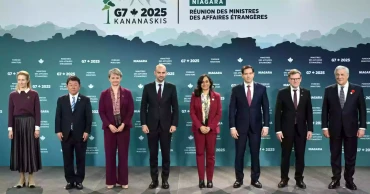
G7 foreign ministers gather in Canada amid rising trade tensions with Trump
Foreign ministers from the Group of Seven (G7) industrialized nations are meeting in southern Ontario this week as trade and defense tensions escalate between the United States and its traditional allies, including Canada, alongside growing uncertainty over U.S. President Donald Trump’s Gaza ceasefire plan and efforts to end the Russia-Ukraine war.
Canadian Foreign Minister Anita Anand, who is hosting the meeting of G7 counterparts from the U.S., Britain, France, Germany, Italy and Japan, told The Associated Press that maintaining cooperation “across a range of issues” remains essential despite trade pressures.
“We’re tackling a range of critical issues with one main focus: putting the safety and security of Americans FIRST,” U.S. Secretary of State Marco Rubio said in a social media post ahead of the talks.
Anand also invited top diplomats from Australia, Brazil, India, Saudi Arabia, Mexico, South Korea, South Africa and Ukraine to join portions of the two-day meeting. Key agenda items include promoting long-term peace and stability in the Middle East and reaffirming commitment to Trump’s proposed Gaza ceasefire plan.
On Wednesday morning, the ministers are scheduled to meet with Ukraine’s foreign minister. The U.K. announced ahead of the talks that it would contribute 13 million pounds ($17 million) to help repair Ukraine’s energy infrastructure ahead of winter. The funds will support power, heating and water system repairs, as well as humanitarian assistance.
“President Putin is trying to plunge Ukraine into darkness and cold,” U.K. Foreign Secretary Yvette Cooper said, adding that Britain’s aid aims to “keep the lights and heat on.” Canada has made a similar pledge in recent weeks.
SoftBank sells Nvidia stake for $5.8 billion to boost investments in OpenAI
Canada’s tenure as G7 host this year has been overshadowed by strained relations with Washington, largely due to Trump’s tariffs on Canadian imports and renewed friction over defense spending demands. Trump has pressed NATO allies — all G7 members except Japan — to spend 5% of GDP on defense. While some have agreed, others, including Canada and Italy, remain far below that benchmark. Anand said Canada plans to reach the target by 2035.
Differences within the G7 also persist over the Israel-Hamas war, with Britain, France and Canada supporting recognition of a Palestinian state, even without a peace deal. Meanwhile, several allies have taken a harder stance on Moscow’s aggression in Ukraine than Trump has.
The meeting near the U.S. border follows Trump’s abrupt suspension of trade talks with Canada after Ontario’s provincial government ran an anti-tariff ad campaign in the U.S. Prime Minister Mark Carney has since apologized and expressed readiness to resume negotiations.
Anand said she will meet separately with Secretary Rubio to discuss bilateral and global issues, though trade matters fall under a different U.S. official’s purview. “Every complex relationship has numerous touch points,” she said. “There’s continued work to be done — both on trade and beyond — and that’s where Secretary Rubio and I come in.”
China’s exports dip 1.1% in October as shipments to US plunge 25%
U.S. officials said Rubio will focus on halting the wars in Gaza and Ukraine, as well as maritime security, Haiti, Sudan, and cooperation on critical minerals. Canada’s priorities include Arctic security, the Ukraine war, and Haiti. A working lunch will center on energy and the supply of critical minerals vital to modern technologies and defense industries — a key area of U.S.-Canada cooperation.
Source: AP
1 month ago
SoftBank sells Nvidia stake for $5.8 billion to boost investments in OpenAI
Japanese technology conglomerate SoftBank said Tuesday it has sold its shares in U.S. chipmaker Nvidia for $5.8 billion, signaling a strategic shift toward investing more heavily in OpenAI, the developer of ChatGPT.
SoftBank Group Corp., based in Tokyo, said the Nvidia stake was sold in October. The move comes as the company’s net profit nearly tripled in the first half of the current fiscal year compared with the same period a year earlier.
Between April and September, SoftBank’s profit surged to about 2.5 trillion yen (approximately $13 billion), while revenue rose 7.7% year-on-year to 3.7 trillion yen ($24 billion).
SoftBank’s earnings often fluctuate because of its wide-ranging investments through its Vision Funds, which have recently performed well.
In February, SoftBank Chairman Masayoshi Son joined U.S. President Donald Trump, OpenAI CEO Sam Altman, and Oracle co-founder Larry Ellison to announce plans for a major artificial intelligence initiative called Stargate, which could see investments of up to $500 billion.
SoftBank has already poured tens of billions of dollars into OpenAI and is partnering with the U.S.-based firm to expand AI services in Japan.
The sale of its Nvidia shares marks Son’s strategic pivot toward artificial intelligence and also generated substantial gains for the company, benefiting from Nvidia’s meteoric rise in market value.
Japan and China trade sharp words after PM Takaichi’s comments on Taiwan
Nvidia recently became the world’s first $5 trillion company—just three months after hitting the $4 trillion mark—and has pledged to invest $100 billion in OpenAI to build massive new AI data centers with at least 10 gigawatts of computing capacity.
While Nvidia and other AI-related firms have fueled this year’s stock market rally, some analysts warn that tech valuations may be overheating, drawing parallels to the early 2000s dot-com bubble.
Despite the divestment, SoftBank and Nvidia maintain close ties, as many SoftBank-backed ventures use Nvidia’s technology.
SoftBank also holds stakes in chipmakers Arm Holdings and Taiwan Semiconductor Manufacturing Co., both benefiting from the growing global demand for AI technologies.
SoftBank shares have nearly doubled in value over the past year, rising another 2% on Tuesday. Nvidia’s stock dipped 1.3% in premarket trading after gaining 5.8% on Monday.
Source: AP
1 month ago

China’s Singles’ Day shopping festival reflects weak consumer sentiment amid economic slowdown
China’s annual “Singles’ Day” shopping festival, once known for record-breaking sales, is now reflecting the country’s cautious consumer mood as economic challenges weigh on spending.
Alice Zhang, a 29-year-old marketer from Guangzhou, said she spent only about half as much this year as in 2024—roughly 3,000 yuan ($421)—after her salary was cut by more than 20%. “I’ve made a conscious effort to cut back,” she said, noting she opted for cheaper products and skipped buying new shoes altogether.
The festival, created by e-commerce giant Alibaba in 2009 as China’s answer to Black Friday, has evolved from a one-day event on Nov 11 into a weeks-long sales period. Analysts say this year’s subdued enthusiasm shows consumers remain wary despite government efforts to boost domestic demand.
According to Chinese retail data provider Syntun, combined sales for this year’s Singles’ Day reached over 1 trillion yuan ($140 billion) by Oct 31. Last year, the figure rose 26% year-on-year to 1.44 trillion yuan.
Economists say household confidence remains fragile amid slow income growth, a cooling property market, and limited stimulus effects. “Confidence remains quite downbeat among households,” said Lynn Song, chief economist for Greater China at ING Bank.
Shaun Rein, managing director of China Market Research Group, said early promotions this year reflect the efforts of major platforms like Alibaba and JD.com to “drum up business” amid weak demand. However, many consumers complained that discounts were smaller and less appealing than in previous years, while analysts observed growing “consumer fatigue.”
Some shoppers also suspect that online retailers inflate prices before offering “discounts.” Guangzhou-based freelance media worker Sonia Song said she now compares prices more carefully across livestreaming apps and e-commerce sites. “I’ll only buy what’s cheapest or most cost-effective now,” she said.
Meanwhile, government rebate programs for trading in old appliances and vehicles have reduced the impact of online discounts, as consumers who already benefited from earlier deals are less likely to spend again.
Amid weak domestic demand, Chinese e-commerce giants are expanding abroad. Alibaba’s Taobao platform is running Singles’ Day campaigns in 20 countries, focusing increasingly on Southeast Asian markets like Thailand, Vietnam, and the Philippines following U.S. restrictions on duty-free small shipments.
Despite the slowdown, beauty, health, and wellness products continue to perform well, according to WPIC Marketing + Technologies CEO Jacob Cooke.
Still, many Chinese are tightening their belts. Gao Liang, who works at a fitness club in Beijing, said he expects to spend far less this year after a 20% income drop. “Our business hasn’t been doing well because people are cutting spending,” he said. “Given my unstable income, I don’t need to hoard things.”
Source: AP
1 month ago

South Korean solar firm cuts pay, hours for Georgia workers as US detains imports
South Korean solar manufacturer Qcells has announced temporary pay and hour reductions for around 1,000 of its 3,000 employees in Georgia, as U.S. customs authorities continue detaining imported components critical to its solar panel production.
Qcells, a subsidiary of South Korea’s Hanwha Solutions, said Friday it will also lay off 300 temporary workers employed through staffing agencies at its plants in Dalton and Cartersville, northwest of Atlanta.
According to the company, U.S. Customs and Border Protection (CBP) has been holding shipments of imported materials at ports over suspicions that they may contain components produced with forced labor in China. The detentions have slowed Qcells’ assembly lines and limited production capacity.
The move follows an announcement by Homeland Security Secretary Kristi Noem in August, stating that enforcement of the 2021 Uyghur Forced Labor Prevention Act would be intensified. The law restricts goods linked to forced labor in China’s Xinjiang region. Reports indicate that CBP began detaining Qcells’ solar cells as early as June.
Qcells, however, has denied any link to forced labor or Chinese supply chains. Company spokesperson Marta Stoepker said, “Our latest supply chain is sourced completely outside of China, and our legacy supply chains contain no material from Xinjiang province based on third-party audits and supplier guarantees.”
She added that Qcells maintains “robust supply chain due diligence measures” and detailed documentation, which has helped secure the release of some shipments.
“Although our supply chain operations are beginning to normalize, HR actions must be taken to improve operational efficiency until production capacity returns to normal levels,” Stoepker said in a statement.
The company confirmed that affected workers will retain their full benefits during the temporary furloughs.
Qcells is currently completing a $2.3 billion plant in Cartersville to produce ingots, wafers, and solar cells — key components of solar modules. Despite the rollback of most federal tax credits for solar panel purchases under the Trump administration earlier this year, Qcells said construction of the facility will continue.
“Our commitment to building the entire solar supply chain in the United States remains strong,” Stoepker said. “We will soon be back on track, with our Georgia team delivering American-made clean energy to communities nationwide.”
Source: AP
1 month ago
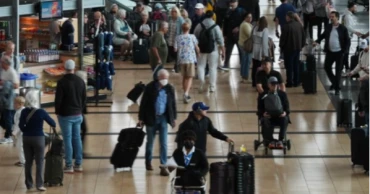
US airlines cancel over 2,500 weekend flights as shutdown strains air traffic control
U.S. airlines canceled more than 2,500 flights over the weekend as the Federal Aviation Administration (FAA) continued to scale back air traffic operations amid the ongoing government shutdown, officials said Saturday.
The agency’s reduced capacity order — aimed at coping with unpaid and overworked air traffic controllers — has begun to disrupt some of the country’s busiest airports, deepening the fallout from what has become the nation’s longest federal shutdown.
“We all travel. We all have somewhere to be,” said Emmy Holguin, 36, waiting for a Miami-to-Dominican Republic flight. “I’m hoping the government can take care of this.”
Analysts warn that if cancellations keep growing into Thanksgiving week, the disruptions could ripple far beyond air travel, squeezing tourism, supply chains, and holiday shipping.
Cancellations surge as staffing thins
Flight-tracking site FlightAware reported more than 1,500 cancellations Saturday, following over 1,000 on Friday, with another 1,000-plus flights already canceled for Sunday.
Major airports in Atlanta, Chicago, Charlotte, and Newark were hit hardest, with delays spreading along the East Coast due to radar and tower staffing shortages.
Drone sighting briefly halts flights at Berlin airport
The FAA said the current flight reductions affect about 4% of commercial operations across 40 airports — a figure expected to rise to 10% by Friday if the shutdown drags on. Transportation Secretary Sean Duffy warned that deeper cuts could follow.
Controllers working without pay
Many controllers have gone without pay for nearly a month, forcing some to call in sick or take second jobs. Others are working mandatory six-day weeks with no pay, according to the National Air Traffic Controllers Association (NATCA).
On Saturday, the union said it delivered 1,600 handwritten letters to Congress urging lawmakers to end the shutdown.
Travelers stranded and frustrated
Although most passengers have been able to rebook, uncertainty remains about future cancellations. “Travel is stressful enough. Then you put these disruptions in place, and it really makes everything more challenging,” said Heather Xu, 46, flying home to Puerto Rico after a cruise.
Some travelers canceled plans altogether. Diana Alvear of New Jersey said her family scrapped their trip to California over safety and disruption concerns. While United Airlines refunded the airfare, she said they lost a $700 Airbnb deposit.
“This has been costly and disappointing,” Alvear said. “It’s really weighing on our hearts.”
Economic ripple effects
Experts warned that disruptions could soon hit consumers’ wallets. Nearly half of U.S. air freight travels in passenger plane cargo holds, meaning flight cuts could push up shipping costs and retail prices.
Pakistan’s PIA resumes UK flights after five-year ban
“This shutdown will impact everything — from business travel to tourism to local tax revenue,” said Greg Raiff, CEO of Elevate Aviation Group. “It’s a cascading effect.”
Patrick Penfield, a supply chain professor at Syracuse University, said the longer the shutdown lasts, “the more likely we are to see the economic pain extend beyond airports and into everyday life.”
Source: AP
1 month ago