Arts-&
4 Bangladeshi filmmakers participating in Cannes Docs 2026
Four Bangladeshi filmmakers are participating in Cannes Docs 2026 with their documentary film projects under a French-supported initiative.
Held alongside the Cannes Film Festival, Cannes Docs is one of the world’s leading platforms for documentary filmmakers, producers, broadcasters, and distributors.
The festival began on Tuesday.
The initiative was organised by Alliance Française de Chittagong in collaboration with Bisubo Art Organization and supported through the French PICC grant, said the French Embassy in Dhaka.
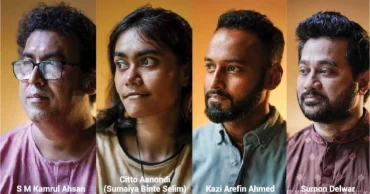
The selected filmmakers are Kazi Arefin Ahmed with Opekkha, Citto Aanondi (Sumaiya Binte Selim) with Blue-Collars from the Frontline, S M Kamrul Ahsan with In Search of Her, and Sumon Delwar with My Cousin.
The projects were selected through a national open call launched in September 2025, followed by a transparent and comprehensive jury evaluation process.
6 days ago
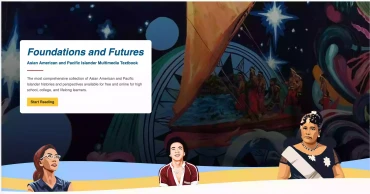
UCLA online textbook gives voice to Asian American, Pacific Islander history and cultures
A new free digital textbook developed by the UCLA Asian American Studies Center is aiming to reshape how Asian American and Pacific Islander (AAPI) history and cultures are taught in schools and universities across the United States.
The multimedia textbook, titled “Foundations and Futures: Asian American and Pacific Islander Multimedia Textbook,” seeks to challenge long-standing stereotypes such as “model minority” and “perpetual foreigner,” which scholars say have contributed to the marginalization of AAPI communities in American history.
The project, which took years to complete and involved around 100 contributors including curriculum developers and illustrators, is designed to provide educators with a comprehensive and accessible resource for teaching AAPI experiences.
“Our presence, our practices, our cultural rituals and things like that are not deemed as ‘American,’” said Karen Umemoto, co-editor and director of the UCLA Asian American Studies Center. “The actual putting together of this textbook also became our fight for inclusion and represents our right to be seen, our right to speak.”
Co-editor Kelly Fong said the textbook will help students see themselves represented in mainstream educational materials. “Young people are going to have so many different opportunities to see themselves and their communities represented in this core text,” she said.
The textbook covers a wide range of AAPI histories, including migration, labour movements, community struggles and contributions across the United States, with additional chapters planned for future updates. It also includes multimedia content such as archival images and videos.
Researchers involved in the project said it gained added urgency during the COVID-19 pandemic, which saw a rise in anti-Asian hate incidents across the United States. The development of the textbook was also shaped by broader discussions on racial equity and ethnic studies education.
“COVID, I think, was really one of the things that shaped the textbook the way that it did,” Fong said, adding that education can play a key role in addressing racism.
The textbook includes stories of lesser-known figures and communities, ranging from Vietnamese and Hmong Americans to Indigenous Hawaiians, as well as narratives of women such as Mamie Tape and civil rights leader Patsy Takemoto Mink.
However, scholars acknowledged that the project is launching amid growing political opposition to diversity, equity and inclusion (DEI) initiatives in education, particularly under Republican-led policies in several states.
Despite concerns that some schools may hesitate to adopt the material, educators involved in the project say it fills a long-standing gap in American history teaching and will serve as an important resource for teachers.
Education experts say the free textbook could be especially valuable because of its accessibility and university backing, even as debates continue over ethnic studies and DEI programs in schools.
The UCLA centre is now seeking additional funding to expand the project further, with plans to add more content on communities such as Tongan Americans and Taiwanese Americans in future updates.
8 days ago
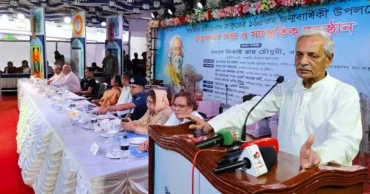
Rabindranath’s literature a powerful tool to remove darkness: Nitai Roy on his birth anniversary
Cultural Affairs Minister Nitai Roy Chowdhury has said the literature of Rabindranath Tagore is one of the most effective tools for removing darkness from society.
He said Rabindranath is the ray of sunlight in Bengali literature.
Just as sunlight dispels darkness, Rabindranath, through his timeless literary works, has illuminated and removed the darkness from our consciousness, he added.
The Minister made these remarks, while speaking as the chief guest at the inauguration ceremony of a three-day national celebration of the 165th birth anniversary of Rabindranath Tagore in Kushtia on Friday.
The event was organised by the Ministry of Cultural Affairs and implemented by the Kushtia District Administration at the historic Shilaidaha Kuthibari in Kushtia, a place deeply associated with the poet’s memories.
Nitai Roy Chowdhury, in his address, also said Rabindranath was, in every sense, a humanist and a compassionate advocate for farmers.
Referring to Shilaidaha as a living monument of Bengali literature and culture, he announced that the Ministries of Culture and Tourism would jointly work to transform the Kuthibari into a complete tourist destination.
Cultural Affairs Secretary Kaniz Moula presided over the event, while eminent educationist Professor Wakil Ahmed delivered a commemorative speech titled “Rabindranath: The Poet of Peace and Humanity.”
Members of Parliament Reza Ahmed Bacchu Molla, Afzal Hossain and Farida Yasmin, among others, were present.
The cultural affairs minister also visited the museum inside the Kuthibari and viewed the preserved memorabilia of the poet.
Later, the event was followed by cultural soiree on the open stage with an inaugural musical performance by Kushtia Shilpakala Academy artist Shreha Khatun.
The three-day festival features a variety of events, including Rabindra Sangeet performances, poetry recitations, dance, and drama, said a PID handout.
8 days ago
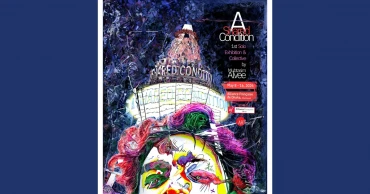
Mubtasim Alvee’s debut solo exhibition ‘A Shared Condition’ begins May 8
A week-long exhibition titled A Shared Condition, marking the first solo showcase of artist Mubtasim Alvee, will open at Alliance Française de Dhaka on May 8.
Curated by artist Mustafa Zaman, the exhibition will open at 6:00pm on Friday at Alliance Française de Dhaka in Dhanmondi.
The exhibition and its associated collaborative programmes will continue until May 16 and remain open daily from 2:00pm to 8:00pm.
Dhaka-based multidisciplinary artist, animator and activist Mubtasim Alvee is currently pursuing an MFA in Painting at the Faculty of Fine Arts of University of Dhaka. His artistic practice explores abstraction, perception and process through open-ended visual forms reflecting personal and collective experiences.
Alvee is also the founder of Syllabaad Collective and the Charukola Animation Society, both aimed at encouraging collaborative learning and interdisciplinary artistic exchange.
According to organisers, A Shared Condition examines the intersection between personal and collective psychological experiences. Inspired by the concept of pareidolia, the exhibition allows figures and forms to emerge organically from abstraction, reflecting memory, emotion and shifting identities.
The exhibition also addresses how historical, political and cultural forces shape the psyche within a post-colonial context. Organisers said the works portray fragmented and fluid identities, highlighting continuous transformation and uncertainty.
Featuring around 100 artworks created between 2024 and 2026, the exhibition includes works in acrylic, spray paint, pastel, printmaking and digital media.
Alongside the artworks, the programme will include panel discussions, workshops, interactive audio-visual installations, film screenings, musical events and theatre performances.
The event is supported by several organisations, including Bhabachakra, Syllabaad Collective, Charukola Animation Society, Dhaka Comics, Cartoon People, Tickify, Elaka Studios Ltd., Footprint Film Production, Siliconinja, and Street Spirits.
10 days ago
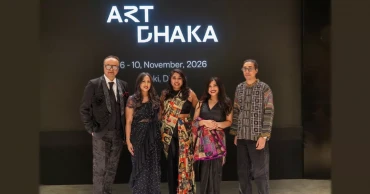
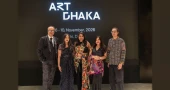
First edition of Art Dhaka to take place on November 6–10
An exciting chapter in Bangladesh’s cultural landscape has begun with the official launch of Art Dhaka, a new art fair scheduled to be held in Dhaka from November 6–10 this year.
The launch event held at Aloki on Sunday brought together diplomats, corporate leaders and members of the country’s arts and culture community, formally introducing the initiative to the public.The initiative is led by a group of individuals and institutions deeply committed to promoting the country’s arts and culture.
The founding members include Durjoy Rahman, Aumia Khundkar, Amreen Bashir Ali, Fahd Sattar, and Nahar Khan. Together, they bring a powerful convergence of cultural leadership, media, philanthropy, and institutional experience.
Art Dhaka has been conceived as a hybrid art fair designed to bring together artists, galleries, collectors, and institutions within a single curated environment. The fair will feature gallery presentations, curated exhibitions, public programming, and dedicated spaces for emerging artists and new collectors.
The fair will be designed to create multiple points of engagement. Talks, panels, and interactive experiences will offer audiences insight into artistic practice, collecting, and the evolving role of art in society.
A central focus of Art Dhaka is to bridge the generational gap among patrons and cultivate new audiences, said a press release on Thursday.
Through accessible entry points, educational programming, and direct engagement with artists and curators, the platform aims to demystify the art world and build familiarity with artistic practice.
By creating pathways for students, young professionals, and first-time buyers to engage with art in a meaningful way, Art Dhaka seeks to establish an informed next generation of collectors who can support and strengthen the cultural ecosystem over time.
With the tagline, “Art for All,” this platform aims to be a place where artists, collectors, and institutions can meet, where new audiences can engage with confidence, and where the cultural energy of Bangladesh can be experienced at scale.
The first edition of Art Dhaka aims to facilitate a space where artistic practice, audiences, and patronage come together with clarity and purpose.
About the founders:
Durjoy Rahman is the Founder of the Durjoy Bangladesh Foundation (DBF) and one of Asia’s foremost art collectors and cultural philanthropists. For over three decades, he has been deeply involved in building a distinguished collection that spans international masters alongside emerging and established South Asian artists. Through DBF, Durjoy actively supports creative practice by initiating exhibitions, artist residencies, publications, and cross-cultural collaborations worldwide. The name “Durjoy Bangladesh” translates to “Invincible Bangladesh,” reflecting a spirit of resilience and cultural strength that aligns with the foundation’s mission.
DBF has long-term partnerships with leading international institutions including the Victoria and Albert Museum (V&A) and the Los Angeles County Museum of Art (LACMA), among others, playing a vital role in placing Bangladeshi and South Asian art within major global discourses.
Nahar Khan works across media, culture, and global engagement, shaping narratives that move across borders. She is the Executive Editor of the United News of Bangladesh (UNB), one of the country’s leading and most trusted independent news agencies. She oversees editorial integrity, newsroom innovation, and the agency’s ongoing transformation within an evolving information ecosystem.
She is the founder of Solis, a multi-pillar platform working across strategic insights and intelligence, convening and culture. Her practice is shaped through directing exhibitions, artist residencies, high-level symposia, and international exchange programs that place Bangladeshi art in dialogue with global platforms.
Her broader work includes her role on the board of Cosmos Foundation, supporting conservation, cultural and heritage initiatives. Through exhibitions and cross-border collaborations, she has worked to position Bangladesh’s narratives within wider global conversations. Her most recognised project, The Black Story, brought together artists and scholars across continents to explore shared histories through an Afro–South Asian lens.
Amreen Bashir Ali is a strategist and academic working at the intersection of art, education, and global development. She leads initiatives at the Mubarak Ali Foundation focused on cultural diplomacy and education, including partnerships with institutions such as Harvard Business School, Frieze Art Fair and South by Southwest (SXSW) London. She holds degrees from McGill, Harvard, and Oxford University, and is currently pursuing a PhD in Education at Trinity College Dublin.
T. Aumia Khundkar is the Deputy Managing Director of ICE Media, Bengal Group Limited and leads the operations and editorial direction of the company’s two publications, ICE Today and ICE Business Times. Beyond publishing, Khundkar has extensive experience in managing public relations and communications, and organising events such as Bengal Classical Music Festival and Dhaka Makers. With a deep-rooted affinity for art, culture, and music, her work is driven by a continued commitment to nurturing and elevating Bangladesh’s evolving creative landscape.
Fahd Sattar is the Founder and CEO of Aloki, a multidisciplinary cultural space in Dhaka working across the intersections of art, music, design, performance, and public programming. He is also the co-founder of Dhaka Makers, a platform dedicated to supporting independent artisans, designers, artists, and creative entrepreneurship within Bangladesh’s evolving cultural landscape.
His work focuses on building accessible and community-driven cultural infrastructure through exhibitions, festivals, markets, performances, and cross-disciplinary collaborations. Through both Aloki and Dhaka Makers, Sattar has worked to create spaces that bring together artists, craftspeople, musicians, curators, and audiences in ways that encourage dialogue, experimentation, and new forms of cultural exchange.
With a background rooted in creative direction, event-making, and independent cultural production, his practice explores how alternative platforms can contribute to the growth of contemporary culture and creative economies in Bangladesh.
10 days ago

Pen pal culture endures in digital age as interest in handwritten letters grows
Despite the dominance of digital communication, pen pal programmes continue to survive and even attract renewed interest, with many people rediscovering the value of handwritten letters.
The trend is reflected in stories like that of a woman who recently travelled thousands of miles to fulfil a decades-old promise to her childhood pen friend from New Zealand, highlighting the lasting bonds created through letter writing.
Although organisations such as International Youth Service, which once connected pen pals globally, have shut down, others have persisted or emerged during the internet era. Even as some countries scale back traditional mail services, enthusiasts say there is growing enthusiasm for physical correspondence.
Rachel Syme, a writer for The New Yorker, launched a pen pal initiative during the COVID-19 pandemic that drew more than 15,000 participants. She continues to see strong interest, with hundreds signing up for new rounds of matches and readers seeking pen pals at her book events.
She believes handwritten communication appeals particularly to younger generations looking for a more meaningful and mindful alternative to constant digital interaction.
Long-time participants also highlight the emotional value of pen pal relationships. Julie Delbridge, who joined International Pen Friends as a teenager, described the experience as deeply rewarding and supportive, offering friendship and diverse perspectives during a difficult period in her life.
Over the decades, International Pen Friends has connected more than 2 million people worldwide, with membership rising again during the pandemic and increasing interest recently among young adults.
Educational institutions have also embraced the concept. In the United States, schools and universities are using letter writing to promote communication skills, empathy and reflection. Some professors even require students to exchange letters by post to better understand different forms of connection.
Experts say the appeal of letter writing lies in its slower, more deliberate nature. Compared with instant messaging, it encourages deeper thought and emotional expression.
Digital platforms are also adapting the idea. Apps like Slowly recreate the pen pal experience by delaying message delivery to mimic traditional mail, attracting millions of users globally.
Still, many enthusiasts argue that the tactile experience of writing and receiving letters remains unmatched, offering a unique and personal form of communication.
For those who have maintained long-term pen friendships, the connections often go beyond words, sometimes lasting decades and leading to real-life meetings that reinforce the enduring power of handwritten correspondence.
12 days ago
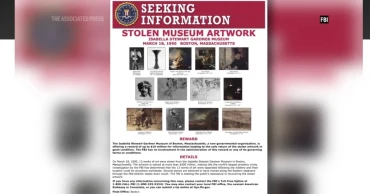
Inside the world’s largest art heist
For decades, the 1990 theft of 13 artworks from the Isabella Stewart Gardner Museum — now valued at more than $500 million — has remained unsolved.
It remains the largest art theft in history — far surpassing more recent museum thefts, including a daylight heist at the Louvre involving far fewer works that was resolved more quickly. In 2013, the FBI said it knew who was responsible for the Boston museum heist but declined to name them, fueling speculation that persists today.
A former FBI agent who led the investigation for more than two decades is now offering the first detailed account of how investigators reached that conclusion — and publicly identifying the men he believes were involved. In a new book, “Thirteen Perfect Fugitives,” Geoffrey Kelly traces how the artworks moved through criminal networks, where violence took the lives of key suspects and witnesses, and challenges long-circulating theories by revisiting key details.
The irony at the center is Gardner’s intention for the museum to remain frozen in time, stipulating in her will that nothing in the Venetian palazzo-inspired building would be changed after her death. Gardner, who lived in the museum and died there in 1924, intended for the paintings, sculptures and architectural fragments to remain exactly as she had arranged.
The empty gilded frames of the missing paintings still hang in the museum today — silent witnesses to what was taken.
The art heistEarly on March 18, 1990, as Boston wound down from St. Patrick’s Day celebrations, two men dressed as police officers arrived at the museum and persuaded a security guard to let them in, violating protocol.
The men handcuffed the guards in the basement and made their way to the museum’s Dutch Room, where they cut Vermeer’s “The Concert” and Rembrandt’s “Christ in the Storm on the Sea of Galilee” from their frames, also taking works by Degas and Manet.
They also took a Napoleonic eagle finial — a decorative metal piece of comparatively little value that investigators later found puzzling — and the museum’s security videotapes.
The museum offered a $5 million reward that they then doubled a decade later for information leading to the recovery of the works.
21 days ago
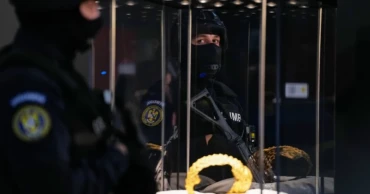
2,500-year-old golden helmet stolen from Dutch museum returns to Romania
A 2,500-year-old golden helmet and other ancient treasures stolen from a Dutch museum have been returned to Romania after a 14-month investigation and international effort to recover them.
The decorated Coțofenești helmet, along with three gold bracelets linked to Romania’s ancient Dacian civilization, was flown back to Bucharest on Tuesday and taken under tight security to the National History Museum, where they were briefly displayed behind glass with armed guards present.
The artifacts were stolen in January 2025 from the Drents Museum in the Netherlands during a raid that shocked the art world and triggered a major cross-border investigation. Authorities say three suspects are currently on trial in connection with the theft.
Museum officials described the return as both a relief and an emotional moment after months of uncertainty over whether the treasures had been lost forever.
“This is not just a return of objects, but of a part of our historical memory,” said Cornel Constantin Ilie, interim director of the National History Museum. “We lived with the fear that part of our past could be gone permanently. Today, we can say it has come home.”
Dutch museum director Robert van Langh also welcomed the recovery, calling it a significant moment for both countries and praising the cooperation between Dutch and Romanian authorities.
Prosecutors in the Netherlands recently presented the recovered items, although one of the three gold bracelets is still missing. Officials say efforts to locate it are ongoing, with a court ruling expected in the coming weeks.
During its disappearance, the helmet was found slightly damaged, while the recovered bracelets remain intact. Investigators had earlier feared the helmet might have been melted down due to its high profile and difficulty to sell.
Romania’s culture minister said the case highlighted both the importance and vulnerability of cultural heritage, warning that such treasures remain at risk from theft, trafficking, and neglect.
The artifacts will be shown to the public in Bucharest before undergoing restoration work, museum officials said, calling their return a symbol of international cooperation and persistence in protecting cultural heritage.
26 days ago
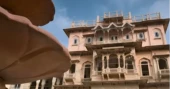
Historic Jaipur palace sets stage for ‘Bhooth Bangla’ shoot
The upcoming horror-comedy Bhooth Bangla brings Akshay Kumar back together with filmmaker Priyadarshan, with much of the film being shot at a historic palace near Jaipur.
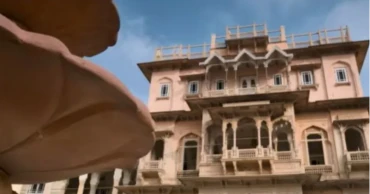
The production is taking place inside Chomu Palace, a sprawling royal estate known for its grand yet eerie atmosphere. The location has cinematic history, having featured in the 2007 hit Bhool Bhulaiyaa. Its maze-like corridors, dim courtyards and regal setting align closely with the film’s haunted mansion theme.
Originally built in the 16th century as Chomugarh Fort by Rao Gopalji, the structure served as a military stronghold for Jaipur’s royal lineage. Over time, it was expanded and transformed into a palace, particularly during the 18th century under Thakur Karan Singhji and later rulers, shifting from defence to royal residence.
By the early 20th century, it had evolved into a full-fledged palace featuring grand spaces such as the Darbar Hall. Today, the restored property operates as a heritage hotel, preserving its historic character while hosting visitors and film productions.
Architecturally, the palace reflects a blend of Rajput and Mughal styles, with carved balconies, domed pavilions and expansive courtyards. Distinctive lattice stonework, known as jaali, allows natural airflow while maintaining privacy. Interiors are decorated with frescoes and murals depicting mythology, royal life and hunting scenes, alongside intricate marble inlay designs.
Now functioning as a luxury heritage hotel, the palace offers guests a cultural experience that includes traditional Rajasthani cuisine and royal-style hospitality. It has also become a popular venue for destination weddings and high-end events.
Situated about 45 kilometres from Jaipur, the palace is accessible through scenic routes showcasing Rajasthan’s rural landscapes, adding to its appeal as both a tourist destination and a filming location. #From NDTV
26 days ago

Hanfu trend expands beyond humans to robots, dolls and pets in China
China’s traditional Hanfu clothing is no longer limited to people, as designers are now creating outfits for robots, dolls and even pets, reflecting a growing interest in blending culture with modern lifestyles.
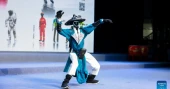
At a recent fashion show in Caoxian County in eastern Shandong Province, models appeared with dolls dressed in matching Hanfu, while humanoid robots also wore traditional outfits, drawing strong attention from visitors.
The event highlighted how Caoxian, one of China’s main Hanfu production centres, is shifting from mass manufacturing to more creative and specialised products.
Local companies that once focused on large-scale production are now exploring niche markets and original designs. Their new products include Hanfu for robots, collectible dolls and pets, along with designs suited for everyday use.
Hu Chunqing, general manager of Chenfei Clothing in Caoxian, said his company started making Hanfu for robots last winter.
With China’s robotics industry growing rapidly, he said combining traditional clothing with machines offers both a way to promote culture and a new area for innovation.
Within just over a month, his team developed more than 20 Hanfu designs for different robot models, including styles inspired by martial arts and various historical dynasties.
Hu noted that making clothes for robots is more complex than for humans, as designers must consider body structure, joints and materials that allow easy movement and heat control.
He believes robot Hanfu could be used beyond performances, with service robots in sectors like healthcare and public safety also wearing them to add a cultural touch.
The trend has also expanded into smaller products. Designer Yao Chixing, founder of Luoruyan, has introduced Hanfu for dolls, targeting young consumers who enjoy customising collectible toys.
She said making miniature Hanfu is even more challenging than regular designs, as all production steps are still required despite the smaller size.
Yao sees doll Hanfu as a growing market, combining modern toy culture with traditional fashion and reflecting cultural identity among young people.
Her brand has also introduced creative ideas, including scented Hanfu using floral fragrances and lighter, practical designs suitable for daily wear.
Meanwhile, Hanfu-inspired clothing for pets is gaining popularity in Caoxian.
Local company TAORAE now produces pet outfits based on traditional Hanfu styles, accounting for about 20 percent of its product range.
Founder Cheng Zhanying said rising pet ownership and demand for emotional connection have driven interest in pet clothing, while Hanfu design has provided a unique niche.
He added that pet outfits must prioritise comfort and flexibility, leading the company to introduce adjustable features based on customer feedback.
Another entrepreneur, Lan Shouku, has also entered the sector, launching a business focused on pet products, including Hanfu-style clothing.
His company’s red festive outfits became popular during the 2026 Spring Festival, when many people dressed in Hanfu and chose similar styles for their pets.
Lan said his team has already developed more than 30 new pet Hanfu designs this year.
Caoxian’s Hanfu industry began nearly 20 years ago with small-scale costume production. With the rise of e-commerce, local businesses quickly expanded and found strong demand.
Today, the county has over 2,800 Hanfu-related businesses employing nearly 100,000 people. In 2025, total sales exceeded 13 billion yuan, with a complete supply chain covering design, production and finishing.
The county now produces nearly half of China’s Hanfu garments.
However, growing competition has pushed companies to focus more on innovation, branding and specialised products.
At the recent event, Luoruyan launched a Hanfu collection linked to a popular historical TV series, marking a new step in brand collaboration.
An industrial base for intelligent robot apparel was also launched, aiming to combine traditional Hanfu with modern technology.
Xie Fangming of the China Fashion Association said Caoxian has developed into the country’s leading hub for original Hanfu production, with strong industrial capacity.
He added that further support will be provided in design talent, copyright protection and branding to help the sector grow into a creative centre.
Hanfu, which dates back to the Han Dynasty, is known for its detailed designs and cultural significance.
Industry insiders say expanding Hanfu to robots, dolls and pets is a way to promote traditional culture across new areas through innovation.
28 days ago