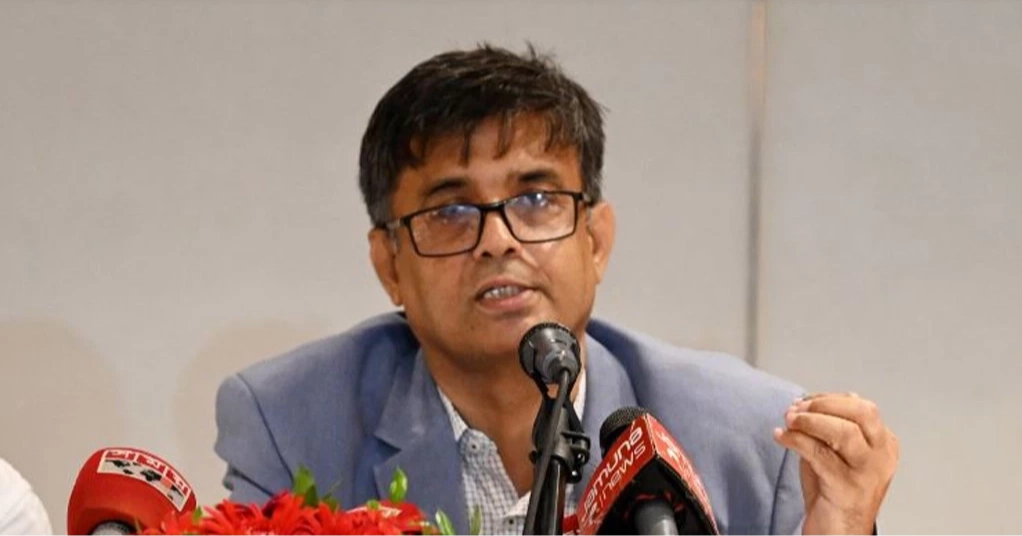
Bangladesh expects a tariff deal with the United States which will be a win-win position for both the countries, Press Secretary Shafiqul Alam said on Tuesday following US President Donald Trump's letter to Chief Adviser Professor Muhammad Yunus.
"Dhaka is looking forward to a tariff deal with Washington DC, which, we hope, will be a win-win one for both countries," he said, adding that another round of talks with the US is scheduled for July 9.
Commerce Adviser Sk Bashir Uddin is in Washington DC, leading the country's trade talks with the United States. National Security Adviser Dr Khalilur Rahman is also part of the team.
Alam said Bangladesh has received a letter from President Donald Trump on Monday declaring that the US would impose 35 percent tariffs on Bangladeshi goods from August 1.
"The Bangladesh team has held several rounds of discussion with their American counterparts," said the Press Secretary, noting that Sk Bashir Uddin will lead the Bangladesh side during the discussion on July 9.
President Trump in his letter said, "We look forward to working with you as your trading partner for many years to come. If you wish to open your heretofore closed trading markets to the United States, and eliminate your tariff, and non-tariff, policies and trade barriers, we will, perhaps, consider an adjustment to this letter."
Trump said these tariffs may be modified, upward or downward, depending on their relationship with Bangladesh.
"You will never be disappointed with the United States of America," President Trump wrote to Prof Yunus.
Starting on August 1, 2025, the US President said they will charge Bangladesh a tariff of only 35% on any and all Bangladeshi products sent into the United States, separate from all sectoral tariffs.
"Please understand that the 35% number is far less than what is needed to eliminate the trade deficit disparity we have with your country. As you are aware, there will be no tariff if Bangladesh, or companies within your country, decide to build or manufacture products within the United States and, in fact, we will do everything possible to get approvals quickly, professionally, and routinely - In other words, in a matter of weeks," Trump said.
Challenges Ahead
Talking to UNB, Mohiuddin Rubel, a leading exporter and former director of the BGMEA, raised concerns about its economic stability, especially in light of its current trade deficit as Bangladesh is home to a major ready-made garment industry.
“That (if 35pc tariff imposed) could harm its economy, especially given its current trade deficit,” he said.
In contrast, Vietnam, despite having a larger trade deficit, secured a lower 20% tariff, highlighting how Bangladesh’s existing trade barriers may have negatively influenced its position in global trade negotiations, Rubel said.
The new tariffs pose a significant threat to employment in Bangladesh, as the United States remains its largest export destination, said the exporter.
“The new tariffs raise worries about job losses in Bangladesh as the US is its main export market. Bangladesh needs to act quickly by engaging US importers to push for policy changes, resuming high-level trade talks, and highlighting the importance of its products,” Rubel told UNB, adding that strategic planning and partnerships are crucial to address the challenges.
Best Trade Negotiator
The White House in its fact sheets said President Trump is the best trade negotiator in history. “His strategy has focused on addressing systemic imbalances in our tariff rates that have tilted the playing field in favor of our trading partners for decades.”
The White House said countries that are not serious about addressing the tariff and non-tariff trade barriers that impede American exports and harm American workers, farmers and businesses are facing the consequences.
On July 7, President Trump signed an Executive Order determining that certain tariff rates, which were initially set to expire on July 9, will expire on August 1, 2025.
President Trump also sent tariff letters to many countries informing them of their new reciprocal tariff rates, which will take effect on August 1.
The US President may send more letters in the coming days and weeks. The countries he sent letters include: Bangladesh (35%), Japan (25%), Korea (25%), South Africa (30%), Kazakhstan (25%), Laos (40%), Malaysia (25%), Myanmar (40%), Tunisia (25%), Bosnia and Herzegovina (30%), Indonesia (32%), Serbia (35%), Cambodia (36%) and Thailand (36%).