US President Donald Trump
Denmark cautiously optimistic over Greenland deal with US
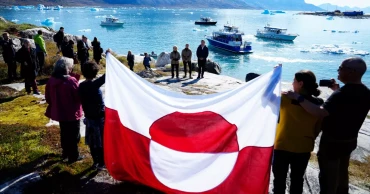
Denmark's government on Saturday cautiously welcomed US President Donald Trump's announcement of an agreement on Greenland that would expand the US military presence on the Arctic island while keeping it under Danish control.
The announcement follows months of threats by Trump to take control of Greenland, a semiautonomous territory within the Kingdom of Denmark and a NATO ally.
Greenland's top diplomat also welcomed the development, saying the agreement had been a long time coming.
Trump said Friday that the deal would give the United States “permanent control over security” and address its security concerns in Greenland.
Danish Prime Minister Mette Frederiksen's office later said the agreement would be signed by the US, Denmark and Greenland next week during the United Nations General Assembly. However, it still requires approval by the Danish and Greenlandic parliaments before it can take effect.
“Next week could be a good week … for Greenland, Denmark, and the United States alike,” Danish Foreign Minister Lars Løkke Rasmussen wrote on Instagram.
He said the agreement could replace a period of uncertainty with a binding arrangement that strengthens security in the Arctic and North Atlantic while respecting Denmark's and Greenland's red lines.
Greenland Foreign Minister Múte B. Egede said he was pleased that an agreement was now within reach.
“It has taken some time,” he told Danish broadcaster TV2. “I'm pleased that we finally have an end product within reach. And it's about time.”
Trump said the United States would immediately begin expanding its military presence in Greenland, which is rich in mineral resources.
The US maintained several military bases and installations on the island during the Cold War but later reduced its presence. It still operates the Pituffik Space Base in northwestern Greenland, which supports missile warning, missile defense and space surveillance operations for the US and NATO.
Few details of the new agreement have been made public. A US State Department official said it would prohibit non-NATO military bases in Greenland, restrict investments by potential adversaries and prevent China and Russia from establishing bases there. The official spoke anonymously because they were not authorized to comment publicly.
US, Danish and Greenlandic officials had been holding quiet negotiations for months to address Trump's security concerns about Greenland, which has about 56,000 residents.
After returning to the White House, Trump repeatedly urged Denmark to sell Greenland to the US and said the territory was important to American security. He also refused to rule out using military force to take control of the island.
Denmark and Greenland have repeatedly said Greenland is not for sale and rejected reports that the US had been gathering intelligence there. Russia and several European countries also strongly opposed the US push for Greenland.
Greenland pro-sovereignty activist Orla Joelsen said on X that the fight against Trump's plan to take over Greenland had been won.
The new agreement, the activist said, explicitly recognizes Denmark's sovereignty and territorial integrity and the Greenlandic people's right to self-determination.
1 hour ago
Trump returns to White House correspondents' dinner with jokes, criticism and calls for press respect
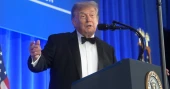
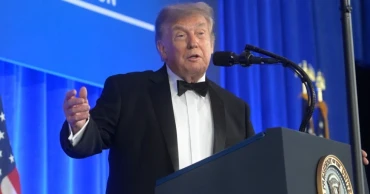
US President Donald Trump returned to the rescheduled White House Correspondents' Association (WHCA) dinner on Friday, delivering an hour-long speech filled with jokes, criticism of political opponents and media figures, and references to his presidency.
The event, originally scheduled for April, was postponed after a shooting near the venue raised security concerns.
Opening his remarks, Trump said he had removed the harshest parts of the speech he had originally planned for the April dinner.
"As I said three months ago, the show must go on," he told the audience, recalling the attempted attack that forced the postponement before shifting to lighter remarks.
Trump's appearance marked a notable moment in his relationship with the media. Since returning to office for a second term, he has frequently criticised news organisations, filed lawsuits against media outlets and taken actions affecting press access. Several journalists attending the dinner had previously been publicly criticised or barred from White House events.
During the speech, Trump mixed praise for some journalists with criticism of others. He joked about several public figures, including entertainers, politicians and television hosts, and also poked fun at his own speechwriters.
He also referred to journalism awards presented earlier in the evening, many of which recognised reporting critical of his administration, jokingly asking whether he had any influence over the winners.
Trump briefly mentioned the conflict involving Iran and highlighted construction of a new ballroom at the White House. He also joked about seeking a third presidential term, despite the US Constitution limiting presidents to two terms.
"The second time is always better," he said before adding, "I'm only kidding."
At the end of his speech, Trump put on a red "Trump 2028" cap and jokingly suggested he was running again.
Earlier in the evening, outgoing WHCA President Weijia Jiang of CBS News welcomed attendees and thanked Trump for attending. She said rescheduling the dinner reflected the determination of the White House press corps not to be intimidated by violence.
"Tonight our message is this: We are back," Jiang said.
The ceremony also honoured Secret Service agent Victor Gonzales, who was injured while responding to the April shooting, and staff at the Washington Hilton hotel, where the original dinner had been planned.
Security at the rescheduled event was significantly tighter than usual, with multiple identification checks, armed officers and security dogs. Attendance was also smaller, with about 700 guests.
One journalism award recipient, New York Times reporter Tyler Pager, had recently faced a subpoena from the Justice Department over reporting related to a luxury aircraft gifted to Trump by Qatar. The subpoena was withdrawn a day before the dinner.
The event took place amid continued tensions between the White House and the news media. Critics have long argued that the annual correspondents' dinner creates an appearance of overly close relationships between journalists and the public officials they cover.
Despite his frequent criticism of the press, Trump ended his speech on a conciliatory note, telling journalists he respected their profession before joking that they would struggle without him as a newsmaker.
"I have a lot of respect for your profession," Trump said. "When I'm not around, you're all gonna be broke."
1 month ago
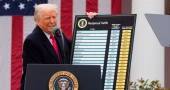
Trump imposes 50% tariffs on most Canadian goods
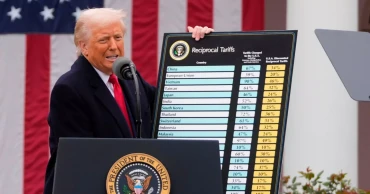
US President Donald Trump on Monday imposed a 50% tariff on most Canadian goods, accusing Canada of unfairly discriminating against American automobiles, alcohol and dairy products, in a move that could intensify trade tensions and fuel inflation.
The tariffs, introduced under Section 338 of the 1930 Trade Act, will take effect in 30 days, allowing time for negotiations. Energy products, potash, fish and critical minerals are exempt, but goods previously covered under the US-Mexico-Canada Agreement (USMCA) are included after the US declined to renew the 2020 pact.
Canadian Prime Minister Mark Carney said Ottawa remains committed to "free and fair trade" and is ready to negotiate, while Ontario Premier Doug Ford urged Canada to respond with matching tariffs if the measures proceed.
Business leaders on both sides called for negotiations, warning of economic damage. Analysts also cautioned that invoking the rarely used Depression-era law could increase uncertainty and potentially expand tariffs to other US trading partners.
The move poses political and economic risks for Trump ahead of November's midterm elections. Critics warned the tariffs would raise consumer prices and trigger retaliation, while the administration argued they would encourage manufacturing to return to the US.
Trump also ordered a review of possible additional tariffs over Canadian wildfire smoke affecting US air quality. He further accused Canada of maintaining discriminatory policies on US autos, alcohol and cheese, citing retaliatory measures taken after earlier US tariffs over fentanyl-related disputes.
1 month ago
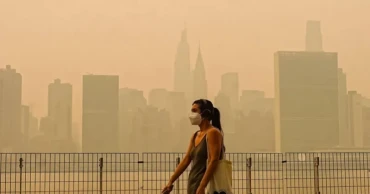
Trump threatens new tariffs on Canada over wildfire smoke affecting US cities
US President Donald Trump has threatened to impose new tariffs on Canada, accusing the country of allowing wildfire smoke to pollute American cities with what he described as "filthy" air.
The comments came as massive wildfires continued to burn across parts of Canada, sending thick smoke into several US states and worsening air quality from the Midwest to the East Coast.
Canadian leaders rejected the criticism, saying the country is using every available resource to battle the fires and urged the United States to provide assistance instead of blaming Canada.
Ontario Premier Doug Ford said Canada has repeatedly helped the US respond to natural disasters, including wildfires in California and hurricanes in North Carolina.
"Maybe what you should do rather than complain is send support, send help, because we have done the exact same thing for our American friends," Ford said.
Ford noted that the US states of Michigan and Massachusetts have already offered help by sending water bombers, firefighters and rescue teams.
Canadian Prime Minister Mark Carney also responded, saying climate change is a shared global challenge.
"Climate change is everyone's responsibility — including the United States," Carney told reporters, adding that his government remains in close contact with provincial authorities and affected communities.
Ford defended Ontario's response, saying more than 150 firefighting crews, over 80 water bombers and helicopters have been deployed to contain the blazes.
"We are throwing every single resource we can," he said.
Wildfires continue to spread
Several communities in northern Ontario have been evacuated as fires continue to spread. A First Nations leader said one community had been "burnt to ashes."
Wildfires are also raging in British Columbia, where officials reported more than 59 active fires on Friday. The British Columbia Wildfire Service said 39 new fires started within the previous 24 hours, while 31 remain out of control.
A large group of fires in northwestern Ontario has produced massive smoke clouds that have spread across Canada and into the United States.
Smoke disrupts daily life across US
Heavy smoke reduced visibility in New York City on Thursday, partially obscuring landmarks including the Empire State Building and the Statue of Liberty. Similar hazy conditions affected Washington, DC, where national monuments were barely visible.
Health officials advised residents to stay indoors, while some communities distributed free face masks because of the health risks linked to poor air quality.
The smoke also forced the cancellation of outdoor activities across parts of the northern United States, including Chicago, Detroit, Pennsylvania and New England. Summer camps moved activities indoors, concerts were postponed and at least one popular lakeside beach was temporarily closed.
Poor visibility also disrupted air travel, causing flight delays at several airports.
Concerns ahead of World Cup final
The wildfire smoke has also raised concerns ahead of Sunday's FIFA World Cup final between Argentina and Spain at MetLife Stadium in New Jersey, which President Trump is expected to attend.
US officials, including Andrew Giuliani, who heads the White House World Cup Task Force, have been holding informal discussions with FIFA and other agencies monitoring the wildfire situation.
However, weather forecasts suggest rainfall over the weekend is expected to improve air quality before kickoff.
Meanwhile, residents of several First Nations communities in northern Ontario continue to evacuate as the fires advance. Videos shared online showed some families leaving remote areas by boat.
Matthew Hoppe, incident commander for the Namaygoosisagagun First Nation, said the community had been devastated after the wildfire spread with little warning.
Source: BBC
2 months ago
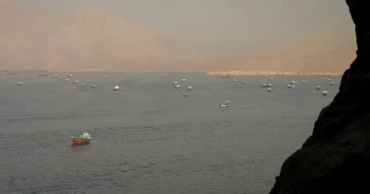
Trump hails Iran agreement, but major questions remain over its future
US President Donald Trump has welcomed a newly announced agreement with Iran as a major diplomatic breakthrough, though uncertainty remains over key details that could determine whether the deal succeeds.
Trump described the agreement as a “great deal” that would bring peace and stability to the Middle East. In a social media post on Sunday, he said the strategically important Strait of Hormuz would remain open to commercial shipping and that the United States would end its naval blockade.
“Let the oil flow!” Trump wrote, expressing confidence that the agreement would help ease tensions in the region.
However, many important questions remain unresolved, particularly regarding Iran’s nuclear programme and how the agreement will be implemented.
US Vice President JD Vance said the deal includes provisions aimed at ensuring Iran does not develop a nuclear weapon and that Washington will be able to verify compliance.
Despite those assurances, uncertainty remains over restrictions on uranium enrichment and the future of Iran’s stockpile of highly enriched uranium.
Further discussions are expected during a 60-day extension of the current ceasefire, when technical negotiations will continue to address unresolved issues.
Iran has also signalled caution. The country's Supreme National Security Council said final negotiations would not proceed until the other side fulfils its commitments under the memorandum of understanding.
Analysts say how both sides interpret and implement those commitments will play a critical role in determining whether the agreement holds.
The deal could also have significant implications for global energy markets. Experts warn that oil exports through the Strait of Hormuz are unlikely to return immediately to normal levels, as shipping backlogs, mine-clearing operations and production adjustments may take several weeks.
Another key factor is Israel’s role in the region.
According to reports, Trump expressed frustration with Israeli Prime Minister Benjamin Netanyahu over military strikes in Lebanon that he believed could have jeopardised the nearly completed agreement.
Although the deal survived that tension and was publicly announced, observers say renewed military action could threaten its stability. Any disruption to shipping through the Strait of Hormuz could once again affect global energy supplies and international markets.
The agreement may also have political implications inside the United States.
Vance acknowledged that the conflict had contributed to higher energy prices, increasing financial pressure on many Americans. He expressed hope that energy costs would begin to decline following the agreement.
Whether lower oil prices translate into broader economic relief could influence public opinion ahead of the upcoming congressional midterm elections.
Recent polling suggests that many Americans remain dissatisfied with the state of the economy. Concerns over inflation, energy costs and household expenses continue to put pressure on the administration and the ruling Republican Party.
Even so, the agreement is being viewed as a potentially important step toward reducing regional tensions and easing economic uncertainty, although its long-term success will depend on the outcome of upcoming negotiations and developments in the wider Middle East.
With inputs from BBC
3 months ago
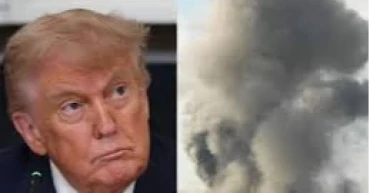
Trump urges Israel and Iran to halt attacks immediately
US President Donald Trump has urged Israel and Iran to cease hostilities immediately amid growing concerns that renewed exchanges of fire could undermine efforts to secure a lasting peace agreement.
“Israel and Iran must immediately stop ‘shooting,’” Trump wrote in a brief message on his Truth Social platform, reports AL Jazeera .
The appeal came as Iran's armed forces announced the suspension of their military operations against Israel, while warning that any future Israeli attacks, particularly in Lebanon, would trigger a much stronger response, according to Iran's semi-official Fars News Agency.
In a statement carried by the agency, Iran's Khatam al-Anbiya Central Headquarters said the country's armed forces had delivered a “painful response” to Israel following what it described as Israeli attacks in southern Lebanon and Beirut's Dahieh district, allegedly backed by the United States.
The statement followed a series of attacks between Israel and Iran that threatened to derail diplomatic efforts aimed at ending a conflict that has weighed heavily on regional stability and the global economy.
Israel did not immediately respond to Iran's announcement. However, an Israeli military official, speaking on condition of anonymity, told Reuters that Israel remained prepared for various scenarios in Iran and was ready to continue operations for as long as necessary.
The latest developments have intensified concerns about a possible resurgence of broader regional hostilities despite ongoing international efforts to preserve the fragile ceasefire.
3 months ago
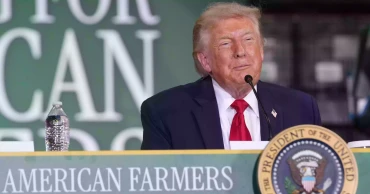
Trump says Iran conflict does not contradict his ‘no new wars’ campaign pledge
US President Donald Trump has rejected criticism that the ongoing conflict with Iran contradicts his campaign promise of “no new wars,” arguing that he never guaranteed his presidency would be free of military conflicts.
In an interview aired Sunday on NBC’s Meet the Press, Trump said he had not promised there would be no wars if he returned to office.
“First of all, I didn’t guarantee no war. Why would I have built the strongest military in the world?” Trump said.
The president also defended a now-abandoned $1.8 billion fund that was intended to compensate political allies and repeated his unsubstantiated claims of widespread voter fraud in California’s prolonged vote-counting process following last week’s primary election.
Trump, who campaigned in 2024 portraying himself as a leader who started “no new wars” and accusing Democratic rivals of being warmongers, maintained that the conflict with Iran does not amount to an extended military engagement.
“I don’t like these endless wars. This is not an endless war. We’ve been doing this for three months,” he said, referring to the conflict with Iran that began on February 28.
He argued that US actions were necessary to prevent Iran from acquiring nuclear weapons, saying he was “doing the world a service” and “doing our country a service.”
At the same time, Trump reiterated his claim that US strikes last year had “obliterated” Iranian nuclear facilities, despite also citing the need to stop Tehran’s nuclear ambitions.
Trump further defended his decision during his first term to withdraw from the nuclear agreement negotiated under former President Barack Obama, a deal he has long criticized while promising to secure a better alternative.
“It takes years to do these things,” Trump said.
3 months ago
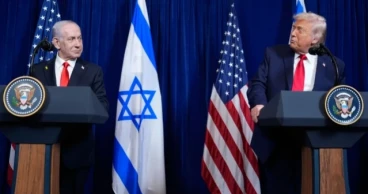
Trump criticizes Netanyahu over Lebanon escalation, report says
US President Donald Trump reportedly engaged in a tense phone conversation with Israeli Prime Minister Benjamin Netanyahu over Israel’s recent military actions in Lebanon, amid concerns that the escalation could undermine diplomatic efforts involving Iran.
According to a report by Axios citing US officials familiar with the discussion, Trump strongly criticized Netanyahu's handling of the situation and expressed concern that continued Israeli operations could further damage Israel’s international standing, reports NDTV.
Sources said Trump was particularly frustrated that Israeli military actions in Lebanon were threatening ongoing negotiations aimed at reducing tensions across the region. He reportedly argued that expanding strikes, particularly around Beirut, could isolate Israel diplomatically and complicate efforts to secure broader regional stability.
US officials told Axios that Trump believed Israel’s response had become disproportionate despite Hezbollah's attacks on Israeli territory. He was also said to be concerned about civilian casualties in Lebanon and opposed military operations that could result in extensive destruction while targeting individual Hezbollah figures.
Following the conversation, Israeli officials reportedly signaled that plans for strikes in Beirut had been reconsidered.
Although Trump later publicly described the call as productive, sources characterized the private exchange as one of the most difficult discussions between the two leaders since Trump returned to office.
The two leaders have maintained a long and often complicated relationship, marked by both close cooperation and periodic disagreements, particularly on issues involving regional security and Iran.
After the call, Trump announced that Israeli troops would not advance into Beirut and said he had also communicated indirectly with Hezbollah representatives, who had indicated a willingness to halt attacks on Israel. He expressed hope that both sides would refrain from further hostilities.
In a statement, Netanyahu confirmed speaking with Trump but stressed that Israel would continue taking action against Hezbollah if attacks on Israeli communities persist. He added that Israeli military operations in southern Lebanon would proceed as planned.
The latest tensions come despite a ceasefire that has largely been in place since April. Hostilities resumed after exchanges of fire between Israel and Hezbollah, raising concerns about the stability of the truce and its impact on wider diplomatic efforts involving Iran.
Iran has reportedly insisted that any broader ceasefire arrangement should also cover developments in Lebanon.
Meanwhile, Lebanese officials said efforts are continuing to preserve the ceasefire, including proposals aimed at preventing attacks on Beirut's southern suburbs and northern Israel.
3 months ago

Pro-Trump-backed candidate leads Colombia election amid dispute over results
A tough-on-crime outsider seen as supportive of US President Donald Trump has taken the lead in Colombia’s presidential election, while the ruling political camp has raised doubts over the first-round results, setting up a tense runoff vote.
Aberaldo de la Espriella led the first round held on Sunday, securing about 44% of the vote, according to nearly complete official results. He will face progressive senator Iván Cepeda, who won around 41%, in a second round scheduled for June as no candidate crossed the 50% threshold.
Cepeda, an ally of outgoing President Gustavo Petro, and Petro himself questioned the outcome, alleging without evidence that large-scale vote manipulation and foreign interference may have influenced the results. Electoral authorities have not confirmed any irregularities.
Cepeda said he would wait for a full review before fully accepting the outcome, though he acknowledged a runoff was likely. “Only when the vote-counting commissions have fully clarified what happened will we comment on tonight’s results,” he said.
De la Espriella, a political newcomer known as “El Tigre” (The Tiger), has campaigned on a hardline security agenda, promising a strong crackdown on armed groups and organized crime. He has also called for international observers, saying he wants US and democratic institutions to monitor the runoff.
Cepeda, a left-leaning senator, has pledged to continue Petro’s peace-focused approach, including negotiating agreements with guerrilla groups and criminal networks under a “total peace” strategy. However, critics say the policy has struggled to reduce violence on the ground.
The close results reflect a sharp political divide in Colombia over how to deal with long-running insecurity, with one side backing peace talks and reforms, and the other pushing for tougher security measures.
De la Espriella is expected to benefit in the runoff from voters who supported other conservative candidates in the first round.
The election is widely seen as a referendum on Petro’s presidency, coming a decade after Colombia’s landmark peace deal with the FARC rebel group. While the 2016 agreement raised hopes of ending decades of conflict, violence has resurfaced in several regions, with armed groups expanding their influence.
In recent years, Colombia has also seen rising attacks, including drone strikes and political violence. The campaign period was marked by insecurity, including the killing of presidential hopeful Miguel Uribe Turbay at a rally last year.
Across the country, voters remain divided. Some support a tougher military-style crackdown similar to policies seen under El Salvador’s President Nayib Bukele, which reduced crime but drew criticism over human rights concerns. Others warn such approaches could deepen cycles of violence and undo fragile peace efforts.
Political analyst Juan Acevedo said the vote carries wider regional significance. “Whoever wins here will suggest to the region if progressive policies will continue or if things are going to return to the right,” he said.
3 months ago
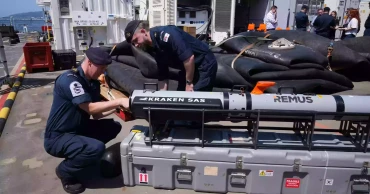
Britain, allies prepare mine-clearing mission in Strait of Hormuz
Britain’s Royal Navy is preparing for a possible mine-clearing operation in the Strait of Hormuz as tensions remain high over the conflict involving Iran, though deployment will depend on a peace agreement being finalized.
Hundreds of British sailors aboard the RFA Lyme Bay, currently docked near Gibraltar, are on standby for the mission. The vessel is being loaded with ammunition and advanced mine-hunting sea drones equipped with sonar technology.
The preparations come after US President Donald Trump criticized allies for not doing enough to support Washington’s military campaign linked to Iran. Tehran’s actions in the Strait of Hormuz have disrupted global shipping and sharply increased energy prices.
In March, Trump urged NATO allies to secure the strategic waterway themselves, saying they should “go get your own oil.”
Britain’s Armed Forces Minister Al Carns told reporters during a visit to the ship that Britain and France are preparing for a possible international operation to reopen the vital shipping route once fighting ends.
Trump said Saturday that a peace deal involving Iran had been “largely negotiated” following discussions with Israel and regional allies, though final details are still being worked out.
The RFA Lyme Bay is expected to join the British destroyer HMS Dragon and other allied ships before heading through the Suez Canal toward the Persian Gulf.
Carns defended Britain’s role after Trump questioned the strength of the British military and criticized Prime Minister Keir Starmer.
“Which other country can pull together 40 nations and come up with a solution to deal with a complex problem?” Carns said.
According to British officials, around 6,000 ships have been unable to pass through the Strait of Hormuz since the conflict began.
Royal Navy officials warned that Iran could have deployed several types of sea mines in the strait, including mines attached to cables, rocket-propelled devices, or mines hidden on the seabed and triggered by sound, movement or light.
Commander Gemma Britton, head of the Royal Navy’s Mine and Threat Exploitation Group, said the navy is using autonomous underwater systems that can scan the seabed much faster and more safely than traditional crewed vessels.
The drones use sonar to create images of underwater objects, helping crews identify possible mines. Some systems can operate remotely from smaller unmanned boats launched from the RFA Lyme Bay, reducing risks for sailors.
Britton said the immediate goal would be to clear safe shipping lanes so stranded vessels could move through the strait again. However, fully clearing the entire waterway could take months or even years.
Despite the preparations, British officials admitted it is still unclear whether mines are actually present in the strait or whether the international mission will ultimately be needed.
Carns said commercial shipping companies and insurers require complete assurance that the route is safe before normal trade can resume.
“We don’t know when the Americans, Iranians and Israelis are going to reach a suitable solution,” Carns said.
Until then, he added, the RFA Lyme Bay and its crew will remain on standby and “really, really ready.”
3 months ago