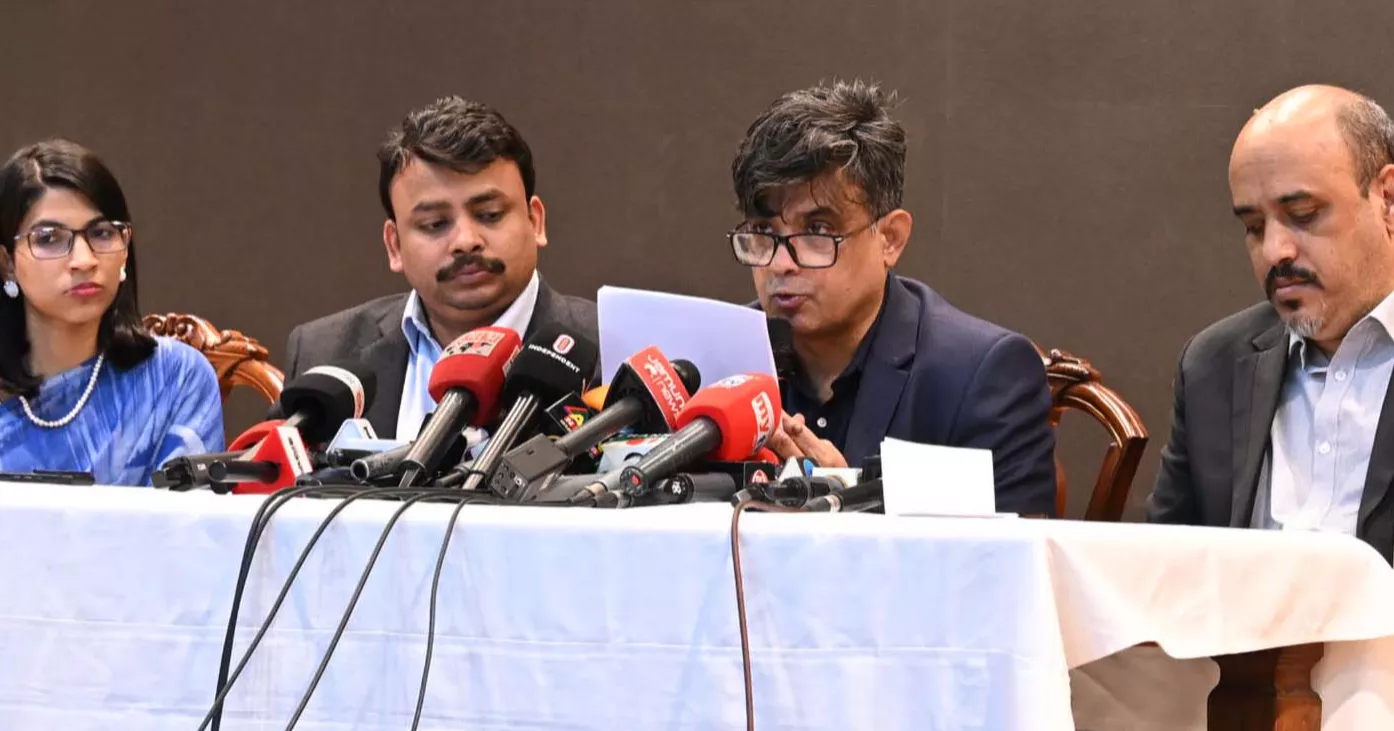
Chief Adviser’s Press Secretary Shafiqul Alam on Thursday said the interim government would hand over responsibility to the elected government as soon as possible following the national election, expressing optimism that the process would be completed by February 17 or 18.
“The transfer of power will be done as soon as possible. If members of parliament are sworn in within three days, the leader of the majority party will be invited to take the oath as Prime Minister. This could happen by February 15 or 16, and I do not think it will be delayed beyond February 17 or 18,” he told reporters at the Foreign Service Academy.
The 13th national parliamentary election is scheduled for February 12. A referendum on the implementation of the July National Charter will also be held on the same day.
Meanwhile, the Council of Advisers decided that all government, semi-government, autonomous, and semi-autonomous offices will operate from 9am to 3:30pm during the upcoming holy month of Ramadan.
The decision was taken at the meeting of the Council of Advisers held at the CAO with Chief Adviser Prof Muhammad Yunus presiding.
During office hours, a 15-minute break from 1:00pm to 1:15pm will be observed for Zohr prayers.
According to the Islamic Foundation, the holy month of Ramadan is expected to begin on February 19, subject to the sighting of the moon.
Press Secretary Alam said since assuming office in August 2024, the interim government has taken 526 decisions and issued 116 ordinances, with 439 decisions already implemented, reflecting an implementation rate of 83.46 percent.
He said the figures were presented earlier in the day at the weekly meeting of the Council of Advisers held at the Chief Adviser’s Office (CAO).
The interim government held 68 regular weekly meetings between August 8, 2024, and January 31, 2026, with Chief Adviser Prof Muhammad Yunus in the chair, and took 526 decisions.
Of these, 439 have already been implemented, marking an implementation rate of 83.46 percent, Alam said.
During this period, a total of 116 ordinances were issued, while 16 ordinances remain under process.
Of the pending ordinances, three have already received policy-level approval, he added.
The Press Secretary also said 30 policy-related instruments, including policies, guidelines, strategies, and action plans, were undertaken during this timeframe.
Among them, 16 have been signed or ratified, while the remaining 14 are currently under implementation.
In addition, the interim government has entered into 14 bilateral agreements during the same period.
Govt requests UN rights office to undertake investigation into Hadi murder
Highlighting the government’s performance, Alam said the implementation rate of decisions was exceptionally high compared with previous governments.
He emphasised that the ordinances were not limited to minor or symbolic changes; rather, many involved substantive reforms expected to have far-reaching and transformative impacts on the lives of the people of Bangladesh.
Chief Adviser’s Deputy Press Secretary Abul Kalam Azad Majumder, Senior Assistant Press Secretary Foyez Ahammad, and Assistant Press Secretary Shuchismita Tithi were present at the briefing.