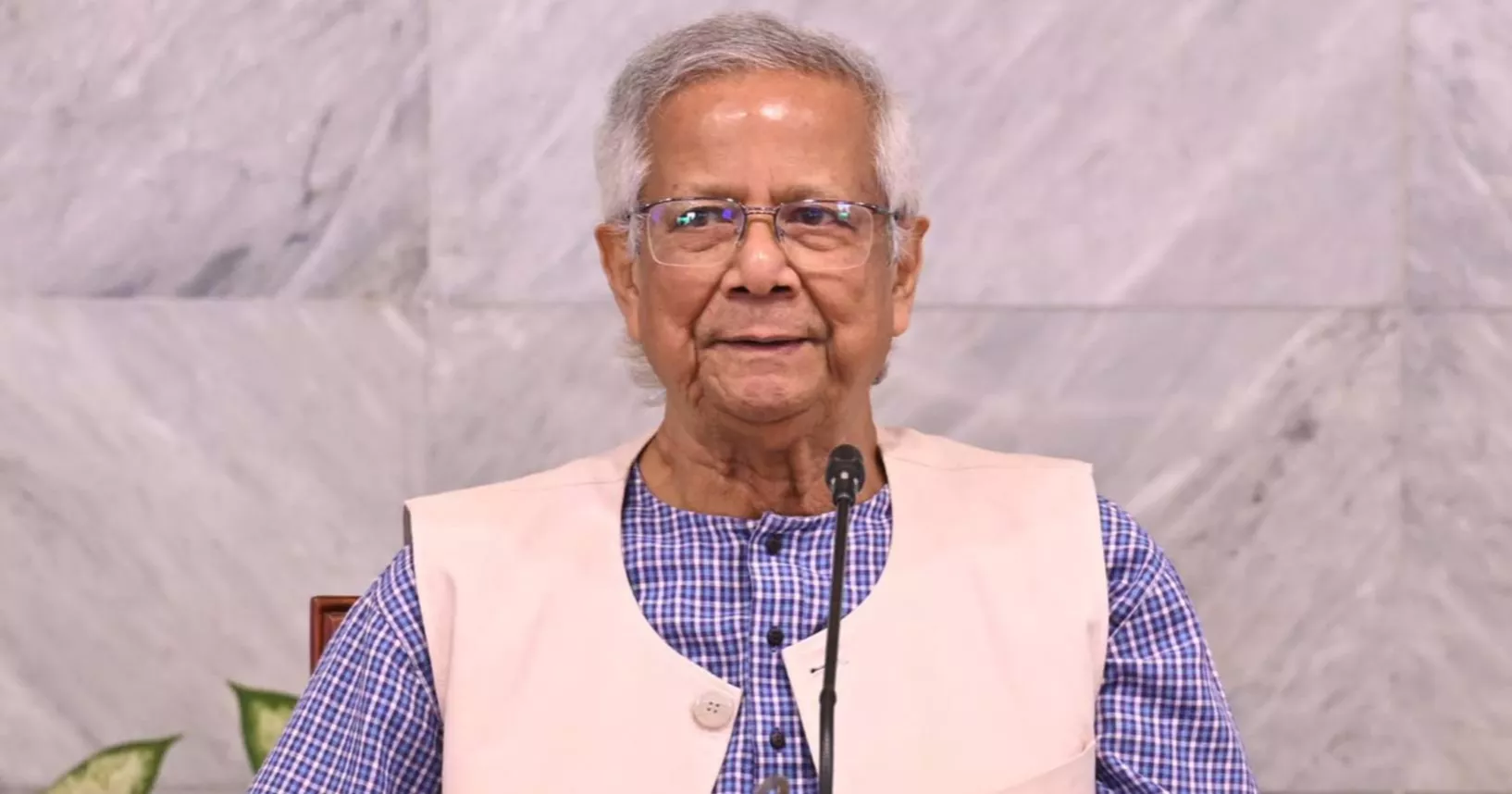
Expressing satisfaction over the peaceful election campaign across the country, Chief Adviser Prof Muhammad Yunus on Monday said the presence of a large number of international observers coming from different countries reflects the renewed global confidence in Bangladesh’s democracy.
He said it also demonstrates the international community’s serious approach towards the twin elections - the national election and referendum scheduled for February 12- in Bangladesh.
“We expect that this election will be better than any other elections that the country witnessed in the past,” Chief Adviser’s Press Secretary Shafiqul Alam quoted Prof Yunus as saying during a get-together event with the senior secretaries and secretaries of the government.
Prof Yunus happy over polls preparations, says next ‘week very crucial’
Cabinet Secretary Dr Sheikh Abdur Rashid presided over the function.
The Chief Adviser said huge numbers of observers are coming from various countries which reflect that they got back the confidence in Bangladesh democracy.
Press Secretary Alam, while briefing the reporters at the Foreign Service Academy, said the elections, held during the regime of Sheikh Hasina’s regime, did not have any legitimacy and no prominent election observers came to observe the elections at that time.
Prof Yunus observed that so far there has been no significant tension surrounding the election and political parties carrying out campaigns peacefully across the country.
"Election campaigns are taking place peacefully across the country. Political parties are playing a responsible role, and large public gatherings at campaign events are being conducted without violence or disorder," he said.
The Chief Adviser if the ‘Yes’ vote wins in the referendum, the country will change fundamentally and mis-governance will not return. "If the ‘Yes’ vote wins in the referendum, Bangladesh’s future will be built in a more positive way," he said.
Prof Yunus expressed optimism that the upcoming national election would be a free, fair, peaceful and festive one.
Speaking about past elections, he said previous polls in Bangladesh could hardly be called elections, describing them instead as ‘mockery’ in the name of elections.
Prof Yunus calls for ethical use of technology, rejects fraud for prosperity
"In contrast, the forthcoming election will be held in a free, fair and peaceful manner. With only two days remaining, we have almost reached the destination (peaceful, credible election)," the Chief Adviser said.
This election, he said, together with the referendum, would bring an unprecedented change to Bangladesh politics and structure.
Prof Yunus said Bangladesh will continue to move forward and attract investors from around the world who will come to establish factories in the country and described Bangladesh’s young population as a vast and powerful resource.
Referring to the Japan-Bangladesh Economic Partnership Agreement (EPA), he said this will encourage many foreign companies to set up production facilities in the country.
The Chief Adviser reiterated that the Japan-Bangladesh EPA is the first of its kind and should be seen as a model, adding that Bangladesh will pursue more free trade and preferential trade agreements.
Such agreements, Prof Yunus said, will open many new doors for the economy and for Bangladeshi products.
The Chief Adviser highlighted that, for the first time, expatriate Bangladeshis have been formally included in the political process.
He said their role in Bangladesh’s political movements and uprisings in the past is now being fully recognized, and going forward they will be able to play a stronger and more meaningful role in national affairs.
The Chief Adviser highlighted the extensive use of technology in this election, saying it has made the process easier and more accessible for everyone.
He said that a mobile app has been developed to guide voters on how to cast their votes, while election-related apps will be used to monitor security across nearly 43,000 polling centres across the country.
The ‘Election Bondhu’ initiative has been introduced, body-worn cameras have been provided to around 25,700 law enforcement personnel, and CCTV cameras are being installed at polling centres, Prof Yunus said, expressing hope that this election would be better than any previous election held in the country.
He thanked the secretaries for their performance over the past 18 months, particularly for their cooperation in expediting work related to around 130 ordinances issued during this period.
The Chief Adviser said their support and efficiency have been critical to the government’s work.
Later, the Chief Adviser posed for photographs with the senior secretaries and secretaries of the government.
If employers lose trust, all skills development initiatives would fail: Prof Yunus