Bangladesh democracy
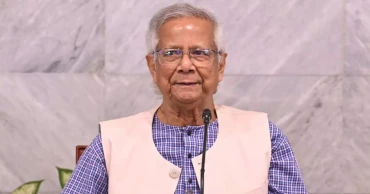
Prof Yunus sees renewed global confidence in Bangladesh democracy
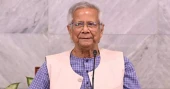
Expressing satisfaction over the peaceful election campaign across the country, Chief Adviser Prof Muhammad Yunus on Monday said the presence of a large number of international observers coming from different countries reflects the renewed global confidence in Bangladesh’s democracy.
He said it also demonstrates the international community’s serious approach towards the twin elections - the national election and referendum scheduled for February 12- in Bangladesh.
“We expect that this election will be better than any other elections that the country witnessed in the past,” Chief Adviser’s Press Secretary Shafiqul Alam quoted Prof Yunus as saying during a get-together event with the senior secretaries and secretaries of the government.
Prof Yunus happy over polls preparations, says next ‘week very crucial’
Cabinet Secretary Dr Sheikh Abdur Rashid presided over the function.
The Chief Adviser said huge numbers of observers are coming from various countries which reflect that they got back the confidence in Bangladesh democracy.
Press Secretary Alam, while briefing the reporters at the Foreign Service Academy, said the elections, held during the regime of Sheikh Hasina’s regime, did not have any legitimacy and no prominent election observers came to observe the elections at that time.
Prof Yunus observed that so far there has been no significant tension surrounding the election and political parties carrying out campaigns peacefully across the country.
"Election campaigns are taking place peacefully across the country. Political parties are playing a responsible role, and large public gatherings at campaign events are being conducted without violence or disorder," he said.
The Chief Adviser if the ‘Yes’ vote wins in the referendum, the country will change fundamentally and mis-governance will not return. "If the ‘Yes’ vote wins in the referendum, Bangladesh’s future will be built in a more positive way," he said.
Prof Yunus expressed optimism that the upcoming national election would be a free, fair, peaceful and festive one.
Speaking about past elections, he said previous polls in Bangladesh could hardly be called elections, describing them instead as ‘mockery’ in the name of elections.
Prof Yunus calls for ethical use of technology, rejects fraud for prosperity
"In contrast, the forthcoming election will be held in a free, fair and peaceful manner. With only two days remaining, we have almost reached the destination (peaceful, credible election)," the Chief Adviser said.
This election, he said, together with the referendum, would bring an unprecedented change to Bangladesh politics and structure.
Prof Yunus said Bangladesh will continue to move forward and attract investors from around the world who will come to establish factories in the country and described Bangladesh’s young population as a vast and powerful resource.
Referring to the Japan-Bangladesh Economic Partnership Agreement (EPA), he said this will encourage many foreign companies to set up production facilities in the country.
The Chief Adviser reiterated that the Japan-Bangladesh EPA is the first of its kind and should be seen as a model, adding that Bangladesh will pursue more free trade and preferential trade agreements.
Such agreements, Prof Yunus said, will open many new doors for the economy and for Bangladeshi products.
The Chief Adviser highlighted that, for the first time, expatriate Bangladeshis have been formally included in the political process.
He said their role in Bangladesh’s political movements and uprisings in the past is now being fully recognized, and going forward they will be able to play a stronger and more meaningful role in national affairs.
The Chief Adviser highlighted the extensive use of technology in this election, saying it has made the process easier and more accessible for everyone.
He said that a mobile app has been developed to guide voters on how to cast their votes, while election-related apps will be used to monitor security across nearly 43,000 polling centres across the country.
The ‘Election Bondhu’ initiative has been introduced, body-worn cameras have been provided to around 25,700 law enforcement personnel, and CCTV cameras are being installed at polling centres, Prof Yunus said, expressing hope that this election would be better than any previous election held in the country.
He thanked the secretaries for their performance over the past 18 months, particularly for their cooperation in expediting work related to around 130 ordinances issued during this period.
The Chief Adviser said their support and efficiency have been critical to the government’s work.
Later, the Chief Adviser posed for photographs with the senior secretaries and secretaries of the government.
If employers lose trust, all skills development initiatives would fail: Prof Yunus
8 months ago
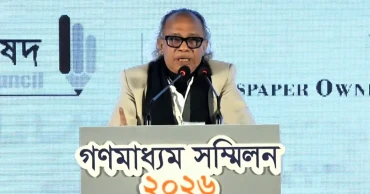
Free, fearless media vital to Bangladesh democracy: Journalists
Editors, journalists and media leaders from across the country on Saturday underscored the vital role of a free, independent, active and fearless media in sustaining democracy, warning that any attempt to silence media organisations ultimately threatens the rights of society as a whole.
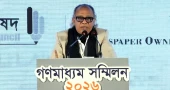
“The democratic aspiration that brings people into journalism can never be a crime,” said President of the Editors’ Council and Editor of New Age Nurul Kabir, while delivering the opening remarks at the first-ever Media Convention held at the Krishibid Institution Bangladesh auditorium.
The country’s first ‘Media Convention-2026’ was jointly organised by the Newspaper Owners’ Association of Bangladesh (NOAB) and the Editors’ Council.
Nurul Kabir said attacks on or attempts to silence media institutions inevitably obstruct the rights of the entire society. Journalists choose the profession with a collective commitment to democracy, human rights, equality and a non-communal social order, he said.
“Those who seek to suppress institutions that serve as vehicles of democratic aspirations do so through laws, force and intimidation,” Nurul Kabir said, stressing the need for unity and collective resistance.
He said if newspapers and other media outlets cannot function independently, remain active or speak out freely, fundamental rights across society will inevitably be curtailed.
Media development and democratic development, he observed, are deeply interconnected worldwide.
The Daily Star Editor Mahfuz Anam said independent journalism ultimately benefits governments the most. “If you truly believe in independent journalism and uphold a liberal perspective, the government will be the biggest beneficiary,” he said.
“Government, remember—no one will tell you the truth. Your party colleagues will not, out of fear. The bureaucracy will not. Even the intelligence community will not. They will keep you surrounded by praise and admiration. Independent journalism is the only institution that tells you the truth,” Mahfuz Anam said.
Prothom Alo Editor Matiur Rahman emphasised the importance of unity among journalists, warning that disputes at any time and on any issue are harmful to the profession.
He described the gathering as a significant step forward and said that regardless of differences in opinions, thoughts, ideas or ideologies, journalists must remain united and stand by one another on issues concerning media institutions, journalism and personal safety. “It is crucial to come together, to remain united, to stand by each other and to demonstrate solidarity and empathy,” he said.
Organisers said democratic values have come under sustained assault in recent times, particularly through incidents of mob violence, posing serious challenges to freedom of expression and democratic principles
Journalists at the convention highlighted the need to protect democratic space and media freedom, ensure the safety of journalists, and uphold the professional dignity and rights of media workers.
Leaders of various journalist organisations, including the Association of Television Channel Owners, Broadcast Journalist Centre, Jatiya Press Club, Bangladesh Federal Union of Journalists, Dhaka Union of Journalists, Dhaka Reporters Unity, Diplomatic Correspondents Association, Bangladesh (DCAB), Economic Reporters Forum (ERF), Photo Journalists Association and the Crime Reporters Association of Bangladesh, took part in the convention.
Editors, journalists urge BNP to ensure press freedom, if elected
Journalists from outside Dhaka, along with editors, publishers, invited media professionals and columnists, also joined the programme, which aimed to project a united stance in support of independent, responsible and courageous journalism.
9 months ago
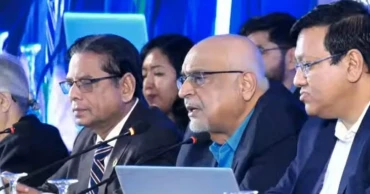
People to emerge as frontline guardians of democracy: Debapriya
The people of Bangladesh will emerge as the frontline guardians of democracy in the days ahead, Citizen’s Platform Convener Debapriya Bhattacharya said on Thursday, citing the country’s evolving political and social transformation.
“The people of Bangladesh are far more aware and far more capable than before. In the days ahead, safeguarding democracy will not require anyone else, the people of this country will themselves act as the principal guardians of democracy,” Debapriya said at a press briefing.
The event titled ‘National Election 2026: Citizens’ Recommendations for the Next Government’, organised by the Citizen’s Platform at a city hotel.
Debapriya said sustainable development and positive change in the country cannot be achieved through policy frameworks alone.
1971, 1990 and 2024 share same spirit of dignity, not conflict: Debapriya
To that end, alongside policy recommendations, the Citizen’s Platform has now introduced a national programme to monitor policy implementation. Under this initiative, the extent to which the recommendations are implemented over time will be closely tracked.
“Policy advice alone does not ensure implementation; oversight is essential,” he said, adding that education, health, social protection, and broader economic and social policy frameworks developed by the platform will be monitored through a ‘Reform Tracker’.
Debapriya also said the Reform Tracker will not be limited to the Citizen’s Platform’s proposals alone, but will also monitor how far political parties fulfill their manifesto commitments related to citizens’ development after the election.
Noting that civil society is currently more conscious than at any previous time, Debapriya said citizens will play the most decisive role in the country’s democratic transition. With a focus on improving people’s living standards, the Citizen’s Platform has structured its policy recommendations accordingly.
Politicians also face growing security concerns alongside citizens: Debapriya
Later, CPD Distinguished Fellow Mustafizur Rahman presented 12 policy recommendations aimed at achieving inclusive development in Bangladesh’s future socio-economic and democratic transition, while CPD Additional Director (Research) Towfiqul Islam Khan announced a 10-point action plan to implement those recommendations.
9 months ago
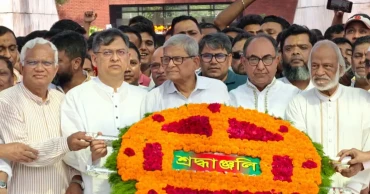
Efforts underway to destroy democracy: Fakhrul
BNP Secretary General Mirza Fakhrul Islam Alamgir on Friday alleged that various efforts are once again underway to destroy democracy in Bangladesh, following last year’s July–August mass uprising.
“After the mass uprisings in Bangladesh, there are now again different kinds of attempts and conspiracies to destroy democracy. At this moment, the Revolution and Solidarity Day inspires us to follow the path through which we can truly build a democratic and prosperous Bangladesh,” he said.
Speaking to reporters after paying homage to BNP founder and former president Ziaur Rahman at his grave, Fakhrul said the “civil-military uprising” of November 7, 1975, also inspires the party to work towards building a country where people’s right to vote and right to justice are guaranteed.
“Along this path, Bangladesh will move forward, BNP will move forward, and we are working towards that goal,” the BNP leader said.
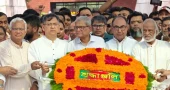
Earlier, Fakhrul, along with thousands of BNP leaders and activists, paid homage to Zia by placing wreaths at his grave in the capital’s Sher-e-Bangla Nagar, marking the National Revolution and Solidarity Day commemorating the “civil-military uprising” of November 7, 1975. They offered fateha at the grave of the party’s founder and prayed for the eternal peace of his departed soul.
BNP pledges to implement signed July Charter, urges parties not to block polls with new issues
Fakhrul described November 7, 1975, as a turning point in Bangladesh’s history when patriotic soldiers and mass people united to foil the conspiracies of hegemonic forces and freed Ziaur Rahman, the “proclaimer of independence,” from captivity, entrusting him with the responsibility of leading the nation.
He said Ziaur Rahman laid the foundation for Bangladesh’s political and economic transformation by restoring multi-party democracy, ensuring press freedom, guaranteeing the independence of the judiciary, and introducing a free-market economy.
During his short term in office, Fakhrul said Zia vigorously reformed the country’s political and economic systems, moved Bangladesh away from one-party BAKSAL rule to a multi-party democracy, opened up the media sector—which previously had only four newspapers—and strengthened judicial independence by establishing the Judicial Council.
He said Zia also set the groundwork for Bangladesh’s economic progress by launching the free-market system, encouraging industrial growth, and creating opportunities for overseas employment—initiatives that laid the foundation for today’s thriving garment industry and remittance-driven economy.
“This was how the journey towards a prosperous Bangladesh began. Ziaur Rahman laid the foundation for building a happy and democratic state,” the BNP leader said.
Fakhrul said Zia, a great leader born once in a generation, established the very basis of Bangladesh’s progress. “That is why this day is not only significant for BNP but also deeply important to all democratic-minded people across the nation.”
BNP is observing the National Revolution and Solidarity Day today with various programmes held with due respect.
Desperation to hold referendum before election raises public suspicion: Khosru
On this day in 1975, amid political unrest, soldiers and civilians together freed then Chief of Army Staff Ziaur Rahman from captivity in Dhaka Cantonment, paving the way for him to come to power.
On November 2, BNP announced a 10-day programme to mark the day extensively, aiming to highlight its true historical importance.
As part of the programmes, the party flag was hoisted atop all its offices across the country in the morning.
The BNP’s Dhaka South and North city units brought out a rally from the party’s Nayapaltan central office at 3:00pm. All district and upazila units of the party also held rallies on the same day.
11 months ago
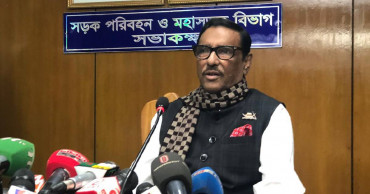
Voters’ apathy not good for democracy: Quader
Road Transport and Bridges Minister Obaidul Quader on Tuesday said the apathy of voters during the recently held Dhaka city elections is not good for Bangladesh democracy.
6 years ago