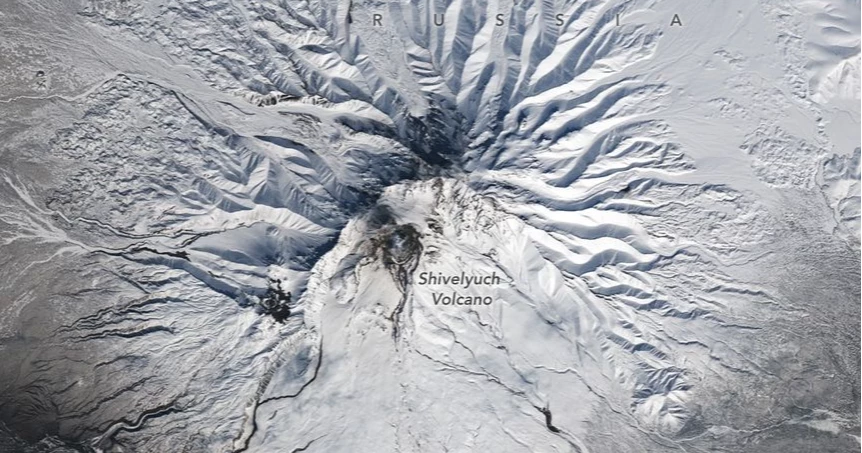
Shiveluch, one of the most active volcanoes on Russia’s Kamchatka Peninsula and the northernmost active volcano in the region, continues to show near-daily volcanic activity, according to satellite observations.
The volcano’s horseshoe-shaped caldera regularly exhibits signs of unrest, including thermal anomalies, hot avalanches, debris flows and ash deposits that frequently darken the surrounding snow-covered landscape.
A Landsat 9 satellite image captured on April 23, 2026, showed fresh volcanic activity altering the late-spring snow cover. Scientists said a growing lava dome—formed by slow-moving, viscous lava—has been developing inside the caldera in recent months, based on reports from the Kamchatka Volcanic Eruption Response Team (KVERT).
Lava domes typically build up gradually in rounded or spine-like formations, similar to toothpaste being squeezed from a tube. On Shiveluch, these domes undergo repeated cycles of growth and collapse, often triggering explosive ash emissions and fast-moving pyroclastic flows of hot ash and debris.
Experts said these collapses generate so-called “block-and-ash flows”, which carry large rock fragments mixed with volcanic ash and soil. These flows can create thick deposits that retain heat for long periods, sometimes for months or even years, often melting surrounding snow during winter.
Satellite data has also detected ongoing thermal activity within the caldera and along flow channels leading away from it. KVERT reported that an “explosive-extrusive eruption” was ongoing on the day of the satellite capture, accompanied by “powerful gas-steam activity”.
The volcano’s recent behaviour follows a major eruption and flank collapse in April 2023, which sent pyroclastic flows dozens of kilometres down the slopes, destroying large forest areas and leaving extensive deposits still visible today.
Experts say some of those deposits may still retain residual heat. Geologist Janine Krippner noted that similar deposits from past events remained warm years later, based on her fieldwork in the area.
Shiveluch has repeatedly undergone cycles of collapse and rebuilding, making it one of the most dynamic volcanoes in the world, scientists said.
#By NASA