Science
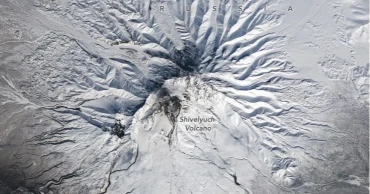
Kamchatka’s Shiveluch volcano shows continuous activity, satellite data reveals
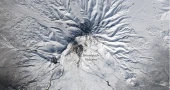
Shiveluch, one of the most active volcanoes on Russia’s Kamchatka Peninsula and the northernmost active volcano in the region, continues to show near-daily volcanic activity, according to satellite observations.
The volcano’s horseshoe-shaped caldera regularly exhibits signs of unrest, including thermal anomalies, hot avalanches, debris flows and ash deposits that frequently darken the surrounding snow-covered landscape.
A Landsat 9 satellite image captured on April 23, 2026, showed fresh volcanic activity altering the late-spring snow cover. Scientists said a growing lava dome—formed by slow-moving, viscous lava—has been developing inside the caldera in recent months, based on reports from the Kamchatka Volcanic Eruption Response Team (KVERT).
Lava domes typically build up gradually in rounded or spine-like formations, similar to toothpaste being squeezed from a tube. On Shiveluch, these domes undergo repeated cycles of growth and collapse, often triggering explosive ash emissions and fast-moving pyroclastic flows of hot ash and debris.
Experts said these collapses generate so-called “block-and-ash flows”, which carry large rock fragments mixed with volcanic ash and soil. These flows can create thick deposits that retain heat for long periods, sometimes for months or even years, often melting surrounding snow during winter.
Satellite data has also detected ongoing thermal activity within the caldera and along flow channels leading away from it. KVERT reported that an “explosive-extrusive eruption” was ongoing on the day of the satellite capture, accompanied by “powerful gas-steam activity”.
The volcano’s recent behaviour follows a major eruption and flank collapse in April 2023, which sent pyroclastic flows dozens of kilometres down the slopes, destroying large forest areas and leaving extensive deposits still visible today.
Experts say some of those deposits may still retain residual heat. Geologist Janine Krippner noted that similar deposits from past events remained warm years later, based on her fieldwork in the area.
Shiveluch has repeatedly undergone cycles of collapse and rebuilding, making it one of the most dynamic volcanoes in the world, scientists said. #By NASA
4 months ago

Science, technology vital for development, security: Minister Mahbub
Science and technology are not only drivers of economic growth but also key pillars of national security, sustainable development and human welfare, said Posts, Telecommunications and Information Technology, and Science and Technology Minister Fakir Mahbub Anam on Saturday.
“The government is working to build a knowledge-based and innovation-driven Bangladesh placing emphasis on expanding STEM education, commercialising research, increasing investment in advanced technologies including AI and strengthening the startup ecosystem,” said the minister after inaugurating the two-day 6th Young Scientist Congress in the capital.
The congress themed ‘Young Scientists for Artificial Intelligence’ is being held at the National Science and Technology Complex in Agargaon. Bangladesh Academy of Sciences organised the event.
Young scientists from across the country are taking part in the event showcasing their research, innovations and future prospects in the field of artificial intelligence.
The minister said the participation of young scientists in the congress would further accelerate the country’s scientific advancement.
Addressing the young participants, he said they would lead the future and must contribute to national development through research, innovation and creativity.
He also urged them to apply their knowledge and experience for the country after completing higher education abroad.
Science and Technology Ministry Secretary Md Anwar Hossain said the government has taken initiatives to establish a national AI institute prioritising artificial intelligence development in the country.
He said efforts are underway to formulate integrated policies to ensure data security, management and effective use of AI in agriculture, education, healthcare and industry.
Emphasis is also being placed on STEM education, nanotechnology, biotechnology and semiconductor development, alongside linking innovation with markets through the “Innovation to Market” initiative, he added.
University Grants Commission (UGC) Chairman Prof Dr Mamun Ahmed said the world is now in the era of the Fourth Industrial Revolution where artificial intelligence is transforming life and workplaces and young Bangladeshi scientists are the driving force behind this change.
The congress features technical sessions, research presentations, panel discussions and technology exhibitions, with participation from universities, research institutions and technology-related organisations.
The inaugural session was presided over by Bangladesh Academy of Sciences Vice President Prof Dr Z N Tahmida Begum, said a PID handout.
Teachers, researchers, young scientists, students and experts from across the country attended the programme.
5 months ago

The secret behind a horse’s whinny: Scientists reveal how It works
Horses often whinny to greet companions, call new friends or show excitement during feeding time. Scientists have long wondered how they create this special sound, known as a neigh.
A new study has now revealed the secret. Researchers found that a horse’s whinny is actually a mix of both low- and high-pitched sounds produced at the same time. The low tone is created when air passes over vibrating tissues in the voice box, similar to how humans speak or sing.
The high-pitched tone, however, had puzzled experts for years. Larger animals usually make deeper sounds because of their bigger vocal systems. But horses appear to break that rule.
According to the study published in the journal Current Biology, horses produce the higher pitch by whistling. Scientists used a tiny camera inserted through the animals’ noses to observe the voice box while they whinnied and made softer “nickering” sounds. They also scanned the vocal structures and tested airflow through voice boxes from deceased horses.
They discovered that as air vibrates the tissues in the voice box, an area just above tightens and leaves a small gap, allowing a whistle-like sound to escape. Unlike humans, who whistle with their mouths, horses whistle internally through their voice box.
Jenifer Nadeau of the University of Connecticut, who was not part of the study, said the finding was surprising and helps explain the unique tone of a neigh. Researchers also noted that while small rodents can whistle this way, horses are the first known large mammals to do so.
Alisa Herbst from Rutgers University said the two-tone call shows that a whinny is more complex than previously thought. Study author Elodie Mandel-Briefer of the University of Copenhagen added that the dual tones may help horses express different emotions at once when interacting socially.
Scientists are still exploring how this rare vocal ability evolved, as closely related animals like donkeys and zebras cannot produce the same high-pitched sound.
6 months ago

SpaceX Crew-12 Dragon successfully docks with space station
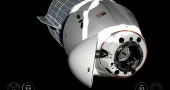
SpaceX’s Dragon spacecraft, carrying four astronauts for NASA’s Crew-12 mission, autonomously docked with the International Space Station on Saturday.
The spacecraft launched at 5:15 a.m. Eastern Time on Friday aboard a Falcon 9 rocket from Cape Canaveral Space Force Station and reached the space-facing port of the station’s Harmony module at around 3:15 p.m. Eastern Time on Saturday.
The four-member team comprises Jessica Meir and Jack Hathaway from NASA, Sophie Adenot of the European Space Agency, and cosmonaut Andrey Fedyaev from Roscosmos.
SpaceX sends new team to ISS after medical emergency
Over the nearly eight-month mission, Crew-12 will carry out a range of scientific experiments to support future human missions beyond low Earth orbit and deliver benefits for life on Earth, NASA said.
The crew will investigate pneumonia-causing bacteria to support better cardiovascular therapies and evaluate technologies for producing intravenous fluids on demand for future space missions. They will also assess how different physical traits influence blood circulation during spaceflight.
According to NASA, other studies will focus on automated monitoring of plant health and exploring interactions between plants and nitrogen-fixing microbes to boost food production in space.
Elon Musk’s SpaceX to build self-sustaining Moon city
7 months ago
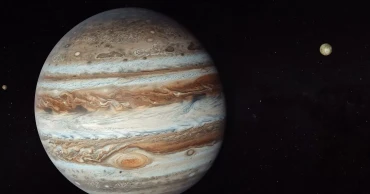
NASA’s Juno data shows Jupiter smaller and flatter than earlier estimates
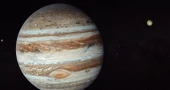
New findings from NASA’s Juno mission suggest that Jupiter, the largest planet in the solar system, is slightly smaller and more flattened than scientists previously believed.
According to NASA, researchers analysed radio occultation data collected during 13 close flybys of the gas giant, while also factoring in the impact of Jupiter’s powerful zonal winds. The study, published in the journal Nature Astronomy, found that Jupiter is around 8 kilometres narrower at the equator and about 24 kilometres flatter at the poles than earlier measurements indicated.
NASA explained that radio occultation allows scientists to peer through Jupiter’s thick and opaque cloud layers to gain insights into its internal structure. During these experiments, Juno sends radio signals to Earth-based receivers in NASA’s Deep Space Network. As the signals travel through Jupiter’s ionosphere, atmospheric gases bend and slow them.
NASA postpones crewed moon mission to March after hydrogen leaks
By analysing subtle changes in the frequency of these signals, scientists can calculate key atmospheric properties, including temperature, pressure and electron density at various depths within the planet’s atmosphere.
The agency said that determining Jupiter’s precise size and shape is crucial because the planet serves as an important reference point for studying giant exoplanets beyond the solar system. A more accurate model of Jupiter will help astronomers better interpret observations of distant planets as they transit their host stars.
7 months ago
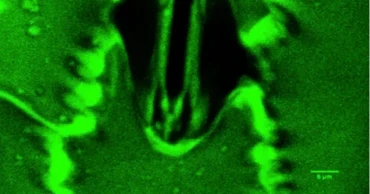
New device lets scientists watch plants breathe live
Scientists have, for the first time, developed a technology that allows humans to watch plants “breathe” in real time, a breakthrough that could help create stronger and more drought-resistant crops.
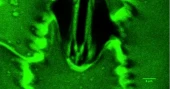
Researchers at the University of Illinois Urbana-Champaign have built a device called “Stomata In-Sight” that makes it possible to directly observe how tiny pores on plant leaves, known as stomata, open and close to regulate the exchange of carbon dioxide, oxygen and water vapour.
For centuries, scientists have known that plants absorb carbon dioxide and release oxygen and water vapour through these microscopic pores. However, the process had never before been observed live and in such fine detail.
The new system combines a high-resolution confocal microscope, a precise gas-exchange measurement setup and machine-learning software to analyse images. During experiments, small sections of leaves are placed inside a palm-sized chamber where temperature, humidity, light, carbon dioxide levels and water supply can be carefully controlled.
Using the device, researchers recorded videos showing how gases move as plants absorb carbon dioxide for photosynthesis and release oxygen and water vapour. The system also tracks subtle cellular changes as stomata respond to light, heat and humidity.
Scientists say the breakthrough could transform crop research by helping identify genetic traits linked to better water-use efficiency. This is seen as crucial at a time when water scarcity and rising temperatures pose major threats to global food production.
The University of Illinois Urbana-Champaign has patented the technology and hopes it will soon be manufactured for wider scientific use. The findings have been published in the journal Plant Physiology.
With inputs from NDTV
8 months ago

NASA’s new moon rocket rolls to launch pad ahead of possible February astronaut mission
NASA’s massive new moon rocket rolled out to the launch pad early Saturday, marking a major step toward the first crewed lunar fly-around in more than 50 years, which could lift off as early as February.
The 322-foot Space Launch System rocket began its slow journey from Kennedy Space Center’s Vehicle Assembly Building at daybreak, moving at about one mile per hour on a giant transporter. The four-mile trip to the pad was expected to take most of the day.
Thousands of NASA workers and their families gathered in the early morning chill to watch the long-awaited rollout, an event that had been delayed for years. NASA Administrator Jared Isaacman and the four astronauts assigned to the mission led the cheering crowd.
Weighing about 11 million pounds, the rocket and its Orion crew capsule were carried by a transporter first used during the Apollo and space shuttle eras and later upgraded for the heavier SLS.
Study warns ocean chemistry changes could weaken sharks’ teeth
The only previous SLS launch took place in November 2022, when an uncrewed Orion capsule was sent into orbit around the moon. This time, astronauts will be aboard.
“This one feels very different, putting crew on the rocket and taking them around the moon,” said NASA’s John Honeycutt.
The upcoming 10-day mission will be commanded by Reid Wiseman, with Victor Glover as pilot and Christina Koch as mission specialist. They will be joined by Canadian astronaut Jeremy Hansen, making his first spaceflight.
The astronauts will not land on the moon or enter lunar orbit. That milestone is planned for a later Artemis mission.
NASA plans to conduct a fueling test on the launch pad in early February before setting a final launch date. The agency has a narrow window of five days in the first half of February before the schedule shifts into March.
If successful, the mission will mark humanity’s first return to the moon since Apollo 17 in 1972, when Gene Cernan and Harrison Schmitt завершed the era of lunar landings.
8 months ago

Researchers unravel color mystery in Jackson Pollock’s iconic painting
Scientists have finally solved a decades-old puzzle surrounding the origins of the striking turquoise blue in one of Jackson Pollock’s masterpieces. They confirmed that the abstract expressionist used a synthetic pigment known as manganese blue.
The breakthrough came from a new study published Monday in the Proceedings of the National Academy of Sciences. Researchers scraped samples of the blue paint from Pollock’s “Number 1A, 1948”, a nearly 9-foot-wide canvas now displayed at the Museum of Modern Art in New York, and analyzed them using lasers to measure molecular vibrations. The process produced a unique chemical fingerprint, identifying the pigment as manganese blue—the first confirmed evidence of Pollock using it.
The painting, which features Pollock’s trademark drips and splatters, also bears his handprints near the top. While scientists had previously identified the reds and yellows on the canvas, the source of the vivid turquoise remained elusive until now.
“It’s really interesting to understand where some striking color comes from on a molecular level,” said study co-author Edward Solomon of Stanford University.
Manganese blue, once popular among artists and even used to tint swimming pool cement, was phased out in the 1990s over environmental concerns. Earlier research had suggested Pollock’s turquoise could be manganese blue, but the new study confirms it directly from canvas samples.
Beyond identification, researchers examined the pigment’s chemical structure to understand how it produces such a vibrant hue. Experts say these studies not only preserve historic works but also help detect forgeries.
Because Pollock often poured paint directly onto canvas instead of mixing on a palette, scientists were able to access more precise samples for testing.
“I actually see a lot of similarities between the way we worked and the way that Jackson Pollock worked on the painting,” said Abed Haddad, co-author and assistant conservation scientist at MoMA.
Pollock, often described as chaotic, insisted his method was deliberate and structured—a view echoed by researchers who finally decoded one of the artist’s colorful mysteries.
1 year ago
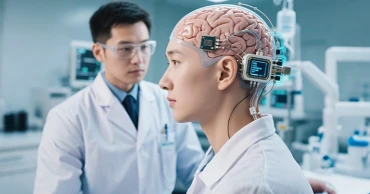
Chinese team begins first human trial of invasive Brain-Computer Interface
A groundbreaking clinical trial in Shanghai has enabled a Chinese man, who lost all four limbs in an electrical accident 13 years ago, to play chess and racing games using only his thoughts. This became possible after researchers implanted a brain-computer interface (BCI) directly into his brain — marking China's first human trial of such invasive technology.
The trial is being conducted by scientists from the Center for Excellence in Brain Science and Intelligence Technology (CEBSIT) under the Chinese Academy of Sciences, in collaboration with Huashan Hospital of Fudan University. With this development, China becomes the second country after the United States to push invasive BCI into the clinical stage.
Implanted in March 2025, the device has so far worked without complications such as infections or electrode malfunctions, researchers confirmed. They hope the technology could gain regulatory approval by 2028 and significantly improve life quality for individuals with spinal cord injuries, double-arm amputations, or neurodegenerative conditions like ALS.
Japan trials ‘Universal Artificial Blood’ that could revolutionise emergency care
Brain-computer interfaces link the brain directly to external systems, enabling new forms of communication and control. CEBSIT Deputy Director Shi Yongyong said this technology not only helps decode how the brain processes information but also opens up new methods for treating neurological disorders and advancing human-machine interaction.
Historically, BCI research involved bulky machines. But shrinking these systems while maintaining precision has proven difficult, said Pu Muming, an academician with the CAS.
The current breakthrough uses ultra-thin, flexible electrodes — just 1% the diameter of a human hair — which cause minimal disruption to brain tissue, explained Zhao Zhengtuo, the lead researcher. These electrodes can capture detailed and stable neural signals over long periods and have already been tested in rodents, monkeys, and now humans.
The entire BCI implant is coin-sized — just 26 mm wide and under 6 mm thick — roughly half the size of a similar device from Elon Musk’s Neuralink, Zhao noted.
According to Li Xue, another lead researcher, the system can decode brain signals and convert them into control commands in mere milliseconds, faster than the blink of an eye. Safety and performance were first confirmed in macaque monkeys, with stable operation and even successful device replacement during tests.
The surgical method used for implantation is minimally invasive, ensuring low risk and quick recovery. Neurosurgeon Lu Junfeng, who led the operation, said precision was critical. His team used advanced navigation to place the electrodes accurately within the motor cortex, down to the millimeter.
There are three main types of BCI: non-invasive (external), semi-invasive (partially internal), and invasive (fully implanted). Lu used a football game analogy to explain the differences: non-invasive devices are like microphones outside a stadium — you can hear the crowd but not the match clearly. Semi-invasive devices offer a better view, like hanging mics inside the stadium. Invasive ones, like the one used here, are like having mics on players — giving precise, real-time information.
Arizona confirms measles outbreak in Navajo County
Looking ahead, the team plans to enable the patient to operate a robotic arm for daily tasks like holding a cup. They also aim to expand capabilities by integrating more complex tools like robotic pets and smart robots to enhance mobility and independence.
1 year ago
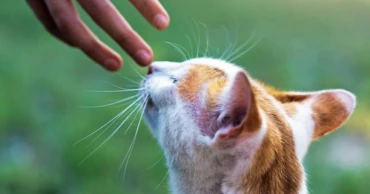
Cats perceive owner's smell from stranger's, research finds
A new study has found that domestic cats can distinguish between the scent of their owner and that of a stranger.
Conducted by Tokyo University of Agriculture, the research revealed that cats spent noticeably more time sniffing tubes containing the scent of unfamiliar individuals than those with their owner's odour.
According to the researchers, this indicates that cats are capable of telling the difference between familiar and unfamiliar humans based on smell. However, it remains uncertain whether they can identify specific individuals.
While it is well established that cats use their keen sense of smell to recognise and interact with other cats, this study is among the first to explore whether they can also differentiate between people by scent.
Previous research has shown that cats can recognise humans by their voice, follow a person’s gaze to locate food, and adjust their behaviour based on emotions detected through scent.
In a new study published on Wednesday, researchers tested 30 cats using plastic tubes containing three types of swabs: one with the owner's scent, one with the scent of a stranger of the same sex as the owner, and one clean swab with no scent.
The scented swabs had been rubbed under the armpit, behind the ear, and between the toes of the owner or the unfamiliar person.
Astronomers discover strange new celestial object in Milky Way galaxy
The findings revealed that cats spent significantly more time sniffing the swabs with the stranger’s scent than those with the owner's scent or the clean swab.
This suggests cats can distinguish between familiar and unfamiliar human smells, the researchers said.
This behaviour aligns with previous observations that cats, especially weaned kittens, tend to sniff unfamiliar female cats longer than their mothers.
However, the researchers emphasized that the results do not confirm whether cats can identify specific individuals like their owners.
Study co-author Hidehiko Uchiyama noted that since the experiment only involved familiar and unfamiliar scents, further research is needed.
He explained that future behavioural tests using odours from multiple familiar people would be required to determine if cats show unique reactions specifically to their owner's scent.
Serenella d'Ingeo, a researcher from the University of Bari who was not involved in the study but has previously researched how cats respond to human scents, said the findings show that cats react differently to familiar and unfamiliar odours.
However, she cautioned that the motivations behind their reactions remain unclear. “We don't know how the animal felt during the sniffing... We don't know, for instance, whether the animal was relaxed or tense,” she explained.
D’Ingeo also noted that since the odour samples were presented by the cats’ own owners, who naturally contribute their scent to the environment, this might have heightened the cats' interest in the unfamiliar odours.
“In that situation, owners present not only their visual presence but also their odour,” she said. “So of course if they present other odours that are different from their personal one, in a way they engage more the cat.”
Why Ginger cats are special? genetic secret uncovered
The authors of the study concluded that cats use their sense of smell to recognise humans. They observed that after sniffing the tubes, cats often rubbed their faces against them—a typical scent-marking behaviour.
This suggests that sniffing might be an exploratory action that comes before marking something with their own scent. However, the researchers stressed that this link needs further exploration, along with the question of whether cats are truly able to recognise a specific individual based solely on their scent.
1 year ago