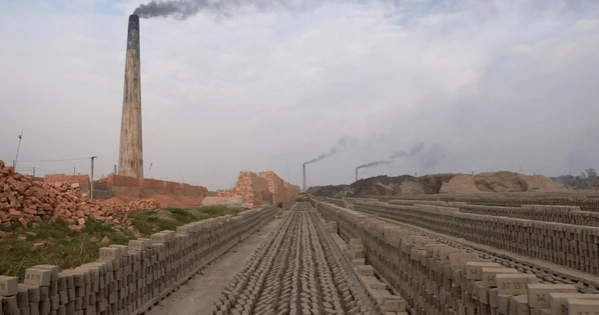
The north-western district, known for its eye-catching greenery and mango orchards, hosts 113 brick kilns, over 80 percent of these operating illegally.
With prohibited chimneys spewing black smoke and polluting the air, the brick kilns continue to operate thanks to negilence of the authorities concerned.
The rampant black smoke has been adversely impacting the livelihood and agricultural production in the district, said locals with a call for immediate action to shut the kilns.
The Brick Manufacturing and Brick Kiln Establishment (Control) Act, amended in 2013 and again in 2019, mandates licensing for all brick kilns from the office of district deputy commissioner and approval from the Department of Environment (DoE).
According to the law, it is prohibited to set up brick kilns in residential, protected, or commercial areas, city corporations, municipalities, or agricultural land. The use of wood as fuel in brick kilns is also banned.
However, most of the brick kilns are situated near residential areas, mango orchards, and agricultural land, with many using wood as fuel, which is a complete violation of the law.
According to data served from the district DoE, there are currently 113 brick kilns operating in the five upazilas, with only 20 kilns valid and the rest 93 unauthorised.
Read: 4 acres of forestland recovered in Gazipur, 7 illegal brick kilns demolished in Tangail
A field visit revealed vast open fields where black smoke was rising from the chimneys of brick kilns, overshadowing the surrounding greenery.
Several brick kilns were found within mango orchards and residential areas, and within short distance. Some brickfields stand close to each other.
In all five upazilas of the district, illegal brick kilns are cropping up in mango orchards and farmland. Standing at the new bridge in Chapainawabganj Sadar upazila, one can see smoke emitting off almost 14 brick kilns.
Wishing not to be named, a brick kiln owner admitted that the number of legal brick kilns in the district is very low, claiming that like legal brick kilns, illegal kilns also pay VAT to the government.
He also said that while everyone tries to set up brick kilns in open areas but such areas are hardly found.
Abu Said, assistant director at the DoE in the district, said that the deputy commissioner has already been informed about the matter, with expectation to begin drives against illegal brickfields soon.
Read more: 8 brick kilns fined Tk 12 lakh in Kushtia for unauthorised operations
He, however, said it would not be possible to shut them down all at once as the number of the illegal brick kilns is so high. The drives will be carried out in phases.
Deputy Commissioner Abdus Samad warned that no illegal brickfield would be spared and drives would be launched soon.