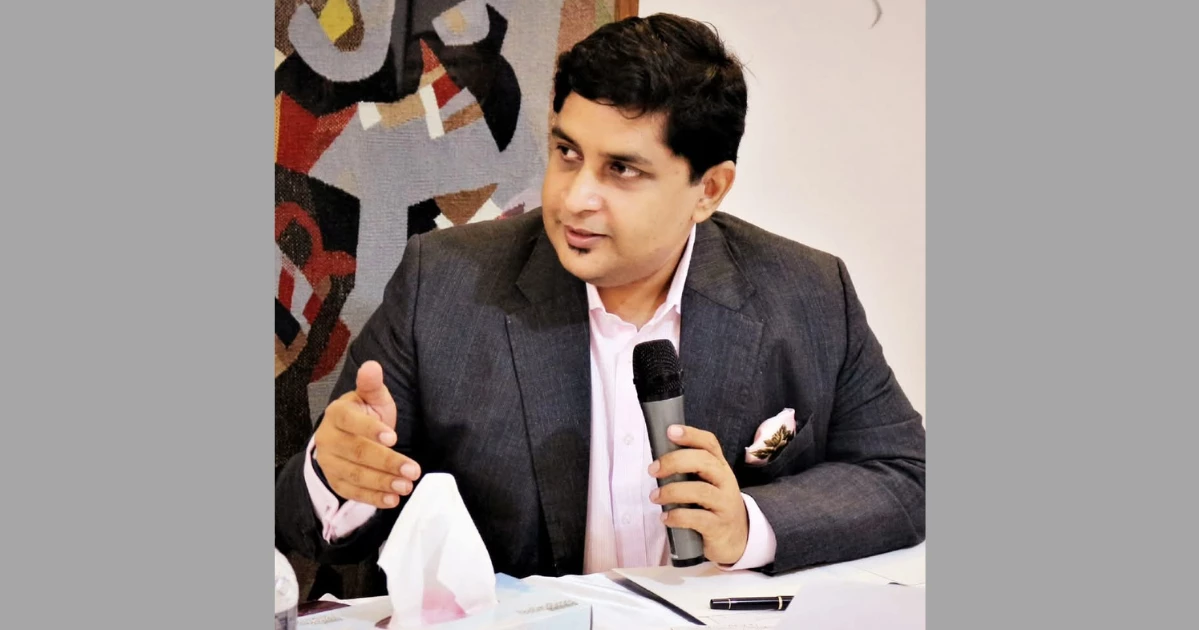
Highlighting the importance of permanent solutions, Executive Director of the Bangladesh Center for Indo-Pacific Affairs Professor Shahab Enam Khan has said although the situation between the two South Asian nations has "stabilised" for now, there remains a risk of renewed escalation if either India or Pakistan makes a "strategic miscalculation".
"The ceasefire marks a meaningful beginning, but a prevailing "retaliation" mentality could jeopardise it, possibly leading to further military confrontations," Khan, who also serves as a professor at the Department of International Relations of Jahangirnagar University, told UNB on Sunday.
The foreign affairs expert said this risk is a "significant concern" for the international community, especially major powers like Beijing and Washington, as well as regional neighbours such as Tehran and others in the Middle East and South Asia, who are closely monitoring developments.
India and Pakistan agreed to a ceasefire on Saturday after “US-led talks” to end the most serious military confrontation between the nuclear-armed rivals in decades but accused each other of violating the deal just hours later.
The ceasefire had been expected to bring a swift end to weeks of escalating clashes, including missile and drone strikes, triggered by the mass shooting of tourists last month that India blames on Pakistan, which denies the charge.
But multiple explosions were heard in two large cities of Indian-controlled Kashmir hours after the countries agreed to the deal.
Indian Foreign Secretary Vikram Misri said late Saturday that “there had been repeated violations of the understanding arrived between the two countries” and accused Pakistan of breaching the agreement.
Focus on Permanent Solutions
To promote lasting peace, Prof Khan said, it is politically wise to avoid retaliatory rhetoric and focus on permanent solutions.
He said this strategy should incorporate the growing international consensus on resolving the tensions surrounding Kashmir and terrorism.
Dhaka appreciated Indian Prime Minister Narendra Modi and Pakistan Prime Minister Shehbaz Sharif for agreeing to a ceasefire with immediate effect and to engage in talks.
"I most sincerely commend Prime Minister Narendra Modi of India and Prime Minister Shehbaz Sharif of Pakistan for agreeing to a ceasefire with immediate effect and to engage in talks," said Chief Adviser Professor Muhammad Yunus in a message on Saturday night.
Prof Yunus expressed his deep appreciation to US President Donald Trump and US Secretary of State Rubio for their effective mediation.
India and Pakistan accuse each other of violating ceasefire hours after reaching deal
"Bangladesh will continue to support our two neighbours to resolve differences through diplomacy," Prof Yunus said.
Delhi could consider sharing information and evidence related to the Pehelgaon attacks, while Pakistan should disclose evidence indicating that military actions on its territory violated international law and principles of war, Prof Khan said.
Role of International Community
He said the international community can play a vital role in facilitating investigative support and implementing confidence-building measures to alleviate tensions and mistrust.
"Therefore, India and Pakistan must maintain open and honest dialogue at various levels, including among political parties," Prof Khan said.
The ongoing communication between both militaries and discussions at the national security adviser level are aiding the de-escalation process and bridging gaps in political communication.
"However, a critical issue both countries must address is misinformation and disinformation," Prof Khan said, adding that without a political commitment to counter misinformation warfare, public perception will continue to pose political challenges.
Nonetheless, he thinks, history demonstrates that periods of tension often serve as opportunities for improved relations, as seen with European states or the Asean group.
India and Pakistan agree to ceasefire in US-mediated talks
"This recent episode could potentially pave the way for greater cooperation between the two developing countries, with India assisting Pakistan in combating terrorism and Pakistan helping India expand its economy," Prof Khan said.
The revitalisation of a reformed Saarc has never felt more necessary than in the past week of heightened tensions, he said, adding that the earlier they embrace regional cooperation, the better it will be for South Asia and its neighboring countries.
Efforts by Trump Administration
"After a long night of talks mediated by the United States, I am pleased to announce that India and Pakistan have agreed to a FULL AND IMMEDIATE CEASEFIRE. Congratulations to both Countries on using Common Sense and Great Intelligence. Thank you for your attention to this matter!” US President Donald Trump said through his verified social media handle on Saturday night.
Responding to a question, Prof Khan told UNB that the recent escalation of tensions has increased geopolitical risks in the region, posing threats to peace, stability and economic growth.
"It is commendable that the Trump Administration played a key role in alleviating these tensions and reducing military pressures," he said.
India-Pakistan clash sees use of Chinese missiles, French jets, Israeli drones and more
Diplomatic efforts from Beijing and Tehran have also contributed to diffusing the situation, Prof Khan observed.
Meanwhile, he said, Delhi has made a positive gesture by indicating a willingness not to complicate matters unless Islamabad continues to pose military threats.