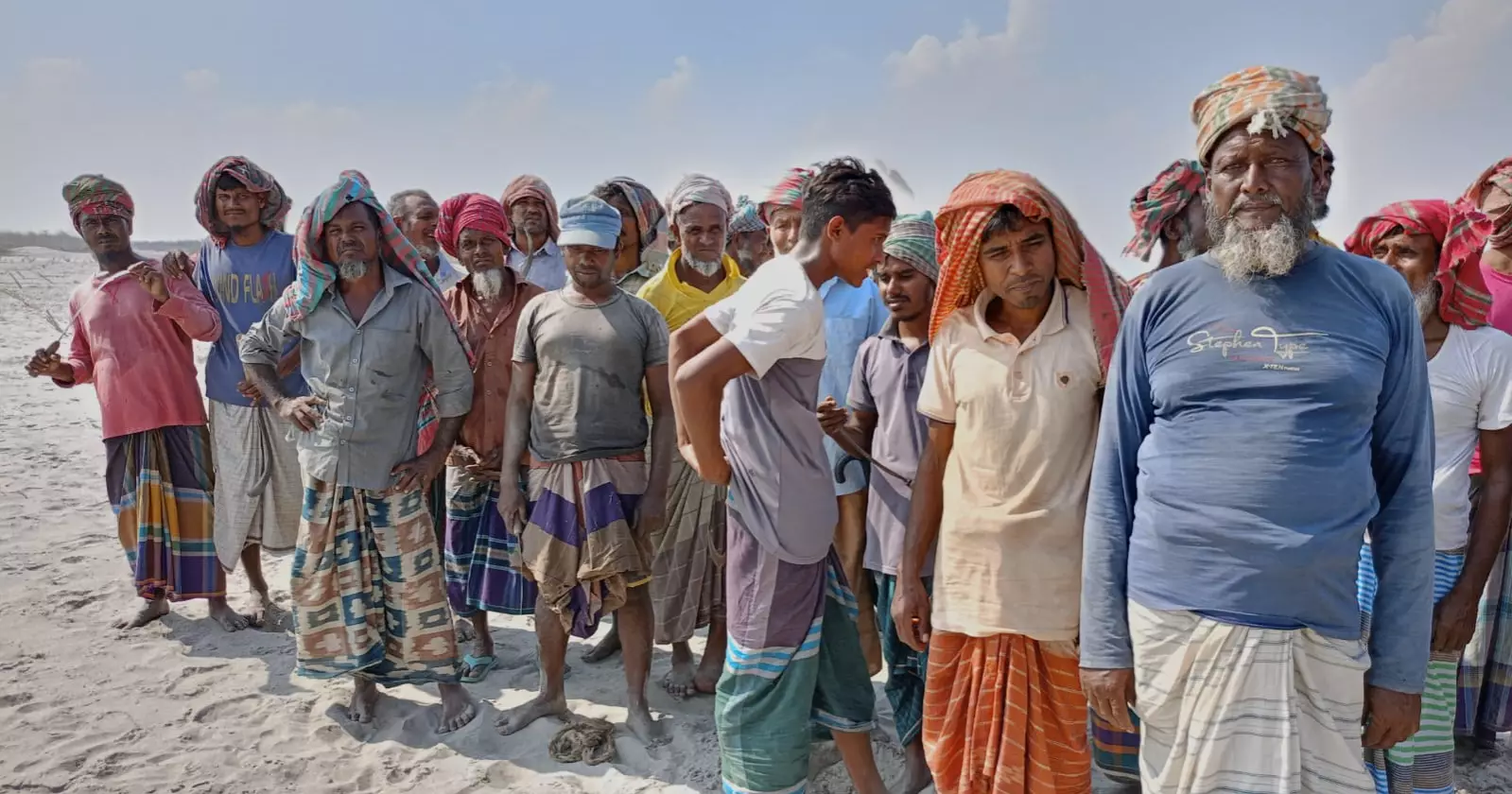
Expectations are running unusually high in the northern district of Kurigram, as residents look to the newly formed government for visible and sustainable solutions to the chronic problems of river erosion and unemployment that have shaped life in the area for decades.
Bordering India and crisscrossed by rivers, Kurigram has long struggled with poverty, unemployment and underdevelopment in education, health care and communications. Locals say repeated promises and short-term projects have failed to deliver lasting change, leaving thousands trapped in a cycle of displacement and economic insecurity.
At least 16 rivers, including the Brahmaputra River, Dharla River, Teesta River and Dudhkumar River, flow through the district. Every year, monsoon floods and erosion eat away homesteads, farmland, schools and roads, forcing hundreds of families to lose their land and relocate, often repeatedly.
Residents say temporary embankments and piecemeal projects have done little to stem the damage. What they want now, they say, is a comprehensive and long-term river management plan involving permanent embankments, regular dredging and science-based river training.
“River erosion destroys our lives every year. Every year we have to battle erosion to survive,” said Shajahan Ali of Baldi Para in Kurigram Sadar upazila, recalling how his family has been displaced multiple times by erosion. “We want a permanent solution.”
Alongside erosion, the lack of employment opportunities has emerged as Kurigram’s most pressing social challenge. With few industries in the district, large numbers of educated and semi-educated youths migrate to Dhaka, Gazipur and Chattogram in search of work, often leaving families behind.
“There is no work here,” said Raju Mia from Char Baraibari village under Bhogdanga union. “We don’t want to leave our families and go to big cities. We want jobs in our own district.”
Sahinur Rahman, a young resident of Jhunkar Char in Jatrapur union, echoed the frustration. “I finished my studies, but there are no jobs. If there were factories here, we could work locally. Instead, we are forced to move to Dhaka.”
Local development advocates argue that the situation can change if the government prioritises Kurigram in its development agenda. They are calling for the establishment of agro-based industries, food processing plants, cold storage facilities, and stronger support for small and medium enterprises, alongside skills development programmes for youths.
PM Tarique urges market restraint ahead of Ramadan
According to Khaja Sharif Uddin Ali Ahmed Rintu, senior vice-president of the Kurigram District Development and Implementation Council, around 1.65 million of the district’s nearly 2.3 million people live in poverty.
“River erosion and decades of mismanagement have repeatedly stripped people of their homes and livelihoods,” he said. “Many NGOs have worked here in the name of poverty reduction, but the lives of ordinary people have not changed much. Proper implementation of development allocations is crucial if poverty is to be reduced.”
Professor Shafiqul Islam Bebu, president of a local char development organisation, said balanced development is key to Kurigram’s future.
“To bring neglected Kurigram forward, we must stop river erosion, improve living standards in char areas and create employment through industrialisation,” he said. “Only fair and equitable distribution of national development resources can ensure sustainable progress here.”
For residents, the message to the new government is clear: move beyond paper plans and political promises to deliver real action on the ground.
“If river erosion is controlled and jobs are created, Kurigram will change,” said one local elder. “People will finally be able to live with dignity, hope and stability.”
As the new administration settles into office, the people of Kurigram wait to see whether this time their long-standing demands will finally translate into lasting change.