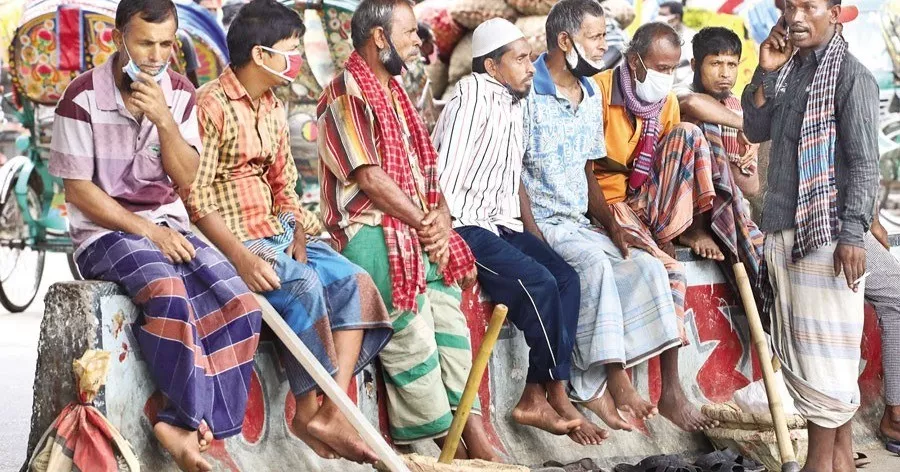
While millions across Bangladesh mark Eid-ul-Fitr with prayers, feasts and family reunions, the day unfolds very differently for thousands of day labourers, rickshaw pullers and transport workers in the capital.
For them, Eid is less about celebration and more about survival, as work obligations and economic necessity keep them tied to the city, far from loved ones waiting in distant villages.
From the early hours of the morning, when worshippers gather at mosques and open grounds for Eid prayers, many among the urban working class are already on the move.
Their day begins not with new clothes or festive meals, but with the familiar urgency of earning enough to sustain their families.
At Gabtoli, one of Dhaka’s busiest transport hubs, drivers, helpers and ticket sellers remain occupied even on Eid morning.
Long-distance buses continue to arrive and depart, carrying passengers returning to the capital after celebrating Eid in their village homes.
For transport workers, the holiday often means longer shifts rather than rest.
Abdul Jalil, a 42-year-old bus helper, said he had not been home to Kurigram for Eid in three years.
“If I go home, I lose income. My children are small. They expect new clothes and good food. I send money instead. That is my Eid,” he said, standing beside a coach preparing for departure.
Like Jalil, countless transport workers choose to stay back, ensuring the city’s wheels keep turning. Their work becomes even more crucial during Eid, when travel demand surges. Yet, this necessity comes at a personal cost — missing the warmth of family gatherings, the joy of children, and the peace of village life.
Across the city, rickshaw pullers form another group for whom Eid brings little respite.
With many residents travelling out of Dhaka, the streets may appear quieter, but those who remain still depend on rickshaws for movement.
For pullers, this creates an opportunity to earn slightly more than usual, prompting many to forgo visits home.
In Dhanmondi, 35-year-old rickshaw puller Shah Alam was seen waiting for passengers shortly after Eid prayers concluded.
Originally from Gaibandha, he said he had sent most of his earnings to his wife and two children.
“They bought clothes for Eid. I talked to them on the phone this morning. They were happy. That is enough for me,” he said with a faint smile.
However, his voice carried a sense of quiet resignation. “Of course I want to be there. But if I leave, who will earn? Eid comes every year, but expenses are every day.”
Day labourers, particularly those engaged in construction and informal work, face an even harsher reality.
With many worksites temporarily closed during Eid, their already irregular income becomes uncertain.
Some try to find alternative work, while others remain in the city in the hope of securing small jobs.
At Mohammadpur, a group of labourers gathered near a bazar, hoping to be hired for loading, unloading or other odd tasks.
Among them was 28-year-old Mizanur Rahman from Sunamganj. He said he could not afford the journey home this year.
“The bus fare has increased. If I go home, I will spend everything. Then how will I survive after Eid?” he asked.
Instead, he sent money to his parents and younger siblings. “They celebrated. I stayed here. It is painful, but this is life.”
The emotional toll of such separation is often overlooked. For many workers, Eid serves as a reminder of the distance between their aspirations and reality.
Phone calls and mobile money transfers have become substitutes for physical presence, but they cannot replace the experience of sharing meals or embracing loved ones.
Transport workers, in particular, describe Eid as one of the busiest and most demanding times of the year.
Drivers must remain alert for long hours, navigating crowded roads and tight schedules. Helpers manage passengers and luggage, often under stressful conditions.
At Sayedabad, truck driver Kamal Hossain said he had been on the road since the previous night.
Transporting goods is essential to keep markets supplied during Eid, he explained. “People need food, clothes, everything. If we stop, the system stops,” he said.
Yet, behind this sense of duty lies personal sacrifice. “My family is in Barishal. They had Eid without me. I will go after a few days, Inshallah,” he added.
In areas like Badda and Uttara, where a significant number of low-income workers reside in rented accommodations, Eid day often passes quietly.
With many house owners and employers away, these neighbourhoods take on a subdued atmosphere.
Small groups of workers gather to share simple meals, sometimes cooking together to recreate a sense of community.
For some, charitable distributions provide temporary relief.
Local residents and organisations distribute food, clothing and small amounts of money, offering a glimpse of the festive spirit.
However, such assistance remains limited compared to the scale of need.
Economists and labour rights advocates note that the situation reflects deeper structural challenges.
The informal sector, which employs a large portion of the urban workforce, lacks social protection, job security and paid leave.
As a result, workers must choose between income and personal well-being, even during major religious festivals.
“Eid highlights inequality in a very visible way,” said one labour activist. “For middle and upper-income groups, it is a time of joy and family. For many workers, it is a reminder of economic pressure and social discrimination.”
Despite these hardships, many workers express resilience and a sense of responsibility towards their families. Sending money home, ensuring children can celebrate, and maintaining a steady income remain their top priorities.
Back in Gabtoli, as the day progressed and buses continued to move in and out, Abdul Jalil paused briefly between trips. Asked what Eid meant to him, he reflected for a moment before replying, “Eid means happiness. But happiness is different for different people. For me, it is knowing my family is okay.”
As evening approaches and families across the country gather for festive meals, thousands of workers in Dhaka will continue their routines — pulling rickshaws, driving vehicles, or waiting for the next opportunity to earn.
Their Eid is quieter, marked not by celebration but by endurance. Yet, within that endurance lies a profound expression of care — a commitment to families far away, sustained through sacrifice, distance and the hope of better days ahead.