
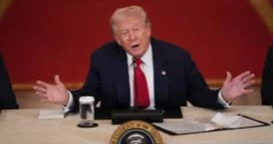
President Donald Trump said Friday that dealing with the war in Iran was “easy” compared with the complicated challenge of regulating college sports and controlling the rising salaries of football players — a remark he later appeared to reconsider.
Trump hosted a roundtable discussion with several sports figures, including former Nick Saban, commissioner Greg Sankey, and Pete Bevacqua. During the meeting, participants spent more than an hour discussing how large payments to top athletes, along with newer developments like the transfer portal, have disrupted college athletics.
US looking at potential leaders for Iran: White House
Presidents often have to deal with numerous complex issues at the same time. However, the timing of this discussion stood out because the United States and Israel had launched military strikes on Iran just a week earlier. When a reporter began asking about Iran at the end of the event, Trump interrupted, saying the situation there was “an easy problem compared to what we’re doing here.”
Another journalist asked about Trump’s decision to dismiss Homeland Security Secretary Kristi Noem the previous day. Trump responded with frustration, asking reporters to stay focused on the topic of college sports.
Later, he acknowledged that the issue might seem minor compared with global conflicts. Nevertheless, he said college athletics mattered greatly to him and that he wanted to resolve its problems if possible.
Trump says US evacuating ‘thousands’ from Middle East
Trump briefly addressed the Iran situation later, rating U.S. military actions there extremely highly, saying they scored between “12 and 15” on a scale of 1 to 10.
College athletics—especially football—remains hugely popular in the United States, but managing the system has become increasingly complicated. Trump has repeatedly criticized the growing salaries athletes receive under the NCAA’s name, image, and likeness (NIL) rules, arguing that the changes have harmed the traditional structure of college sports.
According to Trump, major revenue sports such as football are putting pressure on smaller programs and women’s athletics. He also claimed that some universities are paying athletes so much that it could push institutions toward financial trouble.
The roundtable followed several hours of private meetings with senior officials, during which Trump likely discussed Iran and other major matters. He later announced he had also met with defense contractors who agreed to expand weapons production.
Despite those pressing global concerns, Trump — alongside Secretary of State Marco Rubio and White House chief of staff Susie Wiles — devoted considerable time to the college sports debate.
During the meeting, Saban jokingly downplayed his role by saying he was “just a football coach.” Other participants, including House Speaker Mike Johnson and Ron DeSantis, expressed their passion for college football and concern about its future. Former Urban Meyer and Randy Levine also contributed to the discussion, though no current college athletes were present.
Trump assured attendees he was willing to spend as much time as necessary on the issue. The group also included former Secretary of State Condoleezza Rice, who once served on the College Football Playoff Selection Committee.
Ultimately, Trump urged lawmakers to pass the SCORE Act or similar legislation to impose new regulations on college sports. Critics argue the proposal mainly benefits the National Collegiate Athletic Association and its most powerful programs.
When told the bill was unlikely to pass Congress, Trump said he might instead issue an executive order on college sports.
“If this doesn’t work, colleges are going to be destroyed,” he warned.
It remains unclear how such an order would differ from one he signed in July directing federal authorities to clarify whether college athletes should be classified as university employees. Trump also expressed nostalgia for the system that existed before NIL rules were introduced.
At one point he asked whether it might be possible to return to the earlier scholarship-based model, while still allowing athletes to receive smaller forms of compensation.