Iran war

Asian stocks mostly gain despite concerns over Iran war
Asian stocks mostly rose Wednesday, supported by continued optimism over artificial intelligence and chip-related companies despite concerns about the ongoing war in Iran.
Japan’s benchmark Nikkei 225 jumped 2.1% in afternoon trading to 66,882.34. Australia’s S&P/ASX 200 gained 1.1% to 8,806.40, while South Korea’s Kospi slipped 0.1% to 6,861.30 after giving up earlier gains.
Hong Kong’s Hang Seng rose 0.3% to 24,585.63, and the Shanghai Composite added 0.5% to 3,847.55.
SoftBank Group Corp., which has invested in OpenAI, surged more than 6% in Tokyo. Japanese chip-related companies, including Renesas Electronics and Rohm Co., also gained.
On Wall Street, stocks ended slightly lower Tuesday as rising long-term Treasury yields put pressure on markets.
The S&P 500 fell 0.2% after moving between small gains and losses during the session. The Dow Jones Industrial Average declined 0.3%, while the Nasdaq composite dropped 0.1%.
Major indexes turned lower as higher bond yields offset gains by several major technology companies. Nvidia, the market’s most influential stock, fell 0.7% after an early rise, while Broadcom gained 1.6%.
Oil prices have fluctuated sharply as the U.S.-Iran war continues, contributing to a rise in Treasury yields to their highest level in 24 years.
U.S. benchmark crude rose 0.1% to $89.47 a barrel, while Brent crude, the international benchmark, gained 0.49% to $103.09. Brent remains well above the roughly $72 a barrel recorded before the U.S. and Israel attacked Iran in late February.
Mediators continued efforts to help the United States and Iran reach an agreement to end the fighting and reopen the Strait of Hormuz. President Donald Trump rejected a proposal from Tehran over the weekend to reopen the key waterway.
The yield on the 10-year Treasury rose to 5.25% from 5.24% late Monday. It had reached 5.28% earlier Tuesday, its highest level since 2002, according to Tradeweb.
The S&P 500 lost 12.85 points to close at 7,670.84. The Dow fell 131.59 points to 51,349.92, while the Nasdaq declined 22.84 points to 26,797.54.
Several major U.S. economic reports are due this week, which could give investors and the Federal Reserve a clearer picture of the inflation outlook.
U.S. inflation has remained above 3% for most of the year, well above the Fed’s 2% target. Wall Street expects the central bank to raise its benchmark interest rate again at its October meeting.
“While it is easy to focus on the macroeconomic headwinds of bond yields and oil, the underlying U.S. economy remains remarkably resilient,” said Tina Teng, a market analyst at MooMoo, a global financial technology and online brokerage company.
In currency trading, the U.S. dollar fell to 156.93 Japanese yen from 157.27 yen. The euro slipped to $1.1344 from $1.1347.
21 days ago
Trump says US winning Iran war, claims control of Hormuz Strait
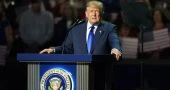
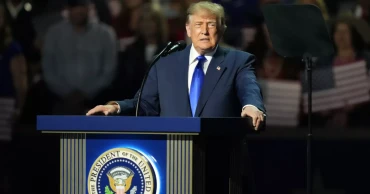
US President Donald Trump on Wednesday said the United States was winning its war with Iran and claimed that US forces controlled the strategically important Strait of Hormuz.
Speaking at the Republican Party’s first-ever midterm convention in Dallas, Trump blamed previous administrations’ green energy policies for rising living costs and claimed his administration had rapidly reduced the prices of food and other goods.
“Oil prices will be going down as soon as we win the war with Iran,” Trump said.
“We’ll win it. We’re winning it. We control the Hormuz Strait,” he added.
Trump also suggested renaming the waterway linking the Persian Gulf with the Gulf of Oman the “Trump Strait,” joking that Iran’s leadership would be pleased with the idea.
He described Iran as the “bully of the Middle East” for 51 years but said, “they’re not the bully anymore.”
Meanwhile, several US military aircraft were reportedly damaged in Iranian strikes on the Muwaffaq Salti Air Base in Jordan early Wednesday, according to CBS News, citing sources familiar with the incident.
About eight F-15 fighter jets suffered minor damage and were returned to service, while an A-10 Thunderbolt, also known as the Warthog, was hit and lost a wing, the report said.
The attack was part of a wave of Iranian retaliation following US statements Tuesday that American forces had targeted five Iranian oil tankers after Tehran attempted to attack a US Navy vessel.
Iran’s Islamic Revolutionary Guard Corps said it had struck eight tankers, two warships and the US base in Jordan.
US forces stationed in Jordan fired more than 30 Patriot missiles in an effort to intercept the incoming Iranian projectiles, according to the report.
Source: Al Jazeera
1 month ago
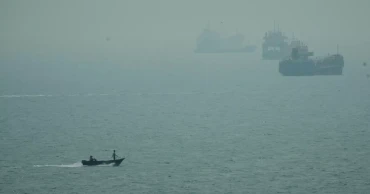
US destroys five more Iranian oil tankers after attacks on Navy warships
The US military said Tuesday it destroyed five Iranian oil tankers after Iran targeted US Navy warships with ballistic missiles, while Tehran launched missiles at American targets in Jordan in the latest escalation in the more than six-month-old war.
Iranian state media reported that missiles were fired toward US targets in Jordan following the US strikes. Jordan's military said its air defenses intercepted 18 ballistic missiles and that two others landed in uninhabited areas, with no casualties reported.
The latest exchanges came as President Donald Trump pursued a combined military and economic strategy aimed at pressuring Iran to end the war. The US administration also announced sanctions against more than two dozen Iranian commercial and private airlines and foreign cargo service providers as part of efforts to further isolate Tehran.
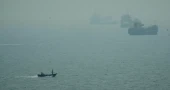
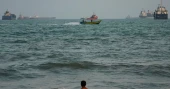
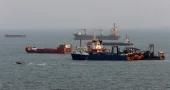
The United States and Iran are also locked in a confrontation over the Strait of Hormuz, through which roughly one-fifth of the world's oil passed before the war. The conflict has pushed up energy prices, with Brent crude briefly reaching $99.46 a barrel on Tuesday.
US forces destroyed three Iranian oil tankers Saturday after Iran's Revolutionary Guard attempted to strike a US aircraft carrier and destroyer with ballistic missiles. US Secretary of State Marco Rubio said Washington would continue responding to attacks on its naval forces.
“For every time they do that or try to do that, they’re going to lose tankers,” Rubio told reporters during a visit to Colombia.
US Central Command said Tuesday's strikes came after the Islamic Revolutionary Guard Corps targeted a US Navy warship twice over the previous two days. The warship evaded the attacks and continued patrolling regional waters, and no US personnel were injured, it said.
The five tankers destroyed Tuesday were identified as the Kivik, Charminar, Horizon 1 and Riesco in the Gulf of Oman, and the Derya near Iran's Kharg Island in the Strait of Hormuz. The crews were warned to abandon the vessels before the strikes, according to Central Command.
Iranian state television also reported attacks on oil tankers near the southern port of Jask and Kharg Island, saying their crews had been evacuated.
Iran's Revolutionary Guard Navy meanwhile warned crews of oil tankers near Kuwait and Bahrain to leave their vessels, saying the ships could be targeted in retaliation. It accused the two Gulf countries of hosting US forces and supporting American attacks.
The US blockade of Iranian ports has further squeezed Tehran's economy by restricting oil exports, while US forces have been assisting a limited number of vessels transiting the Strait of Hormuz along a route near Oman.
Iran has sought to impose its own designated route for ships passing through the strait, which had been regarded as international waters before the war.
Danny Citrinowicz, an Iran expert at Israel's Institute for National Security Studies, warned that continued military exchanges could trigger further retaliation and deepen the economic impact of the conflict.
“There is no kinetic solution to the Strait of Hormuz problem,” he said, warning that attempts to resolve the dispute militarily could push Washington and Tehran toward an escalation that becomes increasingly difficult to control.
1 month ago
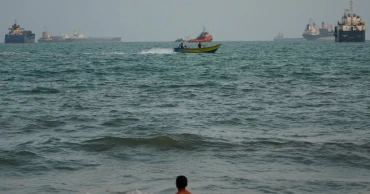
US strikes three Iranian oil tankers after missile attacks on Navy ships
US forces struck three Iranian oil tankers after Iranian forces allegedly targeted American Navy vessels with ballistic missiles, marking a fresh escalation in the months-long conflict, the US military said Saturday.
The US military said an aircraft carrier and a destroyer came under multiple “unprovoked Iranian attacks” while operating in the region, but no American personnel were injured.
According to the US statement, two Iranian oil tankers were permanently disabled and a third, which was carrying no cargo, was destroyed. The military said the vessels were part of a shadow shipping network that helps finance Iran's Islamic Revolutionary Guard Corps and its regional allies.
US Central Command chief Adm. Brad Cooper warned that Washington would defend its forces and, if necessary, destroy Iran's “limited and exposed oil fleet.”
Iran's state broadcaster later reported that Iranian forces had targeted three oil tankers and three US vessels in retaliation for the American strikes. The report could not immediately be independently verified.
An Iranian military command spokesperson warned that attacks on US warships would become more severe if Washington continued interfering with Iranian shipping.
The US said one tanker was hit near Kharg Island, a key Iranian oil-export terminal, another near Jask east of the Strait of Hormuz, and the third in the Gulf of Oman. The crew of the empty tanker was ordered to abandon the vessel.
Iran's Foreign Ministry condemned the attacks as a war crime and warned that Washington and its allies would bear responsibility for the consequences of continued US aggression, including what Tehran described as economic warfare.
The latest strikes came nearly a week after the United States and Iran resumed hostilities following a month-long lull. Fighting has again centered on the Strait of Hormuz, a crucial route for global oil and gas shipments.
The conflict began on Feb. 28 with US and Israeli strikes on Iran. Months of intermittent fighting have inflicted military and economic damage on both sides, while diplomatic efforts to end the conflict have collapsed.
The latest escalation also follows renewed attacks in southern Iran, where a US strike earlier this week killed at least five people. One attack hit a wedding gathering, according to local accounts.
The Trump administration has pursued a combination of military action and economic pressure against Tehran. US Vice President JD Vance said Thursday that there was no prospect of renewed negotiations while Iran continued attacking ships, although he noted that major military operations had ended in July.
Iran, meanwhile, has continued exporting oil despite US sanctions and a blockade, relying partly on a shadow fleet of vessels to transport crude to international buyers.
The country's nuclear programme remains a major source of tension. Negotiations intended to address the issue collapsed after the two countries signed a memorandum of understanding in June.
The United States, Britain, France and Germany are now seeking to refer Iran to the UN Security Council over alleged failures to meet its nuclear nonproliferation obligations.
With diplomacy stalled, Tehran has increasingly used control over the Strait of Hormuz as leverage. US forces have been helping commercial vessels navigate the waterway, although shipping traffic remains significantly below normal levels.
1 month ago
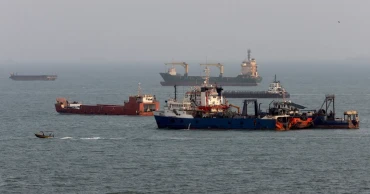
Trump suggests renaming Strait of Hormuz as ‘Trump Strait’ amid Iran war
US President Donald Trump has suggested renaming the Strait of Hormuz after himself, again asserting that the strategic waterway is under US control despite near-daily Iranian attacks on vessels in the area.
Trump made the suggestion Wednesday, less than 24 hours after US forces struck several targets in Iran, killing at least four people, including two children, at a wedding in the southern city of Sirik.
“Now that we have it under USA control, should we change the name Hormuz Strait to TRUMP STRAIT???” Trump wrote in a social media post.
“Like America itself, it would be ‘hotter’ than ever before!”
Iran responded to Tuesday’s US strikes by launching missiles at US bases in the region. The escalation sent oil prices up by around 4 percent.
Despite repeated claims by US officials that the Strait of Hormuz is open and that millions of barrels of oil are passing through the waterway each day, oil prices have not declined in recent weeks.
Iran, meanwhile, continues to maintain that the waterway is closed and remains under its control.
On Wednesday, Saudi Arabia accused Iran of striking an oil tanker, killing two people.
The United Kingdom Maritime Trade Operations (UKMTO), a monitoring agency affiliated with the British Royal Navy, has reported attacks on vessels in the Strait of Hormuz almost every day.
In the US, gasoline prices have also been rising. The average price reached $4.12 per gallon on Wednesday, according to the American Automobile Association (AAA), up from below $3 before the war began on Feb. 28.
When Trump and Israeli Prime Minister Benjamin Netanyahu launched the conflict by attacking Iran and killing its supreme leader earlier this year, Trump had said the war would last six weeks.
However, the promised quick end to what Trump initially described as a “little excursion” failed to materialise. The conflict entered its seventh month last week.
Trump has nevertheless continued to claim victory and control over the Strait of Hormuz, repeatedly saying that Iran has been militarily defeated despite its continued ability to strike US interests in the region.
Following Tuesday’s US strikes, Trump warned Tehran against retaliating, saying Iran would be “hit again at a much harder and higher level” if it responded.
Within hours, however, Iran’s military launched missiles and drones at US bases in Bahrain, Jordan and Iraq.
Trump’s “Trump Strait” proposal on Wednesday was the latest attempt by the US president to assert control over a conflict that critics say was a strategic miscalculation and is turning into a quagmire.
Last month, Trump said he considered the Strait of Hormuz to be “American territory.”
Last week, he also unilaterally renamed Lake Ontario, which borders the US and Canada, as “Lake America” amid ongoing trade tensions between Washington and Ottawa.
#From Al Jazeera
1 month ago
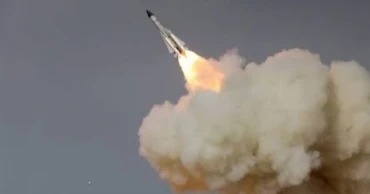
Iran claims retaliatory attack on U.S. bases in Jordan
Iran's Islamic Revolution Guard Corps (IRGC) said on Monday that its aerospace forces carried out retaliatory drone and ballistic missile strikes against U.S. targets at two air bases in Jordan earlier in the day.
The strikes were in response to the "U.S. and Israeli air aggression" against Iran's southern Larak Island in Hormozgan province on Sunday night, the IRGC said in a statement published by its official news outlet, Sepah News.
It identified the targeted air bases as King Hussein and Al-Azraq, saying that the strikes hit technical and maintenance infrastructure as well as hangars of fighter aircraft belonging to the United States, causing heavy damage.
The IRGC said the attack was a "punishment for the aggressor," noting that "aggression and crime will not solve the enemy's desperation to weaken Iran's control over the Strait of Hormuz."
It added that every military action by the "enemy" would be met with more "devastating" responses.
In a statement on Sunday night, the IRGC said that many Iranian military personnel and civilians had been killed or wounded in the attack on Larak Island.
1 month ago
Iranian families struggle as war and sanctions drive up living costs
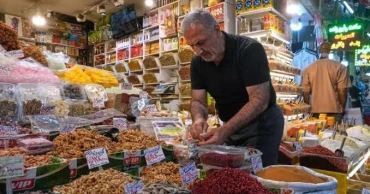
Grocery stores in Tehran remain stocked, but rising prices and job losses are making it increasingly difficult for many Iranian families to afford basic necessities.
Ahmad Karimi, a 52-year-old taxi driver and father of two, said he now works about 15 hours a day just to support his family.
"We have virtually given up on many things," Karimi said, adding that his family has stopped buying fruit and protein and has cut back on leisure activities. He also works on weekends to earn enough money.
Nearly six months into the war involving Iran, the United States and Israel, Iran's economy has come under growing pressure from sanctions and a naval blockade that has made it harder for the country to export oil, its main source of income.
It remains unclear whether the economic pressure will force Iran to make military or political concessions. Some experts doubt it will happen soon.
Since the war began, Iran has attacked oil-producing countries and US bases in the region and disrupted shipping through the Strait of Hormuz, a key waterway for global energy supplies.
Iran hopes the pressure, which has contributed to higher global energy prices, will help it secure better terms for ending the conflict. It is seeking sanctions relief and greater control over the Strait of Hormuz, including the ability to demand payments from ships carrying energy and other goods.
The Trump administration, meanwhile, has threatened even tougher sanctions to put more pressure on Iran. But experts say the US may be underestimating Iran's ability to withstand the economic strain.
Iran has faced Western sanctions for years and has developed ways to reduce their impact. It has increased domestic production, relied on informal trade networks, purchased restricted goods through third countries and used a shadow fleet to export oil.
"Iran's resistance capacity not only avoids collapse, it also prevents the economic pain from translating into the political pressure and changes that the U.S. expects," said Hadi Kahalzadeh, an Iran economy expert at Brandeis University.
Rising prices add to pressure
Tehran's Grand Bazaar remains busy as shoppers look for cheaper essential goods.
Prices have risen sharply, with rice now costing about 60% more and beef 150% more than before the war.
A 41-year-old mother of two from northern Iran recently posted on X about spending 89 million rials, about $65, on milk, eggs, toilet paper and a few other items without buying meat.
She spoke to The Associated Press on condition of anonymity because she feared possible retaliation.
"Buying basic necessities has become our main priority, and our shopping basket has gotten smaller and more limited," she said.
She also described the emotional strain of having to repeatedly tell her children that the family cannot afford things they want or activities they would like to join.
The International Monetary Fund expects Iran's inflation rate to approach 70% by the end of the year. The country's economy, already badly damaged by years of sanctions, is expected to shrink by more than 5%.
Gasoline remains relatively cheap because of government subsidies, but even that could change as fuel supplies become tighter.
An aide to the Iranian president told state television last week that the country is consuming more gasoline each day than it produces and may have to increase prices. Previous fuel price increases have triggered widespread protests.
Economic anger amid war
Iran's leadership was already facing public dissatisfaction over economic conditions before the US and Israel began the war on Feb. 28.
Protests had spread across the country earlier this year but were violently suppressed, with thousands killed and tens of thousands reportedly arrested.
Hassan Golmoradi, an economist based in Tehran, said some Iranians now blame countries imposing sanctions and carrying out attacks that have damaged factories and key infrastructure and killed civilians.
"Despite the hardships and difficulties, they have shown considerable patience in putting up with the resulting economic pressures," Golmoradi said.
Iranian authorities have warned that taking part in anti-government protests is treason and can carry the death penalty.
Mohammad Farzanegan, a professor of Middle Eastern economics at the University of Marburg in Germany, said many people were suffering but did not believe violent protests would improve their situation.
Trump threatens tougher sanctions
US President Donald Trump said Wednesday that he would launch the "most crushing economic operation ever taken against any country" against Iran.
He also threatened secondary sanctions against countries and companies that continue to trade with Tehran.
The United Arab Emirates, which has long been an important route for Iran to obtain goods and avoid sanctions, announced this week that it was suspending all trade with Iran. The announcement came a day after Trump spoke with UAE President Sheikh Mohammed bin Zayed Al Nahyan.
Iranian President Masoud Pezeshkian has said his elected government supports negotiations to end the war.
"What concerns us is people's livelihoods and their economic situation, and we are doing everything we can to deal with it," he told reporters last week.
However, the powerful Islamic Revolutionary Guard Corps remains a major force in Iran. The group has grown stronger after surviving US and Israeli airstrikes that killed senior Iranian leaders at the start of the war.
The Revolutionary Guard is seeking greater concessions from the US, including Iranian control over the Strait of Hormuz and financial compensation for the damage caused by the war.
With peace talks stalled, hard-liners in Iran believe the country can withstand the economic pressure longer than its opponents.
Iran's Supreme Leader Ayatollah Mojtaba Khamenei this month appointed a former Revolutionary Guard commander to lead the Supreme National Security Council, signaling continued support for a tougher approach.
Jobs losses deepen hardship
Official figures put Iran's unemployment rate at 9.1%, although state-linked media say the actual rate could be much higher.
A Labor Ministry official said more than 1 million jobs had been lost by late May, only three months after the war began.
The government has also eased enforcement of mandatory hijab rules, suggesting that authorities remain concerned about public opinion.
For many Iranians, however, the biggest concern now is the growing cost of maintaining their daily lives.
Karimi, the taxi driver, said the government needs to act quickly to ease the financial burden.
"The people won't be able to continue living like this," he said. "We're simply breathing, surviving, and trying to make it from one day to the next."
2 months ago
Iran brushes off US economic threats, other regional developments
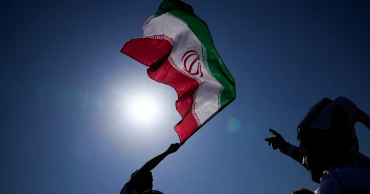
Iran on Thursday dismissed threats by U.S. President Donald Trump of economic pain and isolation for the country, while six European nations condemned Israel over a settlement project.
Doctors Without Borders criticized the decision by Israel's military not to investigate two fatal attacks on the medical humanitarian organization's staff, and in Gaza City, a mass funeral was held for 50 people killed in Israeli airstrikes nearly three years ago but whose remains were just recovered.
Here’s a look at the latest developments in the Iran war and the wider Middle East on Thursday. Full coverage can be found here.
Iran denounces Trump's economic threat
Iranian Foreign Minister Abbas Araghchi has rejected the economic threats made against his country, saying that such “failed policies” will stir more hostility among Iranians and “bring more failures.”
Araghchi's comments came a few hours after Trump threatened “crushing economic measures” against Iran. The U.S. president promised “Economic Warfare and Isolation on an unprecedented scale,” but provided few details.
In a social media post, Araghchi maintained that the threats aim to divert the attention of the U.S. public from domestic financial problems, saying that U.S. “economic terrorism threatens the global economy and the national sovereignty of countries around the world.”
U.S. Treasury Secretary Scott Bessent said Thursday that Iran will face the “greatest coordinated economic isolation in the history of the world."
In a CNBC interview, Bessent threatened secondary sanctions on nations and companies that conduct business with Iran, saying it's time for U.S. allies to make a decision on where they stand.
China's government and India are major buyers of Iranian oil, though Bessent didn't call them out by name.
Doctors Without Borders condemns Israel's military
Doctors Without Borders said that the decision by Israel's military not to open a criminal investigation into two strikes that killed four people shows the country won't take responsibility for attacking civilians.
The international aid group now wants an impartial investigation into the deaths, but didn't specify who should lead the effort.
Doctors Without Borders asked Israel's military to investigate an attack on a Gaza City convoy in November 2023 and a strike on the organization's shelter in Khan Younis in February 2024. Israel’s announcement on Wednesday said that it wouldn't launch criminal investigations into the two cases, in which troops killed the organization's employees.
The decision by Israel's military shows “there is no prospect of accountability within the Israeli legal system for the killing of our staff, just as there has been no accountability for Israel’s ongoing genocide against Palestinians,” Doctors Without Borders said in a statement that cited 15 staff and 1,700 healthcare workers killed in Gaza since October 2023.
Israel denies accusations of genocide and war crimes and says it's targeting Hamas after the militant group's attack on southern Israel that killed 1,200 people and took 251 hostage on Oct. 7, 2023. Israel blames civilian deaths on Hamas, because it operates in populated areas in the tiny, overcrowded Gaza Strip.
UK and others rebuke planned West Bank settlement project
Six European countries along with Canada condemned the latest development in a contentious Israeli settlement project near Jerusalem that would effectively cut the occupied West Bank in two.
Israel’s Ministry of Construction and Housing issued a tender for constructing several compounds with more than 1,200 homes in total in an open tract of land east of Jerusalem. It’s the latest step in a project under consideration for more than two decades, which critics say would prevent the establishment of a contiguous Palestinian state in the territory.
The joint statement from the leaders of the U.K., France, Germany, Italy, the Netherlands, Norway and Canada said international law is clear the settlement is illegal and noted “unprecedented levels of violence by settlers against civilians.”
“We urge the government of Israel to retract these plans immediately and end its expansion of settlements in the West Bank. Not only will they take us further from peace, but they further undermine Israel's international standing,” the countries wrote.
Egypt and Jordan also condemned Israel’s move.
Israeli Foreign Minister Gideon Saar responded on Thursday by defending “the historic right of the Jewish people to reestablish their national home in the Land of Israel — including in the area in question.” Saar criticized the U.K. government for “blaming only Israel while ignoring Palestinian extremism.”
Gaza funeral for 50 killed in opening strikes of war
A mass funeral Thursday in Gaza City remembered 50 Palestinians killed in Israeli strikes in the opening months of the Israel-Hamas war, but whose remains were only recently recovered from under rubble.
Dozens of mourners carried the remains, draped in Palestinian flags, through debris-strewn streets before lowering them into graves. Some held portraits and posters with photos of the deceased.
“We were able to recover them after three years of war, after three years of anguish, pain and torture. We were able to recover them, and dignify them in their final resting place. We were able to pray over them and bury them,” said Lina Karam, who lost her father and other members of her family.
The 50 bodies were from three families who were killed in airstrikes in November and December 2023.
The nearly three-year war has killed more than 73,400 Palestinians, according to Gaza’s Health Ministry. The ministry, which was part of the Hamas-run government, maintains detailed records viewed as generally reliable by U.N. agencies and international organizations. It doesn’t distinguish between civilians and militants, but says women and children make up around half of the toll.
US sanctions network supporting Hezbollah
The U.S. announced new sanctions Thursday against a network of people who allegedly funneled cash into Lebanon for the Iran-backed Lebanese militant group Hezbollah.
The network run by Turkish businessman Yunus Alper Yilmaz uses couriers traveling on commercial flights between Lebanon, Turkey, the UAE and Iran “to move up to hundreds of millions of dollars between jurisdictions, providing an avenue outside the formal financial system” to move funds to Hezbollah, the U.S. Department of Treasury said in a statement.
The Treasury also redesignated Hezbollah — which was already sanctioned by the U.S. — as an Iranian proxy acting on behalf of Iran’s Islamic Revolutionary Guard Corps Quds Force rather than a stand-alone operation.
The redesignation aims to underscore that Hezbollah “operates with little to no regard for Lebanese sovereignty, the Lebanese people or the Lebanese state,” the Treasury statement said.
Turkey denies delegation had visited air base in Syria
Turkey has denied that a Turkish military delegation had visited an air base in northern Syria that was hit by Israeli airstrikes, and vowed to continue supporting Syria in its efforts to rebuild its military.
The Israeli strikes targeted the Abu Duhur base early on Tuesday, causing damage but no casualties. Israeli Prime Minister Benjamin Netanyahu’s office said that Israel had attacked the base because Syria was “on the verge of breaching” an agreed-upon “status quo in security matters” by allowing Turkish troops to deploy there.
Syrian officials have said that a Turkish delegation visited the base before the Israeli strike to review rehabilitation work underway there.
Syria's top diplomat discusses Middle East in Pakistan
Syrian Foreign Minister Asaad al-Shibani arrived in Islamabad for talks expected to focus on regional issues, Pakistan's Ministry of Foreign Affairs said.
The visit comes days after Israeli airstrikes targeted an air base in northern Syria, causing damage but no casualties.
Pakistan's officials say the country's political and military leadership remains in contact with both Iran and the United States over efforts to de-escalate tensions and push for the resumption of talks, after a 60-day deadline under a June memorandum of understanding expired. The agreement was brokered by Pakistan with help from regional countries.
Bodies of Pakistani sailors returned after Houthi attack
The bodies of two Pakistanis killed in last week’s Houthi attack on a Tanzanian-flagged commercial vessel in the Bab el-Mandeb Strait have been repatriated to Pakistan.
Six Pakistani sailors who were wounded in the attack have also safely returned to the country, Foreign Minister Ishaq Dar said in a post on X.
2 months ago
Trump administration faces ammunition strain, weak public support for Iran war
US President Donald Trump said Thursday that while overall US ammunition stockpiles remain sufficient, supplies of some types are under increasing strain.
Speaking at the White House Oval Office, Trump said the United States has a “virtually unlimited supply” of some munitions, while others are “a little bit tighter,” without providing details.
His remarks came two days after reports said the US military had used nearly 80 percent of interceptors for a key missile defense system during the war with Iran, with commanders warning that ammunition stocks were “dangerously low.”
The Atlantic, citing current and former defense officials, reported that supplies of long-range weapons and advanced interceptors, including Patriot and THAAD missiles, had fallen to as low as 20 percent of desired levels.
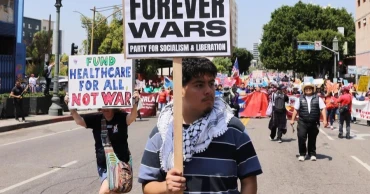
Five months into the war, US public support for the prolonged conflict has weakened. A media poll found Americans who expect greater instability in the Middle East outnumber those expecting more stability by three to one.
A Marquette University Law School poll found inflation and cost of living were the top public concerns, followed by the economy and then the Iran conflict. Since January, 56 percent have cited inflation and living costs as a primary or secondary concern.
Labor Department data showed inflation rose to 3.3 percent in March, 4.2 percent in May and 3.5 percent in June, above the Federal Reserve’s 2 percent target.
Meanwhile, uncertainty over the Strait of Hormuz continues to threaten energy security. US crude imports from Saudi Arabia fell to zero in July, the first full month without such imports since 1985.
Trump said Thursday that no deal had been finalized to reopen the waterway, but negotiations with Iran were continuing and an agreement could be reached soon.
Saudi-based media, citing senior sources, reported that Iran and Oman had reached an understanding on reopening the Strait for 60 days, pending approval by Iran’s Supreme National Security Council.
2 months ago
Trump announces Iran talks on Monday
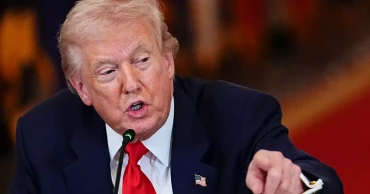
U.S. President Donald Trump said Sunday that negotiations with Iran will begin Monday afternoon, noting that Saudi Arabia, the United Arab Emirates (UAE) and Qatar had asked the United States to call off planned strikes because "they think there's a deal."
"There's a deal on (the Strait of) Hormuz, and then there will be a deal on the nuclear, or you might call it the denuclearization of Iran," Trump told reporters on Air Force One en route to Joint Base Andrews.
Claiming that Iran had also asked the United States to pull back the planned strikes, Trump said that "now what we're doing is we're talking to them in the form of a negotiation."
Saudi Crown Prince and Prime Minister Mohammed bin Salman Al Saud spoke on the phone with Trump on Saturday and "expressed concern and asked for clarity" about the proposed plan of action against Iran, a U.S. official told news outlet Axios.
Pakistan, Qatar, the UAE, Türkiye and other countries have also called on the United States and Iran to de-escalate tensions and avoid further conflict.
2 months ago