Banking
Sonali Bank lends Tk 7,000cr to National Bank for resumption of normal operations
State-owned Sonali Bank has extended a Tk 7,000 crore loan to private sector National Bank under a Bangladesh Bank guarantee to help the struggling lender clear customer dues and resume normal banking operations starting on Thursday.
According to central bank sources, depositors had been unable to withdraw their funds from National Bank for an extended period, prompting four depositors to approach the court.
Following the court's directive instructing the bank to return the depositors' money, the matter drew the attention of high-level government authorities, who subsequently directed Bangladesh Bank to take steps to normalise the bank's transactions.
Following a meeting between Bangladesh Bank Governor Md Mostaqur Rahman, National Bank Chairman Prof Melita Mehzabein and acting Managing Director Zahidul Haque, the central bank decided to provide liquidity support.
The directive was later endorsed during a meeting of National Bank's Board of Directors.
Sonali Bank Managing Director Shawkat Ali Khan said the bank extended the loan to National Bank at a 10 percent interest rate backed by a Bangladesh Bank guarantee.
Under the agreement, if National Bank fails to repay the loan on time, Bangladesh Bank will reimburse Sonali Bank within three days of the loan's maturity.
Central bank data reveals that National Bank previously borrowed Tk 985 crore from various banks, which it failed to repay on time, leaving the liability with Bangladesh Bank.
Currently, Bangladesh Bank's total claims on National Bank stand at Tk 10,568 crore.
National Bank fell under severe financial distress following years of control by the Sikdar Group during the Awami League regime.
Following the political changeover in 2024, the group lost control of the bank through central bank intervention. The bank is currently managed by members associated with the Multimode Group, Hosaf Group, and Armana Group, and has been incurring losses annually since 2022.
According to Bangladesh Bank statistics, 56.44 percent of National Bank’s total disbursed loans are currently classified as non-performing, amounting to approximately Tk 24,000 crore. The bank faces a provision shortfall of nearly Tk 20,000 crore and recorded a net loss of Tk 1,706 crore in 2024.
1 day ago

Sammilito Islami Bank holds 16th board meeting
State-owned Shariah-based Sammilito Islami Bank PLC recently held the 16th meeting of its Board of Directors at the board room of the bank’s head office in Motijheel.
Quazi Shairul Hassan, Chairman of the Board of Directors, presided over the meeting, according to a press release.
Board members Lt. Col. (Retd.) Md. Khan Sobayel Bin Rafiq Asma Akhter, KM Zakaria, and Mohammed Ahsan Habib Chowdhury, Managing Director Abedur Rahman Sikder and Company Secretary (CC) Md. Monirul Islam attended the meeting.
During the meeting, the board reviewed the bank's overall operational activities and approved several investment proposals.
Furthermore, the management team received necessary directives to accelerate recovery drives and ensure the smooth continuation of regular banking operations.
1 day ago
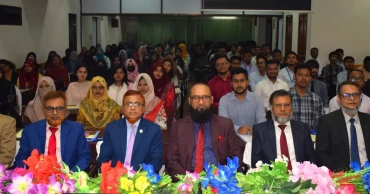
168th internship programme begins at IBTRA
The Islami Bank Training and Research Academy (IBTRA) officially inaugurated its 168th internship programme on Sunday.
Md Altaf Hossain, acting managing director of Islami Bank Bangladesh PLC, attended the opening ceremony as the chief guest.
Presided over by IBTRA Director General ASM Rezaul Karim, the inauguration ceremony was also attended by IBTRA Director (Training) Mohammad Amir Hossain alongside senior faculty members.
A total of 175 students from various public and private universities, including one foreign university, are participating in the 60-day structured internship programme, according a press release.
2 days ago
Banks to remain closed for 5 straight days during Durga Puja
All scheduled banks will remain closed for five consecutive days from October 20 on the occasion of Durga Puja.
According to a circular issued by the Supervised Data Management and Analytics Department (SDAD) of Bangladesh Bank on Sunday, banks will remain closed for three days due to a public holiday from October 20 to 22 (Tuesday to Thursday), followed by the regular weekend holidays on October 23 and 24 (Friday and Saturday).
However, banks will operate under normal business hours on Saturday, October 17, 2026.
The central bank directive follows a notification issued by the Ministry of Public Administration on October 7, 2026.
Meanwhile, bank branches, booths, and sub-branches located in sea, land, and airport port areas will keep operations related to import and export running on a limited scale during the public holidays (October 20-22) and the subsequent weekend holidays (Friday, October 23, and Saturday, October 24).
These branches can make necessary arrangements in coordination with local administration and port or customs authorities in line with existing guidelines.
2 days ago
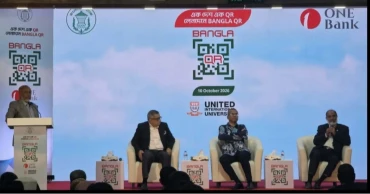
Tk 60,000cr annually needed for 5-8 yrs to rebuild banking sector: Governor
Bangladesh Bank Governor Md. Mostaqur Rahman on Saturday said the banking sector will need Tk 60,000 crore annually from the national budget for the next five to eight years to assist the sector recover from massive “financial looting and structural damages”.
"When I took charge as Governor, one-third of the total funds in the banking system had already been stolen," the central bank governor revealed, describing the scale of capital flight and financial irregularities in the financial sector.
Governor Mostaqur Rahman made the remarks while speaking as the chief guest at a campaign event promoting Bangla QR transactions, organised by ONE Bank PLC at United International University (UIU) in the capital.
Highlighting the massive opportunity cost of this financial drain, the Governor said, "With this amount of money, the government could have supported 2.0 crore families or constructed two mega infrastructure projects like the Padma Bridge."
Severely criticizsng those responsible for the widespread systemic drain on liquidity, he emphasised that standard terminology fails to capture the gravity of the offense.
"The plundering group looted public money. Calling it simple theft would be an understatement; it was outright plundering," he said.
The Governor assured that stringent legal actions are already underway against those involved in the widespread financial irregularities and money laundering to hold perpetrators accountable and recover plundered assets.
5 days ago
Banks directed to disburse Tk 5,000 cr CMSME fund by November
Bangladesh Bank (BB) has instructed banks and financial institutions to expedite the disbursement of the Tk 5,000 crore refinancing funds for cottage, micro, small, and medium enterprises (CMSMEs) and meet their full distribution targets by November.
The directive was issued during a meeting between top executives of participating banks and financial institutions and a Bangladesh Bank Deputy Governor at the central bank headquarters on Thursday (October 8). Managing directors and chief executives from 34 banks and five non-bank financial institutions (NBFIs) attended the session.
Briefing reporters after the meeting, Association of Bankers, Bangladesh (ABB) Chairman and City Bank Managing Director Mashrur Arefin said the refinancing scheme was introduced to provide low-interest working capital loans to CMSME entrepreneurs.
"Following the signing of agreements with banks on September 10, loan disbursements commenced, with approximately Tk 450 crore released in the first two weeks," Arefin said. "The central bank has now urged all participating institutions to complete the full disbursement of the Tk 5,000 crore fund by November to ensure marginal entrepreneurs receive timely, low-cost capital."
Broader Campaign Urged for 'Uddyog' Project
The meeting also reviewed the progress of Bangladesh Bank’s pilot initiative, the 'Uddyog' project, designed to foster youth entrepreneurship across selected districts in various divisions.
Acknowledging that the project has yet to yield the expected response, the ABB Chairman emphasized that banks have been instructed to intensify promotional campaigns at the district, upazila, and union levels.
Under the 'Uddyog' scheme, young entrepreneurs—specifically those aged 21 or below—are eligible to receive up to Tk 10 lakh from banks' Corporate Social Responsibility (CSR) funds alongside an additional Tk 10 lakh in commercial loans.
Banks Deny Non-Cooperation on Closed-Factory Package
Addressing allegations that banks are hesitating to disburse funds under the government's Tk 60,000 crore package aimed at restarting closed and semi-closed industrial units, Arefin clarified that banks are fully committed to the initiative.
"There is no question of non-cooperation from the banks," he asserted. "However, while extending fresh credit to distressed units, banks must carefully evaluate risk parameters to prevent these loans from turning into new non-performing loans (NPLs)."
6 days ago
ADB to provide $100m loan for affordable, climate-resilient housing
The Asian Development Bank (ADB) will provide a $100 million loan to Palli Karma-Sahayak Foundation (PKSF) to expand access to safe, affordable and disaster-resilient housing for around 40,000 low- and middle-income families in Bangladesh.
The financing will be provided under the Inclusive Affordable Housing Finance Project, which will be implemented until 2031, with particular focus on strengthening housing security for women and people living in disaster-prone areas.
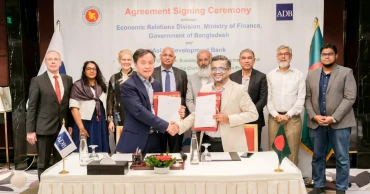
A loan agreement between the government and ADB and a project agreement between PKSF and ADB were signed at a hotel in Dhaka on Wednesday, according to a press release.
Md Shahriar Kader Siddiky, Secretary of the Economic Relations Division (ERD) under the Ministry of Finance, signed the loan agreement on behalf of the government, while Dr AKM Nuruzzaman, Senior General Manager of PKSF, signed the project agreement on behalf of PKSF.
Qingfeng Zhang, Country Director of the ADB Bangladesh Resident Mission, signed both agreements on behalf of ADB.
The loan proceeds will finance the construction of new houses as well as the repair and upgrading of existing homes.
The project will seek to expand housing finance opportunities for low- and middle-income households that have limited access to housing loans through the formal banking system.
A major focus of the project will be the development of houses capable of withstanding floods, cyclones, extreme heat and other natural hazards and climate-related risks.
Disaster and climate vulnerabilities will be incorporated into housing design, construction and safety measures under the project.
This is expected to help vulnerable families secure safer homes while reducing risks to their lives and assets during disasters.
The project will combine affordable housing finance with climate-resilient housing measures to improve the long-term resilience of vulnerable households and increase their access to safer and more sustainable housing.
6 days ago
BB steps in as vendor's network migration disrupts digital banking
Digital banking services—comprising card operations, ATM transactions, and National Payment Switch Bangladesh (NPSB)-linked services across several banks— faced severe disruptions this week, due to a routine system-wide migration and maintenance exercise, Bangladesh Bank (BB) said on Tuesday.
The central bank has summoned the management of IT Consultants PLC, the operator of the Q-Cash network, and directed them to restore all card-related services, including switching, at the earliest possible time, according to a press release signed by Sayeda Khanam, Director (Ex-Cadre – Publication) and Assistant Spokesperson of Bangladesh Bank.
The press release stated that the service disruption began around 9:00 PM on October 4, 2026, due to urgent technical upgrades, system migration, and maintenance work executed by IT Consultants PLC, causing significant inconvenience to bank clients.
Bangladesh Bank assured that it is taking all necessary measures to safeguard customer interests and ensure the continuity of financial transactions nationwide.
The central bank clarified that transactions for banks, Mobile Financial Services (MFS) providers, and other Payment Service Providers (PSPs) directly connected to the NPSB platform remain entirely unaffected and are functioning normally.
Additionally, all other primary payment systems operated by Bangladesh Bank—including the Bangladesh Automated Cheque Processing System (BACPS), Bangladesh Electronic Funds Transfer Network (BEFTN), and Real Time Gross Settlement (RTGS)—continue to operate without interruption.
Bangladesh Bank has advised affected customers to follow instructions issued by their respective banks and utilize alternative payment platforms where necessary during this transition period.
8 days ago
Indonesian envoy discusses boosting trade ties with BB governor
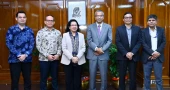
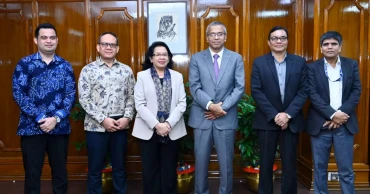
Indonesian Ambassador to Bangladesh Listyowati paid a courtesy call on Bangladesh Bank Governor Md Mostaqur Rahman at his office on Sunday to discuss strengthening bilateral economic, trade, and investment ties.
During the meeting, both sides exchanged views on expanding trade, boosting Indonesian investment in Bangladesh, and exploring new avenues for mutual economic cooperation, according to a press release issued by the central bank.
Highlighting Bangladesh’s growing economy and investment potential, the governor called for expanding Indonesian investment in the country.
Discussions also focused on balancing and diversifying bilateral trade by boosting Bangladeshi exports, including ready-made garments (RMG), electronics and pharmaceuticals, to Indonesia.
Expressing keen interest in solidifying economic and commercial ties, Ambassador Listyowati underscored the potential to enhance cooperation across various sectors of mutual interest.
She was accompanied by Minister Counsellor and Head of Chancery Wahyu Riadi, Third Secretary (Economic Affairs) Robbi Firly Harkha and Officer Sapto Rudiyanto.
Bangladesh Bank Deputy Governor Md Sarwar Hossain and Executive Director Md Harun-or-Rashid were also present at the meeting.
10 days ago
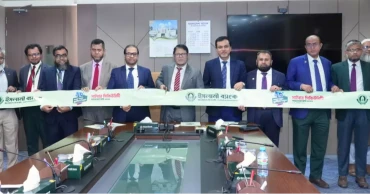
Islami Bank launches month-long cyber security awareness campaign
Islami Bank Bangladesh PLC launched a month-long "Cyber Security Awareness" campaign on Wednesday to strengthen data protection, safeguard customer trust, and build a resilient digital banking infrastructure.
Dr. M. Kamal Uddin Jasim, Managing Director (Current Charge) of the bank, inaugurated the campaign as the chief guest at a ceremony held at Islami Bank Tower in Dhaka.
Emphasizing the imperative of robust digital security, Dr. M. Kamal Uddin Jasim said, "With the growing use and importance of information technology, the significance of cyber security has increased manifold. Ensuring customer trust, data confidentiality, and security is one of our primary responsibilities. Along with institutional measures, every official and employee must play an active, conscious, and responsible role in ensuring cyber security."
The inauguration ceremony was chaired by Executive Vice President Mohammad Rezaul Karim, while Senior Vice President S M Mizanur Rahman delivered the welcome address.
Islami Bank Deputy Managing Directors Md. Rafiqul Islam, Muhammad Sayeed Ullah, Md. Maksudur Rahman, Abu Sayed Md. Idris, and Md. Zakir Hossain, along with other senior executives and officials, attended the event.
All zone heads, branch managers, and sub-branch in-charges across the country also joined the program virtually, according to a press release.
14 days ago