Government
Govt committed to making Durga Puja more joyful than ever before: Health Minister
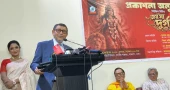
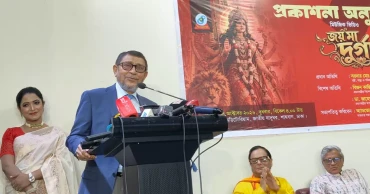
Health and Family Welfare Minister Sardar Md Sakhawat Husain on Wednesday said the government is committed to ensuring that Durga Puja celebrations this year would be more joyful than at any time in the past.
“We want the Sharadiya Durga Puja of the Hindu community to be celebrated with greater joy than ever before, with Hindus and Muslims celebrating together in the same place and people being able to move around and enjoy the festivities even late at night. We have made that commitment, and the government will provide all possible support,” he said.
The minister made the remarks as the chief guest at the launch ceremony of 'Joy Maa Durga', a music video by Ekushey Padak-winning artiste Dr Arup Ratan Chowdhury at the national museum in the evening.
Sharing his experience from his own constituency, Sakhawat Husain said 77 puja mandaps are being set up there this year, compared with 72 last year.
20 hours ago

Govt takes nine decisions to tighten security at Secretariat
The government has taken nine decisions to tighten security at the Secretariat, focusing on access control, vehicle management, visitor pass issuance and building-specific security measures.
The decisions were taken at a high-level meeting on strengthening security at the Secretariat held on October 4, chaired by Cabinet Secretary Nasimul Ghani, according to the minutes of the meeting available on Monday.
The meeting was attended by the relevant secretaries and the Inspector General of Police.
As per the decisions, police on duty will regularly monitor compliance with instructions on vehicle entry, movement and parking inside the Secretariat premises and take necessary action in case of any violation.
A special parking sticker system will be introduced to ensure orderly and secure vehicle management. No vehicle will be allowed to park or remain inside the Secretariat premises without an authorised parking sticker.
Police will also take necessary measures to regularly monitor and supervise the activities of visitors entering the Secretariat.
The Ministry of Housing and Public Works will take the necessary steps to install separate access control systems at Building No. 1 and other buildings to verify and regulate entry by authorised officials, employees and other individuals.
No official, employee or unauthorised person will be allowed to remain on the Secretariat premises at night without prior approval from the relevant authorities.
Anyone requiring an overnight stay for special reasons must obtain permission in advance.
A separate registration system will be introduced for foreign visitors. Their identities, purposes of visits, relevant officials or offices, and entry and exit details must be properly recorded and preserved.
The meeting also set limits on the number of visitor passes that senior government officials can issue.
Ministers, state ministers, deputy ministers, advisers and special assistants will be allowed to issue a maximum of 10 visitor passes each.
The Cabinet Secretary, Principal Secretary and other senior secretaries and secretaries will be allowed to issue up to five passes each, while additional secretaries can issue three and joint secretaries two.
No visitor will be allowed to enter the Secretariat before 12 noon.
The decisions also stipulate that permanent passes issued to officials and employees will automatically become invalid seven days after their transfer orders take effect.
Members of Parliament entering the Secretariat in their personal vehicles will be allowed to bring only their personal officers and drivers. Their identities and authorisation must be properly verified before entry is granted.
2 days ago
Saint Martin’s visit duration, tourist limit to be reviewed: Minister
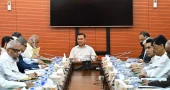
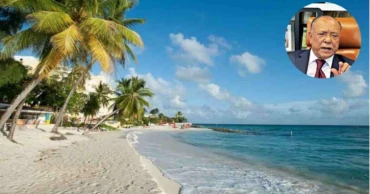
The government will review the duration of tourist visits to Saint Martin’s Island, the number of visitors allowed and the departure point for tourist vessels, Environment, Forest and Climate Change Minister Abdul Awal Mintoo said on Monday.
He said tourism on the island must be managed in a way that protects its natural environment and biodiversity, taking into account its carrying capacity, waste management, the availability of safe drinking water and the impact of tourism on the marine ecosystem.
Further decisions on tourism management will be taken after considering the opinions of relevant ministries and agencies, as well as environmental conservation, tourist safety and transport management, the minister said.
He made the remarks while chairing an inter-ministerial meeting on tourist visits to Saint Martin’s Island at the conference room of his ministry.
State Minister Shaikh Faridul Islam stressed purchasing travel passes and tickets containing QR codes through web portals recognised by the Bangladesh Tourism Board and following environmental conservation guidelines.
He also emphasised prohibiting the carrying of polythene to the island, discouraging single-use plastics and encouraging tourists to bring their own water flasks.
Existing restrictions aimed at protecting the island’s biodiversity, including marine turtles, birds and coral, will remain in force.
Cox’s Bazar-4 MP Shahjahan Chowdhury and Dhaka-14 MP Mir Ahmad Bin Quasem attended the meeting.
Acting Environment, Forest and Climate Change Secretary Dr Fahmida Khanom, Additional Secretary Mohammad Navid Safiullah, Department of Shipping Director General Commodore Md Shafiul Bari, and representatives of relevant ministries, divisions, agencies, tourism businesses and environmental organisations were also present.
Representatives of the local administration and tourism businesses concerned joined the meeting virtually.
2 days ago
Govt aims for balanced development across all 503 upazilas: LGRD Minister
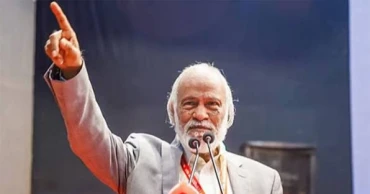
The government wants to ensure balanced development across all 503 upazilas of the country, prioritising the interests of people in every area regardless of political affiliation or region, Local Government, Rural Development and Cooperatives Minister Dr Abdul Moyeen Khan said on Saturday.
“No upazila should receive facilities that people in neighbouring upazilas are deprived of,” he said, stressing that an elected government has a responsibility to implement development programmes in the interests of people across all areas.
He made the remarks while speaking as the chief guest at a discussion titled “Formulating Strategies for Solar Power Installation in Urban and Rural Areas through Cooperative Societies” at the Multipurpose Hall of the Cooperative Bhaban in Agargaon, organised by the Rural Development and Cooperatives Division.
State Minister for Local Government, Rural Development and Cooperatives Mir Shahe Alam attended the programme.
Moyeen Khan said government officials were not merely employees but were engaged in serving the country's 180 million people. The government had considered properly evaluating their work and adjusting salaries and allowances in line with the cost of living, he said.
Although limited resources made it impossible to implement everything at once, the government would try to introduce the measures gradually over the next few years, he added. He also said the issue of adjusting government officials' salaries annually in line with inflation had been raised by Prime Minister Tarique Rahman in a Cabinet meeting.
Emphasising the role of government officials in implementing development plans at the grassroots level, the minister said elected representatives and officials must ensure that ordinary people benefit from all government activities. They must also play an effective role in implementing the prime minister's grassroots-focused development plans.
Highlighting the potential of solar power, Moyeen Khan said the use of renewable energy must be expanded as conventional energy resources were becoming limited. Proper utilisation of solar energy would benefit people, reduce costs and help improve their living standards, he said, urging officials concerned to work responsibly to achieve the government's plans and targets.
On strengthening institutional capacity in the rural development and cooperatives sector, the minister said the government would consider making the administrative structures, scope of work and facilities of relevant institutions more effective. Proposals raised by officials, including upgrading the Rural Development Board to a directorate, would be reviewed seriously, he added.
The minister said increasing the number of registered cooperative societies alone was not enough; they must also become functional and work for public welfare. Noting that the country currently had around 250,000 registered cooperative societies, he stressed the need to ensure their actual effectiveness.
Speaking as a special guest, State Minister Mir Shahe Alam expressed optimism that solar power generation would soon turn into a social movement.
He said decisions had already been taken to install solar panels on the rooftops of educational institutions under the Education Ministry and institutions and marketplaces under the Local Government Ministry. Installing solar panels through cooperative societies under the Rural Development and Cooperatives Division would also help address the country's temporary electricity shortage, he added.
The state minister instructed cooperative and rural development officials to encourage rural people to generate solar power and provide them with necessary support. He also said Tk 390 crore had already been released to local government institutions for installing solar panels and procuring related services.
Rural Development and Cooperatives Division Secretary Dr Rafiqul I Mohamed presided over the programme, which was attended by officials and employees of the ministry and its departments.
4 days ago
Govt discusses Tk 25,000cr integrated plan with int’l agencies for safe water: LGRD Minister
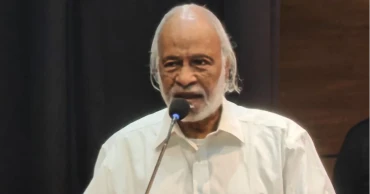
Local Government, Rural Development and Cooperatives Minister Dr Abdul Moyeen Khan on Thursday said discussions have been held with international organisations on an integrated plan involving around Tk 25,000 crore to ensure safe drinking water for Bangladesh’s 180 million people.
The minister made the remarks while talking to reporters after a meeting with a UNICEF delegation at the Secretariat.
“We talked to UNICEF about a particularly important issue — how we can provide safe water to the 180 million people of Bangladesh,” he said.
He said water is essential for human life, but contaminated and germ-filled water can also become a cause of death. “So, ensuring safe water for 180 million people in Bangladesh is a challenge, and that challenge was discussed at the meeting,” he said.
The minister said Bangladesh has abundant water in its rivers, but many rivers are drying up due to water withdrawal upstream.
“As a result, one impact is desertification in the northern districts, while there is another impact in the southern region,” he said.
He said water from Bangladesh’s rivers flows into the Bay of Bengal, and reduced freshwater flows cause seawater salinity to move further inland.
“This has created a huge drinking water problem in the southern region over the past several decades due to upstream water withdrawal,” Moyeen Khan said.
He said people living in the southern region could explain how severe the shortage of potable water has become there.
“Considering all these issues, it is our responsibility to provide safe drinking water to the people,” he said.
The minister said the meeting also focused on how Bangladesh could work with the United Nations for people’s welfare and how such efforts could be financed.
Representatives of the World Bank and WaterAid, along with the UNICEF representative in Bangladesh, were also present at the meeting, he said.
6 days ago
National Revolution and Solidarity Day: Nov 7 declared general holiday
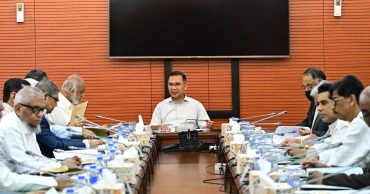
The Cabinet on Monday approved a proposal to declare November 7 a general public holiday every year on the occasion of National Revolution and Solidarity Day.
The day will be observed as a “Kha” category day under the Cabinet Division’s circular on the observance of national and international days.
The decision was taken at a Cabinet meeting held at the Cabinet Division of the Bangladesh Secretariat with Prime Minister Tarique Rahman in the chair.
The Cabinet also approved a proposal to reschedule the holidays announced on the occasion of Durga Puja 2026.
Under the decision, the holiday for Durga Puja will be observed from October 20 to 22, while October 17, which was earlier declared a holiday, will remain a working day.
9 days ago

CCGP approves procurement worth Tk 70,000cr for MRT projects
The Cabinet Committee on Government Purchase (CCGP) on Thursday recommended approval of procurement proposals involving Tk 68,586.14 crore for several packages under the Dhaka Mass Rapid Transit Development projects, including MRT Line-1 and MRT Line-5 Northern Route.
Finance Minister Amir Khosru Mahmud Chowdhury presided over the meeting held at Bangladesh Secretariat.
The proposals, placed by the Road Transport and Highways Division, cover civil works, main lines and stations, track and electrical facilities, signalling and telecommunication systems and depot construction under projects jointly financed by the Bangladesh government and the Japan International Cooperation Agency (JICA).
For MRT Line-1, the committee recommended procurement approval for six packages.
The CP-02 package for civil and building works at the depot has a contract value of Tk 4,285.07 crore, with SINOHYDRO-SEBCL JV as the recommended bidder.
The CP-06 package for construction of the main line and stations from north of Nadda Station to Airport Station, covering 5.182 km, has a contract value of Tk 11,590.58 crore. NISHIMATSU-TPL-TODA JV of Japan has been recommended for the package.
The CP-09 package for track works and electrical facilities has a contract value of Tk 11,065.58 crore, with L&T-Sumitomo Consortium (LTSC) recommended as the bidder.
The CP-10 package covering the signal system, telecommunication system, platform screen doors and Enterprise Resource Management System has a contract value of Tk 6,446.65 crore. Larsen and Toubro Limited of India has been recommended for the package.
The committee also recommended approval of the CP-04 package for construction of the main line and stations from north of Rampura Station to Natun Bazar Station. The package has a contract value of Tk 18,037.26 crore, with TOKYU-MIL (MAX Infrastructure Ltd.) Joint Venture of Japan recommended as the bidder.
Another MRT Line-1 package, CP-07, involving construction of the main line and stations from the transition point to the start of the Balu River over 5.007 km, has a contract value of Tk 2,534.09 crore. CREC-MIL-MBEC Joint Venture has been recommended for the package.
For the MRT Line-5 Northern Route, the committee recommended approval of two procurement proposals.
The CP-03 package for construction of the main line and five stations on the elevated section from Hemayetpur Station to Amin Bazar Transition and from Natun Bazar Transition to Vatara Station has a contract value of Tk 2,670.99 crore. CREC-MIL-MBEC Joint Venture has been recommended as the bidder.
The CP-02 package for construction of civil and building works at the depot has a contract value of Tk 1,847.52 crore, with CPC-HANIL Joint Venture recommended for the work.
The total value of the eight packages is about Tk 68,477.74 crore, based on the contract values provided in the proposals.
The CCGP recommended approval of all the proposals.
13 days ago

Govt approves procurement of 19.375m cycles of contraceptive pills
The Cabinet Committee on Government Purchase (CCGP) on Thursday approved a proposal to procure 19.375 million cycles of third-generation oral contraceptive pills at a cost of Tk 965.84 million.
The proposal was placed by the Health Education and Family Welfare Division under the project titled “Implementation of unfinished activities of essential family planning, maternal, child and reproductive health services of the completed 4th Sector Programme”.
Finance Minister Amir Khosru Mahmud Chowdhury presided over the meeting held at Secretariat.
Renata PLC was recommended as the supplier.
The CCGP also approved consultancy services for the development, operation and maintenance of the e-GP system under the “Strengthening Institutions for Transparency and Accountability (SITA)” project’s “Procurement Modernisation to Improve Public Service Delivery (PMIPSD)” component.
The procurement, proposed by the Implementation Monitoring and Evaluation Division, has a value of Tk 421.87 million, including VAT and AIT, for a 12-month period from 1 October 2026 to 30 September 2027. Dohatec New Media was recommended for the assignment.
The committee also approved a revised levelised tariff for purchasing electricity from the 225MW Ashuganj Combined Cycle Power Plant operated by Ashuganj Power Station Company Limited.
The revised tariff is based on the second revised Tariff Structure (Reference Tariff), with the original contract price set at US cents 4.6971 per kWh, equivalent to Tk 5.7680 per kWh.
Ashuganj Power Station Company Limited was named as the recommended supplier for the electricity purchase.
13 days ago

Govt approves draft deal to operate New Mooring Container Terminal for 15 years
The government on Thursday given policy approval to a draft concession agreement for operation of Chattogram Port’s New Mooring Container Terminal (NCT) by an international terminal operator for 15 years.
The approval was given at a meeting of the Cabinet Committee on Economic Affairs.
The terminal will be operated by an international terminal operator for a period of 15 years under the Public-Private Partnership (PPP) project titled “Operation and Maintenance of CPA’s New Mooring Container Terminal (NCT) including Overflow Yard (OCY)”.
The Ministry of Shipping placed the proposal.
The NCT is one of the major container-handling facilities at Chattogram Port, the country’s principal seaport.
It also gave approval of import urea fertiliser from Russia through direct procurement.
Under the first proposal, urea will be imported through Direct Procurement Method (DPM) from Delta Star Trading FZ-LLC, UAE, with Russia’s JSC SHCHEKINOAZOT as the manufacturer.
The Ministry of Industries placed the proposal before the committee.
14 days ago
Power Division, HSBC, Carbon Trust team up for energy study
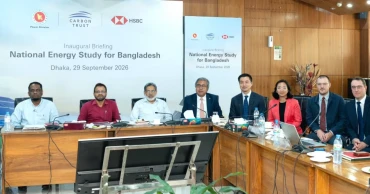
The Power Division under the Ministry of Power, Energy and Mineral Resources, HSBC and the Carbon Trust have initiated the proposed “National Energy Study for Bangladesh” to support the country’s long-term energy security and transition towards a more sustainable and resilient energy system.
A meeting to initiate the study was chaired by K M Ali Reza, Additional Secretary of the Renewable Energy Wing of the Power Division.
Representatives from relevant government ministries, HSBC and the Carbon Trust attended the meeting.
The study will explore practical pathways toward building a more affordable, reliable and sustainable energy system for Bangladesh.
It will assess Bangladesh’s current energy landscape, examine future electricity needs, and evaluate how technologies such as renewable energy, energy storage and other low-carbon solutions could support long-term economic growth and energy security.
Through analysis, stakeholder engagement and capacity building, the study will help inform future energy planning and provide a roadmap to support Bangladesh’s transition to a resilient power sector.
According to the Ministry of Power, the study aims to identify cost efficient clean energy solutions for the Government of Bangladesh and potential pathways to attract foreign direct investment.
HSBC is supporting the study by working with governments and public-sector institutions to explore climate and energy transition solutions.
The Bank has partnered with The Carbon Trust to support the study and provide training to help execute the plan.
Additional Secretary K M Ali Reza said, “This marks the start of an important study that will explore potential options for Bangladesh’s energy mix for Power generation. We welcome the partnership with the Carbon Trust and HSBC and look forward to identifying practical pathways towards a more affordable, green, reliable and secure Power system”.
Mahbub ur Rahman, Chief Executive Officer, HSBC Bangladesh, said, “Given the current context, where the global energy markets face heightened uncertainty, this National Energy Study on Bangladesh is an important and timely initiative which HSBC is proud to support. As a long-standing partner to Bangladesh, we recognise that energy security is fundamental to the country’s sustained economic growth, competitiveness, and resilience. Through this study, we hope to support the Government of Bangladesh in shaping forward-looking and sustainable energy strategy, while supporting the long-term energy needs of our clients operating in the country.”
Andrew Lever, Director, Energy Transition, Carbon Trust, said, “Bringing our global expertise across fossil transition, grid modernisation and renewable integration we are looking forward to supporting the Government of Bangladesh in identifying pathways towards a prosperous, resilient and decarbonised energy future.”
The Carbon Trust is a global team of climate experts driven by the mission to accelerate the transition to a prosperous, resilient, low-carbon future. It has more than 25 years’ experience connecting the dots across sectors worldwide, working alongside businesses, governments, public sector bodies, financial institutions and philanthropies.
The proposed National Energy Study forms part of HSBC’s broader approach to supporting key stakeholders in accelerating the transition towards a more resilient future.
14 days ago