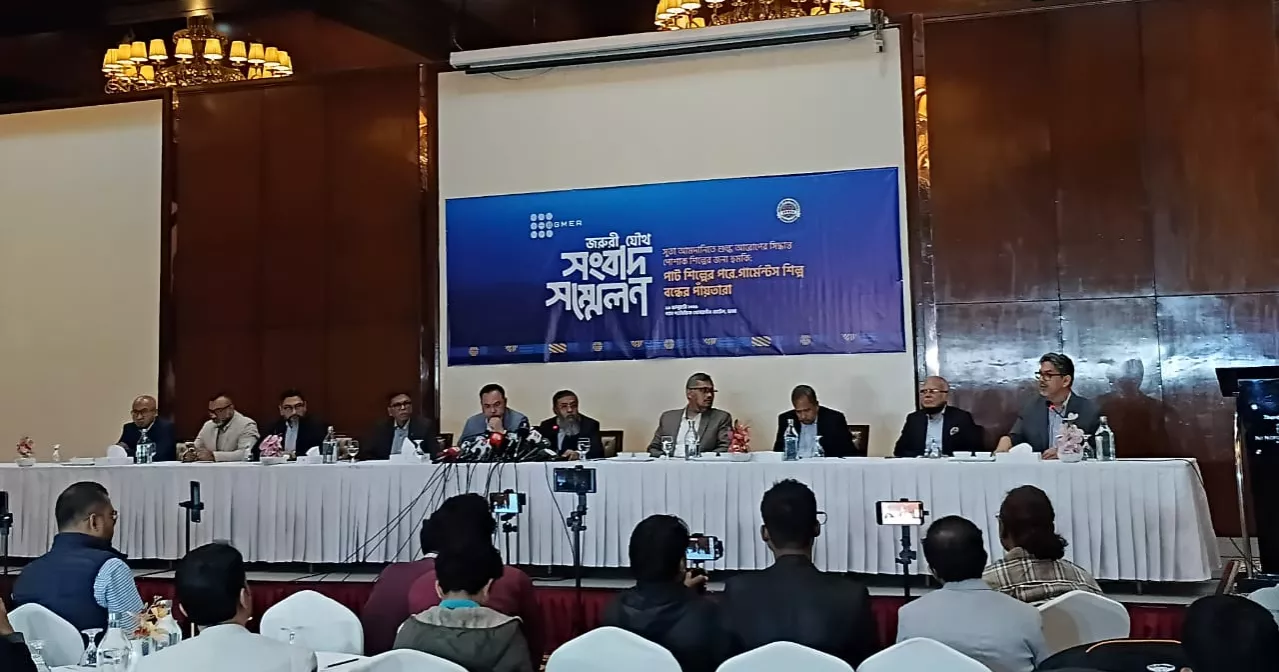
Leaders of the country’s apparel trade bodies, Bangladesh Garment Manufacturers and Exporters Association (BGMEA) and Bangladesh Knitwear Manufacturers and Exporters Association (BKMEA), on Monday strongly opposed recent recommendations to restrict yarn imports.
They said any attempt to force the purchase of local yarn through tariff barriers would undermine the global competitiveness of the garment industry and disrupt its integrated supply chain.
The leaders expressed their concern at an emergency press conference at a Dhaka hotel.
Selim Rahman, acting president of BGMEA, said exporters prefer local yarn if its price matches the global market but imposing new tariffs or restrictions to support local mills would create a crisis.
“If local yarn is available at global market rates, we will not import. But trying to force local yarn sales artificially is not a solution. It will only worsen the crisis,” he said.
He urged the government to support the textile sector through cash incentives, reliable energy supply, and favourable tax and interest rates instead of imposing duties on yarn imports.
He warned that BGMEA might take ‘tough measures’ if these concerns are ignored.
Mohammad Hatem, president of BKMEA, said price differences between local and imported yarn have always existed but the situation worsened after the reduction of cash incentives.
He criticised the Commerce Ministry for recommending restrictions on blended and man-made fiber (MMF) yarn, pointing out that local production in these categories is still insufficient. “If you stop yarn imports artificially and people start importing finished fabric instead, what will you do?” Hatem asked.
The BKMEA leader also raised concerns over the shrinking Export Development Fund (EDF) which has been cut from $7 billion to $2 billion under IMF conditions.
He said many businesses still cannot access the remaining funds.
Garment accessories sector posts record $7.45bn export earnings in FY25: BGAPMEA
Hatem expressed frustration over the lack of support from the financial sector.
Highlighting regional competition, he noted that India continues to provide strong incentives to its textile and apparel sectors despite graduating from LDC status.
He questioned why Bangladesh cannot implement similar support to sustain its top-earning export sector during this transition period.