tariff
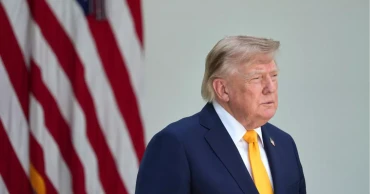
Trump Weighs New 7.5% Tariff on China Over Cheap Exports
US President Donald Trump is considering imposing a new 7.5% tariff on Chinese goods, accusing Beijing of flooding global markets with cheaply priced products, according to people familiar with the matter.
Two of three people who spoke to The Associated Press on condition of anonymity said the proposed tariff is being considered at a level that officials believe would not threaten the current one-year trade truce between the United States and China.
The move is also expected to avoid disrupting a planned meeting between Trump and Chinese President Xi Jinping in late September.
The possible tariff appears to be an effort by the Trump administration to pursue tougher trade measures after the US Supreme Court earlier this year rejected Trump's broader plan for sweeping tariffs.
Following the court decision, the administration announced in March that it would investigate China's industrial overcapacity and its rules on forced labour. Similar investigations were also launched into several other economies over alleged unfair trade practices.
It remains unclear whether Washington is close to making decisions on those other investigations, which include the European Union, Japan, India, South Korea, Vietnam, Taiwan, Bangladesh, Mexico, Thailand and several other countries.
The White House and the US Trade Representative's office did not respond to requests for comment on the possible tariff.
China's embassy in Washington said trade and economic disputes should be handled through negotiations rather than unilateral tariffs. It also rejected accusations that China has a problem with industrial overcapacity.
The investigation into China's excess industrial capacity was launched under Section 301 of the US Trade Act of 1974, which allows the president to impose tariffs on countries accused of unfairly harming US businesses or trade.
New tariff would add to existing duties
The people familiar with the discussions stressed that Trump has not made a final decision and could still abandon or change the proposal.
If imposed, the new tariff would be added to existing duties on Chinese products, including tariffs of 10% to 12.5% announced last month for 60 economies. The administration accused those countries of failing to properly enforce a ban on goods produced through forced labour.
China and several other countries protested those tariffs.
Beijing has also rejected US claims of industrial overcapacity as Washington prepares to release the findings of its investigation.
China's large production capacity in industries such as automobiles, solar panels, cement and steel has become a growing concern among its trading partners.
Chinese leaders have sought to rebalance the economy, but weak domestic demand has encouraged companies to expand into overseas markets. Rising exports helped push China's trade surplus to nearly $1.2 trillion last year, a record level.
China's Commerce Ministry has said the country has never deliberately sought to maintain a large trade surplus.
Iran sanctions add to tensions
The tariff discussions come as the US Treasury Department announced Monday that it is preparing new secondary sanctions against countries that continue doing business with Iran.
China is Iran's biggest trading partner.
The US says the new sanctions are intended to increase pressure on Iran's already weakened economy as the conflict involving the US, Israel and Iran approaches its sixth month.
Treasury Secretary Scott Bessent gave few details about the planned sanctions and did not identify which countries could face penalties.
1 month ago
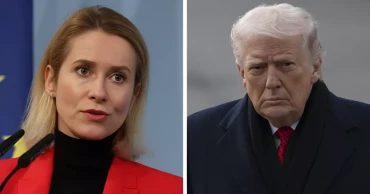
Trump vows to impose Greenland tariffs as EU warns against threats
US President Donald Trump has said he will “100 percent” go ahead with his threat to impose tariffs on European countries that oppose his demand for Washington to take control of Greenland, as the European Union vowed to defend its interests and sovereignty.
Speaking to NBC News, Trump confirmed he would press ahead with the tariff plan, including a 10 percent duty on all goods from Britain from February 1, rising to 25 percent from June 1, until a deal is reached for the United States to purchase Greenland from Denmark.
The US president said the same measures would apply to Denmark, Norway, Sweden, France, Germany, the Netherlands and Finland, all Nato allies.
“I will, 100 percent,” Trump said when asked if he would follow through on the tariff threat.
European leaders have rallied behind Greenland’s sovereignty, rejecting Trump’s claims. Danish Foreign Minister Lars Løkke Rasmussen said Europe must show Washington that tariffs and threats are “not the way forward.”
“You can’t threaten your way to ownership of Greenland. We have red lines that can’t be crossed,” Rasmussen said.
EU foreign policy chief Kaja Kallas said the bloc has “no interest to pick a fight, but we will hold our ground,” adding that “sovereignty is not for trade.”
The European Union is set to hold an emergency summit in Brussels on Thursday to discuss its response to Trump’s latest statements.
Trump also declined to rule out the use of force when asked whether he would seize Greenland, replying: “No comment.”
Denmark has warned that any US military action in Greenland would threaten the future of Nato, while several European allies have voiced firm support for Denmark and Greenland’s position.
With inputs from BBC
9 months ago

Garment industry leaders warn tariffs on yarn may worsen crisis
Leaders of the country’s apparel trade bodies, Bangladesh Garment Manufacturers and Exporters Association (BGMEA) and Bangladesh Knitwear Manufacturers and Exporters Association (BKMEA), on Monday strongly opposed recent recommendations to restrict yarn imports.
They said any attempt to force the purchase of local yarn through tariff barriers would undermine the global competitiveness of the garment industry and disrupt its integrated supply chain.
The leaders expressed their concern at an emergency press conference at a Dhaka hotel.
Selim Rahman, acting president of BGMEA, said exporters prefer local yarn if its price matches the global market but imposing new tariffs or restrictions to support local mills would create a crisis.
“If local yarn is available at global market rates, we will not import. But trying to force local yarn sales artificially is not a solution. It will only worsen the crisis,” he said.
He urged the government to support the textile sector through cash incentives, reliable energy supply, and favourable tax and interest rates instead of imposing duties on yarn imports.
He warned that BGMEA might take ‘tough measures’ if these concerns are ignored.
Mohammad Hatem, president of BKMEA, said price differences between local and imported yarn have always existed but the situation worsened after the reduction of cash incentives.
He criticised the Commerce Ministry for recommending restrictions on blended and man-made fiber (MMF) yarn, pointing out that local production in these categories is still insufficient. “If you stop yarn imports artificially and people start importing finished fabric instead, what will you do?” Hatem asked.
The BKMEA leader also raised concerns over the shrinking Export Development Fund (EDF) which has been cut from $7 billion to $2 billion under IMF conditions.
He said many businesses still cannot access the remaining funds.
Garment accessories sector posts record $7.45bn export earnings in FY25: BGAPMEA
Hatem expressed frustration over the lack of support from the financial sector.
Highlighting regional competition, he noted that India continues to provide strong incentives to its textile and apparel sectors despite graduating from LDC status.
He questioned why Bangladesh cannot implement similar support to sustain its top-earning export sector during this transition period.
9 months ago
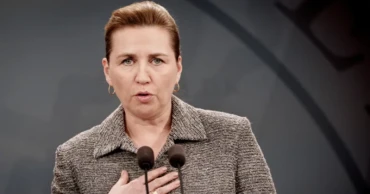
Europe rejects Trump tariff threat over Greenland
Danish Prime Minister Mette Frederiksen has said Europe will not bow to pressure from US President Donald Trump, as European leaders rallied behind Greenland in response to Washington’s threat of tariffs over the autonomous Danish territory.
Trump has warned he will impose new tariffs on eight US allies – Denmark, Finland, France, Germany, the Netherlands, Norway, Sweden and the UK – from February if they oppose his plan to take control of Greenland. He has described the island as vital for US security and has not ruled out using force, triggering strong criticism across Europe.
In a joint statement, the countries threatened with tariffs said Trump’s move could spark a “dangerous downward spiral” and undermine transatlantic relations.
“We stand in full solidarity with the Kingdom of Denmark and the people of Greenland,” the statement said, stressing that Arctic security is a shared Nato interest and that sovereignty and territorial integrity must be respected.
Writing on Facebook, Frederiksen said Europe wanted cooperation, not conflict, but would stand firm on its core values.
“Europe will not be blackmailed,” she wrote.
UK Prime Minister Sir Keir Starmer said he had spoken with Frederiksen, European Commission President Ursula von der Leyen and Nato Secretary-General Mark Rutte before holding talks with Trump. A Downing Street spokeswoman said Starmer made clear that Greenland’s security was a priority for all Nato members and that imposing tariffs on allies over collective security was wrong.
Trump has threatened a 10 percent tariff on goods from the eight countries from February 1, with the possibility of raising it to 25 percent until a deal is reached.
European leaders have warned the move would damage long-standing alliances, while public protests have already taken place in Denmark and Greenland against Trump’s takeover plan.
With inputs from BBC
9 months ago
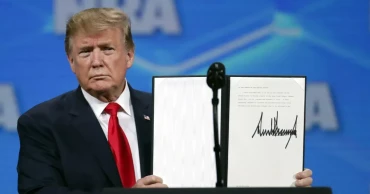
Trump urges NATO to halt Russian oil imports, warns of steep tariffs on China
President Donald Trump on Saturday called on NATO countries to stop buying Russian oil and warned of imposing tariffs of 50% to 100% on China over its continued purchases of Russian petroleum.
In a post on his social media platform, Trump said NATO’s commitment to the Ukraine war has been “far less than 100%,” describing the purchase of Russian oil by some alliance members as “shocking.” Addressing NATO members, he wrote: “It greatly weakens your negotiating position and bargaining power over Russia.”
Since 2023, Turkey has been the third-largest buyer of Russian oil, after China and India, according to the Centre for Research on Energy and Clean Air. Other NATO members, including Hungary and Slovakia, also continue to import Russian oil. It remains unclear whether Trump intends to confront Turkish President Recep Tayyip Erdogan or Hungarian Prime Minister Viktor Orbán directly.
Trump’s comments came after multiple Russian drones entered Polish airspace on Wednesday, a NATO ally. Poland shot down the drones, but Trump downplayed the incursion, suggesting it “could have been a mistake.”
U.S. Secretary of State Marco Rubio, however, called the drone incident “unacceptable and dangerous,” though he said it was still unclear whether Russia deliberately targeted Poland.
Trump calls 50% India tariffs a big deal, says it caused a rift with India
While Trump has repeatedly pledged to end the war swiftly, critics say he has avoided pressuring Russian President Vladimir Putin. His recent meeting with Putin in Alaska produced little progress toward peace. Meanwhile, Congress is pressing him to support a bill toughening sanctions against Moscow.
The U.S. and its allies are moving to show firmer resolve. At an emergency U.N. Security Council meeting on Friday, acting U.S. Ambassador Dorothy Shea reaffirmed that Washington “will defend every inch of NATO territory,” calling the drone incursion “a sign of immense disrespect” for U.S.-led peace efforts.
Britain on Friday also banned 70 vessels linked to Russian oil trade and sanctioned 30 individuals and companies, including Chinese and Turkish businesses accused of supplying Russia with weapons components.
Trump argued that a NATO-wide ban on Russian oil, combined with heavy tariffs on China, would be a decisive step. “China has a strong grip over Russia, and powerful tariffs will break that grip,” he wrote, adding that tariffs could be withdrawn once the war ends.
The U.S. president has already imposed a 25% import tax on Indian goods tied to Russian energy purchases, raising the overall tariff to 50%. Still, Trump has indicated a willingness to negotiate with Indian Prime Minister Narendra Modi.
Tensions with China remain high. Earlier this year, Trump’s 145% tariffs on Chinese goods prompted Beijing to retaliate with 125% tariffs on U.S. exports, effectively freezing trade between the world’s two largest economies. Subsequent negotiations lowered U.S. tariffs to 30% and China’s to 10%.
In his latest post, Trump blamed the war on his predecessor Joe Biden and Ukrainian President Volodymyr Zelenskyy, while notably excluding Putin.
His remarks followed a call with Group of Seven finance ministers on Friday, during which U.S. officials urged their counterparts to cut off revenues funding Russia’s war effort.
1 year ago
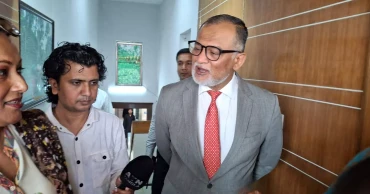
Bangladesh awaits US response to letter on tariff; virtual meeting scheduled for Friday: Commerce Adviser
Bangladesh is awaiting a response from the United States regarding a letter it sent requesting a reduction in the recently imposed tariff on Bangladeshi products, Commerce Adviser Sk Bashir Uddin said on Thursday.
“We sent a letter to the US Commerce Secretary the day before yesterday outlining our position. We are now waiting for a reply—and an invitation. Once we receive both, InshaAllah, we will proceed with our negotiation team,” he told reporters responding to a question over the issue at the Secretariat.
An online meeting between the Bangladesh government and the United States Department of Commerce is scheduled for Friday (July 25), he said.
Bangladesh may get reduced tariffs on exports to USA: Finance Adviser
Regarding the looming August 1 deadline for the new tariff to take effect, he said, “This issue is important not only for us but also for the United States. Our efforts are going on with due dynamism. We have clearly presented our position and are awaiting a formal response. As soon as we receive the invitation, we’ll go there.”
Asked about the government’s expectations, Bashir Uddin said they are hopeful and doing what is needed to be done for a positive outcome.
About the demand from business leaders to appoint a lobbyist in the USA, the adviser said the government has not appointed any lobbyist.
He added that many of the necessary policy adjustments involve complex inter-ministerial legal processes.
“Only we understand what needs to change in our systems. A lobbyist may not be equipped to grasp or handle that. We've been working day and night for the last 15 days. Almost every relevant ministry is involved. We’ve conveyed our position and hope to proceed upon receiving the invitation," he said.
Trump announces trade deal with Japan, reduces tariff to 15%
“Once the online meeting is held, things will move forward. The fact that we’ve been offered an online meeting based on our letter shows that the process is active,” he said, responding to another question.
Despite two rounds of discussions on the issue there has been no breakthrough yet.
On July 8, US President Donald Trump informed Chief Adviser Professor Muhammad Yunus in a letter that the new 35% tariff on Bangladeshi products would take effect from August 1.
1 year ago
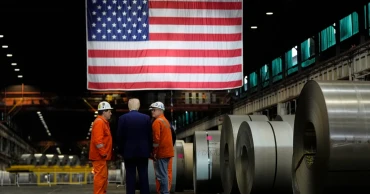
US manufacturing struggles persist despite subsidies and tariffs
Despite support from both the Biden and Trump administrations, U.S. manufacturing remains stuck in a prolonged slump.
Ex-President Joe Biden’s administration rolled out subsidies for chipmakers and clean energy firms, spurring a surge in factory construction from 2021 to 2024. Meanwhile, President Donald Trump imposed high tariffs on foreign goods to protect American manufacturers and encourage domestic production.
Still, factory jobs are declining. The U.S. Labor Department reported a loss of 7,000 manufacturing jobs in June, the second monthly drop in a row. Manufacturing employment is expected to fall for the third straight year.
“Manufacturing production will continue to flatline,” said Mark Zandi, chief economist at Moody’s Analytics. “If production is flat, that suggests manufacturing employment will continue to slide.”
Trump plans to hike tariffs on Canadian goods to 35%
Industry insiders echo concerns. “The past three years have been a real slog for manufacturing,” said Eric Hagopian, CEO of Pilot Precision Products.
Trump’s tariffs offer some relief for U.S. firms by making imported goods more expensive. “When you throw the tariff on, it gets us closer,” said Chris Zuzick of Waukesha Metal Products. But tariffs also raise the cost of imported materials used by American factories, like steel and aluminum, reducing global competitiveness.
Frequent changes to tariff policies have added to industry uncertainty. “Customers do not want to make commitments in the wake of massive tariff uncertainty,” one company said in a recent ISM survey.
“Everyone is kind of just waiting for the new normal,” Zuzick added.
1 year ago

Trump’s tariffs may mean Walmart shoppers pay more, his treasury chief acknowledges
Treasury Secretary Scott Bessent admitted on Sunday that Walmart—the nation’s largest retailer—might pass some of the costs from President Donald Trump’s tariffs on to consumers by raising prices.
Bessent’s comments followed a conversation with Walmart’s CEO, which came just one day after Trump warned the company against increasing prices and pledged to closely monitor its response to the tariffs.
Trump warns Walmart: Don’t raise prices due to my tariffs but do eat the costs from those taxes
Amid ongoing skepticism about Trump’s handling of the economy, Bessent dismissed inflation concerns, defended Trump’s unpredictability as a deliberate strategy in trade negotiations, and downplayed the U.S. credit downgrade issued by Moody’s Ratings on Friday.
However, despite Trump’s insistence that Walmart and China would fully absorb the impact of the tariffs, the retailer seems unwilling to shoulder the full financial burden on its own.
Bessent said he spoke Saturday with Walmart CEO Doug McMillon, stressing in two news show interviews that what he thought really mattered for Walmart customers was the decline in gasoline prices. Gas is averaging roughly $3.18 a gallon, down from a year ago but also higher over the past week, according to AAA.
“Walmart will be absorbing some of the tariffs, some may get passed on to consumers,” Bessent said on CNN. “Overall, I would expect inflation to remain in line. But I don’t blame consumers for being skittish after what happened to them for years under Biden,” a reference to inflation hitting a four-decade high in June 2022 under then President Joe Biden as the recovery from the pandemic, government spending and the Russian invasion of Ukraine pushed up costs.
Walmart did not comment on Bessent’s description of his conversation with McMillon.
In a social media post on Saturday morning, Trump said Walmart should not charge its customers more money to offset the new tariff costs. “I’ll be watching, and so will your customers!!!” he posted.
Bessent said Walmart on its earnings call on Thursday had been obligated under federal regulations “to give the worst-case scenario so that they’re not sued,” suggesting in an NBC interview that the price increases would not be severe in his view.
But Walmart executives said last week that higher prices began to appear on their shelves in late April and accelerated this month.
“We’re wired to keep prices low, but there’s a limit to what we can bear, or any retailer for that matter,” Chief Financial Officer John David Rainey told The Associated Press on Thursday.
Share markets slump again, indices fall in Dhaka and Chattogram
Bessent maintained that the ratings downgrade was a “lagging indicator” as the financial markets had already priced in the costs of a total federal debt of roughly $36 trillion. Still, the tax plan being pushed by Trump would add more roughly $3.3 trillion to deficits over the next decade, including a $600 billion increase in 2027 alone, according to the Committee for a Responsible Federal Budget.
The treasury secretary maintained that deficits would not be a problem because the economy would grow faster than the debt accumulation, reducing its increase as a size of the overall economy.
Most independent analysts are skeptical of the administration’s claims that it can achieve 3% average growth as Trump’s 2018 tax cuts failed to do so. Those tax cuts from Trump’s first term did boost economic growth before the pandemic, but they also raised the budget deficit relative to previous estimates by the Congressional Budget Office.
On tariffs, the Trump administration is still trying to determine rates with roughly 40 major trading partners before a July deadline. It’s also in the early stages of a 90-day negotiation with China, after agreed a week ago to reset tariffs on that country from 145% to 30% so that talks can proceed.
Bessent said any worries about tariffs by small business owners most likely reflected the higher rate previously being charged on China. Still, the uncertainty has been a major drag for consumers and businesses trying to make spending plans in the weeks, months and years ahead.
“Strategic uncertainty is a negotiating tactic,” Bessent said. “So, if we were to give too much certainty to the other countries, then they would play us in the negotiations.”
Bessent appeared on NBC’s “Meet the Press” and CNN’s “State of the Union.”
1 year ago

Chinese businesses view tariff pause with caution and uncertainty
While U.S. President Donald Trump has talked of victory after reaching a weekend deal with China to reduce the sky-high tariffs levied on each other’s goods, businesses in China are reacting to the temporary deal with caution.
The U.S. and China have cut the tariffs levied on each other in April, with the U.S. cutting the 145% tax Trump imposed last month to 30%. China agreed to lower its tariff rate on U.S. goods to 10% from 125%. The lower tariff rates came into effect on Wednesday.
U.S. Treasury Secretary Scott Bessent, announcing the reduction in tariff rates this weekend in Geneva, had said, “We do want trade.” While the markets have responded to the agreement with gusto, rebounding to the levels before Trump’s tariffs, business owners remain wary.
Businesses like one kitchen utensil factory in southern Guangdong province were eager to get back to work. The business said they put at least four orders from their American clients back into production on Tuesday after the tariff pause was announced.
American Eagle shares slide after pulling 2025 outlook, $75m inventory write-down
“We thought the negotiation would bring the tariffs down a bit, but didn’t expect it would be so much,” said Margaret Zhuang, a salesperson for the utensil factory in Guangdong province, one of China’s manufacturing hubs.
Kahlee Yu, sales manager of Yangjiang Hongnan Industry and Trade Company, which also manufactures kitchen utensils, said he was reaching out to American customers again. “We’re a little bit optimistic about the trade deal between the two sides. But it is still possible the tariff policies will change again, resulting in no orders from our American clients,” he said.
However happy they were in the moment, the damage from tariffs announced in April has already been done, Zhuang added, as they are seeing fewer orders. Currently, she has orders for products up until June. Earlier this year, before Trump’s trade war began, they had orders for production extending to August.
The uncertainty also means companies are less willing to make new investments. Kelvin Liao, sales director at Action Composites, a manufacturer of carbon fiber auto parts in Dongguan, a major city in Guangdong, said he was originally planning to buy a piece of land to build a new factory, but opted instead to rent because of the tariff situation.
“It is good to reach a trade deal between the two countries. But people have already lost confidence in Trump, and we will take a wait-and-see attitude,” he said. “We believe the signing a trade deal is just a pause and the ultimate goal of the US is to curb China’s development.”
Tariffs also remain in place for some industries, which are not part of the general deal. Hong Kong businessman Danny Lau, who owns an aluminum-coating factory, said his company still faces about a 75% tariff from tariffs levied at different points since 2018 by the U.S. Still he welcomed the news from the weekend, saying he would reach out to existing American customers to gauge their views.
1 year ago
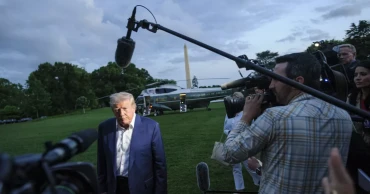
Trump threatens 100% tariff on foreign-made films
In a post on his Truth Social platform Sunday night, Trump announced that he had directed the Department of Commerce and the U.S. Trade Representative to impose a 100% tariff on all movies produced outside the United States.
“The American film industry is dying rapidly,” Trump claimed, accusing other countries of luring filmmakers with generous incentives. He argued that this international competition poses a national security threat, calling it “messaging and propaganda” backed by foreign governments.
However, how such a tariff would be implemented remains unclear. Many film productions, including major blockbusters like the upcoming Mission: Impossible – The Final Reckoning, are typically shot across multiple countries, including the U.S.
Incentive programs for years have influenced where movies are shot, increasingly driving film production out of California and to other states and countries with favorable tax incentives, like Canada and the United Kingdom.
Yet tariffs are designed to lead consumers toward American products. And in movie theaters, American-produced movies overwhelming dominate the domestic marketplace.
China has ramped up its domestic movie production, culminating in the animated blockbuster “Ne Zha 2” grossing more than $2 billion this year. But even then, its sales came almost entirely from mainland China. In North America, in earned just $20.9 million.
The Motion Picture Association didn’t immediately respond to messages Sunday evening.
The MPA’s data shows how much Hollywood exports have dominated cinemas. According to the MPA, the American movies produced $22.6 billion in exports and $15.3 billion in trade surplus in 2023.
Businesses, experts call for business-friendly policies in upcoming budget
Trump has made good on the “tariff man” label he gave himself years ago, slapping new taxes on goods made in countries around the globe. That includes a 145% tariff on Chinese goods and a 10% baseline tariff on goods from other countries, with even higher levies threatened.
By unilaterally imposing tariffs, Trump has exerted extraordinary influence over the flow of commerce, creating political risks and pulling the market in different directions. There are tariffs on autos, steel and aluminum, with more imports, including pharmaceutical drugs, set to be subject to new tariffs in the weeks ahead.
Trump has long voiced concern about movie production moving overseas.
Shortly before he took office, he announced that he had tapped actors Mel Gibson, Jon Voight and Sylvester Stallone to serve as “special ambassadors” to Hollywood to bring it “BACK—BIGGER, BETTER, AND STRONGER THAN EVER BEFORE!”
U.S. film and television production has been hampered in recent years, with setbacks from the COVID-19 pandemic, the Hollywood guild strikes of 2023 and the recent wildfires in the Los Angeles area. Overall production in the U.S. was down 26% last year compared with 2021, according to data from ProdPro, which tracks production.
The group’s annual survey of executives, which asked about preferred filming locations, found no location in the U.S. made the top five, according to the Hollywood Reporter. Toronto, the U.K., Vancouver, Central Europe and Australia came out on top, with California placing sixth, Georgia seventh, New Jersey eighth and New York ninth.
The problem is especially acute in California. In the greater Los Angeles area, production last year was down 5.6% from 2023 according to FilmLA, second only to 2020, during the peak of the pandemic. Last, October, Gov. Gavin Newsom proposed expanding California’s Film & Television Tax Credit program to $750 million annually, up from $330 million.
1 year ago