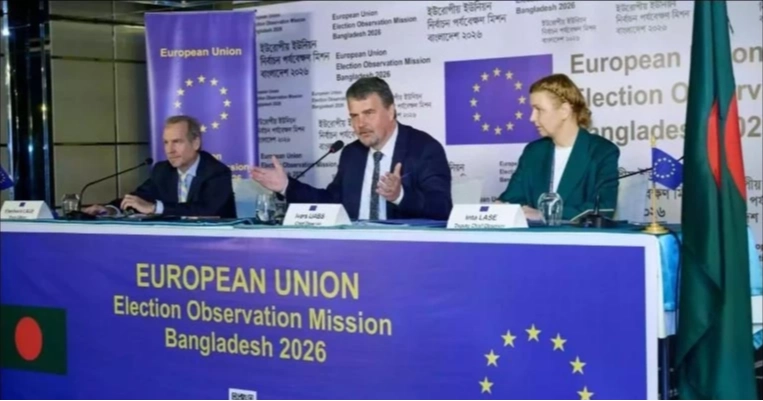
Chief Observer of the European Union Election Observation Mission (EU EOM) to Bangladesh Ivars Ijabs on Saturday described the national election as ‘credible, hugely and genuinely competitive and pluralistic’ but observed that there was lack of proper women's representation.
“Parliamentary elections were credible and competently managed, marking a pivotal step towards restoring democratic governance and rule of law,” he told reporters at a city hotel.
Ijabs noted that for the first time since 2008, elections were genuinely competitive, conducted under a renewed legal framework that largely accords with international standards and with fundamental freedom broadly respected.
however, said sporadic, localised political violence and persistent fear of mob attacks, often triggered by manipulated online narratives, harmed the democratic process.
Regarding the voter turnout, Ijabs said this is historically higher and lower and noted that it is shrinking everywhere and it is something concerning for all democracies.
He said the limited political space afforded to women undermined their equal participation but the EC worked independently and transparently, maintaining the confidence of stakeholders and upholding the integrity of the polls.
Gazettes of newly elected MPs, referendum results published
candidates were, regrettably, almost absent from these elections,” Ijabs said, noting that only four percent of the contestants were women, with BNP fielding 10 and NCP two candidates, while Jamaat and 30 other parties did not have any, evidencing a ‘clear lack of political will’ to advance women in national politics.
He also highlighted the vital role of citizen observers, fact-checkers, as well as youth and women activists in rebuilding public trust in elections, enhancing transparency, and helping voters to make informed choices.
The EU EOM observers noted that the election day was orderly, festive, and calm, while dedicated poll workers managed the opening, voting, and counting efficiently.
Commonwealth Observer Group calls Bangladesh election fair, orderly
The presence of party agents at all stages of the process enhanced integrity, while regular updates on results tabulation at the local level by returning officers and by legacy media helped to maintain public confidence. Independent participation of persons with disabilities was not always ensured.
The absence of affirmative action measures still leaves indigenous communities and minorities underrepresented in the political arena.
"It is time to abandon the old practices that no longer reflect the growing maturity of Bangladesh's democracy and to chart a new course promoting independent institutions, human rights and accountability," said Ijabs.