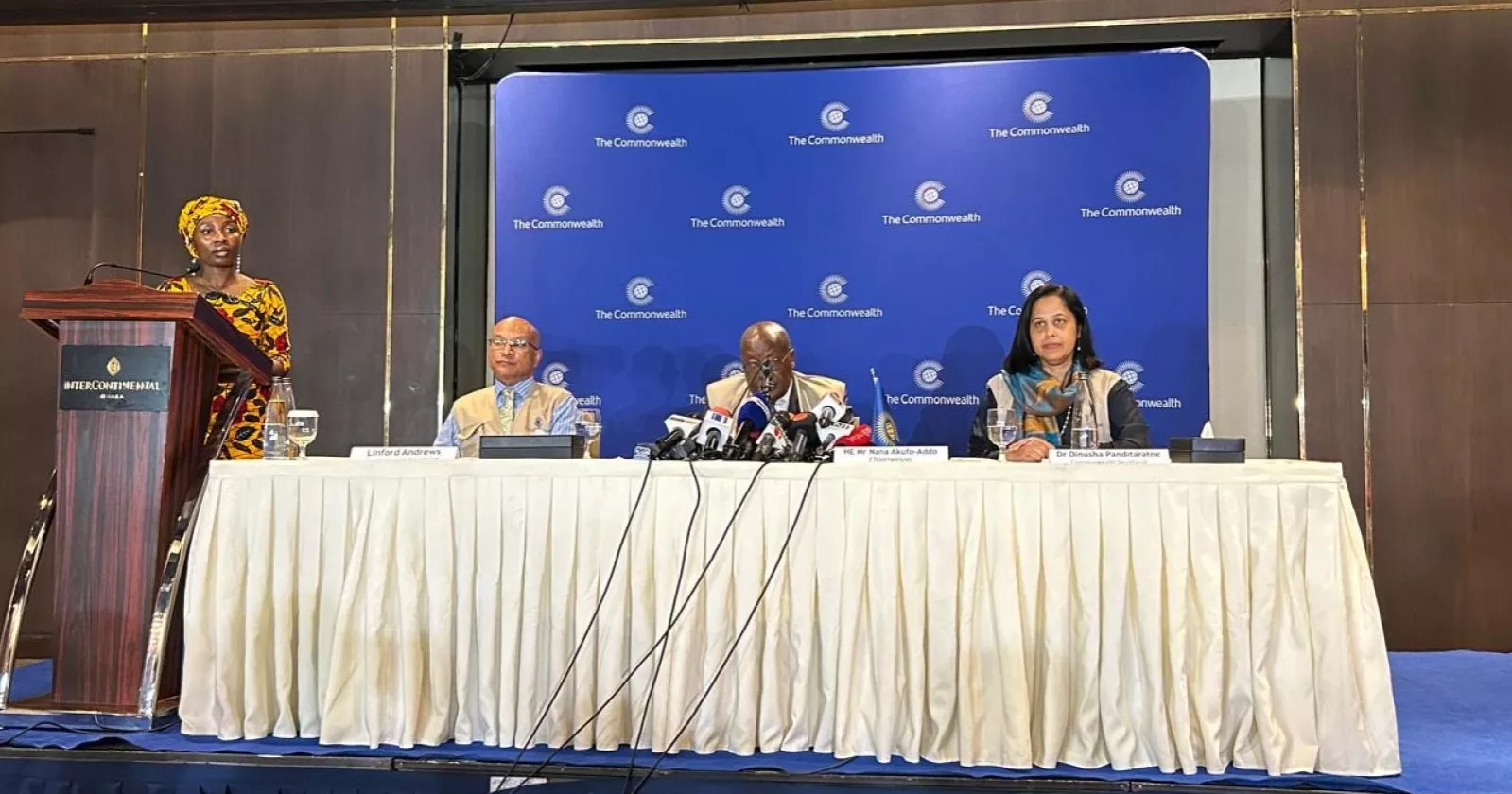
Chairperson of the Commonwealth Observer Group Nana Addo Dankwa Akufo-Addo on Saturday described Bangladesh’s 13th parliamentary election as ‘acceptable, transparent, peaceful and orderly’.
He commended the peaceful conduct of Bangladesh’s parliamentary elections and the July Charter referendum, while highlighting areas where further progress on ‘inclusion and accessibility’ could strengthen the democratic process.
“The people of Bangladesh have exercised their democratic rights to seek the fulfillment of their aspirations. We encourage them to be magnanimous and united in their shared democratic future,” said the former President of Ghana while presenting the Group’s interim statement on Thursday’s national election and referendum at a city hotel.
Looking ahead to the next election cycle, he encouraged the Bangladesh Election Commission to conduct a post-election review, including of all observer recommendations, as is consistent with good practice.
The final report, which will set out the full findings on the process and recommendations in greater detail, will be submitted to the Commonwealth Secretary-General, Shirley Botchwey, and thereafter shared with the government of Bangladesh, the Election Commission, political parties, and Commonwealth governments and then made public.
The Chairperson acknowledged the context in which the elections were conducted, including the significant political developments following the July Uprising of 2024, as well as decisions affecting the participation of some political parties.
While the Group noted isolated reports of post-election tensions, it encouraged all stakeholders to continue to promote calm and peaceful conduct during the post-election period, and to resolve any disputes through the relevant legal channels.
The Observer Group praised the vibrant media coverage, noting its important role in informing citizens and encouraging political debate.
At the same time, it raised concerns about online misinformation, cyber harassment and hate speech, which continue to affect public discourse.
The participation of women and youths emerged as areas requiring greater attention.
Women accounted for only 4 per cent of candidates, with seven elected, while youth activism did not always translate into formal influence within political party structures, he said.
According to the Group’s statement, despite isolated pre- and post-election tensions, polling officials, security personnel and election agents generally carried out their duties with professionalism.
The Group also noted that officials assisted elderly voters and persons with disabilities.
However, many polling stations remained inaccessible, particularly on upper floors, and lacked provisions for other forms of disability.
On the referendum, the Group said it recognises the Charter as a response to multiple and urgent demands for reform. “At the same time, some stakeholders expressed concerns as to whether the referendum process was sufficiently consultative and clearly communicated.”
The Group encouraged all stakeholders to maintain calm during the post-election period and consider the recommendations that will be outlined in its forthcoming final report.
The Commonwealth Observer Group is an independent body that will make recommendations to the Commonwealth Secretary-General.
It was constituted by the Commonwealth Secretary-General. Twelve experts, drawn from the fields of politics, law, media, gender, and election administration from several Commonwealth regions, were part of the group.
UN encourages political stakeholders to strengthen national unity in Bangladesh
The Commonwealth admitted Bangladesh as its 34th member on 18 April 1972, after its independence in December 1971.
This is the fourth time that a Commonwealth Observer Group has been deployed.