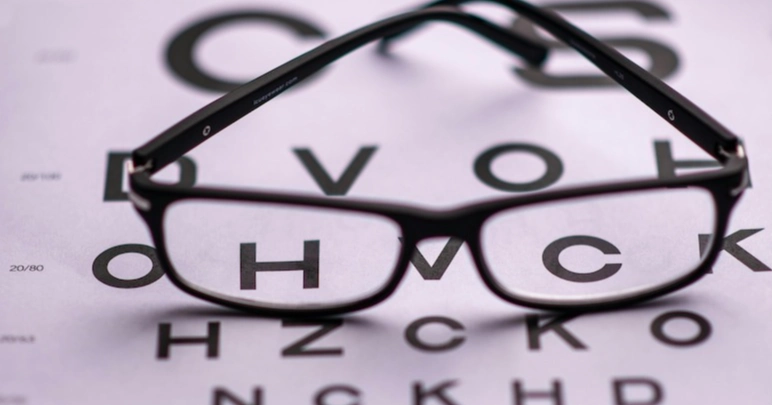
Scientists have developed eye drops that could potentially restore near vision in people with presbyopia, a common form of long-sightedness, raising hopes that reading glasses may no longer be necessary.
A study presented at the European Society of Cataract and Refractive Surgeons (ESCRS) in Copenhagen revealed that participants who used the drops were able to read additional lines on eye test charts, with improvements sustained for up to two years.
Presbyopia, typically affecting people in their 40s and older, occurs when the eye’s lens loses flexibility, making it difficult to focus on close objects. Glasses or surgery can address the condition, but glasses are often inconvenient and surgery remains costly. Researchers say the new drops could offer a simpler, more affordable alternative.
The study, involving 766 participants, tested drops containing pilocarpine and diclofenac, taken twice daily. The patients were divided into three groups, each receiving the same diclofenac dose but different pilocarpine concentrations.
Results showed an average improvement of 3.45 lines on the Jaeger chart, which measures near visual acuity, within an hour of application. “Our most significant result showed rapid and sustained improvements in near vision for all three concentrations,” said Dr Giovanna Benozzi, director of the Centre for Advanced Research for Presbyopia in Buenos Aires.
Notably, 99 percent of patients in the 1% pilocarpine group achieved optimal near vision, while 69 percent in the 2% group and 84 percent in the 3% group could read three or more additional lines.
Common side effects included temporary dim vision, irritation, and headaches, but researchers said the drops were safe, effective, and well tolerated.
Experts welcomed the findings, though they stressed the need for larger, long-term, multi-centre trials to confirm safety and effectiveness before the treatment can be widely adopted.