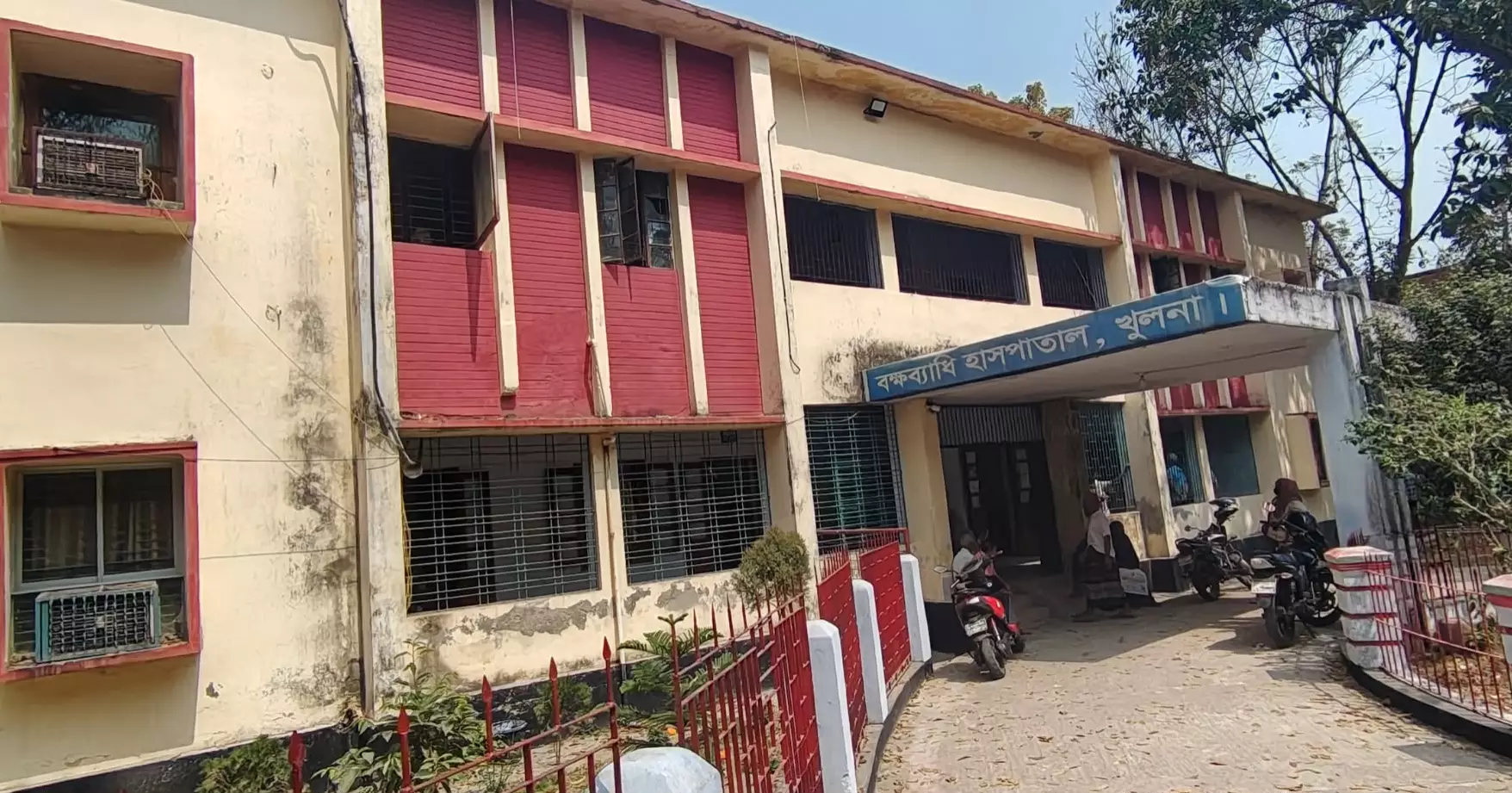
At a time when public hospitals across Bangladesh often struggle with overcrowding and staff shortages a starkly different picture has emerged at the Khulna Divisional Chest Disease Hospital where nurses significantly outnumber admitted patients.
The 100-bed facility at Mirerdanga under Khan Jahan Ali Police Station currently has only 26 patients admitted against a sanctioned 93 nursing posts.
Even with several nurses on leave or in training, the number of on-duty nurses frequently exceeds the patient count, according to hospital sources.
The comparatively lighter workload and fewer complications have made the hospital a preferred posting for many nurses.
Some have reportedly managed to remain stationed here for years avoiding transfers that are common in the public health system.
However, the situation has also sparked allegations of underutilisation of human resources.
Critics claim that with fewer patients to attend to, some nurses spend idle time on mobile phones or in casual conversations during duty hours.
Hospital authorities, however, strongly deny such claims.
Farida Yasmin, acting deputy nursing superintendent, said nurses remain actively engaged in a wide range of responsibilities beyond direct patient care.
“In addition to providing regular services to patients, nurses are involved in ECG procedures, MDR-related tasks, operation theatre duties, computer work, and preparing patient reports,” she said.
She added that nurses are assigned across three shifts — from 8:00am to 2:00pm, 2:00pm to 8:00pm, and 8:00pm to 8:00am — and must also cover emergency duties in multiple wards.
“In four critical wards alone, eight to ten nurses are deployed. Nurses also handle emergency department responsibilities during morning and evening shifts,” she said.
Yasmin further noted that a shortage of doctors at the hospital has increased the burden on nurses, who often have to manage patients round the clock in the absence of physicians.
“There is no scope for idleness or passing time on mobile phones,” she added.
According to hospital data, of the 93 sanctioned nursing positions, 84 are currently filled. Among them, 17 nurses are on leave, nine are undergoing BSc nursing training, one is on maternity leave, two are on quarantine leave, and others are on various types of leave, deputation, or training assignments.
Despite these constraints, the hospital continues to function with a structured duty roster across three shifts.
Yasmin also highlighted structural challenges within the institution including limited training opportunities for nurses compared to other government hospitals.
“Regular training helps improve professional skills, but such opportunities are limited here,” she said.
She added that the post of nursing superintendent has long remained vacant, with a senior nurse supervisor currently performing the duty in an acting capacity.
Another pressing issue is the lack of usable residential facilities.
The hospital’s staff quarters have remained abandoned for years, forcing nurses to commute from distant areas and often making it difficult to report to duty on time.
The unusual staff-to-patient ratio at the hospital has reignited debate over the distribution of healthcare resources.