Restoring law and order and rebuilding investor confidence remain the most pressing challenges for Bangladesh’s business sector, as the BNP-led government seeks to steer the economy out of a prolonged slowdown, business leaders and economists said.
They stressed that sustained stability and clear policy direction will be essential to revive investment and fasten the economic recovery.
During the 18-month tenure of the interim government following the 2024 mass uprising, they said, the country’s business sector experienced a severe slump.
Although some political stability has returned after the 13th parliamentary election held on February 12, the sector has yet to show signs of meaningful recovery.
BGMEA pushes for quick release of Tk 5,700cr RMG incentives
According to the business leaders, regaining the confidence of entrepreneurs—many of whom have lost trust in the system—and sustaining improvements in law and order will be critical for economic revival.
President of the Dhaka Chamber of Commerce & Industry (DCCI) Taskeen Ahmed said curbing extortion must be the government’s top priority to restore business confidence.
“To ensure a stable business environment, extortion has to stop first. Corruption and bureaucratic complexities in government offices must also be addressed,” he said.
Taskeen pointed out that even after the fall of the Awami League government, businesses have continued to face extortion at similar or, in some cases, higher rates.
“Factories still have to pay extortion money for trucks entering and leaving premises. For the current government, stopping extortion is the biggest challenge. If this is resolved, businesses will regain some relief,” he said.
While extortion remains a major concern for local entrepreneurs, large-scale investors are equally worried about corruption and administrative bottlenecks in government offices.
The business leaders fear that without institutional reforms, foreign and large domestic investors will remain hesitant to commit long-term investments in Bangladesh.
President of the Bangladesh Textile Mills Association (BTMA) Showkat Aziz Russell said the country is passing through a critical period.
“No entrepreneur feels confident about making long-term investments in Bangladesh at this moment. The government’s first task is to restore that confidence,” he said, stressing the need to eliminate bureaucratic red tape and the culture of 'passing the pillow' within ministries.
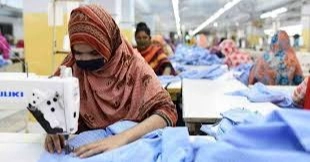
The ready-made garment (RMG) sector, the backbone of the country’s exports, is also under significant strain.
More than 400 garment factories reportedly shut down during the interim government’s tenure. Many factories are struggling to pay wages and festival bonuses ahead of Eid and have sought financial support from the central bank.
In a letter to Bangladesh Bank, Acting President of the Bangladesh Garment Manufacturers and Exporters Association (BGMEA) Inamul Haq Khan cited geopolitical shifts, global recessionary pressures and tariff wars as key reasons behind declining export earnings.
He said export income fell by 2.43 percent in the first six months of the current fiscal year, while back-to-back letters of credit (LCs) dropped by 12.90 percent in November 2025. Lower unit prices of garments, deferred shipments and postponed orders have further disrupted production.
Factories are also struggling with rising operational costs, including wages, utility bills, transport expenses and bank interest payments. Production capacity is gradually shrinking amid sluggish export activities.
Meanwhile, a recent report by the International Institute for Strategic Studies (IISS) noted that Bangladesh’s economic stability largely depends on political stability.
It said the BNP government faces strong short-term pressure to accelerate growth, curb inflation, raise foreign exchange reserves, attract foreign direct investment and enhance trade connectivity.
The report also observed that state-owned enterprises and the banking sector remain structurally weak.
Echoing similar concerns, the Centre for Policy Dialogue (CPD) stressed the need for fundamental shifts in economic policy.
CPD Additional Research Director Towfiqul Islam Khan identified three major challenges: weak macroeconomic stability, fragile private sector investment and employment conditions, and limited fiscal space for the government.
Economists have advised the government to adopt prudent fiscal measures, gradually depreciate the currency, reduce incentives for remittance and export sectors, and revise the current budget realistically to better prepare for the next fiscal year.
Business leaders said without decisive reforms in governance, economic management and institutional efficiency, restoring momentum in Bangladesh’s business and investment climate will remain an uphill task.