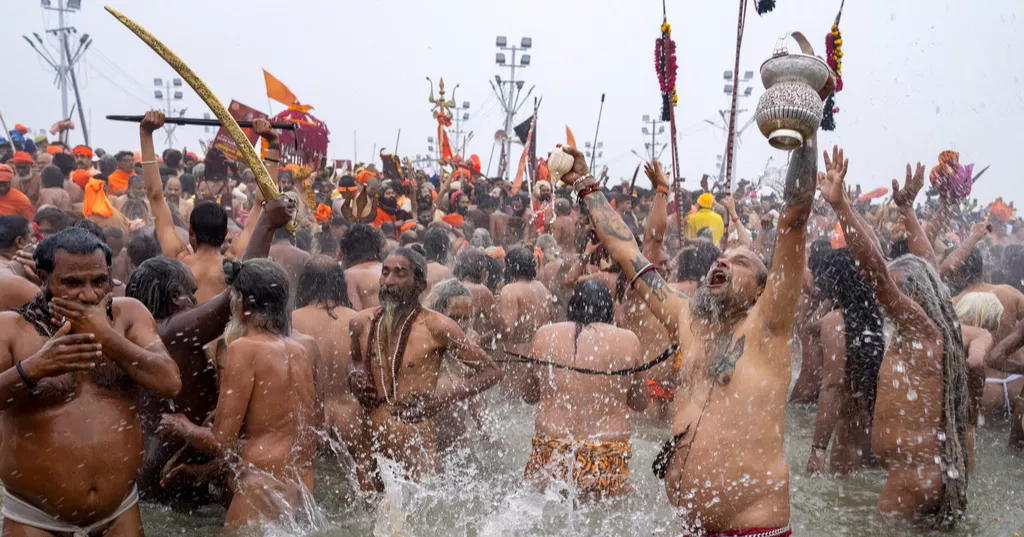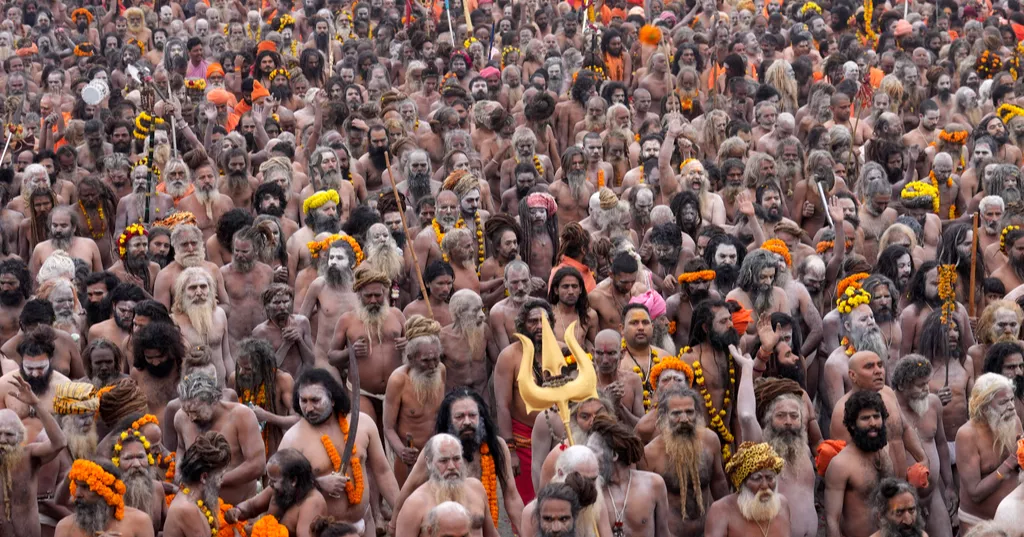
Millions of Hindu pilgrims and ascetics gathered in northern India on Tuesday for the first major bathing ritual of the Maha Kumbh festival, the world’s largest religious gathering.
Pilgrims took dips in the freezing waters at the confluence of the Ganges, Yamuna, and mythical Saraswati rivers in Prayagraj, marking the beginning of the grand event, AP reports.
At sunrise, large groups of ash-smeared Hindu holy men, known as Naga Sadhus, marched and rode in chariots toward the river.
Holding tridents, swords, and drums, they chanted hymns in praise of Lord Shiva as they made their way to the bathing site in a festive procession. Their followers, millions of devotees, joined them in the river, seeking spiritual cleansing.
India's Modi marks the opening of a strategic tunnel in disputed Kashmir
The Maha Kumbh festival, held once every 12 years, began on Monday, attracting over 15 million pilgrims for the first major bath. Over the next six weeks, officials expect more than 400 million people to visit Prayagraj, participating in religious rituals and bathing in the holy rivers.
Hindus believe that immersing in the confluence purifies the soul, washing away sins and freeing individuals from the cycle of rebirth. Venkatesh Ramaling, a tech specialist from Pune, spoke of the inspiring faith of the pilgrims.
“People have such strong belief here. It’s amazing how they dive into such cold water,” he said, sharing his own feeling of positivity after the ritual.
The Kumbh festival is rooted in a Hindu myth involving the god Vishnu, who is said to have wrested a golden pitcher containing the nectar of immortality from demons. A few drops of this nectar are believed to have fallen at four sacred sites — Prayagraj, Nasik, Ujjain, and Haridwar — where the Kumbh festival is held.