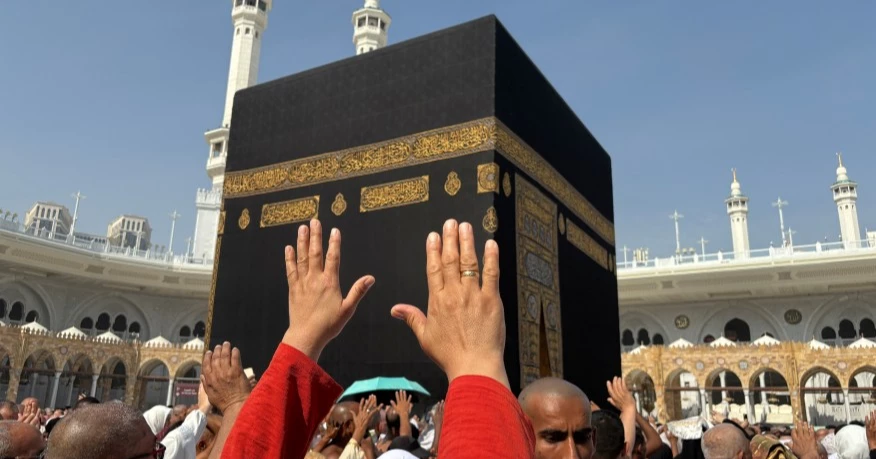
The ongoing war in the Middle East has disrupted travel for thousands of Muslim pilgrims visiting Saudi Arabia for the Umrah pilgrimage, leaving many stranded and forcing others to cancel their planned trips.
Indonesian authorities said more than 58,000 pilgrims from Indonesia are currently stuck in Saudi Arabia due to flight disruptions and security concerns.
Indonesia’s Vice Minister for Hajj and Umrah Dahnil Anzar Simanjuntak said the government is negotiating with Saudi authorities and airlines to reduce the financial burden on stranded pilgrims, particularly hotel and flight costs.
He also urged about 60,000 Indonesians planning to travel for Umrah to postpone their trips until April for safety reasons.
Officials described the situation as an urgent humanitarian and logistical challenge as many pilgrims struggle with unexpected expenses and uncertainty about returning home.
Some stranded pilgrims said the delays have caused both financial and emotional stress.
Zanirah Faris, an Indonesian pilgrim whose return flight was cancelled, told local media that she had been rebooked on a flight scheduled for March 12. She urged authorities to assist pilgrims who cannot afford extended hotel stays.
Indonesia, which has the world’s largest Muslim population, sends hundreds of thousands of people to Saudi Arabia each year for Umrah, especially during the holy month of Ramadan.
The travel disruption has also affected pilgrims from other countries.
Malaysia’s Consul General in Jeddah Mohamad Dzaraif Raja Abdul Kadir said about 1,600 Malaysian pilgrims were also stranded in Saudi Arabia. Authorities have opened a 24 hour operations centre to monitor the situation and assist affected citizens.
Malaysia Airlines has temporarily resumed return flights from Jeddah and Medina until Sunday, while the country’s foreign ministry is working with diplomatic missions and airlines to evacuate stranded Malaysians.
Airports in the Gulf region serve as major global transit hubs connecting travellers to Europe, Africa and Asia. As a result, the conflict has disrupted travel far beyond the Middle East.
Many pilgrims described how the war has overshadowed what is normally a deeply spiritual journey.
Maged Kholaif, an Egyptian pilgrim, said his flight from Saudi Arabia to Kuwait was cancelled on the day the war began. Stranded with his wife and mother in law, he eventually travelled overland to Kuwait where he reunited with his children.
Others cancelled their trips entirely.
Javed Khizer, a resident of Michigan in the United States, said he decided to cancel Umrah travel plans for himself and his family after watching the worsening situation in the news.
Umrah, often referred to as the minor pilgrimage, can be performed at any time of the year unlike the annual Hajj. Many Muslims prefer to perform Umrah during Ramadan, a period of increased worship and fasting.
Despite the tensions, some pilgrims already in Saudi Arabia say they are trying to focus on their religious rituals.
Majid Mughal, a visitor from the United States travelling with his family, said they learned about the conflict while on their way to Saudi Arabia but decided to continue the journey.
He said security conditions appeared normal so far, although his family continues to monitor flight updates daily as they prepare for their return home.