Mexico

Meta faces trial in New Mexico after undercover investigation
The first stand-alone trial brought by state prosecutors in a series of lawsuits against Meta is set to begin in New Mexico, with jury selection starting Monday.
The case is based on a state undercover investigation that used proxy social media accounts and posed as children to document sexual solicitations and Meta’s response. Meta owns Facebook, Instagram and WhatsApp. The case could provide states with a new legal avenue to pursue social media companies over the impact of their platforms on children, relying on consumer protection and nuisance laws.
Attorney General Raúl Torrez filed the lawsuit in 2023, alleging that Meta created a marketplace and “breeding ground” for predators targeting children for sexual exploitation and failed to disclose what it knew about those harmful effects.
Legal experts say a victory for New Mexico could have far-reaching consequences as regulators worldwide search for legal theories to rein in social media companies. “So many regulators are keyed up looking for any evidence of a legal theory that would punish social media that a victory in that case could have ripple effects throughout the country, and the globe,” said Eric Goldman, codirector of the High Tech Law Institute at Santa Clara University School of Law. “Whatever the jury says will be of substantial interest.”
The trial, which is scheduled to begin with opening statements on Feb. 9, is expected to last nearly two months.
Read More: Meta secures large nuclear energy supply to power AI data centers
Meta has denied the civil allegations, accusing prosecutors of using a “sensationalist” approach. Although CEO Mark Zuckerberg was removed as a defendant, he has been deposed and case documents include references to him.
The New Mexico lawsuit centers on allegations that Meta’s algorithms promote harmful and addictive content to children, rather than focusing on user-generated posts themselves. Prosecutors argue this strategy could bypass longstanding legal protections under the First Amendment and Section 230 of the Communications Decency Act.
The state’s undercover investigation involved decoy accounts posing as minors, which documented sexual solicitations and monitored Meta’s response. Prosecutors say the company prioritized profits over child safety.
Goldman said Meta is deploying significant legal resources in New Mexico and elsewhere. “If they lose this,” he said, “it becomes another beachhead that might erode their basic business.”
7 months ago
Trump threatens tariffs on countries supplying oil to Cuba, increasing pressure on Mexico
President Donald Trump on Thursday signed an executive order authorizing tariffs on goods from any nation that sells or provides oil to Cuba, a step that could further strain the island amid a worsening energy crisis.
The measure mainly targets Mexico, which has been a critical oil supplier to Cuba and has maintained ties with the island despite efforts by President Claudia Sheinbaum to foster a strong relationship with Trump.
When asked if he intended to “choke off” Cuba, which he called a “failing nation,” Trump replied, “I’m not trying to, but it looks like it’s something that’s just not going to be able to survive.”
Trump and Sheinbaum spoke by phone Thursday morning, though Sheinbaum said Cuba was not discussed. She noted that Mexico’s foreign affairs secretary had told U.S. Secretary of State Marco Rubio that continuing humanitarian aid to Cuba was important, and Mexico was ready to act as an intermediary between the U.S. and Havana.
Trump threatens 50% tariff on Canadian aircraft, escalating trade war
Speculation has grown this week that Mexico might reduce oil shipments under U.S. pressure. Cuba, facing an economic and energy crisis partly fueled by U.S. sanctions, has relied heavily on oil from allies such as Mexico, Russia, and Venezuela. Following a U.S. operation that ousted Venezuelan President Nicolás Maduro, Trump announced no Venezuelan oil would be sent to Cuba.
Mexico’s state oil company, Pemex, reported shipping nearly 20,000 barrels of oil per day to Cuba from January to September 2025, though experts tracking shipments via satellite say the amount has fallen to around 7,000 barrels.
Sheinbaum has provided ambiguous answers regarding the shipments. She said some deliveries had temporarily paused due to normal supply fluctuations, calling the decision “sovereign” and not influenced by the U.S., while maintaining that Mexico would continue supporting Cuba. She emphasized that contracts with Pemex largely determine shipment schedules.
Trump orders reopening of Venezuela commercial airspace, signals travel resumption
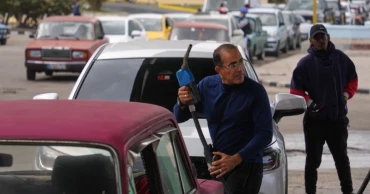
The uncertainty highlights the intense pressure on Mexico and other Latin American nations as Trump escalates his confrontational stance following the Venezuela operation. It remains unclear how the executive order will affect Cuba, where long gasoline lines and growing anxiety underscore the island’s ongoing crisis. Cuban authorities did not immediately respond to requests for comment.
7 months ago
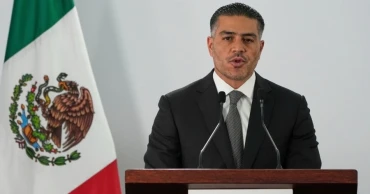
Mexico transfers 37 cartel suspects to the US amid pressure from Trump administration
Mexico has transferred another 37 alleged members of drug cartels to the United States, the country’s security minister said on Tuesday, amid rising pressure from the administration of U.S. President Donald Trump to curb cross-border drug trafficking.
Mexican Security Minister Omar García Harfuch said in a post on X that those handed over were “high impact criminals” who “represented a real threat to the country’s security.”
The latest move marks the third such transfer in less than a year. García Harfuch said Mexico has now sent a total of 92 detainees to the United States as it seeks to respond to mounting threats from Washington.
Footage released by Mexican authorities showed handcuffed prisoners guarded by heavily armed, masked officers as they were boarded onto a military aircraft at an airport near Mexico City.
“As the pressure increases, as demands from the White House dial up, (Mexico’s government) needs to resort to extraordinary measures, such as these transfers,” said David Mora, a Mexico analyst at the International Crisis Group.
Read More: Mexico plans to build Latin America’s most powerful supercomputer
The U.S. State Department and Justice Department did not immediately comment.
Those transferred include figures from the Sinaloa Cartel, Beltrán-Leyva cartel, Jalisco New Generation Cartel, the Northeast Cartel and a Zetas splinter group based in Tamaulipas. Mexican officials said all face pending U.S. cases.
Among them was María Del Rosario Navarro Sánchez, the first Mexican charged in the U.S. with supporting a terrorist organization.
Trump has floated military action against cartels and recently said, “We’ve knocked out 97% of the drugs coming in by water and we are going to start now hitting land.”
8 months ago
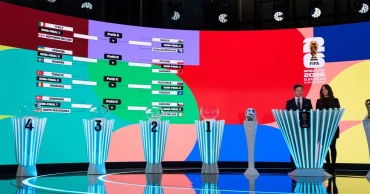
FIFA tweaks World Cup draw to keep top teams apart until Semifinals
FIFA has overhauled the 2026 World Cup draw format to ensure the four highest-ranked teams like Spain, Argentina, France and England avoid each other until the semifinals, provided they top their groups.
The draw, set for December 5 at the Kennedy Center in Washington, D.C., will use a tennis-style bracket system for the first time. FIFA confirmed Tuesday that the new format rewards top-ranked sides by placing them in separate pathways for the 48-team tournament hosted by the United States, Canada and Mexico from June 11 to July 19.
The change means defending champions Argentina, led by Lionel Messi, and European champions Spain, inspired by Lamine Yamal, can only meet in the final at MetLife Stadium near New York, if both win their respective groups.
“To ensure competitive balance, two separate pathways to the semifinals have been established,” FIFA said in a statement, aiming to reward teams whose consistent good results have raised their world ranking.
Unlike previous World Cups where knockout paths were tied to group allocation, the new approach fixes the bracket in advance.
This year’s draw will place 48 teams into four pots before assigning them to 12 groups of four. A full, updated match schedule, with stadiums and kickoff times, will be released on December 6. The ceremony will last about 90 minutes, with the draw itself taking an estimated 45 minutes.
As hosts, Canada, Mexico and the United States enter Pot 1, joined by the nine highest-ranked teams: Spain, Argentina, France, England, Brazil, Portugal, the Netherlands, Belgium and Germany.
Forty-two teams have already qualified, including Iran and Haiti, which FIFA expects to play as drawn despite political sensitivities with the U.S. The tournament will span 16 venues across the three host nations, including 11 NFL stadiums in the U.S.
The remaining six entrants will be decided in March through European and intercontinental playoffs. Those teams will enter Pot 4, the lowest-ranked tier, meaning four-time champions Italy could prove a dangerous wildcard next week when the final placing draw is made.
Host nations will be marked with different colored balls: Mexico as A1 (green ball), Canada as B1 (red ball), and USA as D1 (blue ball). The other nine Pot 1 teams will automatically be assigned to position 1 in their respective groups.
Pot 2 features the next 12 teams: Croatia, Morocco, Colombia, Uruguay, Switzerland, Japan, Senegal, IR Iran, Korea Republic, Ecuador, Austria and Australia.
Pot 3 includes Norway, Panama, Egypt, Algeria, Scotland, Paraguay, Tunisia, Côte d'Ivoire, Uzbekistan, Qatar, Saudi Arabia and South Africa.
Pot 4 contains Jordan, Cape Verde, Ghana, Curaçao, Haiti, New Zealand and the six playoff winners.
Teams from the same confederation cannot be drawn together, except for Europe, which will have 16 representatives, forcing four groups to include two UEFA nations.
To maintain bracket balance, Spain (rank 1) and Argentina (rank 2) will be placed in opposite pathways. The same applies to France (rank 3) and England (rank 4), ensuring the top sides stay separated until late.
For the host schedules, the USA, placed in Group D, will open on June 12 in Inglewood against a Pot 3 team, then face a Pot 2 opponent in Seattle on June 19, and finish against a Pot 4 side back in Inglewood.
Mexico, in Group A, will kick off the tournament on June 11 at the Estadio Azteca against a Pot 3 team, then play a Pot 2 team on June 18 in Guadalajara, before returning to Mexico City for their final group match against a Pot 4 opponent.
Canada starts on June 12 in Toronto against a Pot 4 team, then moves to Vancouver for matches against Pot 3 and Pot 2 sides.
World Cup draw pots:
Pot 1: Canada, Mexico, USA, Spain, Argentina, France, England, Brazil, Portugal, Netherlands, Belgium, Germany
Pot 2: Croatia, Morocco, Colombia, Uruguay, Switzerland, Japan, Senegal, IR Iran, Korea Republic, Ecuador, Austria, Australia
Pot 3: Norway, Panama, Egypt, Algeria, Scotland, Paraguay, Tunisia, Côte d'Ivoire, Uzbekistan, Qatar, Saudi Arabia, South Africa
Pot 4: Jordan, Cabo Verde, Ghana, Curaçao, Haiti, New Zealand, European Playoff A, B, C, D, FIFA Playoff Tournament 1 and 2
Information from The Associated Press was used in this report.
9 months ago
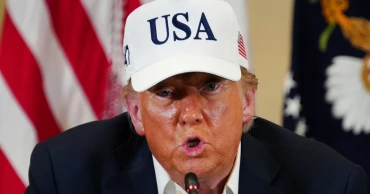
US to levy 30% tariffs on EU, Mexico: Trump
U.S. President Donald Trump on Saturday announced 30% tariffs on imports from the European Union and Mexico, effective August 1, targeting two of the country's largest trade partners.
The announcement came through letters Trump posted on his social media account, where he outlined the reasoning behind the move.
In his message to Mexico’s president, Trump acknowledged the country’s efforts in helping to curb undocumented migration and the flow of fentanyl into the U.S. However, he criticized Mexico for not doing enough to prevent the region from becoming what he called a “Narco-Trafficking Playground.”
In a separate letter addressed to European Union leaders, Trump described the U.S. trade deficit as a threat to national security.
“We have had years to discuss our Trading Relationship with The European Union, and we have concluded we must move away from these long-term, large, and persistent, Trade Deficits, engendered by your Tariff, and Non-Tariff, Policies, and Trade Barriers,” Trump wrote. “Our relationship has been, unfortunately, far from Reciprocal.”
Judge blocks Trump administration from random immigration raids, arrests in California
The move is part of a broader campaign effort by Trump, who has been ramping up announcements of new tariffs as a central theme of his 2024 re-election bid. He claims these measures will restore fairness to the U.S. economy, which he says has been exploited by foreign powers for decades.
By introducing these reciprocal tariffs, Trump is effectively challenging the global trade framework established under the Uruguay Round of negotiations, which set tariff rates under a “most favored nation” principle — ensuring no country was treated less favorably than others.
With Saturday’s letters, Trump has now imposed tariff conditions on 24 countries and the 27-member European Union.
1 year ago
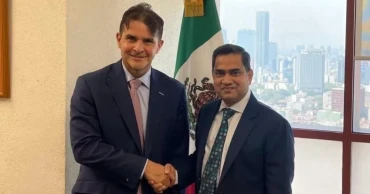
Govt committed to holding "free, fair, credible" polls: Ambassador Mushfique
Bangladesh and Mexico have expressed their commitment to deepening bilateral ties and agreed to expedite the finalisation of several pending agreements to further strengthen cooperation.
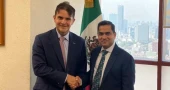
Bangladesh Ambassador to Mexico M Mushfiqul Fazal (Ansarey) met with Director General (Asia-Pacific) Fernando Gonzalez Saiffe at the Mexican Ministry of Foreign Affairs on February 11 to discuss ways to strengthen bilateral relations between Bangladesh and Mexico, according to a message here on Wednesday.
During the meeting, Ambassador Mushfique briefed the director general on recent developments in Bangladesh, emphasising that the interim government is committed to implementing necessary reforms aimed at ensuring a "free, fair, and credible" election.
He underscored the potential for strengthening economic ties, particularly by expanding Bangladeshi exports to Mexico, including RMG, pharmaceuticals and leather goods.
Main goal is to ensure free, fair election: EC Sanaullah
Mushfique stressed the importance of accelerating the process of opening a Mexican Embassy in Dhaka to enhance diplomatic ties and promote business, cultural exchange, and people-to-people connectivity.
To commemorate the upcoming 50th anniversary of diplomatic relations between Bangladesh and Mexico, the ambassador proposed a series of joint celebratory events.
DG Saiffe praised the ambassador’s proactive approach and recalled his visit to Bangladesh during the Foreign Office Consultations two years ago.
BNP leader Altaf calls for institutional restructuring to ensure fair elections
He fondly reflected on his interactions with key stakeholders, including the Federation of Bangladesh Chambers of Commerce and Industry (FBCCI).
1 year ago
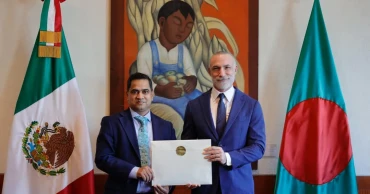
Reform initiatives aim to foster good governance, inclusive election: Ambassador Mushfiqul
Highlighting the interim government’s reforms initiatives, Bangladesh Ambassador to Mexico M Mushfiqul Fazal (Ansarey) has said these initiatives aim to foster good governance, democracy, political reforms, economic development, and a free, fair, and inclusive election.
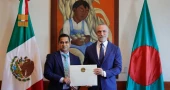
He met with Chief of Protocol at the Mexican Foreign Ministry Jonathan Chait Auerbach and handed over a copy of a letter of credence on Friday.
The envoy will formally present his credentials to the President of Mexico at a later date, said the Bangladesh Embassy in Mexico.
During the meeting Mushfiqul expressed his gratitude for the support and cooperation extended by the Mexican Foreign Ministry.
He underscored the longstanding and friendly ties between Bangladesh and Mexico.
Read: Reforms needed to restore democracy in Bangladesh: HRW
1 year ago
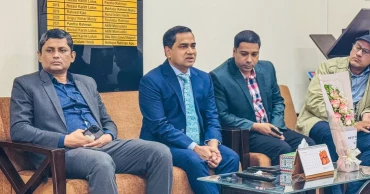
Ambassador-designate Mushfiqul eyes stronger trade ties with Mexico
Bangladesh Ambassador-designate to Mexico Mushfiqul Fazal Ansarey on Monday said he would put in his best efforts to significantly expand trade relations with the North American country in addition to exploring wider areas of cooperation between the two countries.
“There’s ample opportunity to further expand trade volume with Mexico,” he said, referring to the bilateral trade volume between the two countries which is now around $674.6 million.
While having an interaction with the members of Diplomatic Correspondents Association, Bangladesh (DCAB) over tea at its Lounge at the Ministry of Foreign Affairs, Ambassador Mushfiqul said there is a lot to do to present the country in Mexico. “I believe there is a huge scope to work to that end.”
Mexico relocates migrants far from US border
He said it is a great privilege and honour for him to work in the team of Chief Adviser Prof Muhammad Yunus. “I will try my best to show due respect to the trust and confidence that he has placed in me.”
Nobel Laureate Dr Yunus offered his vision of an emerging new economic system in his book ‘A World of Three Zeros: The New Economics of Zero Poverty, Zero Unemployment, and Zero Net Carbon Emissions’. Ambassador Mushfiqul said there is a huge campaign in favour of Dr Yunus’s vision of “Three Zeros” and social business.
Dr Yunus urges Malysia to issue multiple-entry visas for Bangladeshi workers
1 year ago

Mexico relocates migrants far from US border
Around 100 migrants from various countries roamed aimlessly through the streets of Acapulco, a troubled resort on Mexico’s Pacific coast.
Having trekked for weeks across southern Mexico alongside hundreds of other migrants, they agreed to immigration officials’ proposal to travel to Acapulco, expecting to continue their journey toward the U.S. border. Instead, they found themselves stranded on Monday, reports AP.
Trump threatens to impose sweeping new tariffs on Mexico, Canada and China on first day in office
With President-elect Donald Trump’s second inauguration just two weeks away, Mexico persists in breaking up high-profile migrant caravans and scattering migrants across the country to keep them away from the U.S. border and prevent their concentration in any one area.
This "dispersion and exhaustion" strategy has been a cornerstone of Mexico’s immigration policy in recent years. It has significantly reduced the number of migrants reaching the U.S. border, explained Tonatiuh Guillén, former chief of Mexico’s immigration agency, it said.
Claudia Sheinbaum to be sworn in as Mexico’s 1st female president
Guillén added that the current administration hopes the reduced migrant numbers will help counter Trump’s pressure. Guillén left the administration of former President Andrés Manuel López Obrador after Trump threatened tariffs over migration during his first term.
Acapulco, once a jewel of Mexican tourism, is an unlikely destination for migrants. The city is grappling with organized crime and is still recovering from the devastation of Hurricane Otis in 2023.
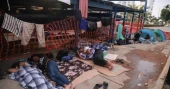
On Monday, while Mexican tourists enjoyed the final moments of their holiday beach vacations, migrants slept on the streets or sought ways to resume their northward journeys, the report said.
“Immigration officials told us they’d give us a permit to travel freely across the country for 10 to 15 days, but that didn’t happen,” said 28-year-old Venezuelan migrant Ender Antonio Castañeda. “They abandoned us here with no way to leave. They won’t sell us bus tickets or anything else.”
Castañeda, like thousands of others, had left Tapachula, a southern city near the Guatemalan border. In recent weeks, more than six caravans of about 1,500 migrants each have departed from Tapachula, but none got far.
6 die in landslide caused by heavy rains in Mexico
Authorities allow the migrants to walk for days before exhaustion sets in and then offer to transport them to various cities, promising to review their immigration status—a process with uncertain outcomes.
Some migrants have ended up in Acapulco, where about a dozen sleep at a Catholic church near immigration offices. On Monday, dozens gathered outside the offices seeking information, but no one provided answers.
Castañeda, having received money from his family and desperate to leave, opted for a ride from a van driver he deemed the most reliable, despite fares being five times higher than regular bus tickets to Mexico City.
Some migrants discovered that the permits they received restrict their travel to Guerrero state, where Acapulco is located, while others have had more luck.
On Sunday, a recent migrant caravan disbanded after hundreds received transit permits allowing unrestricted travel within Mexico for a limited time.
Cuban migrant Dayani Sánchez, 33, and her husband were among those granted such permits. “We’re a little scared about safety while traveling by bus, fearing we might be stopped,” she said. Mexican drug cartels often target migrants for extortion or kidnapping, and some migrants accuse authorities of similar practices.
President Claudia Sheinbaum has claimed that her immigration policy prioritises humanitarian concerns, allowing more migrants to leave southern Mexico. However, migration advocates have pointed out that migrants are often sent to dangerous regions.
The Rev. Leopoldo Morales, a priest at the Catholic church near the immigration offices in Acapulco, expressed similar concerns. In November, buses carrying migrants—including families—arrived in Acapulco. Last weekend, two more buses brought adult migrants.
Although Acapulco is not a traditional migration route and lacks infrastructure to support migrants, local priests have coordinated efforts to provide water, food, and clothing. “They’re in dire straits, arriving with nothing,” Morales said.
Migrants quickly realise finding work in Acapulco is nearly impossible. Following Hurricane Otis, the federal government deployed soldiers and National Guard troops to aid reconstruction and ensure security. However, the city continues to struggle with violence.
Acapulco remains one of Mexico’s most violent cities, with high homicide rates. Local cab drivers and small business owners—who spoke anonymously—reported rising extortion, deterring large businesses from rebuilding.
Honduran migrant Jorge Neftalí Alvarenga, relieved to have left Chiapas near the Guatemalan border, was already disillusioned.
“They misled us,” Alvarenga said. “We asked for arrangements to take us to Mexico City for work or even places like Monterrey, where there are more job opportunities.”
1 year ago

Bangladesh Embassy in Mexico City launches e-passport services
The Embassy of Bangladesh in Mexico City has marked a significant milestone with the launch of e-passport services, transforming travel security and convenience for Bangladeshi citizens.
With e-passport services now fully operational from Sunday, Bangladeshi nationals in Mexico, along with those in Costa Rica, Guatemala, Honduras, Ecuador, and other Latin American countries, can enjoy enhanced services, faster processing, and a more seamless travel experience, said the Embassy on Monday.
This initiative underscores the collaboration between the government of Bangladesh, the Ministry of Home Affairs, and key stakeholders.
Bangladesh Ambassador Abida Islam inaugurated the initiative, highlighting its role in modernizing national travel infrastructure and meeting global standards.
The event was attended by members of the Bangladeshi community, and dignitaries from Bangladesh and Mexico.
The Embassy in Mexico City is now the 52nd Bangladeshi mission to introduce e-passport services, advancing the government’s efforts to digitize and enhance efficiency.
The e-passport system ensures advanced security, faster immigration processing, and a seamless travel experience aligned with international standards.
Read: Bangladesh Mission in KSA inaugurates e-passport services for expatriates
The event featured a documentary detailing the evolution of the e-passport system and remarks from prominent members of Bangladeshi community, including Arifuzzaman Kabir (Ericsson), Aktaruzzaman (Japan-Bangladesh Tobacco Limited), Azad Hossain (restaurateur), and Shamsul Alam Khan Chowdhury (Grameen Carso).
Their reflections underscored the initiative’s potential to enhance global mobility and strengthen community ties.
Khalil Ahmed, Joint Secretary, Ministry of Home Affairs, Dhaka, and technical perspectives from Mahbubur Rahman, Deputy Project Director, Department of Passport and Immigration, Dhaka, also spoke highlighting the system's implementation and long-term vision.
Read more: Bangladesh Embassy in Portugal launches e-Passport facilities
The event concluded with the presentation of a commemorative crest to Ambassador Abida Islam, followed by the ribbon-cutting of the e-passport facility and the symbolic handover of e-passport delivery receipts to two Bangladeshi nationals in Mexico City.
1 year ago