missile strikes
Russia launches drone and missile strikes on Kyiv, killing 1 and injuring 31
Russia carried out a large-scale drone and missile attack on Ukraine’s capital early Thursday, killing at least one person and injuring 31, local officials said.
Ukrainian authorities said the strikes hit residential areas and civilian infrastructure across multiple cities, with Kyiv bearing the heaviest damage.
Tymur Tkachenko, head of Kyiv’s military administration, said six districts in the capital were affected. He warned that Russia used a mix of ballistic missiles and drones in the attack, damaging homes and public facilities.
Ukrainian Prime Minister Yuliia Svyrydenko said several other cities, including Kremenchuk, Bila Tserkva, Kharkiv, Sumy and Odesa, were also targeted in the coordinated assault involving both cruise and ballistic missiles.
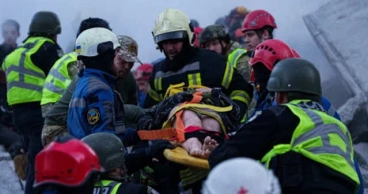
In Kyiv’s Darnytsia district, part of a multi-storey residential building collapsed after being hit, trapping people under debris. Emergency services said at least 27 people were pulled out alive from the rubble.
Kyiv Mayor Vitali Klitschko said 18 apartments were destroyed and reported disruptions in water supply on the city’s left bank following the strikes.
Rescue teams continued searching through debris as smoke rose from damaged buildings. Emergency workers said operations were also ongoing in Obolonskyi and Holosiivskyi districts.
Residents described hearing repeated explosions during the early hours of the morning.
“I heard many blasts and rockets around 3 a.m. Then the building shook and there was a loud explosion, and all my windows shattered,” said 78-year-old resident Lyudmila Hlushko.
In another incident, a drone struck the roof of a five-storey residential building in the Dnieper district, while a separate building in the Dniprovskyi district was also damaged, officials said.
The overnight attack came just hours after another major daytime strike on Kyiv that killed at least six people, according to President Volodymyr Zelenskyy. That earlier assault involved around 800 drones and hit nearly 20 regions across Ukraine.
Zelenskyy said the sustained attacks were aimed at causing “maximum pain and suffering” to civilians.
The escalation comes amid renewed talk of possible peace efforts. U.S. President Donald Trump said Tuesday he believes Russia and Ukraine could soon reach a deal to end the war, while Russian President Vladimir Putin recently suggested the conflict may be “coming to an end.”
However, neither side has outlined any concrete progress, and both continue to hold sharply different demands. Previous diplomatic efforts led by the United States have stalled over key issues, including territorial control and long-term security guarantees.
5 months ago
Iran Fires Cluster Bomb-Bearing Missiles At Israel As Conflict Enters 8th Day
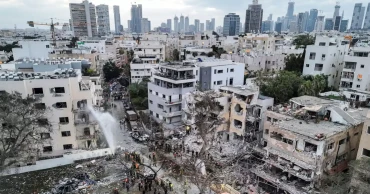
Iran launched at least one missile at Israel that dispersed cluster bombs intended to increase civilian casualties, the Israeli military reported on Thursday. This marks the first known use of cluster munitions in the ongoing seven-day conflict.
Israeli military officials did not provide further specifics, but local media cited the military saying the missile’s warhead opened at an altitude of about 7 kilometers (4 miles), releasing roughly 20 submunitions across an area of about 8 kilometers (5 miles) over central Israel.
One of these small bombs hit a house in the central Israeli town of Azor, causing some damage. There were no reports of injuries, according to Times of Israel military correspondent Emanuel Fabian.
Cluster bombs are controversial because they scatter multiple smaller explosives indiscriminately, some of which may fail to detonate immediately and pose a lasting threat to civilians after conflicts end.
The Israeli military issued a graphic warning the public about the dangers of unexploded ordnance.
Brigadier General Effie Defrin, spokesperson for the Israeli military, said at a briefing, “The terror regime seeks to harm civilians and even used weapons with wide dispersal in order to maximize the scope of the damage.”
Iran’s mission to the United Nations and Israel’s embassy in Washington had not responded to requests for comment at the time of reporting.
Israel threatens Iran’s supreme leader as over 200 injured in Iranian missile strikes
Daryl Kimball, executive director of the advocacy group Arms Control Association, called cluster munitions “egregious weapons” due to their wide-area destructive effect, especially when used near civilian populations, and noted their potential to leave behind unexploded remnants.
He added that given the inaccuracy of Iranian missiles, Tehran should be aware that cluster munitions are likely to strike civilian rather than military targets.
Both Iran and Israel have refused to join the 2008 international treaty banning the production, stockpiling, transfer, and use of cluster bombs—a treaty signed by 111 countries and 12 other entities.
In 2023, after significant debate, the U.S. supplied Ukraine with cluster munitions for use against Russian forces. Kyiv has stated that Russian troops also have used such weapons. None of these three countries are parties to the Convention on Cluster Munitions.
Source: NDTV
1 year ago
Missiles rain down as Israel-Iran conflict enters fifth day
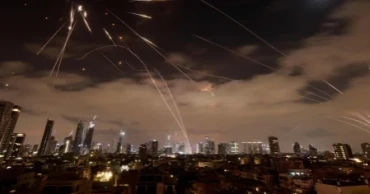
The conflict between Israel and Iran has entered its fifth consecutive day, with missile strikes and aerial bombardments intensifying across key regions, leaving civilians trapped in an escalating spiral of violence.
In Iran, at least 224 people have been confirmed dead since hostilities erupted, according to officials, reports CNN.
Meanwhile, 24 fatalities have been reported in Israel, as both nations engage in a widening exchange of fire, targeting strategic and urban locations alike.
The violence has severely impacted flashpoint areas on both sides.
In Iran, major cities including Tehran, Isfahan and Mashhad have witnessed multiple waves of strikes, with emergency services overwhelmed and hospitals struggling to cope.
In Israel, border towns and central districts are on high alert, with civilians advised to remain indoors or evacuate when possible.
Trump Proposes Ceasefire
US President Donald Trump announced his early departure from the G7 summit in Italy, citing the urgency of the Middle East crisis. Speaking at a press conference, Trump suggested that a ceasefire deal could be “within reach”, with French President Emmanuel Macron later confirming that Trump had formally proposed a peace framework to Tehran.
However, the US leader delivered a stark warning to the Iranian leadership, advising the 10 million residents of Tehran to evacuate, fuelling speculation of potential US military involvement or strikes on the capital.
“This is a very dangerous moment,” Trump said. “We want peace, but we are prepared for all scenarios.”
Iran launches fresh missile barrage on Israel, killing 5 amid escalating conflict
Israeli Strikes Target Nuclear Infrastructure
Israeli Prime Minister Benjamin Netanyahu said the latest Israeli strikes have “significantly set back” Iran’s nuclear capabilities. According to the Prime Minister’s Office, Israeli forces targeted three key Iranian nuclear facilities, as well as individuals identified as senior nuclear scientists.
“I estimate we are sending them back a very, very long time,” Netanyahu told reporters. The full extent of the damage to Iran’s nuclear programme remains unclear, but satellite imagery and local reports suggest substantial destruction at some high-value targets.
Iran’s response to the attacks has been fierce. State media reported fresh launches of ballistic missiles into southern Israel overnight, with claims of damage to a military airbase near Beersheba, though these reports have not been independently verified.
Israel-Iran conflict enters third day with escalating missile strikes, rising death tolls
International Reactions
The United Nations has called for “immediate de-escalation”, warning that the current course could plunge the region into a broader war with devastating humanitarian consequences.
Meanwhile, regional players including Saudi Arabia and Turkey have urged restraint but are reportedly bracing for spillover effects.
With no clear diplomatic breakthrough in sight and tensions escalating by the hour, analysts warn that the coming days will be critical in determining whether the situation can be contained — or whether the region will face yet another prolonged war.
Source: With inputs from CNN
1 year ago
‘Missiles in the Sky’: Panic grips Indian border cities as war clouds gather
Millions of people in cities along India’s border and in Indian-administered Kashmir are living in fear as blackouts and explosions shake their communities.
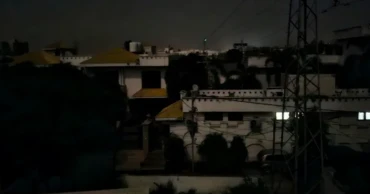
New Delhi, India — Aqib Parray, a resident of Jammu in Indian-administered Kashmir, was standing at a local shop near his home when the power suddenly went out late on Thursday, May 8. Moments later, loud explosions echoed in the air.
Parry recalled the panic that swept through the streets as people rushed to their homes. “From my rooftop, I saw missiles streaking across the sky,” he said, describing the scene. “Then the internet went out. We’ve never seen anything like this in Jammu.”
For two generations of Indians and Pakistanis, the sight of missiles in the sky and the threat of war—coupled with blackouts and the looming danger of missiles, even far from the frontlines—was unprecedented. In 1999, the two countries fought over the contested Kargil region, but the conflict was contained.
Now, as tensions escalate between India and Pakistan, millions of people in both countries are witnessing a situation they have never experienced before. This includes the 750,000 residents of Jammu, along with millions more in other cities that were struck on Thursday evening, according to the Indian government.
The Indian Ministry of Defence reported that eight missiles were fired from drones originating from Pakistan towards Jammu and surrounding areas, including Satwari, Samba, Udhampur, and even targets in Pathankot, Punjab. India claims all missiles were intercepted, and no casualties were reported.
However, Pakistan’s Information Minister Attaullah Tarar denied any attacks on Indian-administered Kashmir or across the international border.
India and Pakistan trade fire and accusations as fears of a wider military confrontation rise
Despite official statements, the growing anxiety is palpable in cities near the frontier, particularly in Indian-administered Kashmir, following the death of 26 civilians in Pahalgam and two days after India launched missile strikes on several Pakistani cities. The threat of war looms heavy, especially in communities close to the border.
‘Sleepless Nights’
In Indian Punjab, authorities imposed blackouts in multiple districts, including Chandigarh, Jalandhar, Pathankot, and Mohali, after dusk. Sabarpreet Singh, a 46-year-old businessman from Amritsar, said he is struggling to cope with the situation. “Things are changing so fast. I haven’t been able to sleep. I’m thinking of leaving the city with my family—my wife and children are terrified when the sirens go off,” he said.
On the evening of Wednesday, a similar blackout was enforced in parts of Gujarat’s Kutch region and in border areas of Rajasthan, where the India-Pakistan frontier cuts through the Thar Desert.
The situation is even more dire along the Line of Control, the de facto border dividing disputed Kashmir between India and Pakistan. Both sides have exchanged heavy artillery, resulting in civilian casualties. India has evacuated thousands of residents, who now sleep in shelters at night.
“There were attempts to target military sites in Jammu, including the defense airport,” a local intelligence officer told Al Jazeera, requesting anonymity. “While we have confidence in our defense systems, the security situation is worsening. We are closely monitoring the situation.”
Praveen Donthi, a senior analyst at the International Crisis Group, explained that India's current unease is understandable. “After India struck deep inside Pakistan and Pakistani-administered Kashmir on May 7, killing at least 31 people—whom India labeled terrorists, but Pakistan called civilians—Pakistan is under immense pressure to retaliate,” he said. “The government and civil society in Pakistan were unwilling to de-escalate without a response.”
‘Senseless Belligerence’
On Thursday, New Delhi accused Pakistan of attempting to target military sites in several cities, including Srinagar and Amritsar, using drones and missiles. While Indian officials claimed to have “neutralized” these attacks, India retaliated by targeting Pakistan’s air defense systems in multiple locations, including Lahore, Pakistan’s second-largest city.
Pakistan’s military, however, stated that its air defense system brought down 25 Indian drones overnight, including in Lahore and Karachi. Pakistani officials confirmed at least one civilian death and five injuries.
Pakistan says it intercepted 25 Indian drones; India claims it neutralised attacks
Indian Foreign Secretary Vikram Misri reaffirmed that any future Pakistani attack would be met with a swift response from New Delhi. He insisted that India was merely acting in self-defense after the escalation initiated by Pakistan, which he identified as stemming from the Pahalgam attack.
Pakistan’s Ministry of Foreign Affairs denied any involvement in attacks on India or Indian-administered Kashmir and warned that any escalation based on false pretenses would be met with “full resolve and determination.”
Political scientist Sumantra Bose emphasized the urgent need for international intervention. “The situation requires immediate diplomatic action to prevent further escalation,” he said. “This conflict is senseless and has been poorly managed. It should never have escalated to this point.”
Bose warned that the situation was quickly spiraling out of control. “It is a continuous loop of retaliations from both sides. If this goes on, it could lead to an even greater conflict.”
US State Department spokesperson Tammy Bruce confirmed on Thursday that the US is actively engaged with both India and Pakistan at multiple levels. She acknowledged Pakistan’s call for an independent investigation into the Pahalgam attack, adding that the US supports efforts to hold the perpetrators accountable.
However, Indian Foreign Secretary Misri had already rejected calls for an independent investigation, citing a lack of confidence in Pakistan’s willingness to cooperate.
Praveen Donthi observed that the Trump administration, until May 7, appeared to be allowing the situation to play out without significant interference. He warned, “Unless the US and other global powers intervene more actively, the situation could spiral into a full-scale war.”
Tensions escalate as India, Pakistan exchange drone and missile strikes
Bose, for his part, argued that “it is already a state of war.” He added, “Things are quickly getting worse. The key decision-makers in both India and Pakistan must be compelled to stop this senseless belligerence and end the cycle of escalation before it’s too late.”
Source: With inputs from Al Jazeera
1 year ago
Tensions escalate as India, Pakistan exchange drone and missile strikes
Tensions between South Asia’s two nuclear-armed neighbours have surged following a deadly exchange of drone and missile attacks, with both India and Pakistan claiming to have repelled cross-border assaults while accusing each other of unprovoked aggression.
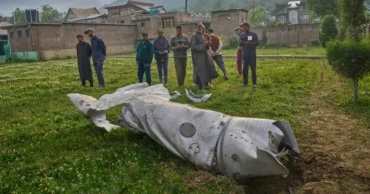
Pakistan’s military announced on Wednesday that it had downed 25 Indian drones in various regions along the eastern border, asserting the attacks were deliberate violations of its airspace.
The military described the operation as a "firm and calibrated response" to protect Pakistan’s sovereignty.
Meanwhile, India reported thwarting a coordinated Pakistani drone and missile strike targeting one of its key military installations in the northern region.
Indian defence officials said the attempted incursion was “aggressively neutralised,” preventing any major damage or casualties.
Malala Yousafzai calls on India, Pakistan to reduce tensions
The flare-up follows a deadly Indian offensive on Tuesday that reportedly killed at least 31 people and injured dozens more in Pakistan’s Punjab province and parts of Pakistan-administered Kashmir. Islamabad has condemned the attack as an "act of brutality."
Speaking at an emergency press briefing, Pakistani Prime Minister Shehbaz Sharif vowed retaliation. “We will avenge the blood of our innocent martyrs,” he declared. “India’s unprovoked aggression will not go unanswered.”
India, however, maintains that its actions were in response to “continued infiltration attempts and militant threats emanating from Pakistani territory.”
Pakistan shoots down Indian drone in the city of Lahore, officials say
The cross-border hostilities have prompted international concern, with calls from the United Nations and regional partners urging both nations to exercise restraint and avoid further escalation.
As of Thursday morning, military activity was reported to be ongoing in some border areas, with residents in both countries fearing a deeper conflict may be imminent.
Source: With inputs from Al Jazeera
1 year ago

Israeli missile strikes put Damascus airport out of service
Israel’s military fired missiles toward the international airport of Syria's capital early Monday, putting it out of service and killing two soldiers and wounding two others, the Syrian army said.
The attack, the second in seven months to put the Damascus International Airport out of service, caused material damage in a nearby area, the army said, without giving further details.
Israel has targeted airports and ports in government-held parts of Syria in an apparent attempt to prevent arms shipments from Iran to militant groups backed by Tehran, including Lebanon's Hezbollah.
Read more: Israel indicts soldiers for trying to bomb Palestinian home
An opposition war monitor reported the Israeli strikes hit the airport as well as an arms depot close to the facility south of Damascus. The Britain-based Syrian Observatory for Human Rights said four people were killed in the strike.
There was no comment from Israel.
On June 10, Israeli airstrikes that struck Damascus International Airport caused significant damage to infrastructure and runways. It reopened two weeks later after repairs.
In September, Israeli airstrikes hit the international airport of the northern city of Aleppo, Syria's largest and once commercial center, also putting it out of service for days.
In late 2021, Israeli warplanes fired missiles that struck the port of Latakia hitting containers and igniting a huge fire.
Israel has carried out hundreds of strikes on targets inside government-controlled parts of Syria in recent years, but rarely acknowledges or discusses such operations.
Read more: 4 Palestinians killed in flare-up as Israel counts votes
Israel has acknowledged, however, that it targets bases of Iran-allied militant groups, such as Lebanon’s Hezbollah, which has sent thousands of fighters to support Syrian President Bashar Assad’s forces.
Thousands of Iran-backed fighters have joined Syria's 11-year civil war and helped tip the balance of power in Assad’s favor.
Israel says an Iranian presence on its northern frontier is a red line that justifies its strikes on facilities and weapons inside Syria.
3 years ago
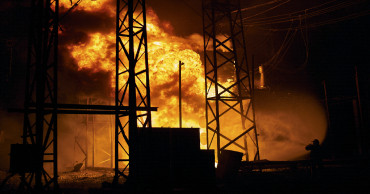
Russia attacks power stations following Ukraine counteroffensive
Russia attacked power stations and other infrastructure Sunday, causing widespread outages across Ukraine as Kyiv’s forces pressed a swift counteroffensive that has driven Moscow's troops from swaths of territory it had occupied in the northeast.
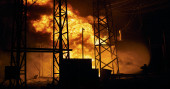
The bombardment ignited a massive fire at a power station on Kharkiv's western outskirts and killed at least one person. President Volodymyr Zelenskyy denounced the “deliberate and cynical missile strikes” against civilian targets as acts of terrorism.
Ukraine’s second-largest city of Kharkiv appeared to be without power Sunday night. Cars drove through darkened streets, and the few pedestrians used flashlights or mobile phones to light their way.
Separately, the Zaporizhzhia Nuclear Power Plant in the Russia-occupied south completely shut down in a bid to prevent a radiation disaster as fighting raged nearby.
Kyiv's action in recent days to reclaim Russia-occupied areas in the Kharkiv region forced Moscow to withdraw its troops to prevent them from being surrounded, leaving behind significant numbers of weapons and munitions in a hasty flight as the war marked its 200th day on Sunday.
Ukraine’s military chief, Gen. Valerii Zaluzhnyy, said its forces had recaptured about 3,000 square kilometers (1,160 square miles) since the counteroffensive began in early September. He said Ukrainian troops are only 50 kilometers (about 30 miles) from the Russian border.
One battalion shared a video of Ukrainian forces in front of a municipal building in Hoptivka, a village just over a mile from the border and about 19 kilometers (12 miles) north of Kharkiv.
Kharkiv Gov. Oleh Syniehubov said Ukrainian troops have reclaimed control of more than 40 settlements in the region.
In Sunday night’s missile attacks by Russia, the Kharkiv and Donetsk regions seemed to bear the brunt. Dnipropetrovsk, Zaporizhzhia and Sumy had only partially lost power, Zelenskyy said.
Kharkiv Mayor Igor Terekhov called the power outage “revenge by the Russian aggressor for the successes of our army at the front, in particular, in the Kharkiv region.”
Ukrainian officials said Russia hit Kharkiv TEC-5, the country’s second-biggest heat and power plant, and Zelenskyy posted video of the Kharkiv power plant on fire.
“Russian terrorists remain terrorists and attack critical infrastructure. No military facilities, only the goal of leaving people without light and heat,” he tweeted.
Read:Last reactor at Ukraine's Zaporizhzhia nuclear plant shut to avoid radiation
But Zelenskyy remained defiant despite the attacks. Addressing Russia, he added: “Do you still think you can intimidate, break us, force us to make concessions? ... Cold, hunger, darkness and thirst for us are not as scary and deadly as your `friendship and brotherhood.’ But history will put everything in place. And we will be with gas, lights, water and food … and WITHOUT you!”
Later in the evening some power had been restored in some regions. None of the outages were believed to be related to the shutdown of the reactors at the Zaporizhzhia plant.
While most attention focused on the counteroffensive, Ukraine's nuclear energy operator said the Zaporizhzhia nuclear power plant, Europe’s largest, was reconnected to Ukraine’s electricity grid, allowing engineers to shut down its last operational reactor to safeguard it amid the fighting.
The plant, one of the 10 biggest atomic power stations in the world, has been occupied by Russian forces since the early days of the war. Ukraine and Russia have traded blame for shelling around it.
Since a Sept. 5 fire caused by shelling knocked the plant off transmission lines, the reactor was powering crucial safety equipment in so-called “island mode” — an unreliable regime that left the plant increasingly vulnerable to a potential nuclear accident.
The International Atomic Energy Agency, the U.N. nuclear watchdog that has two experts at the site, welcomed the restoration of external power. But IAEA Director-General Rafael Grossi said he is “gravely concerned about the situation at the plant, which remains in danger as long as any shelling continues.”
He said talks have begun on establishing a safety and security zone around it.
In a call Sunday with Russian President Vladimir Putin, French President Emmanuel Macron urged the withdrawal of Russian troops and weaponry from the plant in line with IAEA recommendations.
The pullback of Moscow's forces in recent days marked the biggest battlefield success for Ukrainian forces since they thwarted a Russian attempt to seize Kyiv near the start of the war. The Kharkiv campaign seemed to take Moscow by surprise; it had relocated many of its troops from the region to the south in expectation of a counteroffensive there.
Yuriy Kochevenko, of the 95th brigade of the Armed Forces of Ukraine, tweeted a video from what appeared to be central Izyum. The city was considered an important command and supply hub for Russia’s northern front.
“Everything around is destroyed, but we will restore everything. Izyum was, is, and will be Ukraine,” Kochevenko said in his video, showing the empty central square and destroyed buildings.
Meanwhile, the Ukrainian General Staff said Russian troops also had left several settlements in the Kherson region, in the southern part of the country, as Kyiv's forces pressed the counteroffensive. It did not identify the areas.
But an official with the Russian-backed administration in the city of Kherson, Kirill Stremousov, said on social media that the city north of the Crimean Peninsula was safe and asked everyone to stay calm.
Read:Russia pulls back troops from Ukraine's Kharkiv
The Russian Defense Ministry said Saturday the withdrawal from Izyum and other areas was intended to strengthen Moscow's forces in the neighboring Donetsk region to the south. The explanation was similar to how Russia justified pulling back from Kyiv earlier this year.
But Igor Strelkov, who led Russia-backed forces when the separatist conflict in the Donbas erupted in 2014, mocked the Russian Defense Ministry's explanation of the retreat, suggesting that handing over Russia's own territory near the border was a “contribution to a Ukrainian settlement.”
The retreat angered Russian military bloggers and nationalist commentators, who bemoaned it as a major defeat and urged the Kremlin to step up its war efforts. Many criticized Russian authorities for continuing with fireworks and other lavish festivities in Moscow that marked a city holiday on Saturday despite the debacle in Ukraine.
In Moscow, Putin attended the opening of a huge Ferris wheel in a park on Saturday, and inaugurated a new transport link and a sports arena. The action underscored the Kremlin's narrative that the war it calls a “special military operation" was going according to plan without affecting Russians' everyday lives.
Pro-Kremlin political analyst Sergei Markov criticized the Moscow festivities as a grave mistake.
“The fireworks in Moscow on a tragic day of Russia’s military defeat will have extremely serious political consequences,” Markov wrote on his messaging app channel. “Authorities mustn’t celebrate when people are mourning.”
In a sign of a potential rift in the Russian leadership, Ramzan Kadyrov, the Kremlin-backed head of Chechnya, said the retreat resulted from blunders by the Russian brass.
“They have made mistakes and I think they will draw the necessary conclusions,” Kadyrov said. “If they don’t make changes in the strategy of conducting the special military operation in the next day or two, I will be forced to contact the leadership of the Defense Ministry and the leadership of the country to explain the real situation on the ground."
U.S. Secretary of State Antony Blinken and the head of NATO cautioned Friday the war would likely go on for months, urging the West to keep supporting Ukraine through what could be a difficult winter.
Ukraine’s battlefield gains would help as the Biden administration seeks continued financial support of the war effort from Congress and Western allies, said Daniel Fried, a former U.S. ambassador to Poland and now a distinguished fellow at the Atlantic Council in Washington.
“The Biden administration policy is evolving in a direction that is more and more justified,” Fried said.
4 years ago