Dengue-death
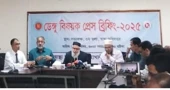
Dengue deaths in Bangladesh climb to 179; DGHS warns of alarming spike
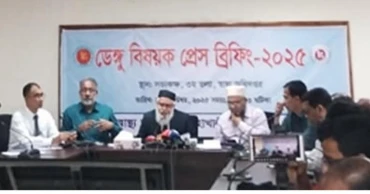
Bangladesh’s dengue crisis is deepening, with 179 deaths reported so far this year, the Directorate General of Health Services (DGHS) warned on Monday.
“The situation is becoming increasingly alarming. Most victims are dying within two to three days of hospital admission,” said DGHS Director General Prof Dr Md Abu Jafor at a briefing in Dhaka.
He said the highest number of fatalities has been recorded among patients aged 20–30, many of whom seek care only six to seven days after fever begins, and often too late to prevent complications. “The risk of death among children has also risen,” he cautioned.
Although infections have surpassed last year’s tally, the overall fatality rate remains comparatively lower, Abu Jafor noted. Still, a growing share of patients is reaching hospitals in critical condition, driving up mortality.
“If anyone develops a fever, they should get tested for dengue immediately. Late diagnosis leads to complications and increases the risk of death. Timely treatment is absolutely crucial,” Abu Jafor said.
Dengue deaths hit record high in Bangladesh; 12 die in a single day
He warned that government measures alone cannot contain the outbreak without public awareness and vigilance.
Dr Moinul Hasan, Director of Hospital Management at the DGHS, said a special medical team is being set up to ensure every dengue patient is monitored by a designated doctor.
Hospitals nationwide have been instructed to boost preparedness, he added.
11 months ago

Climate change behind world’s worst dengue death rates in Bangladesh
Bangladesh continued to log one of the world’s worst case fatality rates during dengue outbreaks, apparently almost throughout the last two decades, underscoring the strain put on the country’s already fragile healthcare system and the people, particularly the poor.
The case fatality rate represents the percentage of people dying out of the total infected population.
Often called the CFR, the rate stood at 0.4 per cent until September 13, with 147 deaths recorded against the total dengue cases of 37,206. The current CFR is one of the highest in the world.
Bangladesh has constantly produced very high CFR, which even exceeded 2 per cent in 2003 and was above 1.5 per cent in 2000, 2001, and 2010. Over the last five years, the rate remained about 0.5 per cent.
In 2023, Bangladesh experienced its worst dengue outbreak, resulting in 1,705 deaths from the mosquito-borne viral disease. It was the highest number of deaths in the world that year. The CFR reached 0.5 per cent, also the highest in the world.
“High death rate implies a high number of critical cases,” said epidemiologist Mohammad Mushtuq Husain, an adviser to the Institute of Epidemiology, Disease Control, and Research (IEDCR).
Dengue claims 5 more lives in 24 hours, 622 hospitalised
While the changing climate is increasing the virulence of the dengue virus and facilitating its vector’s population growth, it is also ensuring a relentless supply of vulnerable people, evicted from their homes by natural disasters, who mostly constitute critical cases.
Bulu’s Nightmare and Others
After spending Tk 14,000 for the treatment during the 24 bedridden days of his sickness from dengue fever, the only choice Muhammad Bulu had to deal with his many debtors was to sell his three-wheeler van, the source of his income.
Bulu represents hundreds of thousands of people displaced frequently by natural disasters before they end up in slums of cities and towns, in search of a place to live and a livelihood. Bulu had come to the Begunbari slum in Tejgaon one and a half decades ago after river erosion took away most of his ancestral land.
Spending in a stupor after being struck by the fever, Bulu had realized he had no place in the city to seek treatment or care. With a high fever, he headed back to his village home in Lalmonirhat, where his wife and parents live.
“The fear of catching the disease again haunts me everywhere,” said Bulu, constantly waving his hand to scare away groups of mosquitoes teasing him from all around at a tea stall near Begun Bari in the afternoon of September 11.
Dengue claims 1 more life; 665 hospitalised in 24hrs
“I am already broke. Getting the disease again would be like getting a death sentence,” he said, resting a vacant look onto a nearby waste pile, littered with things perfectly positioned to hold freshwater during rains, a prerequisite for Aedes mosquito population expansion.
Bulu is in his 30s. Historically, most dengue cases concerned people in the age group of 18-30. Children and elderly people also get frequently infected and are considered highly vulnerable.
“More children from villages are now getting infected with the disease,” said Mohammed Hanif, a pediatrician based in Dhaka.
The spread of dengue among children in rural areas indicates that the disease is getting out of hand, he said.
Obese children and elderly people with comorbidities are most exposed to dengue fatality, he explained.
Children accounted for nearly 7,500 of the total 37,200 cases reported so far this year. They also accounted for 24 of the total 147 deaths this year.
Public health under strain
Epidemiologist Mohammad Mushtuq Husain, who is also an adviser to the IEDCR, explained that the high case fatality rate underscored late hospitalisation of dengue patients, mainly due to the unavailability of primary healthcare services in most of Bangladesh.
“Poor people can’t afford timely dengue diagnosis. They come for the treatment only when their condition is bad,” said Mushtuq.
Primary healthcare is almost non-existent across rural Bangladesh.
Someone suffering from dengue fever must travel to the upazila level to get tested for dengue, mostly in private clinics, often involving an inconvenient journey.
Dengue outbreak worsens: 5 dead, 636 hospitalised in 24 hours
But patients often do not get the desired treatment at upazilas either, mostly depending on private medical facilities for dengue diagnosis. District government hospitals tend to refer serious dengue cases to Dhaka to reduce strain on their limited resources.
Many dengue deaths occur while patients are on the way to Dhaka.
Mushtuq emphasized the need to decentralize the health service to reduce the number of critical cases and deaths.
Experts have long called for an early dengue warning system. Sending mobile laboratories to poor communities could also be a way of fighting the disease by its early detection.
“Public healthcare service needs expansion,” said Mushtuq.
AM Zakir Hussain, a former director of the IEDCR, explained factors increasing the vulnerability of the poor to Aedes mosquitoes, the vector of the disease.
“People living in high-rise buildings are well outside mosquitoes' reach, for they cannot fly very high,” he said.
A study by the Bangladesh Institute of Development Studies on the 2019 dengue outbreak reported higher dengue infections among people who could not afford mosquito nets or mosquito repellents.
Dengue outbreak worsens: 5 dead, 636 hospitalised in 24 hours
The study also found that dengue cases were higher where wastes were dumped. Millions live in sprawling Dhaka city slums, mostly sitting on the city’s waste dumps.
The Economic Burden
A 2021 BIDS study revealed that the average economic cost of treating a dengue patient was Tk 33,817 during Bangladesh’s worst outbreak of the disease in 2019. In public hospitals, the cost was around Tk 22,000. The cost of the treatment was Tk 47,230 in private hospitals.
Another independent study revealed that the average income of a fourth of the studied dengue patients, treated at public hospitals in 2019, was Tk 10,000 per month.
A 2023 study estimated that the annual economic cost of dengue disease in India in 2016 was about US$ 5.71 billion.
The Climate Connection
The year of the worst dengue outbreak, 2023, witnessed an unprecedented shift in rainfall with a substantial wet spell beginning in the last month of the winter season—February.
Provided with an abundant supply of fresh water, just ahead of the temperature rising in pre-monsoon months, Aedes mosquitoes had a great opportunity to boom its population, epidemiologists said.
A World Bank report published in October 2021 said that Bangladesh marked a seasonal shift over the past 44 years following a 0.5°C temperature increase. The dengue season stretched because of the change, the report said.
"The number of cases of dengue fever, which is spread by mosquitoes, recorded annually has doubled every decade since 1990, and one of the potential factors that contributed to this increase is climate change," read a line of the WB report.
The report revealed that dengue cases increase in the range of 25°C to 35°C, with a peak at 32°C. The capacity of mosquitoes to transmit dengue fever has increased by up to 9.5 per cent globally, compared with 1950, the report said.
Bangladesh’s first report of a dengue outbreak dates back to 1964. There were only sporadic outbreaks of the disease until the 1990s.
“There is a marked shift in rainfall pattern and this will continue in the years ahead,” said AKM Saiful Islam, a lead author on the IPCC's sixth assessment report.
“We need to invest more in research to study the changing climate and develop our capacity to predict its potential consequences, such as a surge in dengue cases,” he said.
1 year ago
Dengue: 3 more die, 425 new cases recorded in 24hrs
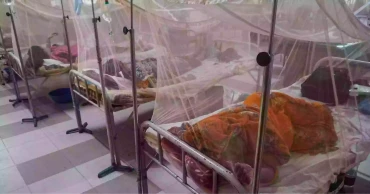
Three more deaths were reported from dengue in 24 hours till Tuesday morning, raising the death toll from the mosquito-borne disease to 51 this year, according to the Directorate General of Health Services (DGHS).
During the same period, 425 new patients were hospitalised with dengue, bringing the total number of infections to 13,188 since January.
Of the latest fatalities, two were reported in Dhaka North City Corporation (DNCC) and one in Khulna Division (outside city corporation areas).
China donates dengue prevention materials to Bangladesh
The fresh cases were detected as follows: 120 in Barishal, 98 in Chattogram, 36 in Dhaka Division (outside city areas), 38 in DNCC, 55 in Dhaka South City Corporation, 18 in Khulna, 11 in Mymensingh, 48 in Rajshahi, and one in Sylhet.
Last year, dengue claimed the lives of 575 people.
1 year ago

Dengue cases surge in Khulna division amid poor hospital preparedness
Dengue infections are rising sharply in Khulna Division exposing gaps in hospital preparedness and treatment capacity.
In just one week leading up to July 4, at least 117 new patients were hospitalised in 10 districts in the division, according to the Directorate General of Health Services (DGHS).
Last year, more than 10,000 people in Khulna Division contracted dengue, with 35 fatalities reported.
Health officials are now expressing concern over an unusually early spike in cases this year, with many patients showing atypical symptoms such as severe shivering, vomiting, and extreme fatigue.
Although dengue season typically runs from August to December the rise in infections this year has begun as early as June and July.
Hospitals are admitting new patients daily, they said.
Tanzila Akter, currently undergoing treatment at Khulna Medical College Hospital, said, “After the fever started, my body began to shake and I started vomiting. The doctors diagnosed it as dengue. I’ve never felt anything like this before.”
In another case, the sister of Solaiman Mia, a dengue patient from Sharankhola in Bagerhat, said, “My brother works in the fields. He might have been bitten by a mosquito there. We first took him to the upazila hospital but when the fever didn’t subside and tests confirmed dengue we had to bring him to Khulna.”
116 medical teams to provide treatment to Khulna dengue patients
Relatives of several patients have raised concerns about the lack of dedicated dengue treatment facilities.
Rafiqul Islam, a caregiver, said, “There are no separate arrangements for dengue patients in the hospital. Without isolation, there’s a risk to others too.”
Doctors said unlike previous outbreaks, many of this year’s dengue patients are experiencing fever along with intense shivering, vomiting, and extreme fatigue.
In neighbouring coastal district Barguna, dengue has reached alarming levels, with health experts linking the outbreak to stored rainwater used due to the scarcity of clean water in the salinity-hit district.
Similar practices of water storage in drums, tanks, and pots are common in parts of coastal districts Khulna, Satkhira, and Bagerhat, increasing the risk of Aedes mosquito breeding.
Advocate Babul Hawlader, Member Secretary of the Khulna Citizens' Committee, expressed dissatisfaction with the local authorities.
“Despite the looming threat, the city corporation’s anti-mosquito drive appears to be weaker than last year. Hospital preparedness is also lacking,” he said.
Dr Kazi Didarul Islam, Professor at the Biotechnology and Genetic Engineering Discipline of Khulna University, said, “This year, we’re seeing an early spike in dengue cases, and new symptoms suggest a different strain—possibly dengue serotype 1. Standard larvicide spraying alone will not be effective. A comprehensive and coordinated response is essential, and the time to act is now.”
Meanwhile, Dr Md Mojibur Rahman, Director of DGHS in Khulna Division, said that directives have been given to all districts to intensify mosquito control measures and keep hospitals ready to handle a surge in patients.
1 year ago
Dengue claims one more live; 262 hospitalised in 24hrs
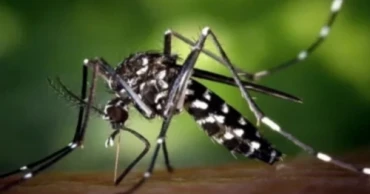
One more death were reported from dengue in 24 hours till Saturday morning, raising the number of fatalities from the mosquito-borne disease in Bangladesh to 41 this year.
During the period, 262 more patients were hospitalised with viral fever, raising the total infected-case to 9,484 this year, according to the Directorate General of Health Services (DGHS).
394 fresh dengue cases reported in 24hrs: DGHS
Last year, dengue claimed the lives of 575 people.
In 2023, 1,705 people lost their lives due to dengue, making it the deadliest year on record.
The DGHS recorded 321,179 dengue cases and 3, 18,749 recoveries in the same year.
1 year ago

Dengue: 5 die, 159 new cases reported in 24hrs
Five deaths were reported from dengue in 24 hour till Friday morning, raising the number of fatalities from the mosquito-borne disease in Bangladesh 28 this year.
In recent fatalities, four were reported in Barishal division (outside of city corporation area) and one in Dhaka South City Corporation (DSCC).
According to the Directorate General of Health Services (DGHS), 159 more patients were hospitalised with viral fever during the period, raising the number of confirmed cases to 5,570 since the beginning of this year.
Of them, Barishal division (out of city corporation area) alone reported 124 new cases; Chattogram Division (outside city corporations) recorded nine cases, Dhaka Division (outside city corporations) reported nine, while 12 cases were detected in DSCC, one in Dhaka North City Corporation and another one in Sylhet Division (outside of city corporation), and three in Khulna Division (out of city corporation).
COVID: 2 deaths, 15 more cases reported in 24hrs
Currently, 531 dengue patients are receiving treatment in hospitals across the country.
Last year, dengue claimed the lives of 575 people.
According to the DGHS, there were 101,214 dengue cases and 100,040 recoveries in the same year.
1 year ago

10 more dengue cases reported in 24hrs
Ten new dengue cases were reported in the 24 hours leading up to Monday morning, bringing the total number of cases to 1,502 this year.
According to the Directorate General of Health Services (DGHS), new cases were reported as follows: one in Dhaka South City Corporation, two in Dhaka Division (Out of CC), four in Chattogram Division (Out of CC), two in Barishal Division (Out of CC) and one in Rajshahi Division (Out of CC).
8 more dengue cases reported in 24hrs
The number of deaths remained at 13, with no new fatalities reported during this period, the DGHS added.
Currently, 70 dengue patients are receiving treatment in hospitals across the country.
Last year, dengue claimed the lives of 575 people.
According to the DGHS, there were 101,214 dengue cases and 100,040 recoveries in the same year.
1 year ago