Iran-US tensions
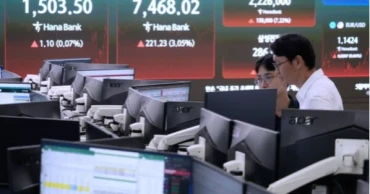
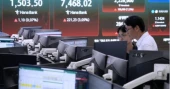
Asian stocks mixed, oil prices fall as Iran-US tensions intensify
Asian stock markets showed mixed performance on Thursday, while oil prices fell as tensions in the Middle East deepened following fresh military strikes by Iran and the United States.
US stock futures moved higher.
The US carried out additional airstrikes on Iran, while Iran responded by launching attacks targeting Bahrain, Kuwait and Qatar. The latest escalation came a day after US President Donald Trump declared that the temporary ceasefire between the two sides was "over."
Despite the renewed fighting, efforts to revive an interim agreement aimed at ending the conflict were continuing through high-level diplomatic talks, according to a regional intelligence official involved in the mediation process who spoke anonymously because of the sensitive nature of the negotiations.
Japan's Nikkei 225 index rebounded, rising 1.4 percent to 67,743.85 after earlier losses this week, supported mainly by technology stocks. Chip equipment maker Tokyo Electron jumped 5.5 percent, while AI-focused investment firm SoftBank Group slipped 0.1 percent.
South Korea's Kospi index gained 0.6 percent to 7,291.91 after fluctuating during the session. The index had dropped 5.4 percent on Wednesday. Samsung Electronics added 0.2 percent, while memory chip manufacturer SK Hynix surged 5.3 percent.
In China, the Shanghai Composite Index climbed 1.7 percent to 4,036.59, even after data showed producer prices rose 4.1 percent in June from a year earlier, compared with a 3.9 percent increase in May. Some economists linked the faster inflation to higher costs resulting from the Iran conflict.
Hong Kong's Hang Seng Index fell 0.7 percent to 24,027.97. Apple supplier Luxshare lost 2.5 percent during its Hong Kong market debut, while Chinese artificial intelligence company Zhipu, also known as Z.ai, jumped 9.3 percent after announcing plans to raise about $4 billion through a share sale.
Australia's S&P/ASX 200 slipped 0.3 percent to 8,762.50. Taiwan's Taiex fell 0.8 percent, while India's Sensex advanced 0.7 percent.
Oil prices eased after rising sharply the previous day. Brent crude, the international benchmark, fell $1 to $77 a barrel after briefly climbing above $80 on Wednesday. Before the Iran conflict began, Brent crude had been trading near $72 a barrel. Earlier hopes for an interim peace deal had briefly pushed prices back to pre-war levels.
US benchmark crude oil also declined, falling 83 cents to $72.69 a barrel.
On Wall Street, the S&P 500 closed 0.3 percent lower at 7,482.71 on Wednesday after dropping as much as 1.1 percent following Trump's remarks on the ceasefire.
The Dow Jones Industrial Average fell 1.1 percent to 52,348.39, while the technology-heavy Nasdaq Composite edged up 0.2 percent to 25,870.65 after recovering from earlier losses.
Broadcom shares rose 4.8 percent after Apple announced a multi-year partnership with the US chipmaker.
In currency trading, the US dollar slipped to 162.37 Japanese yen from 162.59 yen, while the euro strengthened to $1.1438 from $1.1417.
2 months ago
Iran's currency hits record low against dollar amid tensions
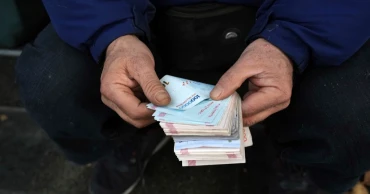
Iran’s rial plunged to a historic low against the U.S. dollar on Saturday, trading at over 1 million rials per dollar, as the country resumed work following an extended holiday. The rising tensions between Tehran and Washington are likely to drive the currency even lower.
During the Nowruz holidays, which marked the Persian New Year, the rial already crossed the 1 million mark due to informal street trading as official exchange shops remained shut. On Saturday, as trading resumed, the rial dropped further to 1,043,000 to the dollar, suggesting the new rate may persist.
Iran rejects direct talks with US amid ongoing tensions
On Ferdowsi Street in central Tehran — the hub of the country’s currency exchange market — some traders turned off their electronic rate boards, citing the unpredictable shifts in the market.
“We turn it off since we are not sure about the successive changes of the rate,” said Reza Sharifi, an exchange employee.
U.S. tensions deepen currency woes
Iran’s economy has suffered greatly under international sanctions, especially since U.S. President Donald Trump unilaterally exited the 2015 nuclear agreement in 2018. That deal had significantly curtailed Iran’s uranium enrichment in return for sanction relief, and the rial then stood at 32,000 to the dollar.
Trump, having begun a second term in January, has resumed his “maximum pressure” strategy, imposing fresh sanctions on Iran, particularly targeting oil exports — including discounted sales to China.
Trump has also reached out to Iran’s Supreme Leader Ayatollah Ali Khamenei, seeking to initiate direct talks. Tehran, however, has only expressed willingness for indirect negotiations — attempts that faltered during the Biden administration.
Meanwhile, Trump has escalated airstrikes against Iranian-aligned Houthi rebels in Yemen. The Houthis remain the last group in Iran’s so-called “Axis of Resistance” capable of attacking Israel, following devastating losses suffered by other Tehran-aligned factions in Israel’s ongoing war with Hamas in Gaza.
According to Tehran’s Donay-e-Eqtesad economic daily, analyst Mehdi Darabi said, “Foreign pressures in recent months have triggered expectations of reduced oil revenues and rising inflation, which have driven up demand for hard currencies.”
Economic turmoil and political heat at home
The economic instability has eroded personal savings, pushing ordinary Iranians to seek refuge in stable assets like U.S. dollars, gold, cars, or even cryptocurrencies and high-risk investment schemes.
Domestically, political tensions continue to simmer. The mandatory hijab law remains a flashpoint, with many women flouting the requirement in Tehran. There are also rumours that the government might hike the price of subsidized fuel — a move that previously led to mass protests.
The sliding rial has intensified pressure on Iran’s reformist president, Masoud Pezeshkian. In March, when the dollar traded at 930,000 rials, Iran’s parliament impeached Finance Minister Abdolnasser Hemmati, blaming him for the currency’s collapse and fiscal mismanagement.
Public outrage also compelled Pezeshkian to dismiss his vice president for parliamentary affairs, Shahram Dabiri, after state media revealed he took a luxury cruise to Antarctica. Though Dabiri reportedly funded the trip himself, his social media photos infuriated citizens struggling with economic hardship.
Iran has rejected direct negotiations with the US in response to Trump's letter
“In a situation where economic pressures are immense and poverty widespread, such expensive leisure trips by officials — even with personal funds — are indefensible and inappropriate,” Pezeshkian stated after dismissing Dabiri, who has yet to publicly respond.
1 year ago
Iran-US tensions: Trump’s letter to Khamenei and key issues
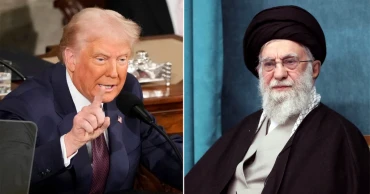
A letter from U.S. President Donald Trump to Iran's supreme leader, aimed at reviving negotiations over Tehran’s rapidly progressing nuclear programme, has reached the Iranian capital.
Although the letter’s content has not been disclosed, its arrival coincides with Trump imposing fresh sanctions on Iran as part of his “maximum pressure” campaign. While he has hinted that military action against Iran remains an option, he has also expressed confidence that a new agreement could still be achieved.
Khamenei dismisses US offer for nuclear talks, calls it deceptive
Iran’s 85-year-old Supreme Leader Ayatollah Ali Khamenei has ridiculed Trump, yet Iranian officials have sent mixed messages about whether talks could take place.
Here’s what you need to know about the letter, Iran’s nuclear programme, and the ongoing tensions that have defined US-Iran relations since the 1979 Islamic Revolution.
Why Did Trump Send the Letter?
Trump sent the letter to Khamenei on March 5, later confirming it in a television interview the following day. He stated: “I’ve written them a letter saying, ‘I hope you’re going to negotiate because if we have to go in militarily, it’s going to be a terrible thing.’” Since returning to the White House, Trump has been advocating for talks while simultaneously tightening sanctions and suggesting that Israel or the U.S. could launch military strikes on Iranian nuclear sites.
During his first term, a letter Trump sent via the late Japanese Prime Minister Shinzo Abe provoked an angry response from Khamenei.
However, Trump's correspondence with North Korean leader Kim Jong Un during the same period resulted in face-to-face meetings, although they failed to produce agreements limiting Pyongyang’s nuclear weapons or its missile programme, which can reach the continental U.S.
How Has Iran Responded?
Iran’s response has been somewhat contradictory. While Khamenei has dismissed the idea of negotiating with what he calls a “bullying government,” some Iranian diplomats, including Foreign Minister Abbas Araghchi, have indicated that discussions on assurances that Tehran would not pursue nuclear weapons might be possible.
Araghchi, who was involved in negotiating the 2015 nuclear deal, later hardened his stance, asserting that talks could not occur under U.S. pressure—aligning with Khamenei’s position.
Nevertheless, Araghchi still met with the Emirati envoy who delivered Trump’s letter.
Why Is Iran’s Nuclear Programme a Concern for the West?
For decades, Iran has maintained that its nuclear programme is for peaceful purposes. However, its officials have increasingly hinted at the possibility of developing a nuclear weapon. Iran is currently enriching uranium to near weapons-grade levels of 60%, making it the only country in the world without a nuclear weapons programme to do so.
Under the 2015 nuclear deal, Iran was permitted to enrich uranium only up to 3.67% purity and to stockpile no more than 300 kilograms (661 pounds). The latest report from the International Atomic Energy Agency placed Iran’s stockpile at 8,294.4 kilograms (18,286 pounds), with a portion of it being enriched to 60% purity.
While U.S. intelligence agencies have assessed that Iran has not yet initiated a weapons programme, they have acknowledged that Tehran has engaged in activities that position it to produce a nuclear device should it decide to do so.
Why Are Relations Between Iran and the U.S. So Strained?
Once a key U.S. ally in the Middle East, Iran was ruled by Shah Mohammad Reza Pahlavi, who purchased American military equipment and permitted CIA technicians to operate secret listening posts monitoring the Soviet Union. In 1953, the CIA orchestrated a coup that solidified the shah’s power.
However, in January 1979, the shah—suffering from terminal cancer—fled Iran as mass protests surged against his rule. The Islamic Revolution, led by Grand Ayatollah Ruhollah Khomeini, subsequently established Iran’s theocratic government.
Later that year, Iranian university students stormed the U.S. Embassy in Tehran, demanding the shah’s extradition and sparking a 444-day hostage crisis, which led to the severing of diplomatic ties between the two nations.
Iran open to talks on nuclear militarization concerns
During the 1980s, the U.S. backed Saddam Hussein in the Iran-Iraq War. The conflict’s “Tanker War” phase saw the U.S. conduct a one-day military operation that severely weakened Iran’s naval capabilities, and the U.S. later downed an Iranian passenger airliner.
In the years since, relations between Iran and the U.S. have fluctuated between hostility and tentative diplomacy, reaching their peak with the 2015 nuclear agreement between Tehran and world powers. However, tensions escalated when Trump unilaterally withdrew the U.S. from the accord, leading to years of instability in the Middle East that continue to this day.
1 year ago