border infiltration

BGB on high alert to prevent border infiltration: Salahuddin
Home Minister Salahuddin Ahmed on Monday said Border Guard Bangladesh (BGB) has been placed on high alert amid developments following the assembly elections in West Bengal, assuring that the force remains fully prepared to prevent border infiltration and maintain law and order.
Briefing reporters at the Secretariat after a meeting on improving the living standards of salt farmers chaired by Prime Minister Tarique Rahman, he said political changes or internal administrative decisions in any Indian state, including erecting barbed-wire fences along the border, are India’s internal matters.
“Bangladesh maintains diplomatic relations with the central government of India based on sovereign equality. The change of political power in any specific state does not affect Bangladesh’s foreign policy or bilateral relations,” the Home Minister said.
He said BGB remains on constant vigilance to prevent any unauthorised border crossings and ensure that the security situation remains stable.
Responding to a question about information spreading on social media claiming atrocities against minorities following the West Bengal polls and their possible impact on Bangladesh, Salahuddin said many misleading posts were being circulated using old videos.
“So far, neither the Home Ministry nor the Foreign Ministry has any information regarding the authenticity of such incidents or any negative impact on Bangladesh,” he said, urging people not to be misled by online propaganda.
Turning to salt farmers, the Home Minister the government has taken initiatives to ensure a fair price for salt in line with production costs to achieve self-sufficiency in the salt industry and protect the interests of local salt farmers.
He said the Ministry of Agriculture is currently reviewing the production costs of salt farmers so that they receive a proper price for their hard work. “The justification for imports is being verified by assessing the domestic demand for both industrial and edible salt.”
Salahuddin stated that, upon the collection of accurate data and in accordance with the directives of the Prime Minister, decisions will be taken in such a manner that the country may achieve complete self-sufficiency in salt production, while ensuring that the farmers do not incur any losses.
5 months ago
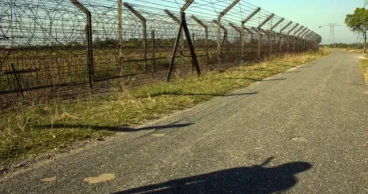
Feni border sees alarming rise in infiltration by foreign nationals
The Feni district, particularly the Pashuram and Belonia border areas adjoining India’s Tripura state, is witnessing a concerning surge in the infiltration of foreign nationals.
Over the past five months, this remote frontier has become an emerging hotspot for unauthorised cross-border movements, particularly involving African nationals.
From 1 November last year to 7 April this year, Border Guard Bangladesh (BGB) detained six African nationals who had illegally attempted to cross the border.
These incidents raise questions about the growing use of the Feni frontier by international human trafficking networks.
According to officials, the arrested people often claim to have lost their passports and travel documents.
Their mobile phones are typically found disconnected, rendering efforts to trace their communications futile.
Once detained, these foreign nationals are brought before court, only to secure bail shortly after, allegedly aided by local legal facilitators and organised human trafficking syndicates.
What follows is even more disquieting: after release, the intruders reportedly reconnect with their networks via WhatsApp using foreign numbers and begin regrouping.
The recurring nature of these incidents underscores the persistent and organised nature of the trafficking operations.
Construction of Madhumati Embankment brings hope for a secure future
Stakeholders, including the BGB, suspect a transnational racket involving Bangladeshi and Indian traffickers.
“We are unsure why Feni has become a target for infiltration,” said Lt. Col Md Mosharraf Hossain, Commandant of BGB Battalion-4.
“Despite strict vigilance, these crossings continue, which is deeply concerning,” he said.
One of the more recent incidents occurred on Sunday night, when the BGB detained Amina Shahbani, a 33-year-old Tanzanian national, while she was attempting to illegally enter India from Bangladesh through the Nijkalikapur border in Parshuram upazila.
She had reportedly been escorted to the border from Feni's Mohipal by two Bangladeshi locals, Abdul Motaleb and Sumon.
A case has since been filed against seven individuals, including the two alleged accomplices.
Other notable detentions include Ethiopian national Israt Umar Haji, 67, in November; Nigerian national Emika Gilbert Apeh, 45, in December; and Sudanese citizen Islam, 26, in January.
In March, Somali national Abdiwali Mohamed Ali and Nigerian national Nawsu Izuchukwu Calistas were caught trying to cross into Bangladesh from India.
Local sources indicate that traffickers prefer routes through Nijkalikapur village in Mirzanagar union and the Mirpara-Belonia border of Baurpathar village due to perceived weaknesses in security and possible local cooperation.
On 25 November, Indian police detained two Bangladeshis—Raju and Mohammad Ibrahim—for their alleged involvement in human trafficking.
In another instance, a Sudanese citizen and a local man named Emran, 50, were arrested in January on charges of cross-border smuggling.
Law enforcement agencies suspect that many of these foreign nationals aim to reach European countries, where they seek political asylum.
200-feet long floating drum bridge becomes blessing for Lalmonirhat’s Patgram residents
Brokers are reportedly helping them obtain UN refugee cards, enabling them to enter refugee camps and initiate asylum processes.
Somali national Abdili Mohamed Ali was found in possession of a UNHCR-issued refugee card collected in India.
“We have information about an organised gang that facilitates the movement of these foreigners across borders,” said Mohammad Nurul Hakim, officer-in-charge of Parshuram Model Police Station.
“Investigations are ongoing to identify and apprehend all involved," Hakim said.
Feni’s Superintendent of Police, Habibur Rahman, echoed the OC’s sentiments.
“The motive behind the influx remains unclear,” he said.
“Detainees provide inconsistent explanations during interrogation. Although some suspects have been remanded, they refrain from disclosing crucial information.”
“Even after arrest and remand, they eventually obtain bail through the court and, in some cases, secure legal visas to remain in Bangladesh,” he added.
Authorities remain on high alert, but with organised transnational networks exploiting legal loopholes and local connections, the challenge of curbing such illicit activities along the Feni border appears far from over.
1 year ago