traditional festivals
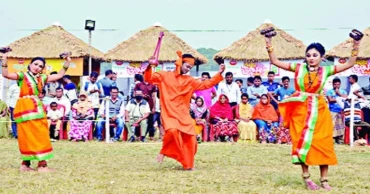
Life in Bangladesh gets dull with traditional festivals vanishing
Life in Bangladesh has become rather dull and monotonous across villages, towns, and cities due to vanishing traditional festivals, underscoring a sharp decline in cultural diversity and tolerance.
Once regarded as a land of festivals, with a major festival every season, Bangladesh, home to one of the largest populations, now boasts very few, mostly celebrating the power of the majority.
The disappearance of traditional festivals is a bleak reminder of aggressive urbanisation, replacing rural, agrarian Bangladesh, where rituals and collective activities were central to life not very long ago.
Over the past three decades, Bangladesh has undergone a rapid transformation, with thousands of people leaving villages willingly and unwillingly, laboring for an economy that displaced them from their roots, both literally and metaphorically.
“Villages today are not what they used to be, nor are their festivals. This is not unique to Bangladesh—it is a global transformation shaped by industrialisation and capitalism,” said Tariq Manzoor, who teaches Bangla at Dhaka University.
In the decades before independence, sacrificing animals during Eid-ul-Azha was commonplace among middle-class families, as some animals were within their purchasing capacity. Many people sacrificed animals in the villages as well, using the animals they reared at home.
Buter after independence, sacrificing animals increasingly became a religious festival affordable to a certain section of society.
Muharram used to be a very important religious festival in parts of Bangladesh, including Dhaka, Manikganj and Tangail. The festival extended over days, involving nightlong rituals in which devotees gathered around a bonfire to commemorate Hasan and Husain.
Read: Festivals like Pitha Utsab needs to be spread all over Bangladesh: KM Khalid
The bonfire was used to cook a mixture of ground chicken and rice. The cooking took hours as the devotees cried by the fire, remembering Hasan and Husain. The food, locally called Root, was shared among all.
“We consider the festival a thing of the past,” said Meherun Nesai, a 60-year-old woman from Tangail.
“We crossed a line there. Such festivals are not permitted in Islam. We pray for God’s forgiveness,” she said.
Some festivals related to the crop calendar also lost their lustre over time.
The Nabanna Utsab or the rice harvest festival faded over time. The festival used to mark the harvest of Aman rice, which became second to Boro cultivation over time in the race to produce more rice. Aman is a variety of the staple rice that farmers preserved for their own consumption.
A writer and researcher, Manjur Hossain, explained, “The word ‘Aman’ comes from the Arabic ‘Amanat,’ meaning a trust. Farmers sell Boro for cash but store Aman to feed the family throughout the year. The Nabanna celebration revolves around this Aman harvest.”
He recalled the age-old tradition of collective harvesting: “Farmers set out in groups right after the Fajr call to prayer, cut and gathered the paddy by noon, and threshed it with oxen late into the night. The first batch of rice was cooked into khichuri, payesh, or hot rice with country chicken by evening.”
“By late Kartik, the sheaf of green paddy would turn golden, and the harvest would begin on the first day of Agrahayan,” recalled Abdul Khalek, an 80-year-old farmer from Barishal.
“Harvesting completed by the first Friday of Agrahayan. I can still recall the joy I felt two to three decades ago; the joy that day was no less than what we feel during Eid,” Khalek added.
The loss of joy is directly influenced by the economic transformation that, in a way, left farmers behind, caught in a debt trap from frequent disasters and never to recover the loss.
Read more: Cultural festivals mark Buddha Purnima across six districts
Aman rice is cultivated during the rainy season for the variety’s ability to grow with an increase in water level.
Nowadays, aman cultivation often fails because of monsoon floods changing nature under the influence of climate change.
The Nabanna was a rare moment of festivity for people regardless of religion. Landlords took two-thirds of the harvest, while tenant farmers received a third—their survival stock for the year. Yet, in every farmer’s household, new rice meant joy, marked by pitha, payesh, and hospitality for visiting daughters and sons-in-law.
Alongside Nabanna came village fairs—vibrant gatherings that stretched for weeks. In the southern part of the country, horse races were the highlight; in the north, earthenware and brass utensils drew crowds. Villagers would buy oil lamps to light up their homes in those electricity-less days.
The village fair constituted an important part of the traditional agricultural marketing channel.
“Those oil lamps are long gone, replaced by electric lights. But even in this abundance of brightness, the pure joy of Nabanna is missing. Sometimes, you need to look back to find beauty in those dimly lit days,” said Mehedi Hasan Rajon, an agro-entrepreneur from Naogaon.
3 months ago