Trump Administration’s Gaza plan
UN endorses Trump administration’s Gaza plan
The United Nations on Monday gave strong backing to the Trump administration’s strategy for stabilizing and administering Gaza, offering crucial international support for U.S. efforts to guide the war-torn region toward peace after two years of conflict.
The U.S.-sponsored resolution, approved by the U.N. Security Council, authorizes an international stabilization force to provide security in Gaza, establishes a transitional governing body to be overseen by President Donald Trump, and outlines a possible future path toward an independent Palestinian state.
Trump celebrated the vote on social media, calling it one of the UN’s most significant approvals and a milestone for global peace.
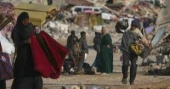
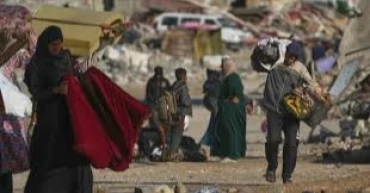
The resolution formally supports Trump’s 20-point ceasefire plan and builds on the fragile truce he helped negotiate with U.S. allies. It represents a major step in defining Gaza’s future following the Israel-Hamas war, which left widespread destruction and tens of thousands dead.
First major winter rains flood Gaza tent camp, worsen crisis
Under the proposal, a new “Board of Peace” would act as a temporary governing authority led by Trump. The stabilization force would receive broad authority, including border control, security operations, and disarmament efforts. Its mandate, along with the board’s, would expire at the end of 2027.
Arab and Muslim nations that had indicated willingness to contribute troops had made clear that UN authorization was a necessary condition for their participation.
Russia, which had introduced a competing proposal, abstained along with China in the final 13–0 vote, avoiding use of its veto power. Hamas rejected the resolution, saying it fails to meet the political and humanitarian needs of the Palestinian people.
Stronger language on Palestinian statehood helped secure supportU.S. Ambassador Mike Waltz said the resolution “marks another significant step toward a stable and prosperous Gaza” and toward ensuring Israel’s security.
The measure came after nearly two weeks of negotiations in which Arab nations and Palestinian representatives pushed the U.S. to take a firmer stance on Palestinian self-determination.
US pushes for support on Gaza resolution as Russia puts forward competing draft
While the resolution acknowledges the possibility of eventual Palestinian statehood, it gives no specific timeline or guarantees. It states that such progress could come after substantial reconstruction in Gaza and reforms within the Palestinian Authority.
The revised text says these developments could create “conditions for a credible pathway to Palestinian self-determination and statehood.” It also promises the U.S. will facilitate talks between Israel and the Palestinians on a long-term political framework.
Israeli Prime Minister Benjamin Netanyahu reiterated his opposition to Palestinian statehood, even as his coalition expressed concern about the resolution’s endorsement of a “pathway” to independence. Israel’s UN Ambassador Danny Danon praised Trump for advancing peace efforts.
Algeria’s UN Ambassador Amar Bendjama thanked Trump for helping secure the ceasefire but emphasized that lasting peace in the Middle East requires justice for Palestinians.
A coalition of Arab and Muslim nations—including Qatar, Egypt, the UAE, Saudi Arabia, Indonesia, Pakistan, Jordan, and Turkey—had issued a joint statement encouraging quick adoption of the proposal.
Russia’s UN Ambassador Vassily Nebenzia said Moscow abstained because the resolution gives too little power to the Security Council and stops short of firmly supporting Palestinian statehood.
The vote bolsters hopes that the fragile ceasefire will hold. The war began with Hamas’ October 7, 2023 attack on southern Israel that killed about 1,200 people; Israel’s response has killed over 69,000 Palestinians, according to Gaza health officials, who say most victims are women and children.
Additional elements of the U.S. proposalTrump said the members of the new Board of Peace would be announced in the coming weeks, along with other planned initiatives.
The resolution directs the stabilization force to oversee Gaza’s demilitarization and ensure weapons held by non-state groups are permanently removed. Hamas criticized this aspect, saying it compromises the force’s neutrality and aligns it with Israel.
The force is authorized to use military measures as needed to fulfill its mandate. Troops will help secure Gaza’s borders alongside a Palestinian police force they will train and vet, and will work with other nations to ensure humanitarian aid reaches civilians. They will coordinate closely with Egypt and Israel.
As the force takes control on the ground, Israeli troops are expected to withdraw from Gaza according to benchmarks and timelines tied to the demilitarization process—terms that must be agreed upon by the stabilization force, Israel, the U.S., and ceasefire guarantors.
2 months ago