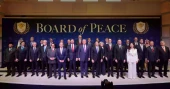
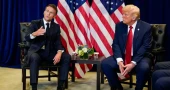
Board of Peace
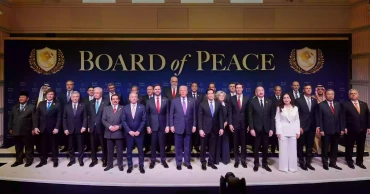
Plans for Gaza international force face uncertainty as troop pledges stall
A planned International Stabilization Force for Gaza, once announced with strong optimism by the United States, is now facing major uncertainty as promised troop contributions fail to materialize.
The 20,000-member force was unveiled in February at the first meeting of former US President Donald Trump’s Board of Peace. A US general assigned to lead the mission had said it would help bring long-term peace and stability after the devastating Israel–Hamas war.
However, three months later, the force has yet to take shape, as none of the five countries that initially pledged troops have sent meaningful contributions.
Efforts to support a fragile ceasefire have also slowed. Hamas has refused to disarm, while Israel has expanded its control in parts of Gaza and continued military strikes, which it says are aimed at militants but have also caused civilian casualties.
The recent conflict involving Iran has further complicated the situation, making it politically difficult for Arab and Muslim countries to openly cooperate with the US and Israel. Rising global energy prices have also added economic pressure on potential contributors.
Indonesia puts largest troop pledge on hold
Indonesia, which had pledged the largest contribution of around 8,000 troops, has suspended its plan indefinitely. Around 1,000 troops were expected to be deployed in April, followed by more in June.
Indonesia’s decision has been seen as a major setback for the initiative. Other pledged contributors include Morocco, Kazakhstan, Kosovo and Albania.
Indonesian officials said the suspension was due to unclear implementation plans and a lack of progress from Washington. They also pointed to rising tensions in the Middle East as a major concern.
Officials in Jakarta said shifting regional dynamics and the ongoing US–Iran conflict had slowed down the entire peace initiative, leaving both the Board of Peace and the stabilization force effectively on hold.
Public and political concerns in Indonesia
Analysts say domestic opinion in Indonesia may also have influenced the decision. The war in Gaza and wider Middle East tensions remain unpopular among the Indonesian public, and rising prices linked to global instability have added to economic concerns.
Experts also noted that many Indonesians are skeptical about whether the peace plan can truly improve conditions in Gaza.
Indonesia has previously lost peacekeepers in Lebanon during clashes involving Israel and Hezbollah, which has further reduced public support for overseas military deployments.
Disagreements over ceasefire progress
US officials linked to the Board of Peace say the main obstacle to progress is Hamas’s refusal to disarm. They argue that the stabilization force cannot begin operations until the second phase of the ceasefire is agreed, which would include Hamas laying down weapons and Israel gradually withdrawing from parts of Gaza.
Israeli forces currently control about 60% of the territory.
Officials supporting the plan say armed groups must be removed before reconstruction can begin, warning that stability is impossible while militias remain active.
Hamas blames Israel for delays
Hamas, however, says Israel has repeatedly violated the ceasefire and is responsible for delays in implementing the agreement. The group also accuses US officials of taking Israel’s side.
Local health authorities say more than 880 Palestinians have been killed since the ceasefire began, although Israel says its strikes were in response to violations of the truce.
According to mediators, Hamas is also demanding Israeli withdrawal from areas captured after the ceasefire began. Egypt has been acting as a key broker in the negotiations.
Several countries that pledged troops have reportedly said they will not deploy forces unless there is clear agreement on Hamas disarmament.
Limited commitments so far
Some countries have only offered limited support. Kazakhstan says it will focus on humanitarian assistance, including medical teams. Albania has said its involvement remains under discussion, while Kosovo has indicated it is in the final stages of preparation to send a small number of troops. Morocco has not provided further details.
So far, no participating country has confirmed that troops are on the ground.
Future still uncertain
Despite the setbacks, some analysts believe Indonesia could still reconsider its position in the future, depending on diplomatic progress.
Observers say Indonesia’s leadership may still want to maintain strong ties with the United States while balancing domestic concerns and regional tensions.
3 months ago
UN faces risk of ‘imminent financial collapse’, secretary general warns
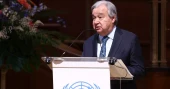
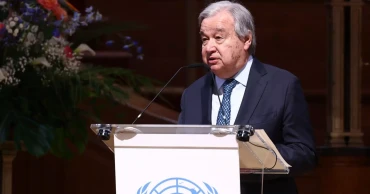
The United Nations is facing the danger of an “imminent financial collapse” as several member states fail to pay their mandatory contributions, UN Secretary General António Guterres has warned.
In a letter sent to all 193 member states, Guterres said the organisation’s financial crisis was worsening and now “deepening, threatening programme delivery”, with funds potentially running out by July. He urged countries either to pay their assessed contributions in full or to reform the UN’s financial rules to avert collapse.
The warning comes as the United States, the UN’s largest contributor, has declined to pay into the organisation’s regular and peacekeeping budgets and has withdrawn from multiple UN agencies, describing them as a “waste of taxpayer dollars”. Several other countries are also in arrears or have refused to pay their dues.
Although the UN General Assembly approved limited changes to the financial system in late 2025, the organisation remains under severe cash strain. The situation is compounded by a rule requiring the UN to refund unspent funds even when the money was never received in the first place.
At the UN’s Geneva headquarters, notices highlighting the financial crisis have been widely displayed. Cost-cutting measures are visible, with escalators frequently shut down and heating reduced in an effort to conserve funds.
Guterres wrote that while the UN had experienced financial difficulties before, the current crisis was “categorically different”. He noted that “decisions not to honour assessed contributions that finance a significant share of the approved regular budget have now been formally announced,” without naming specific countries.
Read More: 12th DU National Model United Nations set to begin on May 29
He stressed that the “integrity of the entire system” relies on members fulfilling their obligations under the UN Charter to pay their “assessed contributions”. According to the secretary general, only 77 percent of total dues were paid in 2025, leaving an unprecedented amount outstanding.
Guterres also criticised a financial rule that forces the UN to return unused programme funds, describing it as a “double blow” in which the organisation is “expected to give back cash that does not exist”.
“I cannot overstate the urgency of the situation we now face. We cannot execute budgets with uncollected funds, nor return funds we never received,” he wrote.
As a result, the UN is now refunding millions of dollars it never had. The letter stated: “Just this month, as part of the 2026 assessment, we were compelled to return $227m [£165m] – funds we have not collected.”
“The bottom line is clear,” Guterres added. “Either all member states honour their obligations to pay in full and on time – or member states must fundamentally overhaul our financial rules to prevent an imminent financial collapse.”
UN agencies often struggle to secure full funding for humanitarian responses, but the past year has been especially challenging. The US did not pay its contribution to the UN’s regular budget in 2025 and provided only 30 percent of its expected funding for peacekeeping missions, reports BBC.
Read More: Kofi Annan was the United Nations
In January, President Donald Trump withdrew the US from dozens of international bodies, including 31 UN agencies, aiming to “end American taxpayer funding and involvement in entities that advance globalist agendas over US priorities”. Although Washington pledged $2 billion (£1.5 billion) for UN humanitarian work in late December, it warned the organisation must “adapt or die”, a sharp drop from the $17 billion it provided in 2022.
Other major donors, including the UK and Germany, have also announced significant cuts to foreign aid, further affecting UN operations.
Guterres had earlier cautioned that the organisation was in its most fragile financial position in years, blaming unpaid contributions and warning in October of a “race to bankruptcy”.
Meanwhile, Trump has faced criticism over proposals to replace some UN functions with his proposed Board of Peace to oversee reconstruction in Gaza. Although he said the initiative would work “in conjunction with the United Nations”, he previously suggested otherwise, saying: “Well, it might.”
7 months ago
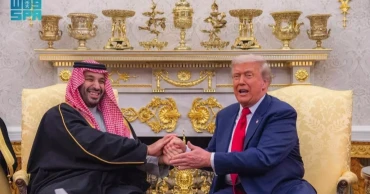
Seven nations join Trump’s Board of Peace for Gaza
Seven countries, including Saudi Arabia, Turkey and Egypt, have agreed to join US President Donald Trump’s newly formed Board of Peace, according to a joint statement. Israel had earlier confirmed its participation.
Trump on Wednesday said Russian President Vladimir Putin had also accepted the invitation, though Moscow later clarified it was still under consideration.
The board, initially linked to ending the two-year Israel-Hamas conflict and overseeing Gaza reconstruction, does not specifically mention Palestine in its charter and appears aimed at taking on functions similar to the UN.
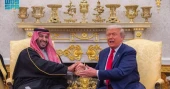
Saudi Arabia said the Muslim-majority nations – Saudi Arabia, Turkey, Egypt, Jordan, Indonesia, Pakistan and Qatar – support efforts for a lasting ceasefire in Gaza, reconstruction, and what they called a “just and lasting peace”.
The body’s charter will take effect once three states formally agree, with member nations holding renewable three-year terms. Contributions of $1 billion will secure permanent seats. Trump will serve as chairman and US representative with authority to appoint executive board members.
The White House last week named seven founding Executive Board members, including US Secretary of State Marco Rubio, Trump’s son-in-law Jared Kushner, former UK Prime Minister Tony Blair, and former UN Middle East envoy Nickolay Mladenov.
Phase one of the plan involved a ceasefire, partial prisoner exchange, limited Israeli withdrawal, and increased humanitarian aid. Israel says the second phase, including reconstruction and demilitarisation, will proceed only after the return of the last hostages.
Humanitarian conditions remain fragile. Gaza’s Hamas-run health ministry reports over 460 Palestinian deaths from Israeli strikes since the ceasefire, while Israel reports three soldiers killed in Palestinian attacks.
The board faces challenges, as Hamas has resisted disarming without recognition of a Palestinian state, and Israel has not fully committed to withdrawing from Gaza.
With inputs from BBC
7 months ago
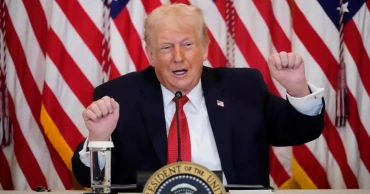
Who is joining Trump’s Board of Peace and what it plans to do
US President Donald Trump’s proposed Board of Peace, initially conceived as a small group of world leaders to oversee the Gaza ceasefire, is rapidly expanding into a far more ambitious international body that Trump says could one day broker global conflicts and rival the United Nations Security Council.
Trump is due to travel to the World Economic Forum in Davos, Switzerland, where more details about the initiative are expected. Ahead of the trip, Israeli Prime Minister Benjamin Netanyahu said on Wednesday that he had agreed to join the board, reversing his earlier criticism of its Gaza oversight committee.
Although the board’s charter has not yet been officially released, a draft obtained by the Associated Press suggests that sweeping authority would be concentrated in Trump’s hands. The document says countries that contribute $1 billion in cash during their first year would be granted permanent membership.
A far broader mission than Gaza
The Trump administration now appears to be positioning the Board of Peace as a global conflict-resolution body, far beyond its original focus on Gaza.
In invitation letters sent to world leaders last Friday, Trump said the board would “embark on a bold new approach to resolving global conflict,” language that signals an ambition to operate as a rival to the UN Security Council.
A draft charter, shared by a European diplomat and confirmed by a US official as accurate as of Monday, describes the need for a more “nimble and effective international peace-building body” and calls for departing from institutions that “have too often failed.” It says the board aims to “secure peace in places where it has for too long proven elusive.”
Under the draft, the chairman — a role Trump says he will hold — would have the authority to invite member states, break tie votes, determine how often the board meets and create or dissolve subsidiary bodies.
Member states would serve three-year terms and fund the board’s operations. Those paying more than $1 billion in cash during their first year could secure a permanent seat.
US officials cautioned that the charter remains under constant revision and is not final.
Countries invited and confirmed
So far, Israel, the United Arab Emirates, Morocco, Vietnam, Kazakhstan, Hungary, Argentina and Belarus have agreed to participate.
Netanyahu’s decision marks a change in position. His office had earlier objected to the Gaza executive committee, citing the inclusion of Turkey, a regional rival of Israel.
Invitation letters have also been sent to Paraguayan President Santiago Peña, Canadian Prime Minister Mark Carney, Egyptian President Abdel-Fattah el-Sissi and Turkish President Recep Tayyip Erdogan. Russia, India, Slovenia, Thailand and the European Union’s executive arm have confirmed receiving invitations.
Kremlin spokesman Dmitry Peskov said Russia is reviewing the proposal and seeking clarification on its details. Trump confirmed on Monday night that Russian President Vladimir Putin had been invited.
It remains unclear how many more countries will ultimately be asked to join.
Some allies say no
France has signalled it does not plan to join, amid tensions with Washington over Trump’s interest in taking over Greenland, a self-governing territory under NATO ally Denmark.
French Foreign Minister Jean-Noel Barrot said Paris supports implementing Trump’s peace plan but opposes creating a new organisation that would replace the United Nations.
Reacting to reports that French President Emmanuel Macron was unlikely to participate, Trump said, “Nobody wants him because he’s going to be out of office very soon,” and joked about imposing tariffs on French wine to pressure him to join.
Other bodies linked to the Board of Peace
The White House said an executive board will be formed to implement the Board of Peace’s vision. Its members include US Secretary of State Marco Rubio, Trump envoy Steve Witkoff, Trump’s son-in-law Jared Kushner, former British prime minister Tony Blair, Apollo Global Management CEO Marc Rowan, World Bank President Ajay Banga and Trump’s deputy national security adviser Robert Gabriel.
Another body, the Gaza Executive Board, will oversee the second phase of the Gaza ceasefire deal, including deploying an international security force, disarming Hamas and rebuilding the territory.
Read More: Netanyahu confirms Israel’s participation in Trump’s proposed Board of Peace
Former UN Mideast envoy Nickolay Mladenov will manage day-to-day operations. Other members include Witkoff, Kushner, Blair, Rowan, Turkish Foreign Minister Hakan Fidan, Qatari diplomat Ali Al-Thawadi, Egypt’s intelligence chief Hassan Rashad, Emirati minister Reem Al-Hashimy, Israeli businessman Yakir Gabay and former Dutch deputy prime minister Sigrid Kaag.
7 months ago
Netanyahu confirms Israel’s participation in Trump’s proposed Board of Peace
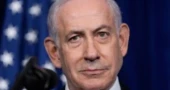
Israeli Prime Minister Benjamin Netanyahu said Wednesday he has agreed to join US President Donald Trump’s newly formed Board of Peace, reversing earlier concerns raised by his office over the composition of the board’s executive committee, which includes regional rival Turkey.
In a statement, Netanyahu’s office confirmed he had accepted Trump’s invitation.
Initially conceived as a small group of leaders to oversee a Gaza ceasefire framework, the Board of Peace has since expanded significantly. The Trump administration has broadened its scope, inviting dozens of countries and suggesting the body could play a role in mediating global conflicts, resembling an informal UN Security Council.
Further details are expected Thursday, when Trump is scheduled to make an announcement about the initiative at the World Economic Forum in Davos, Switzerland.
Although the board’s charter has not been officially released, a draft obtained by The Associated Press suggests substantial authority would rest with Trump. According to the draft, a $1 billion contribution would guarantee permanent membership.
Read More: Israel hits multiple targets in Lebanon ahead of key Hezbollah disarmament talks
At least eight countries- Israel, the United Arab Emirates, Morocco, Vietnam, Kazakhstan, Hungary, Argentina and Belarus have agreed to participate. Invitations have also been sent to leaders in Paraguay, Canada, Egypt and Turkey, while Russia, India, Slovenia, Thailand and the European Union’s executive arm have confirmed receiving invitations.
The Kremlin said it is reviewing the proposal. Trump has confirmed that Russian President Vladimir Putin was invited.
The executive board includes senior US officials and international figures, while a separate Gaza Executive Board will oversee implementation of the ceasefire’s second phase, including security deployment, Hamas disarmament and reconstruction efforts.
7 months ago
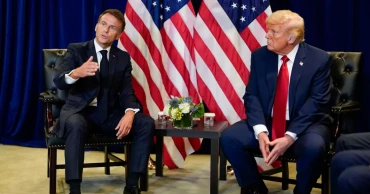
Trump threatens 200% tariff on French wines over Macron snub
U.S. President Donald Trump on Tuesday threatened to impose 200% tariffs on French wines and champagne after reports suggested French President Emmanuel Macron was unwilling to join his “Board of Peace” on Gaza.
“Well, nobody wants him because he’s going to be out of office very soon,” Trump said. “So you know, that’s all right. What I’ll do is, if they feel like hostile, I’ll put a 200% tariff on his wines and champagnes, and he’ll join. But he doesn’t have to join.”
Greenland, tariffs and Trump dominate Davos talks
Macron’s five-year presidential term ends in May 2027, and under French law, he is ineligible for a third term.
The Board of Peace, endorsed by the United Nations Security Council in November, is a global body tasked with overseeing the Israel-Hamas ceasefire. Invitations to world leaders, including Russian President Vladimir Putin, UK Prime Minister Keir Starmer, and Indian Prime Minister Narendra Modi, have been sent.
Trump also reiterated his plans regarding Greenland, saying, “I don’t think they’re going to push back too much. We have to have it ...They can’t protect it.”
#With inputs from Agencies
7 months ago