scientific cattle selection
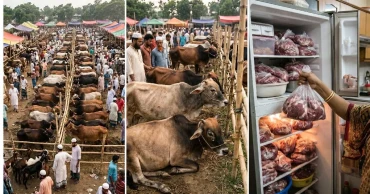
BAU experts advise scientific cattle selection , meat preservation ahead of Eid-ul-Azha
With cattle markets becoming increasingly crowded ahead of Eid-ul-Azha, experts at Bangladesh Agricultural University urged buyers and traders to follow scientific guidelines when purchasing sacrificial animals and preserving meat.
They warned against artificially fattened cattle, disease transmission risks and improper storage practices.
In separate interviews with UNB, three professors from the university highlighted key indicators of unhealthy cattle, potential public health threats at livestock markets and the correct method of preserving meat to maintain its quality and nutritional value.
How to identify artificially fattened cattle
Prof Dr Mohammad Alam Mia of BAU’s Department of Physiology said cattle that have been artificially fattened using steroids, growth hormones or harmful drugs often display several visible signs.
Such animals typically have dry noses, swollen and flabby bodies caused by excessive fluid retention, and difficulty standing or walking.
They become exhausted after minimal movement and often breathe rapidly. When pressure is applied to the skin, it remains depressed for some time before returning to normal.
“The thigh muscles of these cattle are unusually soft and their bones tend to be weaker, increasing the risk of fractures,” he said.
He added that artificially fattened cattle usually show poor appetite, do not ruminate properly and may produce excessive saliva or foam around the mouth.
After travelling long distances to markets, they often become fatigued quickly and are reluctant to stand once seated, he said.
Dr Alam said healthy cattle can be naturally fattened within three to six months through balanced nutrition, regular deworming, vitamin and mineral supplementation and proper farm management.
He advised buyers to assess not only an animal’s size but also its behaviour, breathing pattern, nasal condition and mobility before making a purchase.
If any abnormalities are suspected, they should seek advice from livestock officers or veterinary professionals, he added.
Disease risks at cattle markets
Prof Dr Md Amimul Ehsan of BAU’s Department of Medicine said livestock markets could facilitate the spread of serious diseases, including anthrax and foot-and-mouth disease (FMD).
He said anthrax cases has recently been detected in Rangpur and Gaibandha, with some infected individuals developing skin lesions and eye swelling after exposure to affected animals.
“Humans can contract anthrax through contact with infected blood, meat or other body tissues,” he said, stressing the importance of routine vaccination programmes and veterinary health screening at market entry points.
He said anthrax-infected animals often die suddenly before showing symptoms.
In symptomatic cases, body temperature may rise to 104–105 degrees Fahrenheit.
After death, dark, tar-like blood may ooze from the nose, mouth and anus. Exposure to air can cause the bacteria to form spores capable of surviving in the environment for long periods, he added.
Living animals may also exhibit black lesions or blisters on the tongue, nose or throat, along with unusual agitation or lethargy.
Dr Ehsan said FMD poses another significant concern because the virus can spread through the air over distances of up to 15 kilometres.
“A single infected animal transported from Dinajpur or Chattogram to Dhaka could potentially spread the virus along the route and within surrounding market areas,” he said.
Unsold animals returning from markets may also carry infections back to their home districts, threatening healthy livestock populations, he warned.
The professor urged farmers not to bring sick animals to markets until they have fully recovered following treatment.
Suggestions for cattle market visitors
He also advised visitors to cover any cuts or wounds before entering livestock markets, as pathogens such as anthrax bacteria and tetanus-causing organisms can enter through broken skin.
Proper handwashing with soap or sanitiser after contact with animals and safe disposal of animal waste and blood are also essential preventive measures, he added.
Choosing quality cattle and preserving meat properly
Prof Dr Md Abul Kalam Azad of BAU’s Department of Animal Science said good-quality beef cattle should have evenly distributed muscle and a smooth body structure.
Excessive muscle accumulation in the thighs or grape-like clusters of tissue may indicate poorer meat quality, he said.
An unusually swollen dewlap — the loose skin hanging beneath the neck — could also signal underlying health problems.
Dr Azad noted that cattle weighing more than 350 kilograms generally contain higher levels of fat and saturated fat, which may increase health risks for consumers.
For quality meat, he recommended indigenous two-tooth cattle weighing between 200 and 250 kilograms, typically priced between Tk 90,000 and Tk 130,000.
“If the teeth cannot be examined, a thick horn base can serve as an indicator that the animal is mature and suitable for purchase,” he said.
On meat preservation, Dr Azad cautioned against placing freshly slaughtered meat directly into deep freezers at minus 18 degrees Celsius.
He explained that immediately after slaughter, meat temperature remains around 40 degrees Celsius and requires a gradual cooling process.
The temperature takes roughly 16 hours to fall to 10–15 degrees Celsius, followed by an additional eight hours during which proteins break down into amino acids through natural biochemical processes.
“If this process is interrupted, the meat may lose quality and nutritional value. Direct freezing can damage the microstructure of the meat, causing it to become dry and fibrous after thawing,” he said.
To ensure optimum quality, he recommended dividing meat into one- to two-kilogram portions and storing it in a refrigerator at around 4 degrees Celsius for 24 to 48 hours before transferring it to a deep freezer.
Following this method, meat can retain its quality for six months to one year, he said.
Dr Azad also suggested waiting at least three days after slaughter before cooking beef to achieve its best flavour and aroma.
3 months ago