Gaza

UN, partners continue delivering aid to Gaza, humanitarians say
UN humanitarians said on Thursday that the world body and its partners continue bringing supplies into Gaza every day despite ongoing restrictions, insecurity and funding shortfalls.
UN teams inside Gaza on Wednesday collected hundreds of pallets of supplies from the Kerem Shalom/Karem Abu Salem crossing, including adult diapers, school bags and complementary food for infants and young children, said the UN Office for the Coordination of Humanitarian Affairs (OCHA).
Ramiz Alakbarov, the UN humanitarian coordinator for the occupied Palestinian territory, concluded a three-day visit to Gaza on Thursday.
He stressed that preparations for the rainy season and winter remain a top priority. For this, additional support from donors is urgently needed. These efforts also require Israeli authorities to lift restrictions and expedite the processing of applications to take in critical equipment, as well as engine oil and other materials needed to operate that equipment, according to OCHA.
The World Health Organization (WHO) reported on Thursday that, since October 2023, the United Nations and its partners have supported the medical evacuation from Gaza of over 13,000 patients, including more than 6,000 children.
The WHO stressed that thousands of patients still urgently need specialized medical treatment that is not available in Gaza. The agency called for the urgent reopening of the West Bank referral pathway, including to hospitals in East Jerusalem, and for the necessary support to rehabilitate Gaza's health system and supplies to reduce reliance on medical evacuations. Items that are currently restricted, including ambulances and medical equipment, must be allowed in.
In the West Bank, following Wednesday's destruction by Israeli forces of Khirbet at Tabban community in Hebron, the United Nations and humanitarian partners visited the site on Thursday and assessed the needs of the displaced, said OCHA.
Male members of the community spent Wednesday night in caves, with the community's sheep, while women slept in a tent. On Thursday, partners provided tents and blankets to the displaced, said OCHA.
"The UN reiterates that Palestinians across the occupied Palestinian territory must be protected under international humanitarian law as a population living under occupation," said the office.
Ahead of the upcoming school year, education partners reported that some teachers were not permitted to enter Jerusalem on Thursday. They said that during the first half of the year, 224 incidents impacted education across the West Bank. These incidents directly affected more than 20,000 boys and girls and 850 education staff. Access-related incidents and settler violence accounted for more than three quarters of the recorded cases, said OCHA.
16 days ago
Israeli Strikes in Gaza Kill 4, Including 2 Children
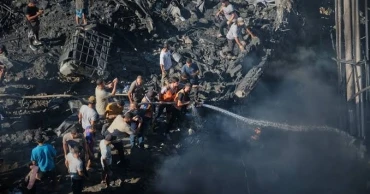
Israeli airstrikes and tank fire killed at least four Palestinians, including two children, in Gaza on Monday, hospital officials said, as residents fled their homes following evacuation warnings.
The attacks came about a week after a US delegation urged Israel to reduce its military strikes in the territory.
In central Gaza's Bureij refugee camp, an Israeli strike hit a building after residents received an evacuation warning. A 4-year-old boy was killed after his family was unable to leave in time, according to Awda Hospital. His mother and sister were wounded.
Israel's military did not immediately comment on the strike.
Three other buildings were hit across Gaza after residents said they received similar warnings. People were seen rushing to safety, with some mothers carrying their children. Others moved through the rubble using wheelchairs or walking sticks.
Israel's military said it carried out strikes in Gaza City's Shati refugee camp and Deir al-Balah after issuing warnings. It said the attacks targeted two Hamas weapons storage facilities located inside mosques.
The military said the facilities contained dozens of Kalashnikov rifles, ammunition magazines and other military equipment, but did not provide evidence to support the claim.
An earlier Israeli strike on a tent in Deir al-Balah killed a man, according to Al-Aqsa Hospital. The Israeli military said the man was a Hamas militant linked to its special forces.
More casualties in southern Gaza
In Khan Younis, southern Gaza, an Israeli strike killed one person and wounded five others, according to Nasser Hospital.
Israeli tank fire also struck an area east of Khan Younis, killing a 10-year-old girl, the hospital said.
The Israeli military did not immediately comment on the Khan Younis strike and said it was unaware of the incident involving the child.
Israel has continued its military operations in Gaza despite a recent meeting between Prime Minister Benjamin Netanyahu and a US delegation seeking to advance a ceasefire agreement.
US negotiator Jared Kushner asked Netanyahu to reduce Israel's attacks in Gaza during the meeting, according to a person familiar with the talks who spoke on condition of anonymity.
Israel has reported strikes on six of the seven days since the meeting.
Israel says it is targeting militants
Israel says its attacks target Hamas militants and military sites and are carried out in response to attacks and other alleged ceasefire violations.
Although the intensity of fighting has declined since the ceasefire began in October, Gaza's Health Ministry says at least 1,288 Palestinians have been killed in Israeli attacks since then. The ministry, which is run by the Hamas-led government, does not distinguish between civilians and militants in its casualty figures.
Militants have also carried out attacks on Israeli troops, and Israel says its military operations are a response to those attacks. Five Israeli soldiers have been killed since the ceasefire began.
Palestinian officials have reported strikes on homes and police stations. Hamas has accused Israel of trying to destabilise Gaza and block progress on the next stages of the ceasefire, including disarmament, reconstruction and the deployment of an international stabilisation force.
Israel warns over kites from Gaza
Israeli officials have also raised concerns after several kites were found in a kibbutz near Gaza. No weapons or dangerous materials were attached to them.
Before Hamas' October 7, 2023 attack on southern Israel, burning kites and balloons launched from Gaza caused fires and other damage in Israel.
Prime Minister Benjamin Netanyahu and Defence Minister Israel Katz warned Sunday that Israel could intensify its attacks if Hamas does not prevent kites from being flown toward Israel.
Hamas spokesperson Hazem Qassem described the kites as “essentially children's toys” and accused Israel of using them as a justification for continuing military action.
The October 7 attack killed about 1,200 people in Israel and resulted in 251 people being taken hostage. All hostages or their remains were later released.
Israel's subsequent military offensive in Gaza has killed more than 73,422 Palestinians, according to Gaza's Health Ministry.
25 days ago
How banned goods are smuggled into Gaza and millions of dollars change hands
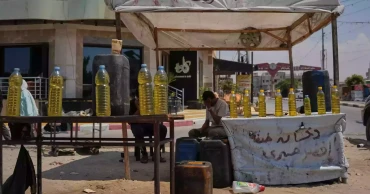
The smuggling of goods restricted or prohibited by Israel into Gaza has expanded significantly, driving up prices, supplying hospitals with scarce medicines and equipment, and generating millions of dollars for smugglers and intermediaries, according to an Associated Press investigation.
The investigation, based on Israeli court records and interviews with traders, merchants, truck drivers, Palestinian officials and residents, found that a wide range of products are entering Gaza through illicit channels. Cigarettes and tobacco are among the most profitable, while other smuggled items include fuel, medicines, solar panels, iPhones and medical equipment.
Israel limits the entry of some products and completely prohibits others, including items it classifies as “dual use.” The category includes materials such as concrete, vehicle parts and X-ray equipment, which Israeli authorities say could potentially be used for military purposes by Hamas.
AP spoke with several people involved in the trade who requested anonymity because of the risks associated with illegal smuggling. The investigation found that smuggling networks have become an important part of Gaza’s wartime economy, with payments allegedly reaching Israeli soldiers, drivers, warehouse workers and other intermediaries on both sides of the border.
“The occupation has left no other option before us. Smuggling has become routine,” one trader told AP, saying some Israeli military personnel are prepared to assist in exchange for money.
The Israeli military said it takes allegations of smuggling seriously and investigates suspected involvement by its personnel in accordance with the law. However, it did not respond to detailed questions about the alleged role of soldiers or Gaza authorities in the trade.
Gaza’s Hamas-led administration also receives a share of the proceeds from some smuggled goods, according to merchants and Palestinian officials. Mohammad Barbakh of Gaza’s Economy Ministry said authorities can collect up to 20% of the value of goods when merchants declare them, while the amount can rise to 80% if authorities discover undeclared shipments.
How the smuggling networks operateSince the beginning of the Israel-Hamas war in October 2023, Israel has maintained strict controls over the movement of commercial goods, humanitarian supplies and food into Gaza. A total blockade last year halted deliveries for nearly three months, contributing to severe shortages and famine conditions in parts of the territory.
Although the flow of goods has increased since a fragile ceasefire took effect in October, it remains far below prewar levels.
Israel has authorized 12 senior Gaza traders to bring in commercial shipments, but Israeli authorities must approve the contents. Traders and aid workers say the approval process can be unpredictable, with some shipments rejected because they contain items considered dual use.
According to documents from COGAT, the Israeli military body overseeing the movement of goods into Gaza, about 150 broad categories are classified as dual use. These include concrete, steel pipes, asphalt and wooden planks. COGAT said some such goods, including generators and X-ray machines, have been permitted in specific cases under strict supervision.
When legal imports cannot meet demand, some traders turn to established smuggling networks. Merchants then sell the products inside Gaza.
People interviewed by AP said Gaza government agencies, hospitals and tribal communities sometimes rely on smugglers to obtain essential supplies, including fuel, spare parts, medicines and medical equipment.
Major traders said they send orders to intermediaries operating in Israel and the West Bank, who arrange the purchase and movement of the goods. Trucks entering through the Kerem Shalom crossing are inspected, but smugglers allegedly use both commercial routes and Israeli military vehicles to move contraband, sometimes paying soldiers to facilitate passage.
Humanitarian vehicles have also occasionally been used, according to merchants and Israeli government statements.
Smuggling becomes a major source of incomeWith much of Gaza’s economy devastated by the war and millions displaced, smuggling has become an important source of revenue. Several major traders told AP that illicit goods now account for more than half of their business and can generate over 70% of their profits.
The costs of bribes and payments at different stages are ultimately passed on to consumers.
Residents reported extraordinary price increases. A vehicle battery that once sold for about $140 can now cost more than $2,300, while solar panels have risen from around 16 cents per watt to $3.25.
Smuggled food has also become common, including chicken, meat, baby formula and pet food.
Cigarettes and tobacco command particularly high prices. Residents said a pack can cost as much as $140, while prices climbed above $1,000 during the complete blockade.
According to traders, court records and Israeli statements, cigarette shipments have been concealed in military vehicles, commercial trucks, aid deliveries and even hollowed-out pineapples.
Hamas administration accused of collecting revenueMerchants said Gaza’s authorities do not directly operate smuggling businesses but collect money from goods brought in illegally.
Two major traders told AP they were summoned by Hamas authorities over shipments they had brought into Gaza. One said he eventually paid $3.5 million, while another reported paying about $3.75 million.
Two senior officials in the Hamas administration estimated that as much as $100 million had been collected from smuggled goods since the ceasefire. They said the money helps pay public-sector workers and support social services.
Barbakh said authorities do not have precise figures because smuggling operations are conducted secretly.
Ismail al-Thawabta, a government media official, said none of the money collected is transferred to Hamas’ military wing and that the funds are used to maintain public services and facilities.
However, several merchants and officials alleged that confiscated cigarettes are sometimes resold by the authorities. Al-Thawabta did not respond to AP questions about that claim.
Smuggling coordinators wield influenceThe investigation also identified powerful intermediaries who allegedly coordinate large-scale smuggling operations.
Israeli court records refer to a figure known as Abu Bassel, whom prosecutors described as having extensive contacts within the Israel Police. Traders and officials interviewed by AP described him as one of the most influential coordinators in the trade, although his identity remains unknown.
Court records describe an incident in which Israeli police raided a warehouse in a West Bank settlement where cellphones and cigarettes were being prepared for shipment to Gaza. One alleged smuggler contacted Abu Bassel, after which police abandoned the raid without making arrests or confiscating the goods.
A senior Gaza Chamber of Commerce official described Abu Bassel as a key figure whose approval is needed for many shipments to enter Gaza.
Israeli court documents allege that he used a Palestinian aid organization as a cover, though the organization denied any involvement in smuggling.
Israeli cases reveal scale of illegal tradeIsraeli authorities have dismantled several alleged smuggling networks since late 2025 and charged more than a dozen suspects, including reserve soldiers serving in Gaza.
One major case involves Israeli brothers Eliran and Avi Algarabli, business associate Yaron Peretz and another Israeli. Prosecutors accuse them of paying reserve soldiers to transport contraband into Gaza.
According to indictments, the group allegedly paid reserve soldier Bezalel Zini about $120,000 to move three shipments containing roughly 6,000 cigarette packs in his vehicle. Other reservists allegedly made four trips into Gaza in a single day, transporting about 20,000 cigarette packs, hundreds of iPhones and medical equipment.
Court records indicate that millions of dollars can be made from such operations. The Algarabli brothers allegedly earned around $2.2 million from smuggling trips between October and December, when they were arrested. Other suspects have been accused of making between $1 million and $3 million.
Gaza residents struggle with shortages and high pricesFor ordinary Palestinians, the consequences are reflected in shortages and soaring costs.
Residents said products such as electric fans, which previously cost around $100, can now sell for $500. Some merchants say Israeli authorities block the import of fans because they are classified as dual-use items.
Mohamed Abu Olwan, a Gaza resident, questioned why such basic products should be restricted.
Mohamed Abuel-Enein, a displaced resident of Rafah, said residents living in tents desperately need fans and other basic goods amid the intense summer heat.
“I don't understand the harm in allowing fans through the crossings,” he said, describing how families struggle to cope with the heat and limited access to basic necessities.
30 days ago
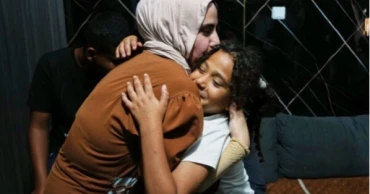
Palestinian siblings separated by war reunite in Israel after losing parents in Gaza
A Palestinian family divided between Israel and Gaza has reunited after nearly two years of war, displacement and personal tragedy.
Mais al-Gharam, 23, had not seen her seven younger siblings since leaving Gaza for Israel shortly before the war began. During the conflict, an Israeli airstrike destroyed the family's home in central Gaza, killing her parents and one of her brothers.
Earlier this month, Mais waited outside Israel's Kerem Shalom crossing, searching the crowd for her surviving siblings as they emerged from Gaza.
"We never stopped being a family," she said. "But every day I wondered whether I would see them again."
After years of legal efforts, Mais was finally able to bring her brothers and sisters, aged 8 to 22, to Israel. The siblings reunited at the border crossing and then travelled together to Nazareth, where relatives welcomed them with hugs and home-cooked meals.
The reunion brought both relief and grief. Although the family was together again, they were also mourning the loss of their parents and younger brother.
Their grandfather, Faraj al-Gharam, described the moment as "coming back from the grave."
The family's story began in 2002 when Murad al-Gharam, a resident of Gaza, met Amal Karim, a Palestinian citizen of Israel from Nazareth, while working in Israel on a temporary permit. After marrying, the couple moved permanently to Gaza, where they raised eight children in Nuseirat refugee camp.
Life changed dramatically after the Hamas-led attack on southern Israel on October 7, 2023, which killed about 1,200 people and led to Israel's military campaign in Gaza.
Mais had already returned to Nazareth, where she married and found work. Her seven siblings, who were born in Gaza, were eligible to apply for Israeli citizenship through their mother, but their father was not.
The family initially decided to remain together in Gaza rather than leave without him.
As fighting intensified, they were displaced multiple times before returning to their home in Nuseirat. On July 10, 2024, an airstrike struck the house, killing Murad, Amal and their 11-year-old son, Maisara.
The surviving children were injured but managed to reach Al Aqsa Hospital in Deir al-Balah, where doctors confirmed the deaths of their parents and brother.
The Israeli military did not immediately comment on the strike.
After the attack, the older siblings took responsibility for caring for the younger children. They cooked, cleaned, collected firewood for heat and water, and even opened a small bakery to earn money while receiving support from relatives in Nazareth.
Meanwhile, Mais worked with Israeli rights group HaMoked to secure permits, legal guardianship papers and citizenship applications for her siblings.
According to HaMoked, the Israeli Interior Ministry initially rejected the request because the children's mother had died. The family was later required to undergo DNA testing to prove their relationship to Mais before the applications were approved.
Nearly two years after the airstrike, the siblings crossed into Israel on July 8 and travelled to Nazareth.
After arriving, they spoke not about politics but about ordinary plans for the future, including going back to school, seeing doctors and spending time with relatives.
"Family is the most important thing," said Jwaher, one of the siblings.
1 month ago
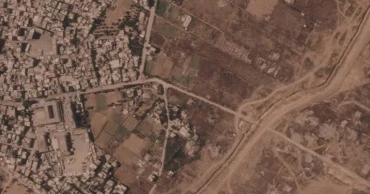
Israel builds long earthen barrier inside Gaza, raising concerns over deeper territorial division
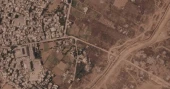
Israel has been rapidly constructing a large earthen barrier inside the Gaza Strip, according to satellite images, reinforcing its control over more than half of the territory and raising concerns that the temporary military line could become a more permanent boundary.
Satellite imagery reviewed by The Associated Press shows that more than 23 kilometres of the barrier have been built in recent months through areas where Palestinian communities were demolished. The structure stretches across much of Gaza, which is about 40 kilometres long and home to more than two million people.
The Israeli military confirmed it has built a physical barrier along the so-called "yellow line" — the area where its forces withdrew under the ceasefire agreement reached with Hamas in October. The line was intended to be a temporary military boundary until a broader Israeli withdrawal could take place.
However, with the ceasefire process stalled, many Palestinians fear the barrier could eventually become a permanent border dividing the enclave.
The Israeli military said it has also established a security zone along the line equipped with surveillance and other technology. It said the barrier is intended to prevent infiltration and protect Israeli troops and nearby Israeli communities but declined to say how far the construction will extend.
Construction progressing rapidlySatellite images indicate the barrier is expanding quickly.
In southern Gaza, one section of the earthworks grew from about 500 metres to roughly 2.4 kilometres between July 1 and July 15, cutting across the area between the Israeli-controlled ruins of Rafah and the Muwasi area, where many displaced Palestinians are living in tent camps.
The longest continuous section of the barrier now stretches nearly 17 kilometres from Khan Younis toward Gaza City. Construction on that section began in February and has continued steadily, with more than one kilometre added between late June and early July.
Smaller, disconnected sections have also been built near the heavily damaged town of Beit Lahia in northern Gaza.
Large areas under Israeli controlMost of Gaza's population is now concentrated west of the yellow line, where many people are living in overcrowded tent camps and relying on humanitarian aid.
Satellite images show that on the Israeli-controlled side of the line, many towns, including much of Rafah, have been flattened by bulldozers and explosives. Roads, military bases and other infrastructure have been built in their place.
Israel says it is destroying Hamas infrastructure as part of its military operations.
The exact route of the yellow line has never been clearly defined. The Israeli military said it is working to mark the boundary more clearly to reduce accidental crossings.
Israeli forces have repeatedly opened fire on Palestinians approaching or crossing the area. The military says it targets people suspected of posing a threat, although reports indicate that civilians, including children, have also been killed near the line.
Ceasefire remains stalledAccording to Palestinian health officials, more than 1,100 Palestinians have been killed by Israeli military operations since the ceasefire began, most in airstrikes and drone attacks. During the same period, militant attacks have killed five Israeli soldiers.
On Tuesday, an Israeli airstrike in Gaza City killed a couple and their four children, aged between 6 and 13, according to Shifa Hospital. The Israeli military said it had targeted Hamas militants operating in the area.
The ceasefire agreement calls for Israel to eventually withdraw its forces to the edges of Gaza, where an international security force would take over. However, implementation has stalled amid continued disagreements between Israel and Hamas.
Israel says Hamas has failed to disarm, while Hamas accuses Israel of violating the ceasefire.
The war began on Oct. 7, 2023, when Hamas-led militants attacked southern Israel, killing about 1,200 people and taking 251 hostages.
Since then, Israel's military campaign in Gaza has killed more than 73,000 people, according to the Gaza Health Ministry, which says women and children account for about half of the fatalities.
1 month ago
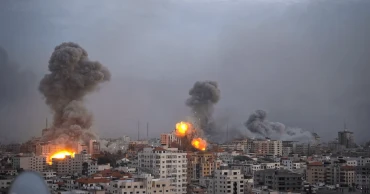
Over 1,000 Palestinians killed in Gaza since ceasefire, Health Ministry says
More than 1,000 Palestinians have been killed in the Gaza Strip since a ceasefire between Israel and Hamas took effect last October, according to Gaza’s Health Ministry.
The ministry said on Wednesday that 1,005 people have been killed in Israeli military operations since the truce began, amid continued airstrikes, shelling and gunfire in various parts of the enclave.
The latest casualties followed a series of Israeli drone strikes over recent days targeting towns, refugee camps in central Gaza and areas of Gaza City.
In the latest incident, an Israeli strike in Khan Younis in southern Gaza killed two Palestinians and injured six others, according to health officials at Nasser Hospital.
The Israeli military confirmed carrying out the strike, saying it targeted a “terrorist,” but provided no further details.
Relatives of the victims told hospital authorities that the attack hit a group of people near the beach in the Mawasi tent camp, where hundreds of thousands of displaced Palestinians are sheltering.
Israel has maintained that it continues to conduct operations against Hamas and other armed groups in Gaza and has expanded the territory under its control inside the enclave.
In a separate statement, the Israeli military said it had killed two militants belonging to Hamas and the Palestinian Islamic Jihad movement in strikes carried out over the weekend.
Meanwhile, Gaza’s Health Ministry said on Sunday that the overall death toll from the Israel-Hamas war, which began in October 2023, has surpassed 73,000.
The ministry does not distinguish between civilian and combatant casualties, though its records are generally regarded by international organizations as credible and are maintained by medical professionals.
3 months ago

Plans for Gaza international force face uncertainty as troop pledges stall
A planned International Stabilization Force for Gaza, once announced with strong optimism by the United States, is now facing major uncertainty as promised troop contributions fail to materialize.
The 20,000-member force was unveiled in February at the first meeting of former US President Donald Trump’s Board of Peace. A US general assigned to lead the mission had said it would help bring long-term peace and stability after the devastating Israel–Hamas war.
However, three months later, the force has yet to take shape, as none of the five countries that initially pledged troops have sent meaningful contributions.
Efforts to support a fragile ceasefire have also slowed. Hamas has refused to disarm, while Israel has expanded its control in parts of Gaza and continued military strikes, which it says are aimed at militants but have also caused civilian casualties.
The recent conflict involving Iran has further complicated the situation, making it politically difficult for Arab and Muslim countries to openly cooperate with the US and Israel. Rising global energy prices have also added economic pressure on potential contributors.
Indonesia puts largest troop pledge on hold
Indonesia, which had pledged the largest contribution of around 8,000 troops, has suspended its plan indefinitely. Around 1,000 troops were expected to be deployed in April, followed by more in June.
Indonesia’s decision has been seen as a major setback for the initiative. Other pledged contributors include Morocco, Kazakhstan, Kosovo and Albania.
Indonesian officials said the suspension was due to unclear implementation plans and a lack of progress from Washington. They also pointed to rising tensions in the Middle East as a major concern.
Officials in Jakarta said shifting regional dynamics and the ongoing US–Iran conflict had slowed down the entire peace initiative, leaving both the Board of Peace and the stabilization force effectively on hold.
Public and political concerns in Indonesia
Analysts say domestic opinion in Indonesia may also have influenced the decision. The war in Gaza and wider Middle East tensions remain unpopular among the Indonesian public, and rising prices linked to global instability have added to economic concerns.
Experts also noted that many Indonesians are skeptical about whether the peace plan can truly improve conditions in Gaza.
Indonesia has previously lost peacekeepers in Lebanon during clashes involving Israel and Hezbollah, which has further reduced public support for overseas military deployments.
Disagreements over ceasefire progress
US officials linked to the Board of Peace say the main obstacle to progress is Hamas’s refusal to disarm. They argue that the stabilization force cannot begin operations until the second phase of the ceasefire is agreed, which would include Hamas laying down weapons and Israel gradually withdrawing from parts of Gaza.
Israeli forces currently control about 60% of the territory.
Officials supporting the plan say armed groups must be removed before reconstruction can begin, warning that stability is impossible while militias remain active.
Hamas blames Israel for delays
Hamas, however, says Israel has repeatedly violated the ceasefire and is responsible for delays in implementing the agreement. The group also accuses US officials of taking Israel’s side.
Local health authorities say more than 880 Palestinians have been killed since the ceasefire began, although Israel says its strikes were in response to violations of the truce.
According to mediators, Hamas is also demanding Israeli withdrawal from areas captured after the ceasefire began. Egypt has been acting as a key broker in the negotiations.
Several countries that pledged troops have reportedly said they will not deploy forces unless there is clear agreement on Hamas disarmament.
Limited commitments so far
Some countries have only offered limited support. Kazakhstan says it will focus on humanitarian assistance, including medical teams. Albania has said its involvement remains under discussion, while Kosovo has indicated it is in the final stages of preparation to send a small number of troops. Morocco has not provided further details.
So far, no participating country has confirmed that troops are on the ground.
Future still uncertain
Despite the setbacks, some analysts believe Indonesia could still reconsider its position in the future, depending on diplomatic progress.
Observers say Indonesia’s leadership may still want to maintain strong ties with the United States while balancing domestic concerns and regional tensions.
3 months ago
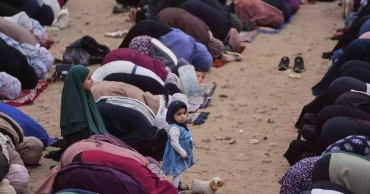
Israel says it killed new Hamas military leader in Gaza
Israel said on Wednesday that it had killed the newly appointed head of Hamas’ military wing in an airstrike in Gaza City, less than two weeks after his predecessor was also killed.
Israeli Defense Minister Israel Katz and the military said Tuesday’s airstrikes targeted Mohammed Odeh, who they claim was killed in the operation.
Relatives of a man named Mohammed Odeh confirmed he died in the strike but did not verify whether he held a senior Hamas military position. Hamas has not issued any statement on the incident.
Katz described him as “one of the masterminds” behind the October 7, 2023 attacks on Israel and said this was the fourth time Israel had eliminated the head of Hamas’ armed wing since that assault. The previous commander, Izz al-Din al-Haddad, was reportedly killed on May 16.
At least three people were killed and 12 others injured in the strike, which took place on the eve of Eid al-Adha, a major Islamic holiday.
In a post on X, Katz vowed continued action against those involved in the October 7 attacks, saying they would be “eliminated everywhere” and that Hamas would not retain any governing or military control.
Israeli Prime Minister Benjamin Netanyahu also reiterated that Israel would continue targeting anyone linked to the 2023 Hamas attack, as he prepares for upcoming elections.
The strike came at a difficult time for Gaza residents, as Muslims marked Eid al-Adha under ongoing conflict and displacement. Many families in the territory are living in tents or temporary shelters after widespread destruction, with humanitarian conditions worsening.
Eyewitnesses in Khan Younis and Gaza City said Eid celebrations were minimal, with widespread grief overshadowing the holiday. “This is not Eid… we’re dead,” said one displaced resident, describing the heavy toll of the ongoing war.
Another displaced woman said the joy of Eid had disappeared due to the loss of loved ones, adding that the celebration now feels empty for many families.
A ceasefire between Israel and Hamas, agreed last October, remains fragile. Despite it, Israeli strikes have continued, with Palestinian health authorities reporting hundreds of deaths since it began. Israel says its operations respond to Hamas violations or threats.
The war began after the October 7, 2023 Hamas attack that killed about 1,200 people in Israel and saw 251 others taken hostage. Gaza’s health ministry says more than 72,700 Palestinians have since been killed, though it does not separate civilians from fighters.
3 months ago
13 killed, 57 wounded in Gaza in past 24 hours: health ministry
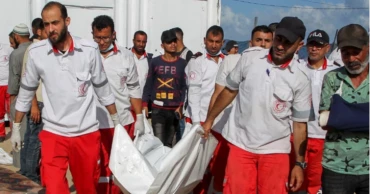
The Gaza Health Ministry said hospitals across the territory received 13 bodies, including one person who died from earlier injuries, and 57 wounded individuals over the past 24 hours, according to a report published by the official Palestinian news agency Wafa.
Since the ceasefire began on October 11 last year, the death toll from Israeli attacks has reached 870, while the number of injured has risen to 2,543, the ministry added. During the same period, 771 bodies have also been recovered.
Israel begins fresh strikes on Lebanon after ceasefire extension
Medical officials said several victims are still trapped under rubble and on roads, as ambulance and rescue teams continue to face challenges in reaching affected areas.
Officials further reported that one Palestinian died in a building collapse, bringing the total number of fatalities from building collapses to 30.
With inputs from Al Jazeera.
4 months ago

Israel intercepts Gaza-bound aid flotilla near Crete, activists say
Activists attempting to deliver humanitarian aid to the Gaza Strip by sea said Israeli forces intercepted their flotilla overnight while it was sailing near the Greek island of Crete, detaining crew members.
The group said the boats were stopped hundreds of miles from Gaza in international waters. The Global Sumud Flotilla had set off earlier this month from Barcelona, with organisers saying more than 70 boats and about 1,000 people from different countries were involved. Additional vessels were expected to join as it moved across the Mediterranean.
In a statement, the activists described the interception as a serious escalation, alleging civilians were detained far from the conflict zone.
Israel’s Foreign Ministry said around 175 activists from more than 20 boats were being taken to Israel. According to tracking data shared by organisers, 22 boats had been stopped west of Crete, while several others were still heading east as of Thursday morning.
Israel, along with Egypt, has maintained a blockade on Gaza since Hamas took control of the territory in 2007. Israel says the restrictions are necessary to stop weapons from reaching Hamas, while critics argue they have worsened humanitarian conditions for Palestinians.
Turkey condemned the action, calling it a violation of international law and humanitarian principles. Turkish officials said the incident was discussed between the country’s foreign minister and his Spanish counterpart.
Activists in Greece announced plans to stage a protest in Athens, claiming the interception took place within an area where Greece is responsible for search and rescue operations, and accusing authorities of failing to respond.
Although a fragile ceasefire has reduced large-scale fighting in Gaza, violence has continued. Gaza’s Health Ministry says more than 790 people have been killed since the truce began, and over 72,000 Palestinians have died since the war started following the Oct. 7, 2023 attack by Hamas-led militants on Israel that killed around 1,200 people.
Around 2 million people in Gaza are still facing severe shortages of food and medicine, with limited aid entering through a single Israeli-controlled crossing.
Organisers said the flotilla aimed to draw global attention to the humanitarian situation in Gaza, especially as international focus shifts to other conflicts.
A similar attempt last year also failed after Israeli forces intercepted or turned back participating vessels. Some activists, including Swedish climate campaigner Greta Thunberg, were detained and later deported, with claims of mistreatment that Israel denied.
4 months ago