Narendra Modi
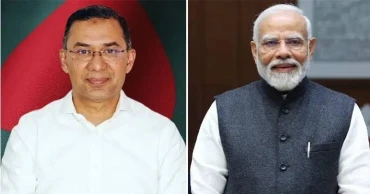
PM thanks Indian counterpart Modi for Eid greetings
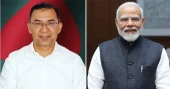
Prime Minister Tarique Rahman has thanked Indian Prime Minister Narendra Modi for extending Eid-ul-Azha greetings to him and the people of Bangladesh.
In a message posted on the Prime Minister’s Office (PMO) Facebook page in response to Modi’s greetings, Tarique Rahman said, “I thank Prime Minister Narendra Modi for his very kind greetings to me and the people of Bangladesh on the joyous occasion of Eid-ul-Azha.”
“May the relations between the peoples of Bangladesh and India continue to be strengthened on the foundations of mutual respect, friendship and goodwill,” he added.
Earlier, Indian Prime Minister Narendra Modi extended warm Eid greetings to Tarique Rahman and the people of Bangladesh, saying the shared vision of the two countries, reflected in their national development goals, is aimed at the mutual benefit of their peoples.
“The Government of India looks forward to working closely with the Government of Bangladesh to strengthen people-centric cooperation in various domains,” Modi said in a letter sent to Tarique Rahman on the occasion.
3 months ago
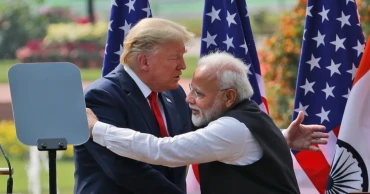
Modi praised for US trade deal as opposition raises agriculture concerns
Indian lawmakers from Prime Minister Narendra Modi’s ruling coalition lauded him Tuesday for reaching a trade deal with the United States aimed at reducing tariffs on Indian goods, while opposition parties questioned its impact on sensitive sectors such as agriculture.
The deal follows U.S. President Donald Trump’s announcement Monday that he would cut import tariffs on India from 25% to 18%, six months after imposing steep duties to penalize New Delhi for continuing purchases of Russian oil, which Washington said fueled Moscow’s war against Ukraine. In exchange, Trump said Modi had agreed to halt Russian crude imports, although the Indian government has not publicly confirmed this.
Trump also said India would reduce import taxes on U.S. products to zero and commit to purchasing $500 billion worth of American goods. “This will help end the war in Ukraine, which is taking place right now, with thousands of people dying each and every week,” Trump wrote on social media. Modi responded on X, expressing that he was “delighted” with the tariff reduction and calling Trump’s “leadership vital for global peace, stability, and prosperity.”
The announcement effectively removes the penal tariff imposed on Indian exports, providing relief for exporters who had been facing combined duties as high as 50%. India had emerged as a major buyer of discounted Russian Urals, raising tensions with Washington.
In Parliament, opposition parties disrupted proceedings Tuesday, demanding clarity on the deal’s implications for agriculture, a key sector employing millions of Indians. While the U.S. seeks greater market access and zero tariffs on most of its exports, India has historically protected sectors such as agriculture and dairy from full liberalization.
U.S. Secretary of Agriculture Brooker Rollings said the deal would help American farmers export more products to India, boosting rural incomes. In 2024, the U.S. faced a $1.3 billion agricultural trade deficit with India. Indian Trade Minister Piyush Goyal assured that sensitive sectors, including agriculture and dairy, have been protected. “India has got the best deal in comparison to the countries in the neighborhood. This will strengthen U.S.-India relations while protecting the interests of all 1.4 billion Indians,” he said.
Analysts urged caution, noting that details such as timelines, tariff reductions, and coverage of sensitive sectors remain unclear. Achieving $500 billion in U.S. imports would take decades, given current imports of around $50 billion, said trade analyst Ajay Srivastava. A senior Finance Ministry official, Arvind Shrivastava, said the deal could expand trade, create opportunities for India’s labor-intensive and manufacturing sectors in the U.S., and boost collaboration in advanced technology.
7 months ago
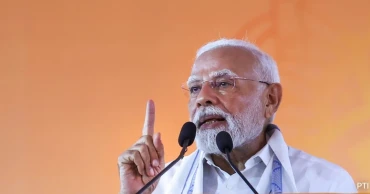
India dismisses Epstein file reference to Modi as baseless
India on Friday firmly rejected any insinuation of wrongdoing after Prime Minister Narendra Modi’s name appeared in a reference contained in newly released files from the United States Department of Justice related to disgraced financier Jeffrey Epstein.
Responding to media reports, External Affairs Ministry spokesperson Randhir Jaiswal said an email cited in the so-called Epstein files mentioned the Prime Minister only in connection with his official visit to Israel in July 2017.
He stressed that apart from that fact, the rest of the claims were unfounded and should be treated with complete contempt.
Modi’s 2017 trip was historic, marking the first visit by an Indian Prime Minister to Israel since the two countries established full diplomatic relations in 1992, reports NDTV.
The clarification came hours after the US Justice Department made public a massive new set of records linked to Epstein, as part of renewed disclosures aimed at revealing what authorities knew about his crimes and his contacts with powerful figures.
Deputy US Attorney General Todd Blanche said the latest release includes more than three million pages of documents, over 2,000 videos and around 180,000 images. Officials noted that some of the material had been withheld from an initial release in December.
The disclosures are being made under the Epstein Files Transparency Act, passed following sustained political and public pressure. The law mandates the release of government records not only on Epstein but also on his longtime associate and former partner Ghislaine Maxwell.
Nepal receives 2nd tranche of election-related assistance from India
Epstein was found dead in a New York jail in August 2019, about a month after being charged with federal sex trafficking offences. Authorities later ruled his death a suicide.
7 months ago
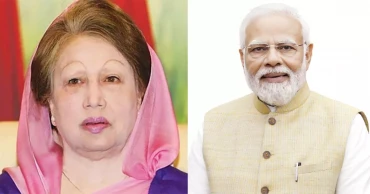
Modi expresses concern over Khaleda's health, offers support
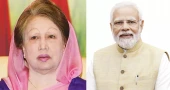
Expressing deep concern over BNP Chairperson Begum Khaleda Zia's health condition, Indian Prime Minister Narendra Modi on Monday (December 01) said India stands ready to extend all possible support in whatever way they can.
"Deeply concerned to learn about the health of Begum Khaleda Zia, who has contributed to Bangladesh’s public life for many years," Modi said in a message through his verified X handle.
Read more: Growing concerns over Khaleda’s health; Chinese team joins medial efforts
"Our sincere prayers and best wishes for her speedy recovery," he added.
The former Prime Minister remains in a critical state as her health deteriorated on Sunday night (November 30).
Since her admission to Evercare Hospital on November 23, Khaleda Zia has been under intensive treatment in the hospital’s Coronary Care Unit (CCU) for multiple complications affecting her liver, kidneys and heart.
On Sunday night, her condition worsened and she was placed on ventilator support.
Read more: Tarique Rahman likely to return home soon: Salahuddin
9 months ago
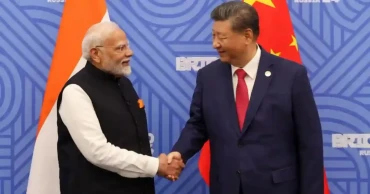
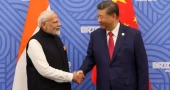
Modi to visit China for the first time in 7 years amid US tariff tensions
Indian Prime Minister Narendra Modi is set to visit China for the first time in more than seven years, according to a government source, marking a step toward improving diplomatic relations with Beijing amid growing tensions with the United States.
Modi’s visit comes as India faces its most significant strain in ties with the US in years. The crisis follows President Donald Trump’s decision to impose the highest tariffs among Asian nations on Indian imports, along with an executive order that places an additional 25 percent tariff on India in response to its continued imports of Russian oil.
Modi will travel to the Chinese city of Tianjin to attend a summit of the Shanghai Cooperation Organisation (SCO), a regional political and security bloc that includes Russia. This will be his first visit to China since June 2018.
India-China relations soured significantly after a deadly military confrontation along their contested Himalayan border in 2020. However, Modi and Chinese President Xi Jinping held discussions on the sidelines of a BRICS summit in Russia in October, which marked the beginning of a diplomatic thaw. The two major Asian powers are gradually easing tensions that had disrupted business and travel links.
India slams U.S. tariffs over Russian oil imports as 'unfair, unjustified'
At the same time, India’s National Security Adviser Ajit Doval is currently in Russia on a planned visit, where he is expected to address issues related to India’s purchases of Russian oil amid US pressure to stop those transactions, according to another government source who requested anonymity.
Doval is also likely to discuss ongoing defence cooperation with Moscow, including efforts to expedite pending exports of Russia’s S-400 air defence systems to India, as well as a potential visit to India by President Vladimir Putin. His visit will be followed in the coming weeks by a trip from Foreign Minister Subrahmanyam Jaishankar.
Officials from both India and the US said that a combination of political miscalculations, missed signals, and growing resentment derailed trade negotiations between the world’s first and fifth-largest economies, whose bilateral trade exceeds $190 billion.
India braces for 50% tariffs as Trump announces additional 25% import tax
According to four separate sources citing an internal government analysis, India fears that Trump’s actions could undermine its competitiveness in roughly $64 billion worth of exports to the US, which represent 80 percent of its total shipments to the American market.
Nonetheless, with exports forming only a modest portion of India’s $4 trillion economy, the overall impact on economic growth is expected to be limited.
Source: Agency
1 year ago
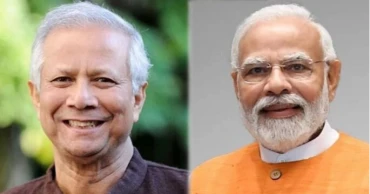
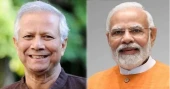
Prof Yunus sends Modi mangoes in a sweet gesture of goodwill
A consignment of mangoes, sent by Chief Adviser Prof Muhammad Yunus to Indian Prime Minister Narendra Modi as a goodwill gesture between the two neighbours, is scheduled to reach New Delhi on Monday.
The consignment containing 1,000 kilogrammes of renowned mango variety 'Haribhanga' will reach New Delhi on Monday, an official at the Bangladesh High Commission in New Delhi told UNB.
The mangoes will also be shared with dignitaries from the Indian Prime Minister's Office, diplomats and other officials within the next couple of days as part of a friendly exchange between the two neighbouring countries.
The interim government is also sending mangoes to West Bengal Chief Minister Mamata Banerjee.
Chief Adviser Prof Yunus on Thursday sent 300 kilogrammes of the popular Haribhanga mangoes as a gift to the Chief Minister of India’s Tripura state and other dignitaries.
The mangoes were sent through Akhaura land port around 5:15 pm on Thursday, packed in 60 cartons.
Spirit of mutual respect, understanding to guide 2 nations to work together: Prof Yunus to PM Modi
Every year, the Bangladesh government sends seasonal gift items to Tripura’s state government and key individuals.
In return, Tripura sends Bangladesh its famed and juicy Queen variety pineapples as goodwill gifts.
This year’s mango gift was arranged by the Ministry of Foreign Affairs and delivered through an exporter.
Officials handed over the consignment to representatives of the Bangladesh Assistant High Commission in Agartala.
This form of outreach, often referred to as "mango diplomacy," was also practiced under previous administration, and this continues to serve as a symbol of goodwill and exchange.
1 year ago
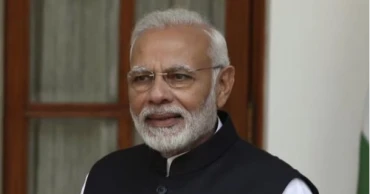
Modi to meet BIMSTEC leaders, engage to strengthen collaboration
Indian Prime Minister Narendra Modi has said he will meet the leaders of the BIMSTEC countries to discuss ways for strengthening collaboration, keeping the interests of people in mind.
"I look forward to meeting the leaders of the BIMSTEC countries and engaging productively to further strengthen our collaboration with interests of our people in mind," Modi said in his departure statement as he began his visit to Thailand and Sri Lanka on Thursday.
Bangladesh sees this year's BIMSTEC Summit, scheduled to be held in Bangkok, Thailand on April 4, "very important" for the country as it will assume the chairmanship of the grouping for the next two years.
Dhaka also thinks the summit will provide them with an opportunity to present a "just and inclusive" Bangladesh in South and Southeast Asia, officials said this week.
Chief Adviser Professor Muhammad Yunus will reach Bangkok on Thursday afternoon to attend the Summit, his Deputy Press Secretary Abul Kalam Azad Majumder told UNB.
Officials in Dhaka indicated that there will be a meeting between Dr Yunus and Prime Minister Modi on the sidelines of the BIMSTEC Summit but did not elaborate further.
Dr Yunus leaves for Bangkok to attend 6th BIMSTEC Summit
South Asian affairs analyst Michael Kugelman, referring to Bangladesh media rreport, said Modi will meet Yunus at BIMSTEC in Thailand this week.
"If true, this will be the biggest India-Bangladesh diplomatic development since (former Prime Minister Sheikh) Hasina’s ouster," Kugelman said in a message shared from his verified X handle.
At the invitation of Thai Prime Minister Paetongtarn Shinawatra, Indian Prime Minister Modi left for Thailand on an official visit and to attend the 6th BIMSTEC Summit in Bangkok.
Over the past decade, Modi said, BIMSTEC has emerged as a significant forum for promoting regional development, connectivity and economic progress in the Bay of Bengal region.
"With its geographical location, India’s North Eastern region lies at the heart of BIMSTEC," said the Indian Prime Minister.
During his official visit, the Indian Prime Minister will have the opportunity to engage with Thai Prime Minister Shinawatra and the Thai leadership, with a common desire to elevate our age-old historical ties, which are based on the strong foundations of shared culture, philosophy, and spiritual thought.
From Thailand, Modi will pay a two-day visit to Sri Lanka from April 4-6.
This follows the highly successful visit of President Disanayaka to India last December.
"We will have the opportunity to review progress made on the joint vision of “Fostering Partnerships for a Shared Future” and provide further guidance to realise our shared objectives," Modi said.
ASEAN MPs look to bar Myanmar from BIMSTEC over human rights concerns
He said he remains confident that these visits will build on the foundations of the past and contribute to strengthening their close relationships for the benefit of their people and the wider region.
1 year ago
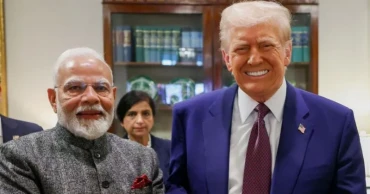
Modi joins Trump’s Truth Social, among few world leaders on platform
Indian Prime Minister Narendra Modi has joined Truth Social, the social media platform owned by former US President Donald Trump, making him one of the few global leaders on the site.
In his first post on Monday, Modi shared a photograph with Trump from his 2019 visit to Houston, Texas, expressing his pleasure at joining the platform, reports BBC.
Trump launched Truth Social in February 2022 after being temporarily banned from major platforms like Twitter and Facebook following accusations of inciting violence during the 2021 Capitol riots.
As of 03:30 GMT, Modi had 21,500 followers and was following only Trump and US Vice President JD Vance.
On Monday, Trump posted a link to Modi’s interview with podcaster Lex Fridman, in which the Indian leader discussed his personal journey, the 2002 Gujarat riots, and India's ties with China.
Hindu temple desecrated with anti-India, anti-Hindu graffiti in Southern California
Truth Social operates similarly to X, formerly Twitter, allowing users to post ‘truths’, ‘retruths’, and send direct messages. Advertisements on the platform are termed ‘sponsored truths’.
The platform is owned by Trump Media & Technology Group (TMTG), which went public in March 2024. Trump holds a 57 percent stake, while Kuwaiti investment firm ARC Global Investments and former contestants from The Apprentice also own shares, though some of these are tied up in legal disputes.
Trump has 9.28 million followers on Truth Social, significantly fewer than the 87 million on X. Despite a $4.45 billion market valuation, TMTG reported losses of $400 million in 2024, with revenue of just $3.6 million.
1 year ago
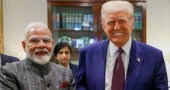
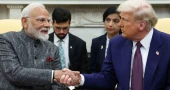
Modi says US and India target $500 billion bilateral trade by 2030
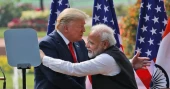
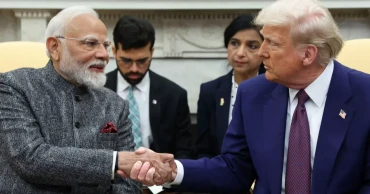
New Delhi and Washington will work to more than double bilateral trade to $500 billion by 2030, Indian Prime Minister Narendra Modi said at a joint press conference with U.S. President Donald Trump on Thursday.
Speaking at the conclusion of the two leaders’ meeting in Washington, Modi also said that “Our teams will work on concluding very soon, a mutually beneficial trade agreement.”
Trump acknowledged India’s recent move to reduce tariffs on select imports and said he would begin talks on disparities on trade and hoped to reach an agreement.
The remarks came hours after Trump signed a presidential memorandum outlining his plan to impose “reciprocal tariffs” on foreign nations, including India.
The U.S. would simply charge the same tariff rates that India charges, Trump said, while the trade deficit with India could be addressed with the sale of oil and gas.
India’s simple average tariff on countries with the most-favored-nation status stands at 17%, compared with the U.S. that levies 3.3%. The U.S. enjoys MFN status with most major economies.
U.S. total goods trade with India is estimated at $129 billion in 2024, according to the Office of the U.S. Trade Representative. India’s surplus with the U.S., its second-largest trading partner, reached $45.7 billion last year.
The U.S. will increase its military sales to India starting this year and ultimately provide F-35 fighter jets to the Asian ally, Trump said at the briefing, in an effort to confront what he called “the threat of radical Islamic terrorism.” India is the world’s biggest defense equipment importer.
Honda, Nissan and Mitsubishi drop their talks on business integration
Modi said India and the U.S. would also work together on developing artificial intelligence and semiconductors while focusing on establishing strong supply chains for strategic minerals.
The lofty target of $500 billion in trade could be achievable, Raghuram Rajan, professor of finance at University of Chicago Booth School of Business and former Reserve Bank of India governor, told CNBC’s “Squawk Box Asia.”
Besides shifting away from Russia — India’s key defense supplier — toward the U.S. for arms, India could also increase its purchases of liquified natural gas from American manufacturers, Rajan added.
The Trump-Modi meeting had the threat of U.S. tariffs looming large.
“We are, right now, a reciprocal nation... We’re going to have whatever India charges, we’re charging them. Whatever another country charges, we’re charging them. So it’s called reciprocal, which I think is a very fair way,” the U.S. president said at the press briefing.
The president said that the reciprocal tariffs will not take effect immediately as his administration works on determining the appropriate tariff levels for each affected country.
Trump has already slapped tariffs on China, Canada and Mexico as well as global tariffs on imports of steel and aluminum. Trump’s tariffs on Canada and Mexico are currently on pause after both countries pledged to crack down on illegal drug trafficking at their respective borders with the U.S.
House Republicans unveil blueprint to extend $4.5 trillion in tax cuts and lift the debt ceiling
Despite the encouraging tones from the meeting, signs of friction remain in the U.S.-India relation, said Daniel Balazs, a research fellow at the S. Rajaratnam School of International Studies, such as the illegal immigration issue and India’s close ties with Russia.
“The latter, in particular, is unlikely to go away anytime soon and will probably remain a sore point between the two sides,” he said.
1 year ago
Modi belittled Bangladesh's independence, freedom fighters: Rizvi
BNP Senior Joint Secretary General Ruhul Kabir Rizvi on Wednesday alleged that Indian Prime Minister Narendra Modi belittled Bangladesh’s independence, sovereignty and freedom fighters by claiming that December 16, 1971, was India’s historic victory.
“India arrogantly considers itself the master, as its Prime Minister Narendra Modi said December 16 was India’s historic victory,” he said while addressing a programme calling for a boycott of Indian products in Shantinagar.
The BNP leader said Modi has belittled and ignored the independence of Bangladesh, its independent territory, the liberation war and the freedom fighters of Bangladesh.
He said the brave sons of Bangladesh fought and put up a resistance against the invading forces of Pakistan from rivers, canals, water bodies, and jungles.
“You (India) played the role of a friend. So, how can it be India’s Victory Day instead of Bangladesh’s Victory Day? That means they want to ignore our Liberation War,” the BNP leader said.
Read: India doesn’t want democracy in neighbouring countries: Rizvi
He said India also wanted to belittle the sacrifices of the 30 lakh martyrs who gave their lives for the liberation of Bangladesh.
“When America was fighting against the British, France helped America from 1776 until their victory in 1781. But France never claimed that this was their Victory Day. Americans celebrate their Victory Day, their Independence Day,” Rizvi said.
On Bangladesh’s Victory Day on Monday, Indian Prime Minister Narendra Modi paid tribute to the soldiers who contributed to India’s historic victory in 1971.
"Today, on Vijay Diwas, we honour the courage and sacrifices of the brave soldiers who contributed to India's historic victory in 1971. Their selfless dedication and unwavering resolve safeguarded our nation and brought glory to us," Modi wrote in a post on X.
"This day is a tribute to their extraordinary valour and their unshakeable spirit. Their sacrifices will forever inspire generations and remain deeply embedded in our nation's history," he added.
Read more: India 'tainted with blood of Muslims and others’, alleges Rizvi
Rizvi also criticised India for backing Sheikh Hasina’s government to illegally stay in power.
“No country in the world, except Delhi, has supported Sheikh Hasina for the past 16 years,” he said.
1 year ago