NATO

NATO jets shoot down drone in Lithuanian airspace amid Russia tensions
NATO fighter jets shot down a drone that entered Lithuanian airspace overnight, officials said Tuesday, less than a day after NATO Secretary-General Mark Rutte warned that attacks near alliance territory would push the bloc to step up its support for Ukraine.
The drone was brought down near the village of Pratkūnai in the Kaišiadorys district, about 100 kilometers west of the capital Vilnius and close to the Kaunas Reservoir, Lithuania’s National Crisis Management Center said.
Lithuania’s military said it was the first time a drone had been shot down inside the country’s airspace. Authorities did not identify where the drone came from or what its purpose was, saying the incident was still under investigation.
The incident came hours after Rutte said in a speech Monday at NATO headquarters in Brussels that strikes “close to NATO territory” reflected Russian President Vladimir Putin’s “desperation” and his intention to spread “fear and terror.”
“Russia is growing increasingly reckless as it continues its terrible war against Ukraine,” Rutte said. He also pledged to strengthen the 32-member alliance’s defenses along its long eastern border with Russia.
Drone likely carried explosives
Drone threats have repeatedly raised concern in Lithuania, which borders Belarus, a close Russian ally, and Russia’s Kaliningrad exclave.
Antanas Matutis, commander of the Lithuanian Air Force, said authorities had recovered the drone’s wreckage and that it was “likely” carrying explosives.
Vilmantas Vitkauskas, head of the National Crisis Management Center, told Lithuanian public broadcaster LRT that the drone most likely entered Lithuania from Belarus. It remained in Lithuanian airspace for about 30 minutes and flew along the outskirts of populated areas before being intercepted, he said.
Ukraine says it is ready to de-escalate
Meanwhile, Russian drone attacks continued across Ukraine after U.S. President Donald Trump said Monday on social media that Russia and Ukraine had agreed “not to hit” each other’s energy infrastructure.
Trump provided no further details about the reported agreement, while Russia did not immediately comment. Previous attempts to arrange even limited ceasefires have repeatedly collapsed within hours, with both sides accusing each other of violations.
Ukrainian President Volodymyr Zelenskyy said late Monday that Kyiv was “ready to support de-escalation.”
“We see that the Russians feel the pressure from our precise strikes on Russia’s war economy,” he said, adding that there had so far been no genuine indication that Moscow wanted to end the war.
Zelenskyy said Ukraine would take steps to reduce tensions if its U.S. partners could ensure that Russia was genuinely prepared to end the war “for real and for the long term.”
Ukraine’s State Emergency Service said Tuesday that eight people had been wounded in Russian strikes on Kyiv since the start of the day. Two of them were injured in attacks on gas stations in the capital.
Meanwhile, Russia’s Defense Ministry said its forces shot down 222 Ukrainian drones overnight.
A “massive” Ukrainian drone attack also caused several fires in the Russian city of Taganrog, regional Gov. Yuri Slyusar said. He said two apartment buildings and three private homes were damaged, along with an educational institution, agricultural warehouses and a facility belonging to Russian online retailer Ozon.
4 days ago
Erdogan gifts engraved revolvers to NATO leaders after Turkey summit
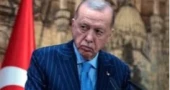
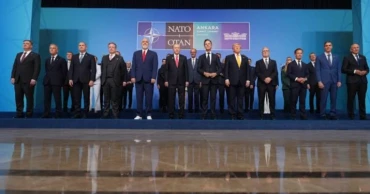
NATO leaders who gathered in Turkey this week to discuss global security returned home with an unusual souvenir from Turkish President Recep Tayyip Erdogan — an engraved revolver and six rounds of ammunition.
The gift was intended to highlight Turkey's expanding defence industry, but it left several leaders facing legal and practical challenges over what to do with the firearms.
Canadian Prime Minister Mark Carney said the revolver had been handed over to police because of Canada's gun laws.
"It struck me that my gift of maple syrup kind of undermatched," Carney told reporters. "I would like to reassure Canadians, they keep guns away from me."
Hungarian Prime Minister Péter Magyar shared a photo on X showing a Magnum revolver engraved with his name alongside six cartridges. It was not immediately known what he planned to do with the gift.
European Commission President Ursula von der Leyen thanked Erdogan for the present, but her spokesperson said the firearm would be decommissioned and donated to a military museum.
British Prime Minister Keir Starmer said the gift package included a document waiving export controls. However, he left the revolver behind because importing it into the United Kingdom would be illegal. It will also be decommissioned.
Belgian Prime Minister Bart De Wever handed his revolver over to airport police after returning home.
Officials said the firearms presented to German Chancellor Friedrich Merz and Dutch Prime Minister Rob Jetten were left at their countries' embassies in Ankara and would also be taken out of service.
Jetten said the gift was unlike anything he had seen before.
"My first reaction was, this is something a bit different to the box of syrup waffles that we gave out at the NATO summit in The Hague," he said. He added that Erdogan appeared to be showcasing Turkey's defence industry, which has become one of the strongest in the region.
Croatian President Zoran Milanović said he only learned after returning home that Erdogan had given him a revolver. His office said it would most likely be donated to a police museum.
"I didn't take it. I shoot from different weapons," Milanović joked, referring to his political style.
The White House did not immediately comment on the gifts.
Erdogan's office has also not officially commented. Turkish media identified the gift as the Gumusay .357 Magnum, a vintage six-shot revolver produced by state-owned arms manufacturer MKE.
According to local reports, the revolvers were meant to demonstrate the progress of Turkey's defence industry, which has evolved from relying heavily on foreign suppliers to producing advanced military equipment, including drones, warships and a next-generation fighter jet currently under development.
Gun ownership has long been part of Turkish culture, and the gifts drew little reaction within the country. However, the gun control advocacy group Umut Vakfi says armed violence remains a serious concern, reporting more than 2,700 gun-related incidents across Turkey last year.
In addition to the revolver, summit participants also received a copy of Erdogan's biography, "The Politics of Courage: Erdogan and the Rise of Türkiye," according to Turkey's state-run Anadolu Agency.
2 months ago
NATO chief faces fresh test as Trump demands allies' loyalty ahead of Turkey summit
NATO Secretary-General Mark Rutte heads into this week's NATO summit in Turkey facing a new challenge as US President Donald Trump shifts his focus from defense spending to demanding greater "loyalty" from America's allies.
Since taking office nearly two years ago, Rutte has spent much of his time trying to keep the United States committed to the 32-member military alliance. He has often praised Trump in an effort to ease tensions over the president's repeated threats to pull the US out of NATO.
For years, Trump's main complaint was that European allies were not spending enough on defense. At last year's NATO summit, member countries agreed to significantly increase military spending, bringing it closer to US levels as a share of national economic output.
But NATO now faces a different challenge: turning that extra money into stronger military capabilities, especially as European countries grow increasingly concerned about the threat from Russia.
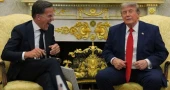
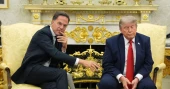
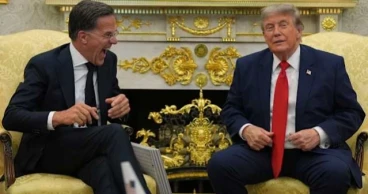
During a White House meeting last month, Rutte presented Trump with a chart titled "The Trump Trillion," highlighting that European allies and Canada have invested $1.2 trillion in defense since 2017.
However, Trump appeared unimpressed. He criticized some NATO allies for refusing to join the US and Israel in military action against Iran, saying he wanted "loyalty" rather than financial contributions.
"We don't need their money. We don't need anything. I just want loyalty," Trump said.
Trump also suggested he might have skipped the upcoming NATO summit if it were not being hosted by Turkish President Recep Tayyip Erdogan, one of the few foreign leaders he has openly praised.
The remarks suggest both Erdogan and Rutte may face an uphill task in keeping the summit focused on alliance unity.
Traditionally, NATO's secretary-general, a role always held by a European, works to build consensus among member states and represent the alliance as a whole.
However, during both of Trump's presidencies, Rutte and his predecessor, Jens Stoltenberg, have devoted much of their efforts to preventing the United States from distancing itself from NATO.
Trump has repeatedly questioned America's commitment to the alliance. He has threatened to withdraw from NATO, suggested pulling US troops out of Europe, and raised doubts about defending allies that fail to spend enough on their militaries. He has also expressed interest in taking control of Greenland, a self-governing territory of NATO member Denmark.
Rutte has responded with careful diplomacy and public praise for Trump.
At the White House last month, he highlighted that increased European defense spending has created tens of thousands of American jobs and generated a $300 billion backlog of European military equipment orders from US manufacturers.
Rutte also gently challenged Trump's claim that NATO had failed to support the US during its military operation against Iran, noting that up to 5,000 American aircraft had flown from bases in Europe before an April ceasefire.
Meanwhile, NATO allies have become increasingly concerned after the Pentagon announced plans to reduce the number of US troops, warships, aircraft and drones available to defend Europe in the event of an attack.
Trump has also given mixed signals about whether US troop levels in Europe will rise or fall.
The uncertainty comes as Russia continues testing Europe's defenses. A study released Thursday said Moscow has increased drone activity near military bases across several European countries.
NATO summits are traditionally designed to demonstrate the alliance's commitment to collective defense under Article 5, which states that an attack on one member is considered an attack on all. The clause has been invoked only once, after the Sept. 11, 2001, attacks in the United States.
Last year's summit in The Hague ended on a positive note after allies agreed to boost defense spending, with Trump describing NATO members as a "nice group of people."
This year's gathering in Turkey is expected to be more difficult.
Rutte has argued that Europe's increased defense investment allows the US to shift more attention toward security challenges posed by China while European allies take greater responsibility for supporting Ukraine.
However, Trump's latest demand for greater "loyalty" from allies has added a new layer of uncertainty ahead of the summit.
In his memoir, former NATO Secretary-General Stoltenberg recalled that Trump nearly derailed the alliance's 2018 summit.
"If an American president says he no longer wishes to defend the other allies and leaves a NATO summit in protest, then the NATO treaty and its security guarantee aren't worth very much," Stoltenberg wrote.
2 months ago
UK unveils future defence plan centred on drones, autonomous systems amid spending debate
Britain on Tuesday unveiled a long-awaited defence investment plan that puts drones, autonomous fighter aircraft and uncrewed submarines at the heart of its future military strategy, reflecting how modern warfare is increasingly being shaped by advanced technology.
The plan comes after months of delays caused by disagreements between military leaders and Treasury officials over defence funding. Like many NATO members, Britain is facing growing pressure to boost military spending in response to Russia's increasingly aggressive actions and concerns over long-term US security commitments.
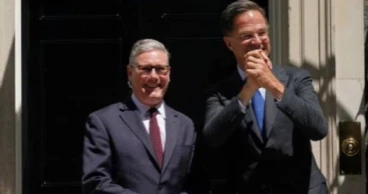
Prime Minister Keir Starmer said the strategy is designed to prepare Britain for what he described as "a more dangerous and volatile world than at any time for decades."
However, the plan stops short of committing to raise defence spending to 3% of the UK's gross domestic product (GDP) by 2030, a key issue that contributed to the resignation of former Defence Secretary John Healey on June 11.
Healey had criticised the government for not investing enough in the armed forces despite growing security threats. Referring to British intelligence assessments, he warned that Russia could be in a position to attack a NATO member by 2030. He said the Treasury's proposal would increase defence spending to only 2.68% of GDP by 2030, after reaching 2.6% next year.
Starmer said new Defence Secretary Dan Jarvis had revised and strengthened the investment plan. The updated proposal includes £15 billion (about $20 billion) in new spending, higher than the £13.5 billion previously offered but still well below the £28 billion defence officials had sought.
The prime minister said Britain would reach the 3% spending target during the next parliamentary term, which could run until 2034.
He said the investment would ensure British armed forces have the advanced capabilities needed to respond to evolving security threats and protect the country. The full defence plan is scheduled for publication later on Tuesday.
The roadmap also outlines how Britain intends to increase defence spending to NATO's target of 3.5% of GDP by 2035 as it seeks to rebuild military strength after years of budget pressures.
Britain has closely studied the war in Ukraine, where drones have become a key part of the battlefield. Ukrainian forces are estimated to use around 200,000 drones every month to defend against Russian attacks.
As part of the new strategy, Britain plans to invest billions of pounds in drone technology across the army, navy and air force. Instead of building a planned fleet of new destroyers, the Royal Navy will develop hybrid ships that can serve as command centres for drone operations.
Speaking at a drone manufacturing facility near London, Starmer said the nature of warfare is changing rapidly. He pointed to Ukraine's use of advanced technology to damage Russia's Black Sea Fleet, carry out strikes deep inside Russian territory and slow the advance of one of the world's largest armies.
Britain's defence review also comes as US President Donald Trump continues urging NATO allies to spend more on defence. Trump has repeatedly argued that European countries should contribute more to their own security instead of relying heavily on the United States.
The defence plan is expected to remain a major issue after Starmer leaves office. Following the recent resignations of Healey and junior Defence Minister Al Carns, Starmer announced last week that he would step down as prime minister. He is expected to attend the NATO summit in Turkey on July 7-8 before leaving office.
Former Greater Manchester Mayor Andy Burnham, who is widely seen as the frontrunner to succeed Starmer, is expected to face pressure to maintain the defence commitments outlined in the new strategy.
Opposition Conservative Party defence spokesperson James Cartlidge criticised the plan, calling it "too little, too late."
He said the review was nearly a year overdue and accused Starmer of pushing it through in an effort to secure a political legacy.
2 months ago
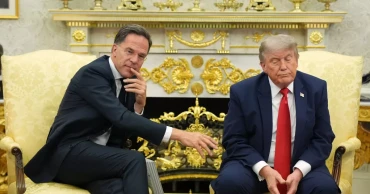
NATO deputy commander hopes Turkey summit will boost defense spending and alliance unity
NATO's deputy supreme allied commander in Europe has expressed hope that next month's summit in Turkey will encourage member states to increase defense spending, reaffirm support for Ukraine and demonstrate the alliance's unity despite growing challenges.
Air Chief Marshal John Stringer shared his expectations in an interview with The Associated Press in London, less than two weeks before the NATO summit in Ankara on July 7-8. The meeting is expected to test the unity of the 77-year-old military alliance at a time of increasing political uncertainty.
The alliance has faced fresh questions after US President Donald Trump sent mixed messages about America's military presence in Europe and repeatedly threatened to withdraw from NATO. His calls to annex Greenland and his friendly remarks about Russian President Vladimir Putin have also unsettled many European leaders.
Adding to the uncertainty, US Defense Secretary Pete Hegseth last week criticized NATO allies for not allowing their military bases to be used in strikes against Iran. He also announced a six-month review of US troop deployments across Europe.
In the United Kingdom, which traditionally provides NATO's deputy supreme allied commander, recent resignations of government ministers highlighted concerns over defense spending plans that critics say are not enough to ensure the country's security.
Stringer said NATO summits are important political events that showcase the alliance's solidarity. While acknowledging that disagreements are inevitable in an organization that has expanded over several decades, he stressed the importance of maintaining unity.
"Are we in one of those moments at the moment? Yes, we are," Stringer said during a military conference in London, where AP also spoke with other senior European military officials about their expectations and concerns ahead of the summit.
2 months ago
Turkey detains over 200 suspects in Ankara security sweep ahead of NATO summit
Turkish security forces have detained more than 200 people in a large-scale operation in the capital Ankara ahead of next month’s NATO summit, targeting individuals suspected of having links to extremist groups, including the Islamic State (IS) group.
US President Donald Trump is expected to join leaders of the 32-member military alliance at the NATO summit scheduled for July 7-8 in Ankara.
Turkish authorities are preparing extensive security arrangements for the event. Planned measures include restrictions on demonstrations, tighter controls on roads leading to airports, and security cordons around the summit venue and hotels hosting foreign delegations.
The government of President Recep Tayyip Erdogan has placed strong emphasis on security, and similar operations are carried out regularly. Last month, authorities detained 324 people across the country over suspected ties to the Islamic State group.
According to the Ankara Chief Prosecutor’s Office, prosecutors issued detention warrants for 241 suspects early Tuesday. By later in the day, police and gendarmerie teams had arrested 209 of them during coordinated raids across the capital. Efforts to detain the remaining suspects were continuing.
Officials said those detained included 56 suspected members of the Islamic State group and 35 alleged members of the Revolutionary People's Liberation Party/Front (DHKP-C), a far-left militant organization known for carrying out armed attacks and assassinations in Turkey.
The Islamic State group has been responsible for several deadly attacks in Turkey over the years, including the 2017 New Year’s Eve attack on an Istanbul nightclub that left 39 people dead.
2 months ago
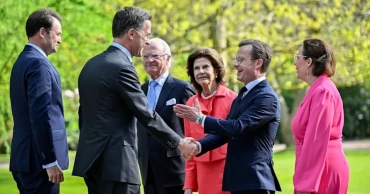
NATO allies puzzled by Trump’s sudden shift on US troop plans in Europe
NATO allies and defense officials have expressed confusion after U.S. President Donald Trump abruptly announced he would send 5,000 American troops to Poland, just weeks after ordering the withdrawal of the same number of troops from Europe.
Swedish Foreign Minister Maria Malmer Stenergard said the situation was hard to follow and created uncertainty for allies. Speaking at a NATO meeting in Helsingborg, she said it was “confusing” and not easy to manage, as foreign ministers gathered with U.S. Secretary of State Marco Rubio.
Defense officials also admitted they were unsure about the decision. One U.S. official said they had spent two weeks responding to earlier plans to reduce troop levels and still did not fully understand the latest change.
In a post on Truth Social, Trump said the United States would send an additional 5,000 troops to Poland, pointing to his close ties with Polish President Karol Nawrocki, whom he supported during last year’s election.
The move marks a sharp reversal from recent signals from the Trump administration, which had suggested cutting the U.S. military presence in Europe rather than increasing it.
Officials within NATO said allies had been taken by surprise, even though Washington had earlier promised better coordination on troop movements. NATO military chief U.S. Lt. Gen. Alex Grynkewich said the alliance would continue working closely with partners to stay aligned on decisions.
Some European ministers, including those from the Netherlands and Norway, said they were not alarmed but stressed that any changes should follow a clear and structured process. Latvia’s Foreign Minister Baiba Braže said allies were aware that the U.S. was reviewing its troop posture, and that for now there appeared to be no major change.
Earlier this month, the Trump administration had announced plans to reduce its presence in Europe by about 5,000 troops. Around 4,000 troops were also reported to have been removed from planned deployment to Poland, while the transfer of some U.S. missile-trained personnel to Germany was paused.
Grynkewich said several hundred troops would be reassigned elsewhere but did not provide details. He also met defense chiefs from Estonia, Latvia, Lithuania and Poland at NATO headquarters to discuss options.
The policy shift comes amid tensions following comments by German Chancellor Friedrich Merz, who criticized U.S. strategy on Iran and suggested Washington was being disrespected by Tehran. Trump responded by saying troop cuts could go “far beyond 5,000” and also announced new tariffs on European cars.
About 80,000 U.S. troops are currently stationed in Europe. Under Pentagon rules, at least 76,000 troops and key equipment must remain unless allies are consulted and it is judged to be in U.S. interest to reduce that level.
Trump’s latest remarks suggest troop levels may remain largely unchanged, with forces rotating into Poland from Germany expected to continue. Polish Foreign Minister Radosław Sikorski welcomed the move, saying it would keep American troop presence in Poland at roughly current levels.
NATO Secretary-General Mark Rutte also supported continued coordination. He said Europe must take greater responsibility for its own security but stressed that existing consultation processes were working as normal.
The meeting in Helsingborg was held to prepare for a planned summit between Trump and NATO leaders in Turkey in July.
3 months ago
NATO military chief sees no further US troop cuts beyond 5,000 withdrawal plan
NATO’s top military commander said Tuesday he does not expect additional US troop withdrawals from Europe in the near term beyond the 5,000 soldiers already announced by President Donald Trump.
US Lt. Gen. Alex Grynkewich made the remarks at NATO headquarters in Brussels during a meeting of senior military officials from the alliance’s 32 member states.
His comments follow Trump’s surprise decision earlier this month to scale back US military presence in Europe, a move made amid rising tensions with allies over the Iran war and broader policy disagreements.
“It will be 5,000 troops coming out of Europe. That’s all I’m expecting in the near term,” Grynkewich said.
The Pentagon has clarified that the reduction mainly involves cancelling planned deployments to Poland and Germany, rather than pulling out forces already stationed in Europe.
The move has sparked concern among US lawmakers from both parties, who argued it was made without proper consultation with Congress and could send the wrong signal to allies.
Pentagon spokesperson Sean Parnell said the military has reduced the number of brigade combat teams assigned to Europe from four to three, leading to a “temporary delay” in troop deployment to Poland, which he described as a key US ally.
He added that final decisions on troop placement will depend on further review of US strategic needs and the ability of European allies to contribute more to their own defense.
US Defense Secretary Pete Hegseth also spoke with Polish Defence Minister Władysław Kosiniak-Kamysz on Tuesday, with Washington assuring Warsaw that it will maintain a strong military presence in Poland.
Trump’s announcement had caught NATO allies off guard, despite earlier US commitments to coordinate closely on major military adjustments.
The plan includes halting the deployment of about 4,000 troops from the US Army’s 2nd Armored Brigade Combat Team, 1st Cavalry Division to Poland, as well as stopping the movement of long-range missile units to Germany.
In some cases, soldiers were informed shortly before departure that they would no longer be travelling to Europe, according to US military officials.
Grynkewich said he had also spoken with military leaders from Estonia, Latvia, Lithuania and Poland about possible adjustments to NATO’s eastern flank, which borders Russia.
Concerns have been raised in the Baltic states over the cancellation of troop rotations. Estonian officials described the move as a setback but said it would not undermine NATO’s overall deterrence in the region.
Lithuania said the issue appears to be technical and expressed hope that US troops will remain in the country as planned.
Despite the changes, Grynkewich stressed that European security would not be weakened, though he warned that further US troop adjustments are likely in the coming years as European allies take on more responsibility for their own defense.
He said the process will continue gradually but added that coordination with allies will remain close.
3 months ago
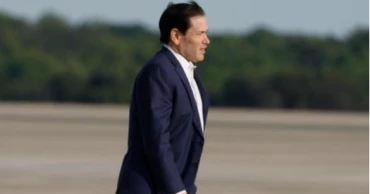
US troop plans, Trump stance loom over Rubio’s NATO visit in Sweden
Marco Rubio, the US Secretary of State, is set to travel this week to a meeting of NATO foreign ministers in Sweden as European allies express growing concern over US troop levels in Europe and President Donald Trump’s shifting positions on the alliance, especially as the impact of the Iran war and rising energy prices continues to be felt.
The US State Department said on Tuesday that Rubio will attend the NATO gathering in Helsingborg on Friday. The meeting comes ahead of a major NATO summit in Ankara, Turkey, scheduled for July.
After Sweden, Rubio will travel to India for a multi-city visit covering Kolkata, Agra, Jaipur and New Delhi. He is expected to meet Indian officials and also join discussions with counterparts from Australia and Japan under the Indo-Pacific “Quad” grouping.
In Sweden, Rubio is expected to repeat US calls for NATO members to increase defense spending and share more of the alliance’s security burden, according to the State Department. He will also take part in discussions on Arctic security and economic interests with NATO’s northern members.
Although Greenland was not mentioned in the statement, tensions over the Danish territory have added to European unease. Donald Trump has repeatedly spoken about US interest in Greenland, which has drawn criticism in Europe. Trump’s special envoy for Greenland recently visited the island.
Greenland’s Prime Minister Jens-Frederik Nielsen said after meeting the envoy that the territory’s people are not for sale and that self-determination is non-negotiable.
Rubio’s presence at NATO meetings has often been welcomed by European allies, who see him as more steady compared to other US officials. He has also attended recent diplomatic missions, including the Munich Security Conference and meetings in Italy.
Ahead of the NATO talks, NATO’s top military officer said he does not expect further major reductions of US troops in Europe for now beyond an earlier announced cut of about 5,000 personnel.
US Lt. Gen. Alex Grynkewich said the situation remains stable following Trump’s announcement earlier this month.
The Pentagon later clarified that some planned troop deployments to Poland and Germany were being delayed rather than fully cancelled. Vice President JD Vance said the move should not be seen as a reduction, but part of normal rotation adjustments, adding that the focus is on strengthening European responsibility for its own defense.
Pentagon spokesperson Sean Parnell also described the change as a temporary delay, saying decisions on troop placement across Europe are still being reviewed.
Trump’s announcement had surprised NATO allies, coming amid earlier commitments by Washington to coordinate closely on security matters and avoid gaps in defense coverage.
Tensions were further heightened after Trump criticized Germany following comments by Chancellor Friedrich Merz over US policy on the Iran war.
3 months ago
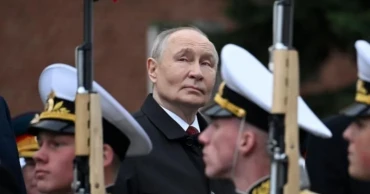
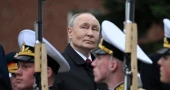
Putin criticises NATO, defends Ukraine war at subdued Victory Day parade
Russian President Vladimir Putin used his Victory Day address in Moscow’s Red Square to defend the war in Ukraine and criticise NATO, as the annual parade took place on a reduced scale this year.
Addressing military personnel and a limited number of foreign leaders, Putin described the conflict in Ukraine as a “just” war and accused NATO of backing Kyiv.
“They are confronting an aggressive force armed and supported by the whole bloc of NATO. And despite this, our heroes move forward,” he said, referring to Russian troops involved in what Moscow calls its “special military operation.”
The ceremony marked Russia’s most important national holiday, commemorating the Soviet Union’s victory over Nazi Germany in World War II. However, celebrations were more subdued compared to previous years.
For the first time in recent years, the parade did not feature armoured vehicles or ballistic missiles, though large numbers of troops marched across Red Square under heightened security.
Putin began his speech by honouring the sacrifices of Soviet soldiers during World War II, saying their legacy continues to inspire Russian forces today.
“The great feat of the generation of victors inspires the soldiers carrying out the goals of the special military operation today,” he said.
He also praised the contributions of ordinary citizens, including scientists, doctors, teachers and workers, to the country’s war effort.
Ahead of the event, Russia and Ukraine agreed to observe a three-day ceasefire, announced by US President Donald Trump.
Among the leaders present at the parade were Belarusian President Alexander Lukashenko, Kazakhstan’s President Kassym-Jomart Tokayev and Uzbekistan’s President Shavkat Mirziyoyev. Fewer international leaders attended compared to last year’s event.
Following the ceremony, Putin laid flowers at the Tomb of the Unknown Soldier and later hosted a reception at the Kremlin.
Victory Day events were also held earlier in Russia’s eastern regions, including Vladivostok, where people took part in the traditional “Immortal Regiment” march to honour war veterans.Source: BBC
4 months ago