Ministry of Fisheries and Livestock

Ministry dismisses viral cattle import permit as fake, warns of legal action
The Ministry of Fisheries and Livestock has declared a permit purportedly authorising cattle imports from India, which has been circulating widely on social media and online platforms, to be fabricated and deliberately misleading.
In a statement issued Wednesday, the ministry said initial verification found no correspondence between the circulating document and any official approval, record or process of the Department of Livestock Services (DLS).
The DLS confirmed the permit was not issued by the department, adding that the information, reference numbers and signatures appearing on the document could not be verified. "The document will not be recognised as a valid government import authorisation."
The ministry urged the public, traders and all concerned parties not to make any decisions based on the false and misleading document, and requested that people refrain from sharing or circulating such materials without verification.
It also warned that legal action may be taken against those found spreading the fabricated information.
For accurate information, the ministry advised the public to rely solely on the official website of the Department of Livestock Services and other credible government sources.
4 months ago

No approval yet for indoor, artificial hilsa farming: Ministry
The Ministry of Fisheries and Livestock has said that the government has not approved indoor or artificial hilsa farming, clarifying that no such initiative has received official clearance so far.
In a press release issued on Monday, the ministry said it has seriously reviewed the issue amid recent discussions and reports published in newspapers, online media and social media regarding indoor or artificial cultivation of hilsa.
The ministry said a meeting on indoor, fully controlled and intensive cultivation of hilsa and other marine fish using the Recirculating Aquaculture System (RAS) technology was held at the Ministry of Fisheries and Livestock on Sunday (February 1).
The meeting was chaired by Fisheries and Livestock Adviser Farida Akhtar, and attended by senior officials of the ministry, the Department of Fisheries and the Bangladesh Fisheries Research Institute.
Home Ministry forms law and order coordination cell ahead of polls
The review found that hilsa is an important Geographical Indication (GI) product of Bangladesh and is closely linked to the country’s riverine and coastal ecosystems, food security, heritage and the livelihoods of a large number of fishermen.
As hilsa production and management largely depend on the natural reproductive cycle and riverine environment, any initiative related to its cultivation is highly sensitive and policy-driven, the ministry said.
It added that there is currently no government policy decision or approval regarding RAS or any other indoor, fully controlled or intensive method of hilsa farming. As such, no individual or institution has been granted permission to cultivate hilsa using these methods.
The ministry said any research, experimental initiative or technical activity related to hilsa must be conducted in line with existing laws, policies and national interests, and subject to prior approval from the relevant government authorities. Any unauthorised activity will be considered unacceptable.
The ministry also urged all concerned, including the public, to rely on government-approved and credible information and not to be misled by misinformation or rumours.
7 months ago
Govt clears Tk 100cr subsidy, 20% power rebate for fisheries, livestock
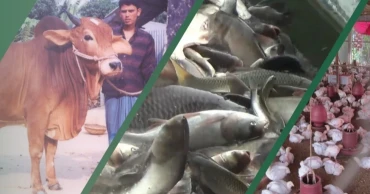
The government has approved a Tk 100 crore subsidy and a 20 percent rebate on electricity bills for marginal-level fish farms, hatcheries and livestock, and poultry farms to reduce production costs and stimulate investment in the sector.
The Ministry of Fisheries and Livestock said on Monday that the decision was taken following a directive issued by the finance ministry on January 22.
Under the existing electricity rebate policy, a 20-percent rebate is being provided to 16 sectors to boost agricultural production, encourage agro-based exports and support industrial growth.
Of these, four sectors under the Ministry of Fisheries and Livestock have been included in the subsidy scheme, with the Finance Division approving a Tk 100 crore allocation in principle.
The sectors brought under the facility include animal and poultry feed manufacturing, fish feed production, the poultry industry, and dairy processing industries—such as milk pasteurisation, powdered milk, ice cream, condensed milk, sweets, cheese, ghee, butter, chocolate and yoghurt.
The ministry expects the initiative to significantly lower production costs, attract greater investment and strengthen the country’s capacity to produce safe and quality animal protein.
According to the directive, the Power Division will annually review rebate claims submitted by electricity distribution companies and send proposals for the four relevant sectors to the Ministry of Fisheries and Livestock, while proposals for the remaining 12 sectors will be sent to the Ministry of Agriculture.
After verifying the eligibility of rebate-receiving sectors, the two ministries will forward fund release proposals to the Finance Division.
Funds will be released to electricity distribution companies on a half-yearly basis. The second-half release will be subject to completion of audits, and rebate-receiving sectors must be clearly mentioned in audit reports.
A draft policy for selecting eligible consumers will also require prior approval from the Finance Division.
Each beneficiary must have a separate electricity line and meter for the relevant sector, and the rebate amount cannot be used for any other purpose. Any violation will make the concerned parties liable, the finance ministry cautioned.
7 months ago
Paws and play take over TSC as DU holds first pet carnival
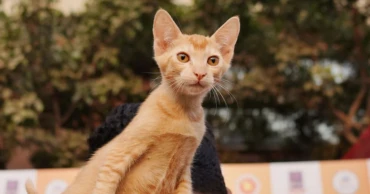
Wagging tails, curious whiskers and smiling faces filled the Dhaka University Teacher-Student Centre (TSC) on Tuesday afternoon (January 20, 2026) as the campus hosted its first-ever Pet Carnival, turning the iconic spot into a lively celebration of companion animals.
Organised by Dhaka University Central Students’ Union (DUCSU) with support from the Ministry of Fisheries and Livestock, the colourful event brought together pet lovers and their furry friends for an afternoon of fun, learning and awareness.
Read more: US colleges welcome pets in dorms to ease students’ stress
7 months ago
Bangladesh suspends Vannamei shrimp fry imports amid disease concerns
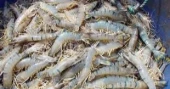
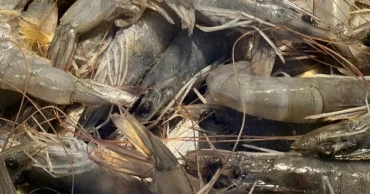
The Ministry of Fisheries and Livestock on Thursday (January 15, 2026) suspended all new and existing approvals for importing shrimp fry for Vannamei farming, citing risks of disease transmission and environmental pollution linked to the exotic species.
In a media release issued in the afternoon, the ministry said the decision was taken following a high-level meeting held on January 7, chaired by Fisheries and Livestock Adviser Farida Akhter, to review the environmental, social and economic impacts of Vannamei shrimp farming in Bangladesh and determine future actions.
Read more: Safe, quality shrimp production must be prioritised: Adviser Farida
The meeting noted that Vannamei shrimp is an import-dependent species and that the import of its fry poses risks of disease outbreaks, environmental degradation, and adverse impacts on indigenous species, including Bagda (black tiger shrimp) and Galda (freshwater prawn).
In this context, participants opined that unregulated expansion of Vannamei shrimp farming would not be appropriate.
The discussion emphasised keeping Vannamei shrimp farming limited to controlled, intensive and environmentally compliant systems. It was also decided that the activities of already approved Vannamei farmers would be closely monitored, with on-site evaluations to ensure full compliance with stipulated farming conditions.
Until such evaluations are completed, all forms of new and existing approvals for importing Vannamei shrimp fry will remain suspended, the media release said.
The meeting further decided to undertake necessary research to assess the environmental, social and economic impacts of Vannamei shrimp farming. Future policy and administrative decisions will be taken based on the findings of these studies.
At the same time, the ministry underscored the need to prioritise the expansion of domestic shrimp farming by boosting the production of indigenous Bagda and Galda shrimp, rather than relying on imported species, and to take up suitable projects to support this goal.
Read more: Human chain demands enforcement of law to stop saline shrimp farming in cropland
Fisheries and Livestock Secretary Abu Tahir Muhammad Zaber, Additional Director General of the Department of Fisheries Md Zia Haider Chowdhury, senior ministry officials, and fisheries officers from relevant districts, also attended the meeting.
8 months ago
Bangladesh’s shrimp sector eyes $5bn boost with better policies
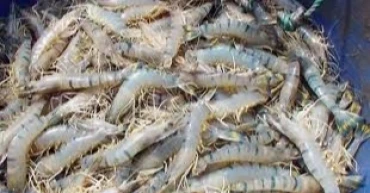
Bangladesh’s shrimp industry, once a $500 million export engine but now earning less than $300 million, could scale up to $5 billion within five years with the right policy support, industry leaders say.
An analysis of export data from the Export Promotion Bureau (EPB) shows that in the 2015-16 fiscal year, the country earned $529 million from shrimp exports. Since then, exports have dropped sharply.
While shrimp exports rose by 19 percent in the 2024-25 fiscal year, the figure is still far from the sector’s past heights.
Addressing why this promising industry has faltered and whether the current upward trend signals a strong future, Professor Asif Wares Newaz of Sher-e-Bangla Agricultural University’s Department of Fishing and Post-Harvest Technology said that the use of antibiotics against international standards, White Spot Disease in Bagda shrimp, and issues like jelly-pushing and using inappropriate antibiotics have negatively affected shrimp exports.
“Even if exporters process shrimp properly, most farmers remain outside monitoring. Without monitoring disease detection, control measures, and proper drug use, regaining lost reputation will be challenging,” he explained.
Asif added that Belgium once was a major market for Bangladeshi shrimp. That market is now dominated by India, the Netherlands, and Vietnam. India alone exports nearly $100 million worth of shrimp to this market, while Bangladesh’s share remains below $25 million.
Shrimp: Khulna’s ‘white gold’ eyes Tk 22,600cr export goal
Entrepreneurs believe Bangladesh has the potential to compete with India in shrimp exports. “India produces shrimp on 102,000 hectares of land. Bangladesh cultivates over 250,000 hectares. Yet India produces over one million metric tons of shrimp, while Bangladesh produces around 100,000 metric tons of Bagda shrimp,” said SK Kamrul Alam, vice president of the Bangladesh Frozen Food Exporters Association (BFFEA).
Kamrul noted that India’s lead is primarily due to its production of Vannamei (white leg) shrimp. Bangladesh received approval to produce Vannamei shrimp several years ago but has not yet started exports. He said leveraging Bangladesh’s shrimp farming land for Vannamei production could break records in exports.
“Once Vannamei shrimp exports start, it will be possible to earn $5 billion solely from shrimp by 2030,” Kamrul added.
Experimental Vannamei shrimp farming began in 2021 at the research center in Paikgacha, Khulna. The following year, eight companies received experimental cultivation permission, followed by approval for four more firms. Commercial production began last year.
Businessmen cite bureaucratic delays as a major reason for the slow roll-out of Vannamei farming. They said an investment of 2–2.5 million Vannamei shrimp could yield sales worth BDT 4.5 million.
“Per hectare, Bagda production is around 500 kg, while Vannamei yields 12–15 tons. Eighty percent of the world’s shrimp exports are Vannamei. Yet we are still stuck with Bagda shrimp. Bureaucratic hurdles delayed approval for almost a decade,” said Kamrul.
500 shrimp enclosures washed away after an embankment collapsed in Satkhira
Farmers, however, still face challenges obtaining permits for Vannamei shrimp farming. Farmers in Satkhira and Bagerhat said that special approval from the Department of Fisheries is required, which is a lengthy process, preventing them from taking advantage of this profitable crop.
“Vannamei shrimp farming requires compliance with multiple guidelines. While it can yield 30–50 percent profit, high initial investment deters common farmers,” said Awal Haque, a shrimp farmer from Shyamnagar, Satkhira.
Seafood manufacturers say they are ready to enter contract farming with shrimp farmers once Vannamei cultivation starts, which would reduce costs for farmers and ensure profits for companies. BFFEA Senior Vice President Tariqul Islam Zaheer emphasized that adequate preparation is essential before starting Vannamei shrimp exports.
“Initial investment exceeds BDT 2 million. If farmers are not properly trained, starting Vannamei cultivation could backfire. Training is needed for pond preparation and shrimp rearing practices,” he said.
Zaheer also highlighted old challenges in shrimp farming, noting that despite being a large sector, farmers have no insurance, and loans for shrimp farming do not enjoy special benefits. Even with low-interest loans available for other crops, fish farmers get no similar support. Subsidies in electricity for fish farming are also absent. Faced with these difficulties, many farmers are filling ponds and moving to land-based farming, causing the fading of the once-famous “white gold” shrimp legacy.
“Although exports reportedly increased, the real picture is different. The rise largely reflects higher dollar prices, not actual export volumes,” Zaheer said.
BFFEA members revealed that while around 100 companies are engaged in shrimp exports, 70 have shut down due to raw material shortages. Without government support, there are fears that the sector could collapse again.
Read more: Chinese Ambassador expresses interest in importing hilsa from Bangladesh
Experts also stress the need for further research on the genetics of Vannamei shrimp. Unlocking the genetic potential, as done with hilsa and jute, could enable Bangladesh to produce high-quality shrimp seedlings adapted to its climate, reducing reliance on harmful antibiotics.
Adviser to the Ministry of Fisheries and Livestock, Farida Akhter, told UNB that while shrimp farming has potential, Bangladesh is yet to fully benefit. The ministry is observing how countries like Vietnam and India are succeeding and will soon introduce business-friendly measures for shrimp farming.
“One cannot look only at the business side; climate and environmental factors also matter. In areas like Satkhira-Bagerhat, lands have been illegally acquired for shrimp farming, increasing salinity and reducing crop yields. Scientific decisions are needed,” she said.
Farida added that low-interest loans are being arranged for fish farmers. Steps have been taken to free farmers from predatory lending and restrictive enclosures, and special emphasis is being placed on subsidised electricity.
BFFEA has independently prepared a research report on measures to boost shrimp farming. They will soon present their findings to the government, believing that with support, Bangladesh can revolutionize shrimp exports and reclaim its “White Gold” legacy.
Read more: Shrimp: Khulna’s ‘white gold’ eyes Tk 22,600cr export goal
10 months ago

Milk, eggs, meat, and fish to be sold affordable prices at 30 points in capital
The Ministry of Fisheries and Livestock will set up 30 sell points in Dhaka to sell milk, eggs, meat, and fish at affordable prices throughout the month of Ramadan.
Under the programme, liquid milk will be sold at Tk 80 per litre, beef at Tk 600 per kg, mutton at Tk 900 per kg, dressed broiler at Tk 250 per kg, and eggs at Tk 9.17 per piece.
Will enhance market surveillance from today: State Minister for Commerce
Fisheries and Livestock Minister Md. Abdur Rahman said these at the conference room of the Department of Livestock Services on Sunday.
The minister said the programme will be conducted from 25 places in the capital from the first to the 28th Ramadan. Besides, the products will be sold at five more points at several permanent markets in the city.
The 25 sale centers are: Natun Bazar (Badda), Korail slum (Banani), Khamarbari (Farmgate), Azimpur Matrisadan (Azimpur), Gabtoli, Diabari (Uttara), Japan Garden City (Mohammadpur), Shatfoot Road (Mirpur), Khilgaon (south of the rail crossing), beside the Secretariat (Abdul Gani Road), Segun Bagicha (kitchen market), Arambagh (Motijheel), Rampura, Kalshi (Mirpur), Jatrabari (at the mouth of Maniknagar Goli), Bosila (Mohammadpur), Hazaribagh (Shikshan), Lukas (Nakhalpara), Arambagh (Motijheel), Kamrangirchar, Mirpur 10, Kalyanpur (Jhilpara), Tejgaon, Old Dhaka (Bangabazar), and Kakrail.
The five selling points at permanent markets are Mirpur Shah Ali Bazar, Mohammadpur Krishi Market, Natun Bazar (100 feet), Kamala Bazar, and Kazi Alauddin Road (Anandbazar).
Well-equipped pickup cool vans will be used to sell the products. The cooling vans will reach each sale center by 9 am with the products and selling will start from 10 am, the minister said.
BGB-BSF border conference wraps up with pledge to bring down border killings to zero
Additionally, the Department of Fisheries has taken initiatives to sell fish at four designated spots in Dhaka North City Corporation and four designated spots in Dhaka South City Corporation.
The spots are Bangabandhu Square at Farmgate’s Khamarbari, Mirpur-1 (Eidgah Ground); Segun Bagicha Bazar; and Merul Badda Bazar under Dhaka North City Corporation; and Mughdapara (Madinabagh Bazar); Jatrabari (Dayal Bharosa Market); Motijheel (Southeast Corner of Bangladesh Bank) and Palashi intersection under Dhaka South City Corporation.
The fish sale will continue from 10 am to 3 pm every day, starting from March 11, and will continue for 15 days, the minister said.
Read more: As Ramadan is about to begin, prices of essentials high in Khulna kitchen markets
2 years ago

Meat and eggs to be sold in trucks at fair prices in Dhaka during Ramadan
The Ministry of Fisheries and Livestock will sell beef, chicken, and eggs in trucks in different spots of Dhaka city from March 10 on the occasion of the arrival of Holy Ramadan.
The mobile trucks will sell beef at Tk 600 per kg, goat/mutton at Tk 900 per kg, dressed broiler chicken at Tk 280 per kg, and eggs at Tk 10.50 per piece.
The Minister of Fisheries and Livestock Md. Abdur Rahman MP informed this to reporters in a press briefing on Monday.
Simeen Hossain briefs JS on steps to prevent rampant child marriage
The minister spoke in a press briefing after the session with deputy commissioners on food, livestock, and fisheries held at the Osmani Memorial Auditorium on Monday.
Abdur Rahman said, “We will strictly control the market in the month of Ramadan. This mobile vending program will help regulate the market during Ramadan.”
He said, initially, the products will be sold at 30 spots in Dhaka city. This is an interim initiative of the government. It will be inaugurated on March 10, and the program will continue until the day before Eid.
50 lakh families to get 1.5 lakh tonnes of rice under VGF during Ramadan: Food Minister
In response to a query, the minister said this activity on the truck-sale program will be held in 30 places in Dhaka. The program will try to expand to more places according to the ability.
2 years ago

Ministry to sell meat, eggs at lower prices in Dhaka during Ramadan
Meat, eggs, and milk will be sold at lower prices in Dhaka from March 23, and it will continue till the 28th of Ramadan.
The Ministry of Fisheries and Livestock will sell meat, eggs, and milk at 20 points in Dhaka to meet public demand during the holy month of Ramadan, Iftekhar Hossain, public relations officer of the ministry, told UNB.
Read More: Have enough stock, no scope of price hike during Ramadan: Tipu
Fisheries and Livestock Minister SM Rezaul Karim will launch the sale of these items -- beef, mutton, dressed broiler chicken, milk, and eggs -- formally at a function in Dhaka on Thursday.
The Department of Livestock will conduct the sales. However, prices of the items are yet to be fixed, he added.
These essential items will be sold at "cheaper prices" to facilitate households' protein intake throughout Ramadan, Iftekhar Hossain added.
Read More: If people don’t buy in excess, there will be no price hike of essentials ahead of Ramadan: Tipu Munshi
3 years ago

Mobile stalls selling livestock, dairy products during lockdown
A fleet of mobile stalls under the Ministry of Fisheries and Livestock are selling fish, meat, egg and dairy products during the lockdown to mitigate the loss of farmers.
Livestock and dairy products worth around Tk 133.21 crore have been sold since April 5.
The production, transportation, supply and marketing of this campaign is being monitored by Minister SM Rezaul Karim himself.
Read Lockdown: Sirajganj dairy farmers in trouble again
Even during this crisis, the Ministry and officials and employees of the Department of Fisheries and Livestock are carrying out mobile sales activities in the public interest at the risk of their lives, he said.
He noted that the dairy associations, poultry associations, fishermen's associations and marginal farmers associated with this sector are continuing this activity braving the risk.
Read Govt forming policy to safeguard poultry, dairy industries
"The farmers in the fisheries and livestock sector are able to easily overcome the losses by marketing the products produced at a fair price. On the other hand, thanks to this initiative, consumers can easily buy fish, meat, milk, eggs and dairy products even under the current restrictions, " he added.
He made these remarks in a briefing arranged to thank the officials involved with the campaign.
Read Railway launches luggage van to transport vegetables
5 years ago