Taliban
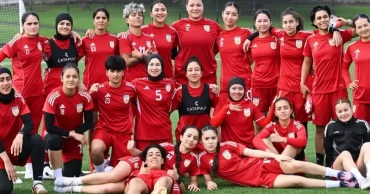
Afghan women’s football team rebuilds dream in exile after Taliban takeover
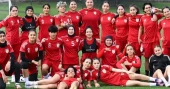
Afghan women footballers who fled their country after the Taliban returned to power are rebuilding their careers in exile, hoping to once again represent Afghanistan on the international stage after years of uncertainty and displacement.
The players, now part of the Afghan Women United program, include athletes like goalkeeper Fatima Yousufi and midfielder Mona Amini. Many left Afghanistan in a hurried evacuation after 2021, when the Taliban banned women from sports and forced the national team to disband.
Before the takeover, the players were students and athletes who trained and competed despite social pressure and safety risks. After fleeing, several settled in Australia, while others spread across Europe and the United States, continuing to train with the hope of returning to international football.
This week, 23 members of the squad are in Auckland, New Zealand, for a training camp and friendly matches against teams including the Cook Islands.
Although the Afghan football federation does not officially recognize the women’s team, FIFA in April approved their eligibility for international competition, marking a major breakthrough for the group.
Amini described the recognition as a turning point after years of struggle, saying it allowed the team to once again dream of competing under the Afghan flag. She recalled their participation in a recent “Unite” tournament, where they secured a win and were able to hear their national anthem again for the first time in years.
Yousufi, who arrived in Australia with only a backpack, said the recognition revived hope after the loss of home, family ties and their sporting careers. She said becoming an official national team again felt like regaining something they thought was gone forever.
Coach Pauline Hamill has helped bring the scattered players together through training camps and international fixtures, identifying talent across different countries to rebuild the squad.
The players say their journey remains deeply tied to the experiences of women in Afghanistan who are still unable to access education and sport. They hope their return to international football will serve as a message of resilience and opportunity.
Amini said the team’s goal is to represent Afghan women and girls who cannot play freely in their own country, adding that they want to inspire a future generation of female athletes.
Yousufi said the group is now focused on education, football and advocacy, and hopes their presence on the global stage will help change attitudes about women’s participation in sport and society.
3 months ago
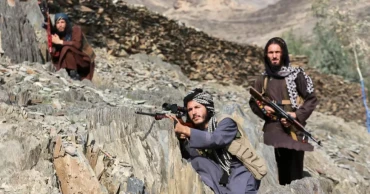
Taliban launch drone attacks on Pakistani military camps: Afghan media
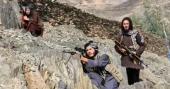
Afghan media outlet TOLOnews has reported that Taliban forces carried out drone strikes on Pakistani military installations in Miranshah and Spinwam, both located in Khyber Pakhtunkhwa.
Citing unnamed security sources, TOLOnews said the attack triggered a fire at the Spinwam military base, reports Al Jazeera .
According to the report, the strikes were launched in response to air attacks carried out by the Pakistan Air Force on Thursday night.
6 months ago
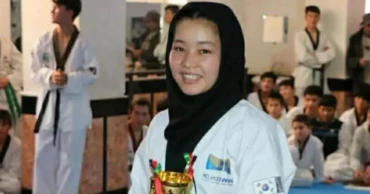
Taliban free 22-year-old female athlete after nearly two weeks in detention
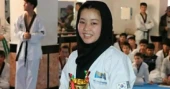
A 22-year-old Afghan woman who was reportedly operating a taekwondo gym for girls has been released after spending 13 days in custody, a spokesperson for the Taliban’s supreme court confirmed.
Khadija Ahmadzada was detained for allegedly violating Taliban regulations governing women’s sports facilities, according to a spokesperson for the Ministry for the Promotion of Virtue and the Prevention of Vice. Women have been barred from sports clubs since the Taliban returned to power in 2021.
Officials had previously said women’s sports facilities would reopen once a “safe environment” consistent with their interpretation of Islamic law was established. However, as of January 2026, no such facilities have reopened and women remain prohibited from competing.
Ahmadzada, who lives near the western Afghan city of Herat, was arrested along with several others after inspectors reported violations at her gym. Authorities accused her of failing to wear what they deemed appropriate hijab, playing music, and allowing men and women to mix in the facility. She was sentenced to 13 days in jail and reportedly had received multiple prior warnings.
Read More: Qatar Foundation pledges support for female athletes in Bangladesh
The case was later referred to the Taliban’s supreme court, which announced her release on Thursday, January 22. Her current whereabouts remain unclear.
Her arrest sparked widespread criticism on social media and drew the attention of Richard Bennett, the UN special rapporteur on human rights in Afghanistan, who publicly called for her immediate release.
Bennett also highlighted the case of Nazira Rashidi, a female journalist detained in late December in the northern city of Kunduz. Taliban officials have denied that Rashidi’s detention is linked to her journalism, according to local media reports.
Source: BBC
7 months ago
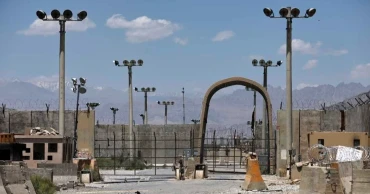
Taliban reject Trump’s push to retake Bagram Air Base
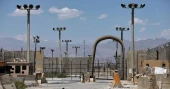
The Taliban government on Sunday dismissed U.S. President Donald Trump’s suggestion that Washington could retake Bagram Air Base, four years after America’s withdrawal handed the facility over to Taliban control.
Trump recently hinted that the Taliban, facing economic woes, a lack of international recognition, internal tensions and threats from rival militant groups, might allow the U.S. military back into Afghanistan.
However, Taliban chief spokesman Zabihullah Mujahid rejected the claim, urging the U.S. to act with “realism and rationality.” Posting on X, Mujahid said Afghanistan was pursuing an economy-driven foreign policy and sought constructive ties with all countries on the basis of mutual interests.
He stressed that Afghanistan’s independence and territorial integrity had been repeatedly emphasized in all negotiations with the U.S. Mujahid also reminded Washington of its commitment under the 2020 Doha Agreement not to use or threaten force against Afghanistan or interfere in its internal affairs.
“The United States must remain faithful to its commitments,” he said.
Mujahid did not respond to AP questions about whether any discussions on Bagram had taken place with the Trump administration or why Trump believed such a move was possible.
In August 2024, the Taliban marked the third anniversary of their return to power with a military display at Bagram, showcasing abandoned U.S. equipment. Trump has since repeatedly criticized his predecessor Joe Biden for what he called “gross incompetence” during the chaotic 2021 withdrawal that ended America’s longest war.
11 months ago
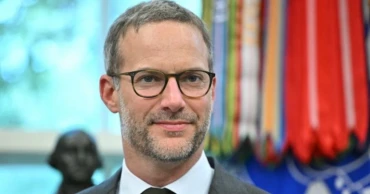
US envoy agrees to prisoner swap in Kabul talks, says Taliban official
The United States has agreed to a prisoner exchange following rare talks with Taliban authorities in Kabul, the group’s Foreign Ministry said Saturday.
According to the ministry, Adam Boehler, the Trump administration’s special envoy for hostage response, and former US envoy for Afghanistan Zalmay Khalilzad met with Taliban Foreign Minister Amir Khan Muttaqi.
“Adam Boehler, referring to the issue of detained citizens between Afghanistan and the United States, said that both countries will exchange prisoners,” said a statement from the office of Taliban deputy prime minister Abdul Ghani Baradar.
Washington has not issued an immediate comment, and Khalilzad did not respond to requests from Reuters.
Among those detained is Mahmood Habibi, a naturalised US citizen and businessman who previously worked in Afghanistan’s telecommunications sector. The US has offered a $5 million reward for information on Habibi’s whereabouts, though Taliban officials deny involvement in his 2022 disappearance.
The Taliban has reportedly sought the release of Muhammad Rahim, the last Afghan held at Guantanamo Bay since 2008 without charge. The deal, mediated by Qatar, was described by the Taliban as a “humanitarian” step and a “gesture of goodwill.”
In January this year, the two sides also carried out a prisoner swap in which US citizens Ryan Corbett and William Wallace McKenty were freed in exchange for Afghan national Khan Mohammad, who had been serving two life terms in the United States.
Both sides have agreed to continue discussions over their nationals held in each other’s custody, the Taliban statement added.
Source: Al Zazeera
1 year ago

UN condemns Taliban arrests over women’s dress code
The United Nations on Monday expressed deep concern over the recent arrest of Afghan women and girls by the Taliban for allegedly violating the group’s strict dress code regulations.
In May 2022, the Taliban authorities issued a decree mandating that women cover their bodies fully, showing only their eyes, and recommended the wearing of the full-body burqa. Since returning to power in 2021, the Taliban have increasingly enforced restrictions on women’s appearance and public behavior through so-called morality laws that prohibit women from revealing their faces outside the home.
According to the UN mission in Afghanistan, “numerous” women and girls were arrested in Kabul between July 16 and 19 for allegedly failing to adhere to hijab rules. “These incidents serve to further isolate women and girls, contribute to a climate of fear, and erode public trust,” the mission said, without disclosing the number of arrests, the ages of those detained, or their current whereabouts.
Syrian forces returning to Sweida after deadly Druze-Bedouin clashes
The mission also called on the Taliban government to “rescind policies and practices” that restrict the human rights and fundamental freedoms of women and girls, particularly the ongoing ban on female education beyond sixth grade.
A Taliban representative was not immediately available for comment.
In January 2024, Afghanistan’s Ministry for the Promotion of Virtue and Prevention of Vice reported that women had been arrested in Kabul for wearing “bad hijab.” Ministry spokesman Abdul Ghafar Farooq did not clarify how many women were detained or what specifically constituted a “bad” hijab.
At the time, the UN said it was investigating allegations of mistreatment and extortion related to the women’s detention and release.
The Taliban regained control of Afghanistan in August 2021 after the withdrawal of U.S. and NATO forces. Since then, the administration has pursued international recognition while enforcing its interpretation of Islamic law. In July, Russia became the only country to grant formal recognition to the Taliban government.
1 year ago

Russia becomes first state to recognise Afghanistan's Taliban government
Russia has become the first nation to officially recognise the Taliban government in Afghanistan, drawing sharp criticism from opposition figures and rights activists.
The decisin marks a significant diplomatic breakthrough for the Taliban nearly four years after they seized control of Kabul and re-established their rule.
Afghanistan’s acting Foreign Minister Amir Khan Muttaqi expressed hope that Russia’s decision would encourage other nations to follow suit. So far, most countries have hesitated to recognise the Taliban administration due to its strict interpretation of Sharia law and severe restrictions on women and girls.
Critics, however, have strongly condemned Moscow’s recognition. Former Afghan politician Fawzia Koofi warned that normalising relations with the Taliban would not bring peace but rather embolden impunity. She further cautioned that such actions could endanger both Afghan citizens and global security.
The Afghan Women's Political Participation Network echoed these concerns, saying the recognition legitimises a "regime that is authoritarian, anti-women, and systematically dismantling basic civil rights."
The Taliban maintains that they respect women's rights within the framework of their interpretation of Afghan culture and Islamic law. However, since they regained power in 2021, girls above the age of 12 have been barred from receiving an education, and women have been excluded from many professions. Additional restrictions include limiting women’s ability to travel without a male guardian and bans on women raising their voices in public.
Russia launches largest air attack on Kyiv since war began
Muttaqi described Russia’s move, announced on Thursday, as the beginning of "a new phase of positive relations, mutual respect, and constructive engagement," calling the decision "courageous."
Russia’s Foreign Ministry, in a statement, highlighted prospects for expanded economic cooperation with Afghanistan in sectors such as energy, transportation, agriculture, and infrastructure. The ministry also pledged continued support to Kabul in fighting terrorism and drug trafficking.
Unlike many other countries, Russia kept its embassy in Kabul open after the Taliban took power in 2021, following the withdrawal of US and allied troops. In 2022, Russia also became the first country to sign a major economic agreement with the Taliban, involving the supply of oil, gas, and wheat to Afghanistan.
Earlier this year, in April, Russia removed the Taliban from its list of terrorist organisations, further paving the way for official engagement. Russian President Vladimir Putin had already referred to the Taliban as an "ally" in combating terrorism during remarks made in July last year.
The relationship between the two countries, however, remains complex. The Soviet Union, led by Russia, invaded Afghanistan in 1979, leading to a devastating nine-year conflict that resulted in the deaths of approximately 15,000 Soviet troops. The Soviet-backed government installed in Kabul faced international condemnation, eventually forcing a Soviet withdrawal in 1989.
In response to Russia’s latest decision, the Afghan Women's Political Participation Network recalled the Soviet invasion, saying they had not forgotten Russia’s role in Afghanistan’s destruction. The group accused Moscow of continuing its harmful interference under the guise of diplomacy.
Former Afghan National Security Adviser Dr Rangin Dadfar Spanta also criticised Russia's recognition, calling it "regrettable." He warned that in the absence of widespread opposition, other countries might follow Russia’s example.
Following the Taliban takeover in 2021, the United Nations imposed strict sanctions on Afghanistan, including the freezing of around $9 billion in assets. The UN has condemned the Taliban’s treatment of women, labelling the restrictions as "gender apartheid," while also reporting incidents of public floggings and brutal attacks on former government officials.
Despite widespread international refusal to recognise the Taliban, some countries have maintained or adjusted their relations. Germany, for example, is considering re-establishing deportations of convicted Afghan criminals. Although Germany halted deportations after the Taliban’s return to power, politician Alexander Dobrindt said Thursday that Berlin should negotiate directly with Afghan authorities to resume deportations.
However, the UN Human Rights Office warned on Friday that returning individuals to Afghanistan would be inappropriate, citing ongoing human rights violations under the Taliban regime.
While most countries shut their embassies in Kabul after 2021, a few—including China, the United Arab Emirates, Uzbekistan, and Pakistan—continue to maintain formal diplomatic representation by appointing ambassadors to Afghanistan.
#With Inputs from BBC
1 year ago
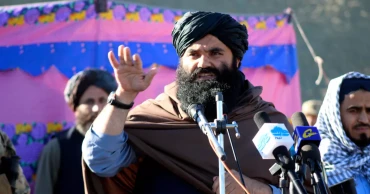
US lifts bounties on senior Taliban officials, including Sirajuddin Haqqani
The U.S. has lifted bounties on three senior Taliban figures, including the interior minister who also heads a powerful network blamed for bloody attacks against Afghanistan’s former Western-backed government, officials in Kabul said Sunday.
Sirajuddin Haqqani, who acknowledged planning a January 2008 attack on the Serena Hotel in Kabul, which killed six people, including U.S. citizen Thor David Hesla, no longer appears on the State Department’s Rewards for Justice website. The FBI website on Sunday still featured a wanted poster for him.
Interior Ministry spokesman Abdul Mateen Qani said the U.S. government had revoked the bounties placed on Haqqani, Abdul Aziz Haqqani, and Yahya Haqqani.
“These three individuals are two brothers and one paternal cousin,” Qani told the Associated Press.
The Haqqani network grew into one of the deadliest arms of the Taliban after the U.S.-led 2001 invasion of Afghanistan.
The group employed roadside bombs, suicide bombings and other attacks, including on the Indian and U.S. embassies, the Afghan presidency, and other major targets. They also have been linked to extortion, kidnapping and other criminal activity.
A Foreign Ministry official, Zakir Jalaly, said the Taliban’s release of U.S. prisoner George Glezmann on Friday and the removal of bounties showed both sides were “moving beyond the effects of the wartime phase and taking constructive steps to pave the way for progress” in bilateral relations.
Japan China and South Korea discuss trilateral cooperation
“The recent developments in Afghanistan-U.S. relations are a good example of the pragmatic and realistic engagement between the two governments,” said Jalaly.
Another official, Shafi Azam, hailed the development as the beginning of normalization in 2025, citing the Taliban’s announcement it was in control of Afghanistan’s embassy in Norway.
Since the Taliban takeover of Afghanistan in August 2021, China has been the most prominent country to accept one of their diplomats. Other countries have accepted de facto Taliban representatives, like Qatar, which has been a key mediator between the U.S. and the Taliban. U.S. envoys have also met the Taliban.
The Taliban’s rule, especially bans affecting women and girls, has triggered widespread condemnation and deepened their international isolation.
Haqqani has previously spoken out against the Taliban’s decision-making process, authoritarianism, and alienation of the Afghan population.
His rehabilitation on the international stage is in contrast to the status of the reclusive Taliban leader Hibatullah Akhundzada, who could face arrest by the International Criminal Court for his persecution of women.
1 year ago

Rashid, Nabi call for reversal of Taliban ban on women’s medical education
Afghan cricket stars Rashid Khan and Mohammad Nabi have voiced strong opposition to the Taliban's reported decision to shut down educational institutions for women training as nurses and midwives.
This move marks yet another blow to women’s rights in Afghanistan since the Taliban seized power in August 2021. While girls and women have been barred from secondary and higher education, medical training had previously been an exception—until now.
Pope stays as stand-in wicketkeeper for England in second cricket test against New Zealand
Besides, the ban on women's participation in sports has drawn international criticism, putting Afghanistan’s ICC Full Member status under growing scrutiny.
"Education holds a central place in Islamic teachings, emphasizing the pursuit of knowledge for both men and women," Rashid wrote in an Instagram story. "The Quran highlights the importance of learning and acknowledges the equal spiritual worth of both genders.
"It is with deep sadness and disappointment that I reflect on the recent closures of educational and medical institutions for the sisters and mothers of Afghanistan. This decision has profoundly affected not only their future but also the broader fabric of our society. The pain and sorrow they express through social media serve as a poignant reminder of the struggles they face.
"Afghanistan, our beloved homeland, stands at a critical juncture. The country desperately needs professionals in every field, especially the medical sector. The acute shortage of female doctors and nurses is particularly concerning, as it directly impacts the healthcare and dignity of women. It is essential for our sisters and mothers to have access to care provided by medical professionals who truly understand their needs.
Pakistan recalls fast bowler Mohammad Abbas after 3 years for test matches in South Africa
"I sincerely appeal for the reconsideration of this decision so that Afghan girls may reclaim their right to education and contribute to the nation's development. Providing education to all is not just a societal responsibility but a moral obligation deeply rooted in our faith and values."
Writing on X, formerly Twitter, Nabi echoed Rashid's views: "The Taliban's decision to ban girls from studying medicine is not only heartbreaking but deeply unjust. Islam has always emphasised the importance of education for everyone, and history is full of inspiring examples of Muslim women who made vital contributions to many generations through knowledge.
"I urge the Taliban to reflect on these values. Denying girls the chance to learn and serve their people is a betrayal of both their dreams and our nation's future. Let our daughters study, grow, and build a better Afghanistan for everyone. This is their right, and it is our duty to protect it."
With inputs from ESPCrickinfo
1 year ago

UN is seeking to verify that Afghanistan's Taliban are letting girls study at religious schools
The United Nations is seeking to verify reports that Afghanistan's Taliban rulers are allowing girls of all ages to study at Islamic religious schools that are traditionally boys-only, the U.N.'s top official in the country said Wednesday.
U.N. special envoy Roza Otunbayeva told the U.N. Security Council and elaborated to reporters afterward that the United Nations is receiving "more and more anecdotal evidence" that girls can study at the schools, known as madrassas.
"It is not entirely clear, however, what constitutes a madrassa, if there is a standardized curriculum that allows modern education subjects, and how many girls are able to study in madrassas," she said.
The Taliban have been globally condemned for banning girls and women from secondary school and university, and allowing girls to study only through the sixth grade.
UN report says more than 570,000 people in Gaza are now 'starving' due to fallout from war
Taliban education authorities "continue to tell us that they are working on creating conditions to allow girls to return to school. But time is passing while a generation of girls is falling behind," Otunbayeva said.
She said that the Taliban Ministry of Education is reportedly undertaking an assessment of madrassas as well as a review of public school curriculum and warned that the quality of education in Afghanistan "is a growing concern."
"The international community has rightly focused on the need to reverse the ban on girls' education," Otunbayeva said, "but the deteriorating quality of education and access to it is affecting boys as well."
"A failure to provide a sufficiently modern curriculum with equality of access for both girls and boys will make it impossible to implement the de facto authorities' own agenda of economic self-sufficiency," she added.
A Human Rights Watch report earlier this month said the Taliban's "abusive" educational policies are harming boys as well as girls.
Türkiye's Erdogan, Egypt's Sisi call for efforts to deliver humanitarian aid to Gaza
The departure of qualified teachers, including women, regressive curriculum changes and an increase in corporal punishment have led to greater fear of going to school and falling attendance, the report said. Because the Taliban have dismissed all female teachers from boys' schools, many boys are taught by unqualified people or sit in classrooms with no teachers at all, it said.
Turning to human rights, Otunbayeva said that the key features in Afghanistan "are a record of systemic discrimination against women and girls, repression of political dissent and free speech, a lack of meaningful representation of minorities, and ongoing instances of extrajudicial killing, arbitrary arrests and detentions, torture and ill-treatment."
The lack of progress in resolving human rights issues is a key factor behind the current impasse between the Taliban and the international community, she said.
Otunbayeva said Afghanistan also faces a growing humanitarian crisis. With Afghans confronting winter weather, more people will depend on humanitarian aid, but with a drop in funding many of the needy will be more vulnerable than they were a year ago, she said.
U.N. humanitarian coordinator Ramesh Rajasingham said that "humanitarian needs continue to push record levels, with more than 29 million people requiring humanitarian assistance — one million more than in January, and a 340% increase in the last five years."
Between January and October, he said, the U.N. and its partners provided assistance to 26.5 million people, including 14.2 million women and girls. But as the year ends, the U.N. appeal is still seeking to close a $1.8 billion funding gap.
US is engaging in high-level diplomacy to avoid vetoing a UN resolution on critical aid for Gaza
Rajasingham said the humanitarian crisis has been exacerbated by three earthquakes in eight days in October in the western province of Herat that affected 275,000 people and damaged 40,000 homes.
A further problem is the return of more than 450,000 Afghans after Pakistan on Nov. 1 ordered "illegal foreigners" without documentation to leave, he said. More than 85% of the returnees are women and children, he said, and many have been stripped of their belongings, arrive in poor medical condition and require immediate assistance at the border as well and longer-term support.
2 years ago