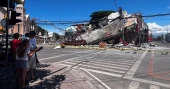
Earthquake
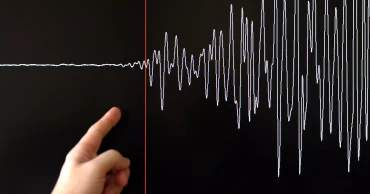
Mild earthquake shakes Narsingdi
A mild earthquake jolted Narsingdi and its adjoining areas early Monday.
The tremor, measuring 3.0 on the Richter scale, struck at 5:32am, according to the Bangladesh Meteorological Department (BMD).
The epicentre was in Shibpur upazila of Narsingdi, about 47 kilometres northeast of Dhaka, the BMD said.
No casualties or damage were reported immediately.
1 month ago
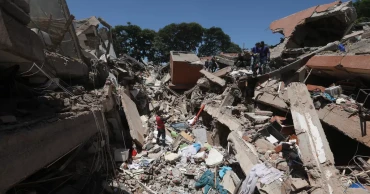
132 killed in Colombia's strongest earthquake in years
At least 132 people have been killed and more than 480 injured after one of Colombia's strongest earthquakes in years struck the country, prompting the government to declare a national disaster as rescue teams searched for people believed to be trapped beneath collapsed buildings.
The magnitude 7.4 earthquake struck at 7:34 am local time Monday at a depth of 103 kilometers (64 miles) in Chocó province, according to Colombia's geological service. The powerful tremor was felt across a vast area of western Colombia.
Many of the deaths were reported in Pereira, a city in the country's coffee-growing region, while surrounding areas and the Valle del Cauca region also suffered significant damage.
The epicenter was near the village of San José del Palmar in Chocó province. Despite damage to roads leading in and out of the village, local mayor León Fabio Marín Moncada said there were no reported deaths or injuries there.
Colombia's Association of Capital Cities said more than 480 people had been injured in the earthquake.
Pereira, about 55 kilometers (34 miles) from the epicenter, was among the hardest-hit cities. Videos verified by the BBC showed at least one building collapsing in Plaza Bolívar, the city's main square, leaving debris and clouds of dust scattered across the area.
Local authorities reported at least 40 deaths in Pereira's metropolitan area and said 65 buildings had collapsed. People were believed to be trapped inside 15 of those structures.
A curfew was imposed in parts of Pereira until 5am Tuesday.
In Cali, about 160 kilometers south of Pereira and roughly 200 kilometers from the epicenter, 32 buildings collapsed.
Dan Cutler, 29, a London resident who has been traveling in Colombia with his partner for about two months, was in Cali when the earthquake struck.
"I've never experienced anything like it," he told the BBC, saying they ran outside in their pajamas after being awakened by the tremor.
He said their hotel suffered no major structural damage, although there were cracks in the walls and some paint and plaster had fallen away.
Deaths were also reported in Manizales, Quibdó and Medellín, as well as in the Chocó and Valle del Cauca regions. At least two people were killed in Manizales.
Angélica Ávila, who was staying at a hotel in Manizales, said cracks appeared in the walls as the earthquake struck.
"Everyone was screaming," she told BBC World Service, adding that she saw dust coming from neighboring buildings and bricks falling from walls.
Journalist and meteorologist Luis Felipe Molina, who was at home in Manizales, about 150 kilometers from the epicenter, said the city has strict seismic-resistant building regulations because of previous earthquakes.
He said his building withstood the impact, although most of the books on his shelves fell and there were sounds of breaking glass and people screaming.
Colombia's aviation authority reported damage at several regional airports, including those in Pereira, Manizales, Quibdó, Armenia, Cartago and Buenaventura.
In the capital Bogotá, trees and traffic lights shook violently, and some buildings developed cracks, but there were no immediate reports of serious damage to major infrastructure.
Tremors were also felt in neighboring Venezuela, Ecuador and Panama.
The earthquake struck less than two months after twin earthquakes devastated northern Venezuela, killing more than 6,300 people.
President Abelardo de la Espriella declared a national disaster situation, giving authorities special powers to respond to the emergency and reallocate funds. The president, who took office only Friday, said more than 1,500 homes had been damaged.
As the scale of the destruction became clearer, several countries offered support. U.S. Secretary of State Marco Rubio said Washington was closely monitoring the situation and was ready to assist. European Commission President Ursula von der Leyen said the EU's Copernicus satellite system was being used to support rescue efforts.
El Salvador's President Nayib Bukele expressed solidarity with Colombia and offered personnel and equipment to help with rescue operations.
The U.S. Geological Survey estimated that about 1.5 million people experienced shaking close to magnitude 7.
The agency said deep earthquakes such as Monday's are generally less dangerous than those occurring closer to the Earth's surface. However, they can still release energy capable of damaging buildings and may produce fewer but potentially stronger aftershocks. #From BBC
1 month ago
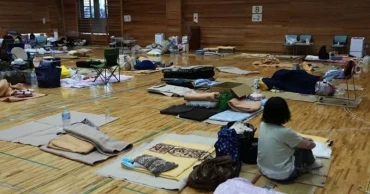
PM visits Japan's quake-hit Kumamoto as cleanup begins amid extreme heat
Japanese Prime Minister Sanae Takaichi on Monday visited the earthquake-hit Kumamoto Prefecture in southwestern Japan as residents began clearing debris from damaged homes while facing scorching temperatures and ongoing water shortages.
The magnitude 7.1 earthquake struck Kumamoto Prefecture on the southern island of Kyushu last Tuesday, killing 38 people, according to prefectural officials. Among the victims was a person who apparently died from heat stroke while sheltering inside a car. Authorities are still investigating the cause of another death.
Residents placed piles of rubble, broken furniture and damaged household appliances outside their homes for collection. Construction of temporary housing also began in the towns of Uki and Hikawa for people displaced by the disaster.
More than 46,000 households were still without running water on Monday, while many communities were also experiencing fuel shortages. The Japan Meteorological Agency forecast temperatures to approach 40 degrees Celsius, raising concerns over heat-related illnesses.
More than 8,500 people remained in emergency shelters, including community centres, school gymnasiums and classrooms, many of which lack air conditioning. Others continued to stay in cars parked near town halls and parks or outside their damaged homes.
Disaster experts have long warned that overcrowded shelters with limited sanitation and privacy can make conditions more difficult for displaced people.
During her visit, Takaichi toured one of the area's better-equipped shelters, which had cardboard beds, partitions and air conditioning. However, the visit drew criticism on social media, with some users saying it did not reflect the conditions in most evacuation centres.
Meanwhile, a local retailer acknowledged that it had instructed two employees, who later died in an explosion at a collapsed shopping mall, to return to the building to secure the day's sales proceeds.
Executives of Habita, which operated a store inside the collapsed Aeon Mall in Kashima, attended the funeral wake of 22-year-old employee Kurumi Otake on Sunday and apologised to her family.
Company sales manager Goji Yuse admitted the employees had been asked to return to the store if it was safe to place the money in a secure safe.
"My daughter is not coming back," Otake's mother told company officials through tears.
The mall operator believes the explosion was caused by a gas leak after about 3,000 shoppers had already been evacuated following the earthquake, though some employees remained inside the building. Rescue teams pulled five survivors from the rubble and recovered the bodies of seven others.
Authorities said the earthquake injured 114 people, destroyed around 700 homes and damaged more than 11,300 buildings across Kumamoto Prefecture.
1 month ago

Fire Service itself may be affected if 7-magnitude quake hits Dhaka: DG
Fire Service and Civil Defence may itself suffer damage if a major earthquake measuring 7 or above hits Dhaka, making simultaneous rescue operations at multiple locations difficult, its Director General Brigadier General Muhammad Zahed Kamal said on Sunday.
Emphasising the role of the media in raising public awareness about earthquakes, the DG said regular campaigns are needed to inform people about safety measures during earthquakes, including where to take shelter, avoiding elevators, and keeping emergency kits containing essential medicines, flashlights and whistles.
He made the remarks while addressing a training programme on fire safety as the chief guest at the Fire Service and Civil Defence headquarters at Bangabazar in the capital.
He also stressed the importance of ensuring safety before entering earthquake-damaged buildings, saying rescue operations vary depending on the structure and condition of collapsed buildings.
"While reporting on such incidents, journalists must also give the highest priority to their own safety," he said.
The Fire Service chief said around 100 stations across the country have been brought under a specific plan to deal with possible disasters like major earthquakes.
"If a devastating earthquake occurs, manpower and equipment will be sent quickly to affected areas from these stations," he said.
As part of the preparedness plan, a dry exercise has already been conducted, he added, saying efforts are also underway to transport small rescue equipment and firefighters by helicopters if necessary.
1 month ago
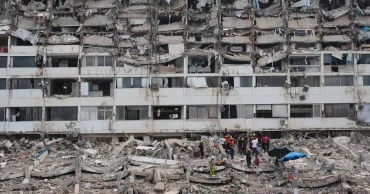
Search for Venezuela earthquake survivors continues as humanitarian crisis deepens
Rescue teams and volunteers continued searching through the rubble of collapsed buildings in Venezuela on Monday as hopes of finding more survivors from last week's devastating twin earthquakes diminished and concerns mounted over a prolonged humanitarian crisis.
Five days after the disaster, relief agencies warned that the critical window for rescuing survivors was rapidly closing, although people trapped beneath the debris could still survive if they had access to food and water.
The earthquakes have left thousands homeless, raising questions over whether the cash-strapped government can effectively coordinate long-term relief and recovery efforts.
The official death toll has surpassed 1,700, according to government figures.
Meanwhile, a magnitude 4.6 aftershock struck the northern state of La Guaira on Monday, adding to the anxiety of residents and rescue workers. Authorities said there were no immediate reports of additional damage.
Government officials, facing criticism over the pace of the response, highlighted ongoing rescue and relief efforts. Police and military personnel distributed food to displaced residents, while authorities said electricity had been restored to 90 percent of La Guaira, one of the worst-hit regions.
Jorge Rodríguez, head of the National Assembly, said engineers were assessing structurally damaged buildings and that 15 temporary camps had been established to shelter displaced families.
Acting President Delcy Rodríguez also praised emergency responders after rescue workers pulled a survivor from the rubble following a 43-hour operation, describing every successful rescue as "a victory for hope."
Despite occasional rescue successes, many families remained waiting near collapsed buildings for news of missing relatives.
Residents were again shaken after Monday's aftershock, one of more than 600 recorded since the twin earthquakes struck last Wednesday. The tremor was felt in Caracas, where many people rushed out of buildings in fear.
Rescue and recovery operations are continuing as authorities and humanitarian agencies race against time to assist survivors and address the growing needs of those displaced by one of the country's deadliest natural disasters.
2 months ago
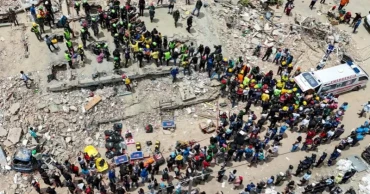
Death toll rises to 1450, over 3000 injured in Venezuela earthquakes
The death toll from the twin earthquakes that struck Venezuela has climbed to 1,450, with more than 3,000 people injured, senior lawmaker Jorge Rodríguez said on Sunday.
The latest figure marks an increase of 20 deaths from the previously reported toll of 1,430.
Rodríguez said 3,150 people have been injured and a total of 12,721 people have been affected by the disaster.
He described the twin earthquakes as "the most brutal natural catastrophe that our country has suffered in its history" and said the country was passing through "critical hours" in efforts to save lives.
According to the official, the number of buildings damaged or destroyed has also risen to 774.
Meanwhile, the United Nations said there is still hope of finding survivors trapped beneath the rubble, although the window for rescue is rapidly closing.
Speaking from La Guaira, UN Resident Coordinator Gianluca Rampolla said experts believe some people could still be alive because of the way certain buildings collapsed.
However, he warned that "time is running short" and noted that extremely high temperatures were complicating rescue efforts.
Emergency workers continue search-and-rescue operations across the affected areas as authorities race against time to locate survivors and provide assistance to thousands of displaced and injured residents.
Source: BBC
2 months ago

5.9-magnitude earthquake jolts Pakistan, Afghanistan; no casualties reported
A 5.9-magnitude earthquake struck parts of Pakistan and neighbouring Afghanistan on Saturday, triggering panic among residents who rushed out of their homes, officials said.
There were no immediate reports of casualties or property damage.
According to the Pakistan Meteorological Department, the quake's epicentre was located in Afghanistan's Hindu Kush region. Tremors were felt in Pakistan's capital Islamabad, the eastern province of Punjab, the northwestern province of Khyber Pakhtunkhwa bordering Afghanistan, and Pakistan-administered Kashmir.
Authorities in Khyber Pakhtunkhwa said district administrations had been put on alert following the earthquake.
Anwar Shahzad, spokesperson for the Provincial Disaster Management Authority, said preliminary assessments had not found any reports of deaths, injuries or damage.
Pakistan is situated on an active seismic belt and experiences frequent earthquakes. In 2005, a devastating 7.6-magnitude earthquake killed tens of thousands of people in Pakistan and Kashmir, the disputed Himalayan territory divided between Pakistan and India and claimed by both countries.
2 months ago
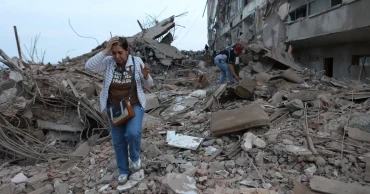
Death toll from Venezuela earthquakes rises to 188 as rescuers search for survivors
Rescue teams and residents continued searching through collapsed buildings in northern Venezuela on Thursday after two powerful earthquakes killed at least 188 people, injured around 1,500 and left more than 200 trapped beneath the rubble.
The twin quakes, measuring 7.2 and 7.5 in magnitude, struck Wednesday evening and were among the strongest to hit Venezuela in more than a century. Thousands of people were also reported missing across the country.
Authorities said the coastal state of La Guaira, north of the capital Caracas, suffered some of the worst destruction, with dozens of buildings collapsing and heavy casualties reported.
Panic gripped cities across northern Venezuela as residents rushed into the streets and searched through debris for missing relatives and neighbors. Television footage showed rescue workers using power tools to cut through piles of rubble in search of survivors.
Acting President Delcy Rodríguez described La Guaira as a "disaster zone" and said rescue teams from other parts of the country were being deployed to the area. She also appealed to businesses to provide heavy construction equipment to aid rescue efforts and said United Nations-certified search-and-rescue teams were on their way.
State television showed several survivors, including three children, being pulled alive from the debris in La Guaira.
The earthquakes also damaged and forced the closure of Venezuela's main airport, while buildings were evacuated as far away as Brazil's Amazon region, around 1,700 kilometres from Caracas.
The latest disaster poses a major challenge for the government of Acting President Rodríguez as Venezuela continues to struggle with a prolonged economic crisis and political uncertainty.
According to the US Geological Survey (USGS), the first 7.2-magnitude quake struck near the Caribbean coastal city of Moron at a depth of about 22 kilometres. A second, stronger 7.5-magnitude quake followed just a minute later at a depth of around 10 kilometres.
Officials have urged residents to remain outdoors, warning that aftershocks could trigger further building collapses and additional casualties.
2 months ago

Mild earthquake shakes parts of Bangladesh
A mild earthquake was felt in parts of Bangladesh on Thursday night, causing brief tremors in several districts.
The tremor, measuring 4.5 on the Richter scale, struck at 9:40 pm, according to the European-Mediterranean Seismological Centre (EMSC).
The EMSC said the epicentre was near Silchar in India, close to Karimganj on the Bangladesh border adjacent to Sylhet. The earthquake originated at a depth of 10 kilometres below the surface.
Tremors were reported from parts of Sylhet, Mymensingh and Dhaka.
No immediate reports of casualties or damage were received.
3 months ago
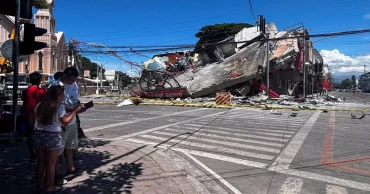
Powerful quake kills 19 in Philippines; triggers tsunami
An offshore magnitude 7.8 earthquake rocked the southern Philippines Monday, killing at least 19 people, injuring more than 200 others mostly in damaged buildings and sending a 1-meter (3-foot) tsunami into nearby coasts.
A few buildings collapsed and key infrastructure sustained quake damage in the city of General Santos, and tsunami damage was reported in at least one coastal village. Smaller waves were measured in Indonesia and Palau and as far away as southern Japan.
“It’s a major earthquake," Teresito Bacolcol, the director of the Philippine Institute of Volcanology and Seismology said, warning people to seek advise before returning to damaged buildings and houses which could collapse due to aftershocks.
“Our pickup truck suddenly jerked and I thought we had a flat tire,” said Rod Sosmeña, regional director of the Office of Civil Defense, told The Associated Press from the hard-hit port city of General Santos, where he was traveling when the quake struck at 7:37 a.m.
“The shaking was very strong and people dashed out of houses into the streets," Sosmeña said.
Another regional disaster-response official, Ednar Dayanghirang, told The AP that he was able to “hardly stand and keep my balance when the ground shook as I was leaving my house” in the southern port city of Davao.
General Santos is a port city of more than 700,000 people that is a regional hub for the tuna export industry and other commerce.
It was the strongest quake to strike the Philippines this year, and was was centered at sea off Mindanao, the second most populous island in the Philippines. According to Bacolcol, the quake occurred at a depth of 33 kilometers (20 miles), about 32 kilometers (20 miles) southwest of Maasim town in Sarangani province.
Philippine President Ferdinand Marcos Jr. ordered the cancellation of classes and directed disaster-response agencies to immediately get to work in quake-hit provinces, saying “the national government is moving and we will not leave Mindanao behind.”
The Pacific Tsunami Warning Center said the threat of a tsunami largely passed about five hours after the quake. Philippine officials also lifted a tsunami warning by mid-afternoon. Six shanties on stilts were damaged in a coastal village in Zamboanga del Sur due to the quake and taller waves, officials said.
Assessing damage and casualties At least 19 people were killed, mostly in collapsed buildings and landslides, while thousands of villagers were displaced, Office of Civil Defense spokesperson Junie Castillo said without providing specific details.
Among the dead were seven people in General Santos, where a few small buildings, including a popular hamburger joint, collapsed or were severely damaged, Sosmeña said.
The other deaths were caused by falling debris, a damaged mosque and a landslide in the southern provinces of Sarangani, South Cotabato and Davao Occidental and on Balut Island, Sosmeña and another reginal disaster-response official, Ednar Dayanghirang, said.
Sosmeña said authorities were checking reports of some students being trapped in a two-story school that collapsed in General Santos. He could not immediately provide details but the national police said at least 12 people were missing in General Santos.
The Bureau of Fire said without elaborating that it was involved in search and rescue efforts in a damaged building and a warehouse in General Santos.
Public schools had reopened nationwide Monday after the summer vacation from April to May. Dayanghirang said more than 100 students attending morning flag-raising ceremonies in his southern region sustained bruises and some fainted in panic.
The international airport in General Santos was temporarily shut, and 17 domestic flights were canceled, the Civil Aviation Authority of the Philippines said.
The DZRH radio network in Manila reported that a small commercial building where its provincial station was located partly collapsed and staffers dashed to the ground floor without injuries. It wasn’t clear if other people were trapped in the rubble of the four-story office building. Debris also fell from other buildings, hitting tricycle taxis parked below.
Tsunami waves near 3 feet measuredWaves of 1 meter (3 feet) were generally monitored in the provinces of Sultan Kudarat and Sarangani. A 1.4-meter (4.6-foot) wave was monitored at one time in the coastal area of Kiamba town in Sarangani, Bacolcol said.
The quake was also felt in Malaysia's Sabah state on Borneo island. Sabah is just a boat ride away from southern Philippines. An 83-centimeter (2.7-feet) tsunami was measured by a gauge off Indonesia's Sulawesi island, and the PTWC said 30-centimer (1-foot) waves were measured in Palau.
Waves up to 20 centimeters (7.8 inches) were detected on the remote Japanese island of Chichijima and the central Japanese town of Kushimoto, the Japan Meteorological Agency said.
The U.S. Geological Survey reported the depth of the original quake at 55 kilometers (34 miles). Variations in measurements by different agencies are common in the immediate aftermath of an earthquake. Aftershocks as strong as 6.5 magnitude were recorded.
The Philippines, one of the world’s most disaster-prone countries, is often hit by earthquakes and volcanic eruptions due to its location on the Pacific “Ring of Fire,” an arc of seismic faults around the ocean. The archipelago is also lashed by about 20 typhoons and tropical storms each year.
3 months ago